9 Best Indoor Plants for Low Light That Actually Thrive

Here is the thing about dark rooms: most plant advice pretends every home has a sun-drenched south-facing window. Real homes have north-facing bedrooms, windowless bathrooms, and that one hallway that never sees daylight. The best indoor plants for low light are the tough, shade-tolerant species that actually thrive where others slowly give up.
I have killed my share of plants by putting sun-lovers in dark corners and hoping for the best. Hope is not a care strategy. What follows is the list I give friends when they ask what will genuinely survive, and even look good doing it, in low light.
The Best Indoor Plants for Low Light: My Top Picks
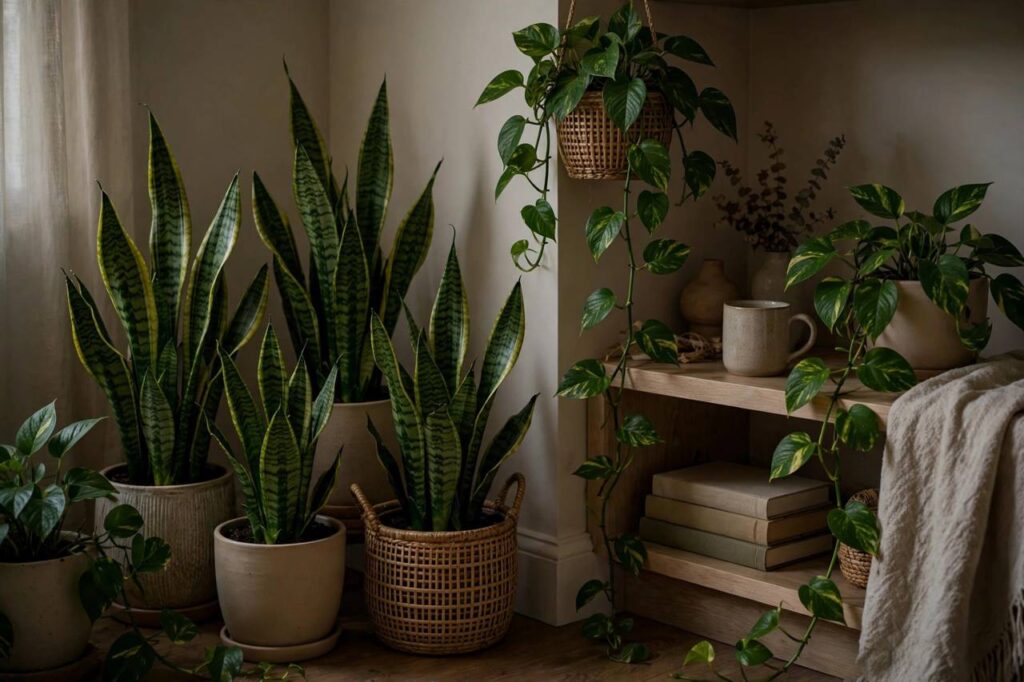
Snake plant (Sansevieria). The undisputed champion of neglect. It tolerates low light, infrequent watering, and general forgetfulness. Its upright, architectural leaves look sharp in any room, and it is one of the few plants that releases oxygen at night.
ZZ plant. Glossy, sculptural, nearly indestructible. The ZZ stores water in its rhizomes, so it forgives missed waterings for weeks. It grows slowly in low light but it grows, which is more than most plants manage.
Pothos. The trailing classic. Golden pothos and its cousins handle low light gracefully, though their variegation fades a bit in deep shade. Hang it, let it trail from a shelf, or train it up a moss pole.
Cast iron plant. The name is the review. Dark green, strappy leaves that shrug off low light, irregular watering, and temperature swings. It is slow, but it is honest work.
Peace lily. One of the few low-light plants that flowers. It droops dramatically when thirsty, which is actually useful: the plant tells you when it needs water. Keep it away from pets, as it is toxic if chewed.
More Winners for Dark Corners
Chinese evergreen (Aglaonema). Comes in varieties with silver, pink, and red variegation that brighten dim rooms. Tolerates low light and low humidity, a rare combination.
Spider plant. Forgiving, fast-growing, and excellent at producing baby plantlets you can gift or propagate. It prefers a bit more light but adapts to shade better than its reputation suggests.
Philodendron (heartleaf). Pothos’s close cousin with softer, heart-shaped leaves. Trails beautifully and asks for almost nothing: water when dry, ignore otherwise.
Parlor palm. The Victorian classic for a reason. Slow-growing, elegant, and genuinely shade-tolerant. It has survived in dim parlors since the 1800s, and it will survive your hallway.
That is nine solid options, and any of them will outperform a sun-hungry fiddle-leaf fig shoved into a dark corner. Match the plant to the light you have, not the light you wish you had.
What “Low Light” Actually Means
Plant people throw around light terms loosely, so here is the practical translation. Low light means a spot several feet from a window, or a north-facing window with no direct sun. You can read a book there comfortably during the day, but a sun-loving plant would slowly starve.
It does not mean no light. Every plant needs some light for photosynthesis. A windowless closet with the door closed is not low light; it is darkness, and nothing on this list survives that. If your room has no windows at all, a simple grow light on a timer solves the problem completely.
When in doubt, observe. If a plant’s new growth is pale, leggy, and stretched toward the window, it wants more light. If established leaves yellow and drop, check water first. Plants communicate; you just have to learn the dialect.
Care Basics That Matter More in Low Light
The number one killer of low-light plants is not darkness. It is overwatering. In dim conditions plants grow slowly and drink slowly, so soil stays wet longer. Water thoroughly, then wait until the top inch or two of soil is dry before watering again. When in doubt, wait another day.
Skip the fertilizer or use it at half strength, and only during spring and summer. A plant barely growing in low light does not need extra food; excess fertilizer just builds up salts in the soil.
Dust the leaves occasionally. In low light every photon counts, and a film of dust measurably reduces what the plant captures. A damp cloth once a month is a small chore with a real payoff. container gardening basics covers soil and potting fundamentals that apply just as well indoors, and how to start a garden has beginner-friendly advice on matching plants to conditions.
Plants to Avoid in Low Light
Honesty requires the other side of the list. Succulents and cacti need strong light and will stretch into sad, pale versions of themselves in shade. Fiddle-leaf figs, crotons, and most flowering plants demand brightness you cannot provide in a dark room.
Herbs are the most common heartbreak. That basil on the kitchen counter needs far more light than a typical kitchen offers. If you want indoor herbs, either give them your brightest window or add a grow light. Otherwise you are composting with extra steps.
The rule is simple: buy the plant for the light you have. The garden center tag is optimistic marketing; your north-facing hallway is the truth.
Styling Low-Light Plants So They Look Intentional
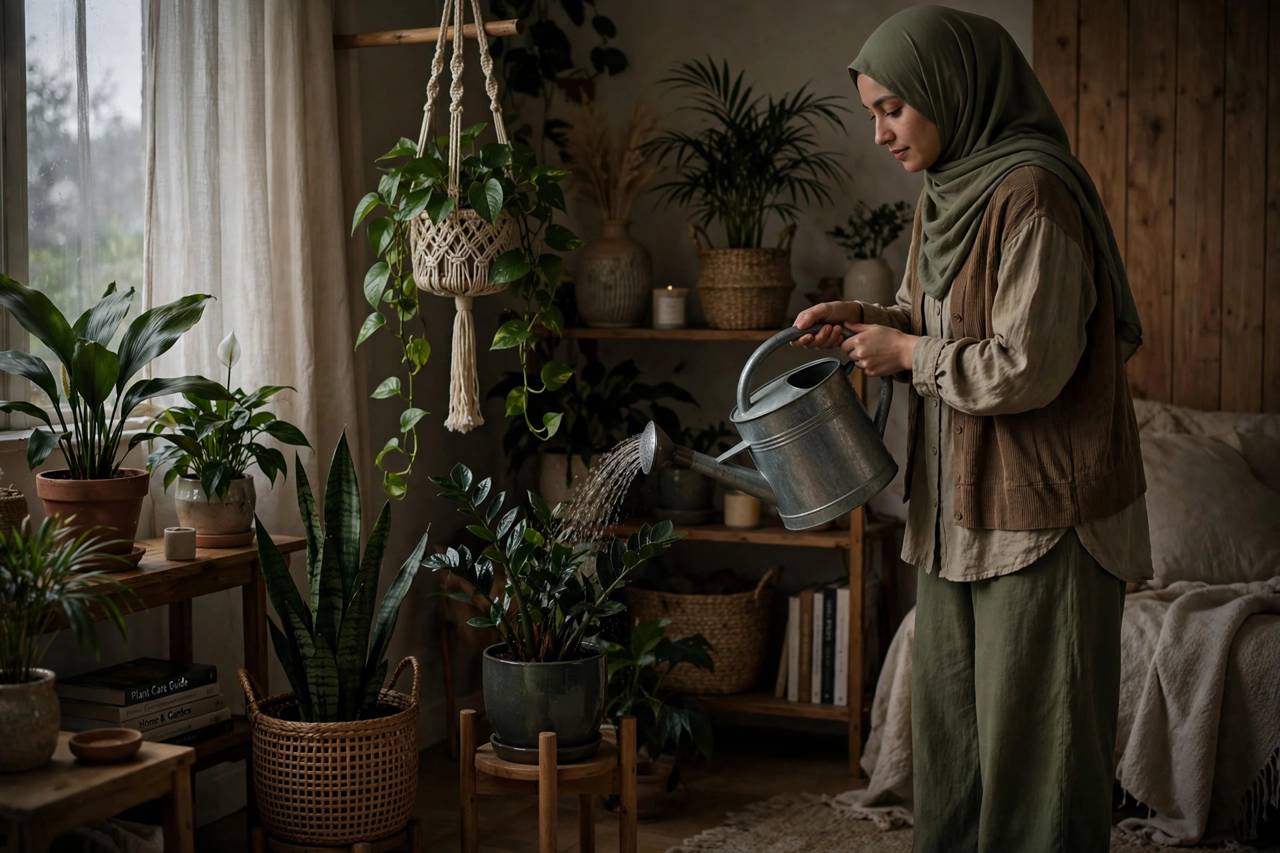
A plant in a dark corner can look like an afterthought or a design choice, and the difference is the pot. Upgrade from the plastic nursery container to ceramic, woven baskets, or even a simple white pot, and the same plant suddenly looks deliberate. Group plants in odd numbers at varying heights for a collected, layered look.
Use the plants’ natural shapes. Trailing pothos and philodendrons belong on high shelves and bookcases where they can cascade. Upright snake plants and ZZ plants anchor floor corners and flanking furniture. A peace lily’s broad leaves fill the visual gap on a side table.
Lighting, ironically, helps low-light plants look their best. A small picture light or a warm LED strip near the plant highlights the foliage and signals that the plant is a feature, not a leftover. You are not adding grow light intensity; you are adding presentation.
Propagating Your Winners
The best low-light plants are also the easiest to multiply, which means free plants forever. Pothos and philodendron root effortlessly in water: snip below a node, place in a jar, wait for roots, pot up. One plant becomes five within a year.
Snake plants propagate from leaf cuttings, though it is slow; dividing the root ball when repotting is faster. ZZ plants can be divided the same way. Spider plants do the work for you, dangling baby plantlets ready to pot.
Propagation is also your insurance policy. If a mother plant declines, you already have its children rooting on the windowsill. Experienced plant people rarely buy the same plant twice; they just keep the lineage going.
The Low-Light Watering Calendar
Here is a practical rhythm that works for most of these plants. Check soil moisture weekly with your finger, but expect to water only every two to three weeks in winter and every one to two weeks in summer. Low light means slow drinking, always.
Water deeply when you do: soak until water runs from the drainage holes, then empty the saucer. Shallow sips encourage shallow roots. And always use pots with drainage. No drainage hole is the fastest way to kill an otherwise unkillable plant.
Watch the seasons. Growth nearly stops in winter for most houseplants, so cut water and skip fertilizer entirely. When spring growth resumes, that is your signal to resume normal care. The plant sets the schedule; you just follow it.
Troubleshooting: When Good Plants Go Bad
Leggy, stretched growth means the plant wants more light. Move it closer to the window or add a grow light. Prune back the stretched stems; most of these plants branch from the cut and grow bushier.
Yellow lower leaves usually mean overwatering. Let the soil dry more between waterings and confirm the pot drains. If the soil smells sour, repot into fresh mix and trim any black, mushy roots.
Brown crispy leaf tips point to low humidity, fluoride in tap water, or fertilizer buildup. Try filtered water, skip the fertilizer, and flush the soil occasionally with a thorough watering.
Dropping leaves after a move is normal shock, not death. Plants hate change; give a relocated plant two to three weeks to adjust before diagnosing problems. The peace lily’s dramatic faint is the classic false alarm: water it and watch it resurrect within hours.
Pests love stressed plants. Check leaf undersides monthly for spider mites, mealybugs, and scale. A shower and insecticidal soap handle most infestations if caught early. Quarantine new plants for two weeks before introducing them to the collection.
Frequently Asked Questions
What is the best indoor plant for very low light?
The snake plant and ZZ plant are the toughest choices for very low light. Both tolerate dim conditions, irregular watering, and neglect better than almost anything else.
Can indoor plants survive with no natural light?
No plant survives true darkness, but many thrive under artificial grow lights. A simple full-spectrum bulb on a timer can keep low-light plants happy in windowless rooms.
How often should I water low-light plants?
Less often than you think. In low light, soil dries slowly. Water thoroughly, then wait until the top inch or two of soil feels dry, which may take one to three weeks.
Why are my low-light plant’s leaves turning yellow?
Usually overwatering, the most common issue in dim conditions. Check that the pot drains well and let the soil dry more between waterings before assuming the plant needs more light.
Do low-light plants still need fertilizer?
Rarely. Slow-growing plants in dim conditions need little feeding. Use half-strength fertilizer only in spring and summer, or skip it entirely.
Can I put low-light plants in my bathroom?
Often yes, and bathrooms are secretly great for many of them. The humidity suits peace lilies, ferns, and philodendrons, and most bathrooms have at least a small window or ambient light. Just avoid placing plants where they get blasted by hot shower steam daily, and skip succulents, which want brightness bathrooms rarely provide.
Should I mist my low-light plants?
Misting raises humidity for only a few minutes and can encourage fungal problems on leaves, so it is mostly theater. If your air is very dry, a small humidifier or grouping plants together works far better. Most plants on this list tolerate average household humidity without any help.