Arm Exercises Without Weights: 12 Bodyweight Moves That Work

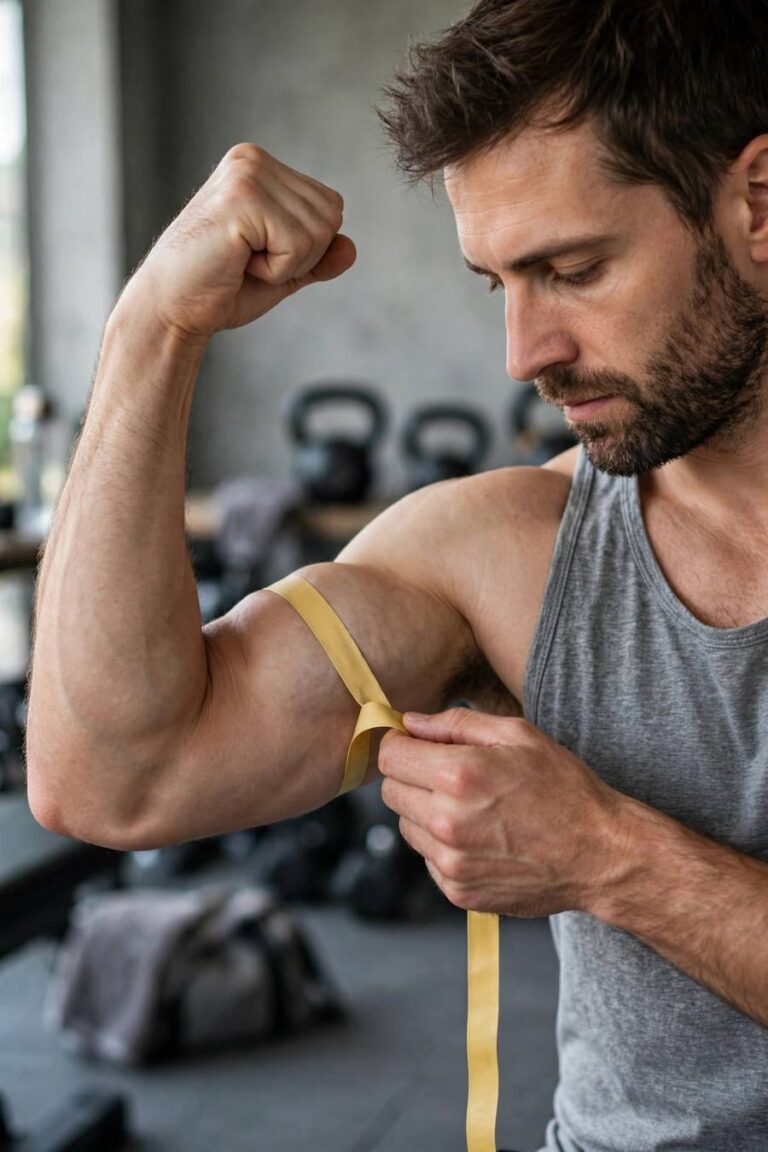
A client once told me he could not train arms because his gym membership lapsed and he had no dumbbells at home. I gave him a doorway, a chair, and the floor, and eight weeks later his arms measured half an inch bigger. Your arms do not know what a dumbbell is; they know tension, and bodyweight provides plenty of it when you pick the right movements and progress them honestly. These 12 exercises cover biceps, triceps, forearms, and shoulders with zero equipment. For the full arsenal including weighted work, see my best arm exercises guide.
How Bodyweight Builds Arms
Muscle grows in response to mechanical tension taken close to failure, regardless of the source. A set of diamond push-ups taken to two reps from failure stimulates the triceps comparably to a set of dumbbell extensions at the same effort. The catch is progression: with weights you add plates, with bodyweight you change leverage. Elevate your feet, slow the tempo, add pauses, move to single-arm variations. Each of these is a legitimate form of progressive overload, and lifters who dismiss bodyweight work usually just never progressed it past the easy versions. The 12 moves below are ordered within each section from accessible to advanced, so you always have a next step.
Triceps: 5 Moves
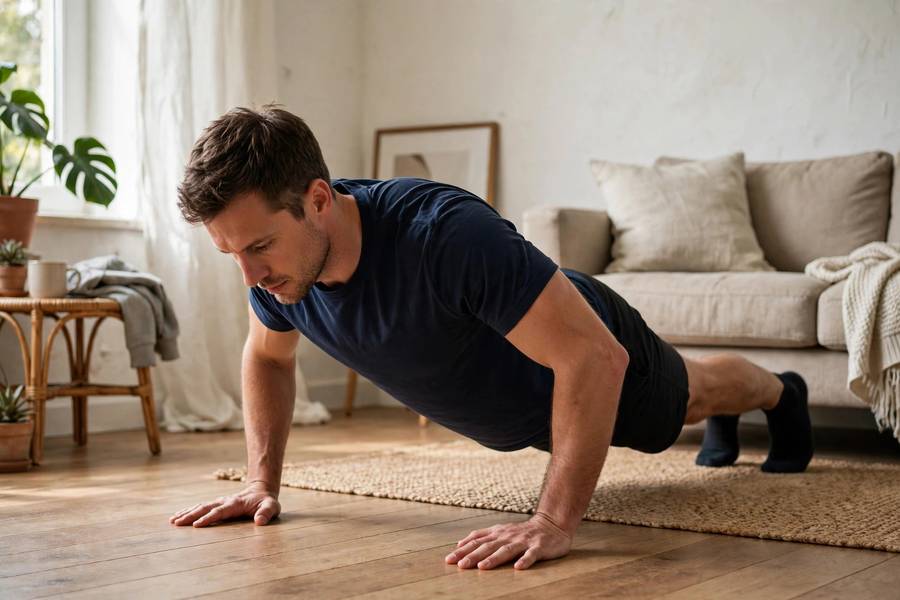
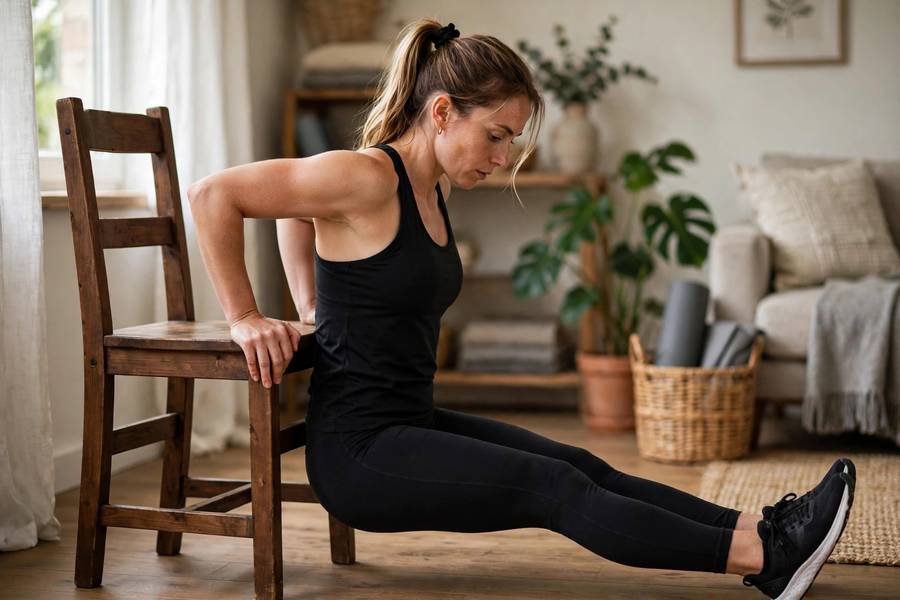
Your triceps are two-thirds of your upper arm, so they get top billing. 1. Chair dips: 3×12. Hands on a sturdy chair behind you, feet on the floor, lower until elbows hit 90 degrees. Keep your back close to the chair. 2. Diamond push-ups: 3×10. Hands together forming a diamond under your chest. This hammers the triceps harder than most people expect; elevate your feet when 12 reps get easy. 3. Bench dips with feet elevated: 3×10. Feet on a second chair. More load, same movement. 4. Pike push-ups: 3×10. Technically a shoulder move, but the triceps do massive work locking out overhead. My best shoulder exercises guide has the full progression. 5. Bodyweight tricep extensions: 3×8. Hands on the floor, lower your forehead to the ground by bending only the elbows, keeping upper arms vertical. Start on knees; this one is humbling.
Biceps: 4 Moves
Biceps are harder to isolate without weights, but these work. 1. Doorway curls: 3×12 per arm. Stand in a doorway, grip the frame at hip height, lean back, and curl your body toward the frame by bending the elbow. Adjust lean for difficulty. 2. Table rows with underhand grip: 3×10. Under a sturdy table, pull your chest to the edge with palms facing you. The biceps take a huge share with this grip. 3. Towel curls: 3×15 per arm. Step on a towel, grip it, and curl against your own leg resistance. Crude but effective; control the tempo. 4. Chin-up negatives: 5×1. If you have any bar, jump to the top of a chin-up and lower over 5 seconds. Eccentric-only work builds serious bicep strength. Work toward full reps with my how to do pull-ups guide; the chin-up is the king of bodyweight bicep builders.
Forearms and Grip: 3 Moves
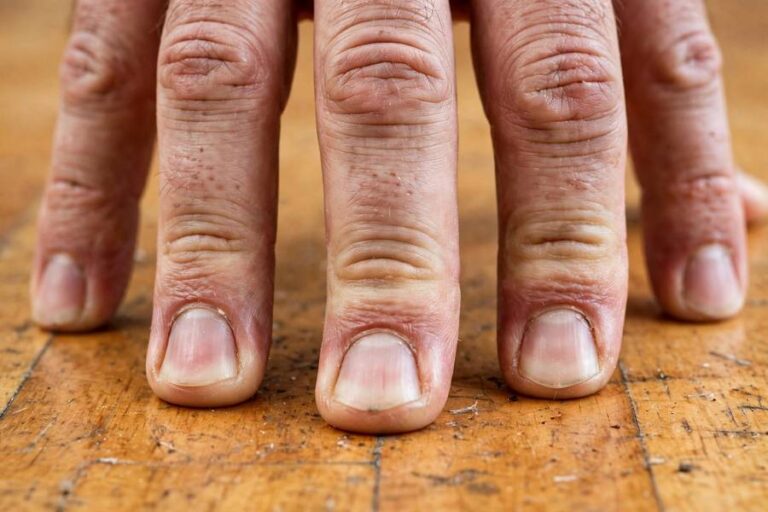
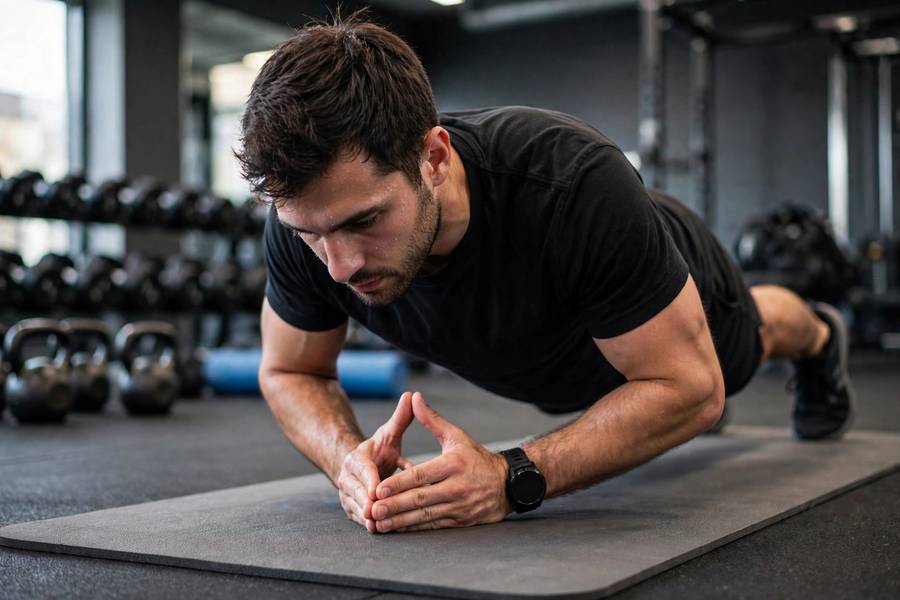
1. Fingertip planks: 3×30 seconds. Plank on fingertips instead of palms. Builds the finger and wrist strength that supports everything else. 2. Towel wrings: 3×20. Soak a towel, wring it dry with both hands in opposite directions. Old-school forearm builder, surprisingly brutal. 3. Dead hangs: 3x max time. Hang from any bar or sturdy tree branch. Grip, forearms, and shoulder health in one. Build to 60 seconds; your hands will thank you in every other exercise.
The 25-Minute No-Weights Arm Workout
Warm up 3 minutes: arm circles, wrist circles, 10 easy push-ups. Then circuit, 3 rounds, 45 seconds rest between exercises: chair dips x12, doorway curls x10 per arm, diamond push-ups x8, table rows underhand x10, fingertip plank 20 seconds, towel wrings x15. That is 6 exercises, 3 rounds, done in about 22 minutes. Do it twice a week with at least two days between. When you can complete all 3 rounds with clean form and reps in reserve, progress one movement to its harder variation: feet-elevated dips, slower eccentrics, longer hangs. The workout never gets easy; you just get stronger, which is the entire point.
The 8-Week Bodyweight Arm Plan
Weeks 1-2: Do the 25-minute workout twice a week exactly as written, all base variations. The goal is learning the movements and finding your rep ranges. Weeks 3-4: Add a fourth round to the circuit. Introduce tempo: 3-second lowering on dips and diamond push-ups. Weeks 5-6: Progress one movement per session: feet-elevated dips, slower towel curls, longer dead hangs. Add chin-up negatives if you have a bar. Weeks 7-8: Test week, then a deload: max reps on diamond push-ups, max hang time, max doorway curls with good form. Write everything down. Most people add 30-50 percent to their rep totals across these 8 weeks, and arms visibly change. Repeat the cycle with harder variations; the second 8 weeks builds on the movement quality the first 8 weeks installed.
Progressing Without Adding Weight
Your progression toolbox: leverage (elevate feet on push-ups, lean further on doorway curls), tempo (3-second lowering phase on every rep doubles the difficulty), pauses (2-second hold at the hardest point), range (deeper dips, fuller stretch), unilateral work (one-arm doorway curls, archer push-ups), and density (same work in less time). Pick one variable and progress it for 4 weeks before changing. Track reps in a notebook; “felt harder” is not data. Most people can progress bodyweight arm work for 6 to 12 months before needing external load, and by then the movement quality you built makes weighted training far more effective. Bodyweight is not a compromise; it is a foundation.
Form Errors That Stall Growth
Swinging curls. If your torso rocks, your biceps are not doing the work; momentum is. Drop the difficulty and keep the torso still. Half-range dips. Stopping at 45 degrees instead of 90 robs the triceps of the stretched position where growth happens. Full range or it does not count. Rushing eccentrics. Dropping fast into push-ups and dips skips the most productive part of the rep. Two to three seconds down, every rep. Neglecting the stretch. At the bottom of dips and the top of overhead extensions, pause one second in the stretch. The stretched position drives disproportionate growth. Training to failure every set. One or two sets to failure per session is plenty; everything else stops with 1-2 reps in reserve. Constant failure fries recovery and stalls the next session. Fix these five and most plateaus resolve within a month.
Superset Pairings That Save Time
Short on time? Pair a bicep and tricep move back-to-back with no rest between, then rest 60 seconds: doorway curls + chair dips, table rows + diamond push-ups, towel curls + bodyweight extensions. Three pairs, 3 rounds, done in 18 minutes. Supersets work well for arms because the bicep rests while the tricep works and vice versa, so performance barely drops. Do not superset two moves for the same muscle; the second one will be garbage. Keep the pairings antagonistic, keep the rest honest, and you get the full session’s stimulus in two-thirds of the time.
Frequently Asked Questions
Yes, especially as a beginner or intermediate. Bodyweight exercises taken close to failure with steady progression build real size; my clients typically add visible arm size in 8-12 weeks. Advanced lifters eventually need external load to keep progressing, but most people never max out bodyweight progressions.
Twice a week with at least two rest days between sessions. Bodyweight arm work creates real muscle damage, especially the eccentrics, and arms recover slower than people think. Three times a week works for the easy variations; twice is better once you are doing the hard ones.
The chin-up, by a wide margin; nothing else loads the biceps through a full range with bodyweight. Until you have a bar, underhand table rows and doorway curls are the best substitutes. If biceps are the priority, getting a doorway pull-up bar is the highest-value purchase you can make.
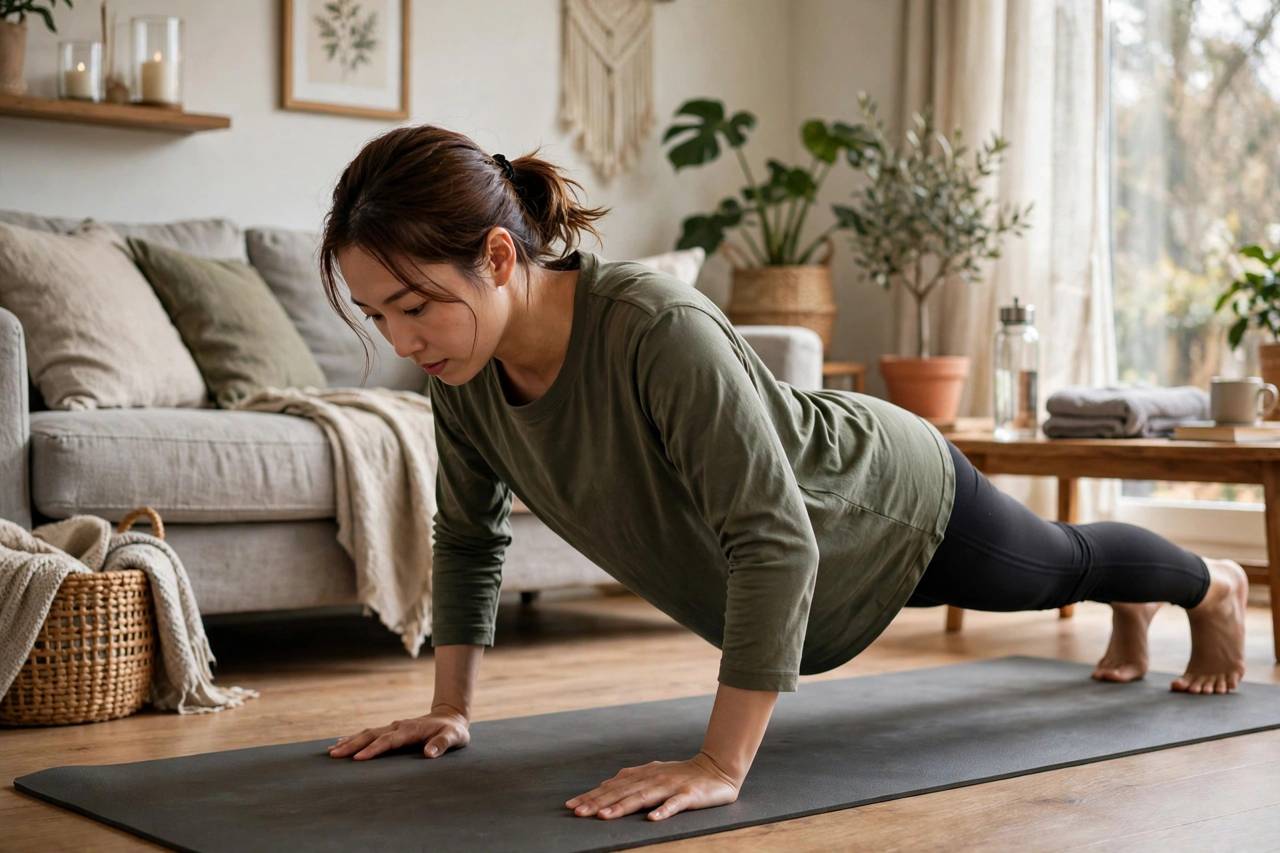
Standard push-ups are chest-dominant, but close-grip and diamond push-ups shift the load heavily to the triceps. Vary your hand position: wide for chest, narrow for triceps. Both build the arms; the narrow versions just do it more directly.
A sturdy table for rows, a doorway for curls and hangs from the frame (check it holds you first), or a tree branch outside. A doorway pull-up bar costs little and unlocks chin-ups, hangs, and rows; it is the single best home-gym purchase for arm training.