How Long Is a Marathon in Miles? (And Why That Exact Number)

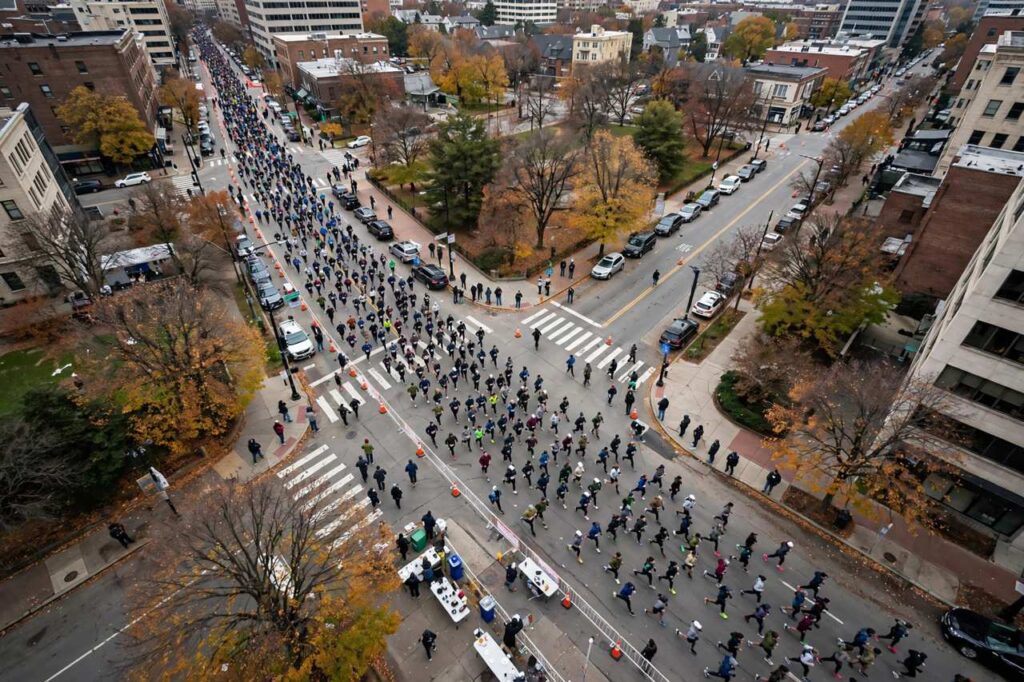
26.2 miles. So how long is a marathon in miles? Exactly 26.2 — and if you have ever wondered why it is not a nice round 25 or 30, you are asking the best question in distance running. The marathon’s oddly specific length comes from ancient legend, royal convenience, and a century of tradition. And whether you are a curious fan or someone flirting with the idea of running one, understanding the distance is the first step to respecting it. Let us break it down.
How Long Is a Marathon in Miles? The Answer
A marathon is 26 miles and 385 yards, universally rounded to 26.2 miles, or 42.195 kilometers. That is the official distance recognized by World Athletics for every certified marathon on the planet, from Boston to Berlin to Tokyo.
To put 26.2 miles in perspective: it is roughly 105 laps of a standard 400-meter track. It is like running from downtown Manhattan to past JFK Airport. At a 10-minute-per-mile jog, it takes about 4 hours and 22 minutes. Elite men finish in just over 2 hours; elite women in about 2 hours 15 minutes. For most first-timers, anything under 5 hours is a triumph.

Why 26.2? The Strange History of the Distance
The marathon traces to the legend of Pheidippides, the Greek messenger who supposedly ran from Marathon to Athens in 490 BC to announce victory, then collapsed. When the modern Olympics revived the marathon in 1896, organizers set the distance at roughly 40 kilometers (about 24.8 miles), the estimated distance of that ancient run.
Here is where it gets delightfully arbitrary. At the 1908 London Olympics, the course was laid out from Windsor Castle to the Olympic Stadium, and then extended 385 yards so the finish would sit directly in front of the royal box, giving the royal family the best view. That improvised total, 26 miles 385 yards, was officially standardized in 1921 and has never changed since.
So the most famous distance in running exists because of where some royals wanted to sit. Sports history is wonderful.
Marathon vs. Other Race Distances
How does 26.2 stack up? A 5K is 3.1 miles, the classic beginner race. A 10K is 6.2 miles. A half marathon is 13.1 miles, exactly half, and the most popular stepping stone. An ultramarathon is anything beyond 26.2, commonly 50K (31 miles) or 100 miles.
The jump from half to full marathon is deceptive. It is not twice as hard; it is exponentially harder. The famous “wall” around mile 20, where glycogen stores run dry, does not exist in shorter races. Respect the distance: most coaches insist runners complete a half marathon comfortably before targeting the full 26.2.
What It Takes to Run 26.2 Miles
Could you run a marathon? With proper training, far more people than think so. But “proper training” is doing a lot of work in that sentence. A typical beginner marathon plan spans 16 to 20 weeks, building from a base of regular running to peak weeks of 35-45 miles, including one long run that eventually reaches 20 miles.
The training breaks down into: base mileage (easy runs building aerobic fitness), the long run (weekly, growing longer, teaching your body to burn fat efficiently), speed work (intervals and tempos for efficiency), strength and mobility (injury prevention), and recovery (sleep and easy days, non-negotiable).
If you are starting from the couch, give yourself a full year: build to a 5K, then a 10K, then a half, then the full. Our guide to marathon training for beginners lays out the complete roadmap.

Race Day: What 26.2 Miles Actually Feels Like
Ask finishers and a pattern emerges. Miles 1-6: electric. Crowds, adrenaline, the temptation to start too fast. Discipline here decides your whole day. Miles 7-13: rhythm. You settle in, the crowd thins mentally, fueling begins. Miles 14-20: the grind. This is where training shows. Stay patient, keep fueling, trust the process. Miles 20-26.2: the famous final stretch. Glycogen fades, everything hurts, and you discover what you are made of. Then the finish line, and a feeling finishers describe for the rest of their lives.
Two race-day skills matter enormously. Pacing: start conservatively; you should feel almost too slow early. Fueling: take in carbohydrates (gels, chews, sports drink) starting at 45 minutes and every 30-45 minutes after, plus water at every station. Bonking is a fueling failure more often than a fitness failure.
Breathing rhythm matters over 4+ hours too. Our article on how to breathe when running covers techniques that keep you efficient deep into the race.
The World’s Major Marathons
Six races form the World Marathon Majors: Tokyo, Boston, London, Berlin, Chicago, and New York City, plus Sydney newly added. Each has its character. Boston is the historic qualifier-only test with Heartbreak Hill. Berlin is the flat, fast course where world records fall. New York is the five-borough party with two million spectators. London is the charity-running capital. Chicago is flat and fast in the fall. Tokyo blends precision organization with incredible crowds.
Qualifying for Boston requires a certified time standard by age group, a goal that structures many runners’ entire careers. The other majors use lotteries, charity entries, or tour packages. Running all six (now seven) earns the coveted Six Star medal, a lifetime achievement in the running world.
Training Smart: Avoiding the Classic Mistakes
Too much, too soon. The number one cause of marathon training injuries. Increase weekly mileage by no more than 10 percent, and cut back every third or fourth week.
Skipping strength work. Runners who lift get injured less. Twice-weekly strength sessions targeting glutes, calves, and core pay enormous dividends. See our guide to strength training for runners for a runner-specific routine.
Neglecting fueling practice. Never try new gels on race day. Practice your exact fueling strategy on long runs until it is boring.
Ignoring niggles. The marathon rewards the healthy, not the heroic. A skipped week beats a scratched race. Cross-train through minor issues and see a professional for anything that alters your stride.

Fueling 26.2: The Nutrition Behind the Distance
You cannot run 26.2 miles on willpower; the math of human energy storage forbids it. The average runner stores roughly 2,000 calories of glycogen, enough for about 18-20 miles of running. The marathon is 26.2. That gap is the entire sport, and bridging it is a nutrition project.
Carb loading. In the 2-3 days before the race, increase carbohydrate intake to 70 percent of calories while reducing training volume. This tops off glycogen stores. It is not an excuse for a heroic pasta binge the night before; consistent elevated carbs across days works better and disturbs sleep less.
Race-day fueling protocol. Start taking carbohydrates at 45 minutes, before you feel you need them, then every 30-45 minutes after. Target 30-60 grams of carbs per hour: energy gels, chews, sports drink, bananas at aid stations, whatever your stomach tolerates. Wash gels down with water, not sports drink, to avoid over-concentrating your stomach.
Hydration strategy. Drink to thirst at aid stations rather than forcing a rigid schedule; overdrinking causes hyponatremia, which is genuinely dangerous. In hot races, add electrolytes. Practice your exact hydration plan on long training runs until it is automatic.
The post-race window. Within 30-60 minutes of finishing, eat carbs plus protein: the classic chocolate milk, a banana and a sandwich, whatever appeals. Your body is primed to replenish. Then eat a real meal within a few hours and sleep like you have earned it, because you have.
Get fueling right and the wall becomes a rumor you heard about. Get it wrong and mile 20 teaches you biochemistry the hard way.
Walking a Marathon: Yes, It Counts
Here is something the running world does not say loudly enough: you can walk a marathon, and it absolutely counts. Many big-city marathons have generous course time limits of 6-7 hours, and run-walk strategies (popularized by coach Jeff Galloway) have carried thousands of first-timers to the finish. Alternating running and walking from the start conserves energy, reduces injury risk, and often produces faster finish times than running until you collapse at mile 18.
The key is practicing your run-walk ratio in training, not improvising on race day. Common patterns: run 4 minutes, walk 1; or run 2, walk 1 for beginners. Walk the aid stations even if you are running strongly; the 20-second reset pays for itself. A marathon finished in 6 hours with a smile beats a marathon DNF’d at mile 22 with regret. The distance does not care how you cover it. What matters is crossing that finish line under your own power, however you get there, and earning the medal exactly like everyone else.
Key Takeaways
A marathon is 26.2 miles (26 miles 385 yards, 42.195 km), a distance standardized in 1921 after the 1908 London Olympics extended the course for the royal box. It demands 16-20 weeks of structured training built on base mileage, long runs, speed work, strength, and recovery. Respect the jump from the half marathon, pace conservatively, fuel early and often, and build through shorter races first. Whether you ever run one or just admire from the sidewalk, 26.2 remains sport’s greatest test of human endurance.
FAQ
How long is a marathon in miles?
A marathon is 26.2 miles, precisely 26 miles and 385 yards (42.195 kilometers). This is the official standardized distance used worldwide.
Why is a marathon 26.2 miles instead of a round number?
The 1908 London Olympics set the course from Windsor Castle to the stadium, then added 385 yards so the finish sat before the royal box. That distance was standardized in 1921 and never changed.
How long does it take to run a marathon?
Elite runners finish in just over 2 hours. The average first-timer takes 4.5 to 5.5 hours. Most recreational runners fall between 3.5 and 5.5 hours depending on training.
How long does it take to train for a marathon?
A typical beginner plan is 16-20 weeks, assuming a base of regular running. Complete beginners should allow up to a year, progressing through 5K, 10K, and half marathon distances first.
What is the hardest part of a marathon?
Miles 20-26, where glycogen depletes (“hitting the wall”). Proper pacing and consistent fueling during the race are the best defenses, along with adequate long-run training.