How to Breathe When Running: Rhythmic Breathing Made Simple


Every beginner runner I’ve ever trained says the same thing about three weeks in: “I love running, but I can’t catch my breath.” And almost every one of them thinks the problem is their lungs. It’s not. The problem is almost always how they’re breathing, not how much.
Your body already knows how to breathe — running just asks it to keep up with a bigger job. When your feet and lungs work on different schedules, everything feels harder than it should. The fix is called rhythmic breathing, and once it clicks, running starts feeling like something your body was built to do.
I’ve coached people convinced they “just weren’t runners.” Nine times out of ten, the issue was shallow chest breathing and no rhythm. Fix the breathing, and the running takes care of itself. Here’s how.
Table of Contents
- Why Runners Struggle With Breathing
- Belly Breathing vs. Chest Breathing
- Rhythmic Breathing: The Core Technique
- Breathing Patterns for Different Efforts
- Breathing Through Your Nose or Mouth?
- How to Stop Side Stitches
- Breathing Drills to Practice
- Common Breathing Mistakes
- Frequently Asked Questions

Why Runners Struggle With Breathing
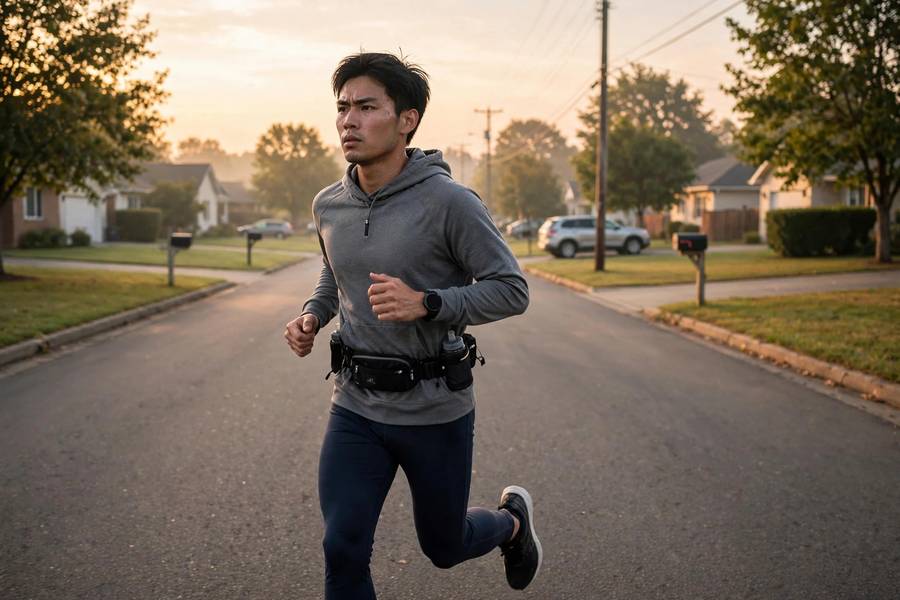
Here’s what happens with most new runners. They start their run, feel fine for the first five minutes, then their breathing gets fast and shallow. Their shoulders creep up toward their ears. They start gasping through their mouth. Panic sets in, they slow to a walk, and they conclude they have terrible fitness.
What actually happened: they never gave their breathing a rhythm. Shallow breathing uses only the top third of your lungs, so the body breathes faster and faster for the same oxygen. Fast breathing feels like drowning even when you’re getting enough air — the rhythm is wrong, not the volume.
There are three big culprits I see constantly:
- Shallow chest breathing. Short, quick breaths that never fill the lungs. This is the single most common problem.
- Breathing out of sync with footstrikes. Every time your foot hits the ground, there’s a small impact that compresses your core. If you always exhale on the same foot, that impact stacks on the same side every time — hello, side stitches.
- Tensing up. Shoulders hunched, jaw clenched, hands in fists. Tension makes breathing harder and burns energy you need for running.
The good news: all three are fixable, and you can start fixing them on your very next run.
Belly Breathing vs. Chest Breathing
This is the foundation. If you change one thing about your breathing, change this.
Chest breathing is what most people do when they run: quick, shallow breaths that expand the upper chest. You can spot it because the shoulders rise and fall with each breath. It’s inefficient — you’re using the smallest, stiffest part of your lungs.
Belly breathing (diaphragmatic breathing) pulls the breath down using the diaphragm, the dome-shaped muscle under your lungs. Your belly expands on the inhale while your chest stays still. The lower lungs have more surface area for gas exchange, so each breath does more work — slower, calmer, deeper.
Try this right now, sitting down:
- Put one hand on your chest, one on your belly.
- Breathe in through your nose for four counts. Try to make only the belly hand move.
- Breathe out through your mouth for four counts, feeling the belly fall.
- Repeat for a minute.
That’s the pattern you want on a run. It takes practice to maintain once your heart rate climbs — your body wants to switch to fast chest breathing when things get hard. That’s where rhythmic breathing comes in.
Rhythmic Breathing: The Core Technique
Rhythmic breathing means syncing your inhales and exhales to your footstrikes. This is the technique that changes everything, and it’s simpler than it sounds.
The classic pattern for easy running is 3:2 — inhale for three footstrikes, exhale for two:
- Right foot, left foot, right foot — breathe IN
- Left foot, right foot — breathe OUT
Why 3:2 and not 2:2? Odd-numbered patterns alternate which foot you exhale on. Exhaling is when your core is least braced against impact, so alternating distributes the load evenly. A 2:2 pattern hits the same side every time — a fast track to side stitches.
Don’t overthink the counting — count “in-two-three, out-two” until it becomes automatic. It usually takes two to three runs to feel natural; after a month, your body just locks in.
Here’s what the 3:2 rhythm does for you:
- Prevents side stitches by balancing the impact of footstrikes across both sides of your core.
- Slows your breathing down, signaling your nervous system that you’re in control — reducing the panicked, gasping feeling.
- Creates a metronome for your effort. If you can’t hold 3:2 without gasping, you’re running too fast.
Breathing Patterns for Different Efforts
One pattern doesn’t fit every run. Here’s how to adjust:
Easy runs and long runs: 3:2
Inhale three steps, exhale two. This is your default. If you’re running easy enough to hold a conversation, 3:2 should feel comfortable.
Tempo runs and moderate effort: 2:2
Inhale two steps, exhale two. Faster breathing for harder work — if 2:2 feels fine, you’re in the right zone.
Hard intervals, hills, and sprints: 2:1 or 1:1
Short, powerful breaths matched to high effort: inhale two steps, exhale one — or one and one when going all-out. At this intensity, breathe as hard as you need.
Walking breaks: recover with control
Don’t just stop and pant. Slow to a walk and take deliberate slow belly breaths — in through the nose, out through the mouth. You’ll recover faster.
The rule of thumb: match the pattern to the effort — if you can’t hold the pattern, slow down. Breathing is your speedometer.

Breathing Through Your Nose or Mouth?
You’ve probably heard conflicting advice on this. Here’s the straight answer: for easy running, breathing in through your nose and out through your mouth is great — the nose warms and filters the air, and it naturally keeps your effort in check. If you can’t get enough air through your nose, that’s your body telling you to slow down.
For harder running, mouth breathing is fine and expected — your body needs more air than your nose can deliver at high intensity.
What matters more than the entry point: keep it rhythmic and keep the belly doing the work. Don’t let someone’s “nose-only” rule turn your run into a breathing struggle.
One exception: wheezing, coughing fits, or tightness that doesn’t clear after hard efforts is a conversation for your doctor, not a breathing technique.
How to Stop Side Stitches
Side stitches — that sharp pain under your ribs — are the number one reason new runners stop mid-run. The rhythmic breathing we covered is your main defense, but here’s the full playbook:
When a stitch hits: slow down but keep moving, press your fingers into the spot and lean slightly forward, then exhale forcefully when the foot on the opposite side of the stitch lands (stitch on the right → exhale on left foot landing). Follow with deep belly breaths.
To prevent them:
- Use the 3:2 breathing pattern (alternates the exhale side).
- Don’t eat a big meal within two hours of running. A small snack an hour before is fine.
- Warm up with 5 minutes of easy jogging instead of blasting off at full speed.
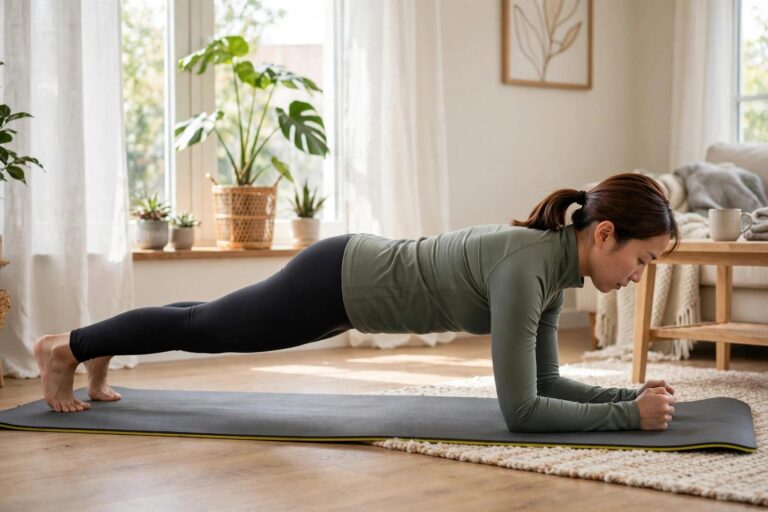
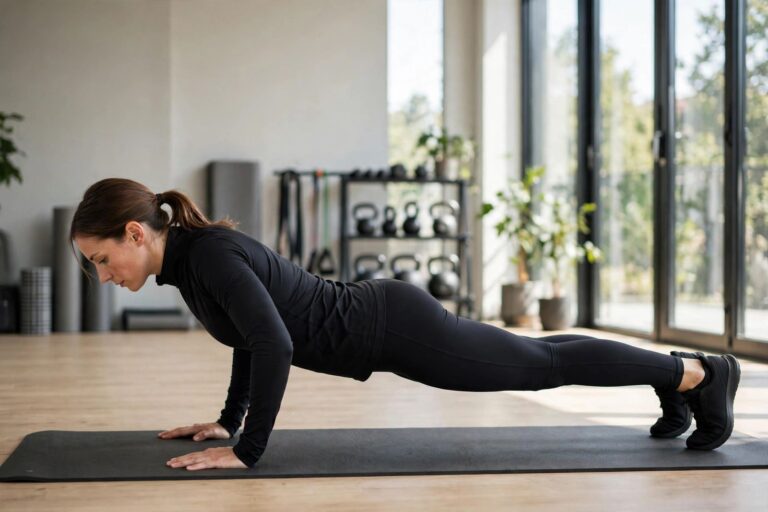
- Strengthen your core. A stronger midsection handles the impact of running better. My guide to bodyweight exercises you can do anywhere includes core work that directly helps here, and learning how to do a plank correctly is a solid starting point.
Most runners find stitches disappear once they dial in rhythmic breathing. It’s rarely a fitness problem — it’s a technique problem.
Breathing Drills to Practice
Practice the mechanics separately and the run gets easier.
Drill 1: The lying belly breath (daily, 2 minutes) Lie on your back with a book on your stomach. Breathe in through your nose and make the book rise; breathe out and let it fall. Two minutes a day for a week rewires the habit.
Drill 2: The walking rhythm (before runs) Walk at a normal pace and practice 4:3 breathing — inhale four steps, exhale three. Slower and easier than running pace, it teaches your body to sync breath with movement.
Drill 3: The talking test (during easy runs) Try to say a full sentence out loud while running. If you can, your effort and breathing are in a good place; if you’re gasping between words, slow down. The simplest pacing tool in running.
Common Breathing Mistakes
The mistakes I correct most often:
Holding your breath on hills. People instinctively brace when they see a hill. Remind yourself to exhale — push the air out with purpose. Think “blow up the hill.”
Breathing only when you “need” to. Waiting until you’re gasping means you’re always playing catch-up. Keep the rhythm going from the first step, even when it feels unnecessary. Prevention beats rescue.
Tensing the upper body. Every couple of miles: drop your shoulders, unclench your jaw, shake out your hands. Tension restricts breathing and wastes energy.
Ignoring the exhale. Everyone focuses on breathing in, but a full exhale clears stale air so the next inhale actually fills your lungs. Breathe out with intent.
Give it two weeks of conscious practice and breathing becomes background noise — which is the whole point.

Frequently Asked Questions
For easy runs, in through the nose and out through the mouth works well and naturally keeps your effort in check. For harder efforts, mouth breathing is normal and necessary — your body needs more air than the nose alone can deliver. What matters most is keeping a rhythm and breathing from the belly, not which opening the air comes through.
Rhythmic breathing means syncing your inhales and exhales to your footstrikes. The standard pattern for easy running is 3:2 — inhale over three footstrikes, exhale over two. This keeps your breathing calm, alternates which side absorbs the impact of exhaling, and prevents side stitches. Harder efforts use 2:2, and sprints use 2:1 or 1:1.
Side stitches usually come from exhaling on the same footstrike every time, which stacks impact stress on one side of your core, or from starting too fast without warming up. Switching to a 3:2 breathing pattern, warming up with five minutes of easy jogging, and exhaling when the opposite foot lands from the stitch will prevent or fix most stitches.
Shorten your stride, slow your pace, and switch to a faster breathing pattern like 2:2 or 2:1. Focus on forceful exhales — push the air out deliberately rather than tensing up and holding your breath. Think of exhaling up the hill. Most runners also benefit from swinging their arms a bit more, which helps drive the breathing rhythm.
Yes. Belly (diaphragmatic) breathing uses the lower lungs, which have more surface area for oxygen exchange, so each breath does more work than shallow chest breathing. Chest breathing only uses the top third of your lungs and forces you to breathe faster and shallower, which is what creates that panicked, can’t-catch-my-breath feeling on runs.
Most runners get comfortable with the basic 3:2 pattern within two to three runs, and it becomes fully automatic within a few weeks of regular practice. Start by practicing on easy runs at a comfortable pace — don’t try to learn it during hard workouts. Lying-down belly breathing drills for two minutes a day will speed up the process noticeably.