How to Breathe Correctly During Exercise: Lifts, Cardio & Drills


Most people never think about how to breathe correctly during exercise — until they are gasping halfway through a set that their muscles could have handled easily. I have watched this for years as a coach: two clients with identical strength, and the one who breathes well does more reps, recovers faster between sets, and finishes workouts feeling strong instead of wrecked. Breathing is the cheapest performance upgrade in fitness. It costs nothing, requires no equipment, and most people are doing it wrong. This guide covers the mechanics: when to inhale and exhale during lifts, how to breathe during cardio, and the diaphragmatic drills that rebuild the whole pattern from the ground up.
First, the uncomfortable baseline: most adults breathe shallowly into their chests, especially under stress. Exercise is stress. So the default pattern — short chest breaths, held breath during effort — is exactly backwards from what your body needs. We are going to fix the foundation first, then layer on the sport-specific timing.
How to Breathe Correctly During Exercise: The Foundation
Good exercise breathing has three qualities: it is diaphragmatic (belly expands, not just chest), it is rhythmic (tied to the movement), and it is continuous (no holding except where specifically noted). Shallow chest breathing recruits accessory neck muscles, raises your heart rate unnecessarily, and delivers less oxygen per breath. Everything below assumes you are working toward belly-first breathing.
Diaphragmatic Breathing: Rebuild the Pattern in 5 Minutes a Day
Your diaphragm is the dome-shaped muscle under your lungs, and it is supposed to do most of the work of breathing. Here is how to wake it up:
- Lie on your back, knees bent, one hand on your chest and one on your belly.
- Inhale slowly through your nose for four counts. The belly hand should rise; the chest hand should barely move.
- Exhale through pursed lips for six counts. Feel the belly fall.
- Repeat for five minutes. Daily, for two weeks.
Progression: do it seated, then standing, then walking. When you can breathe diaphragmatically while walking briskly, the pattern is installed well enough to use during training. Most people feel a difference in their workouts within ten days — usually described as “everything feels a little easier,” which is exactly what better oxygen delivery feels like.
The 4-7-8 reset between sets
Inhale four counts, hold seven, exhale eight. One or two cycles between hard sets drops your heart rate noticeably and keeps you from starting the next set still gasping. It is also genuinely useful outside the gym — before a stressful meeting, for example.
How to Breathe During Strength Training
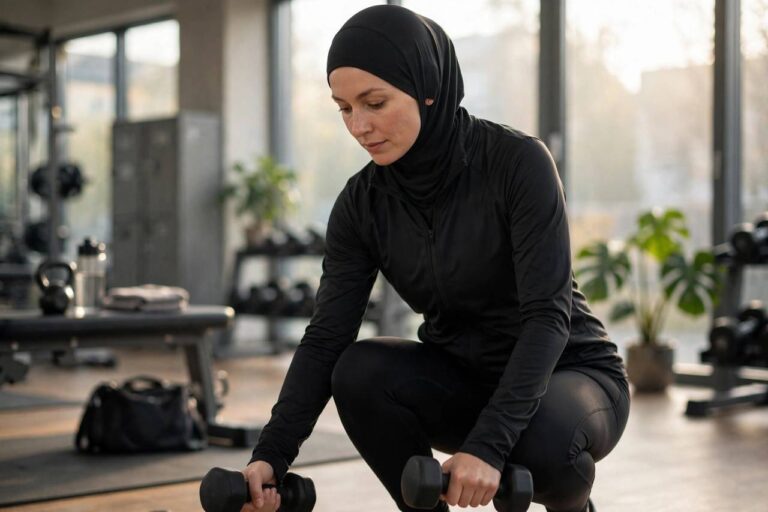
The classic rule, and it holds up: exhale on exertion, inhale on the easy phase.
- Squat: inhale as you descend, exhale as you drive up.
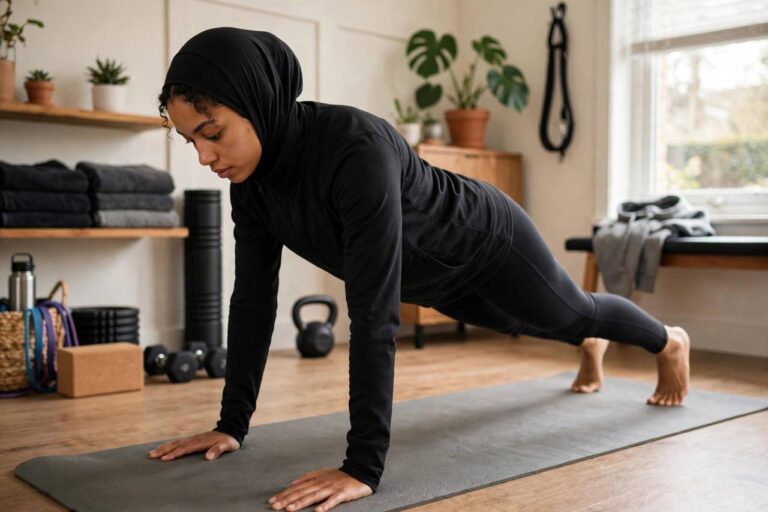
- Bench press / push-up: inhale lowering, exhale pushing.
- Deadlift / row: inhale at the bottom, exhale through the pull.
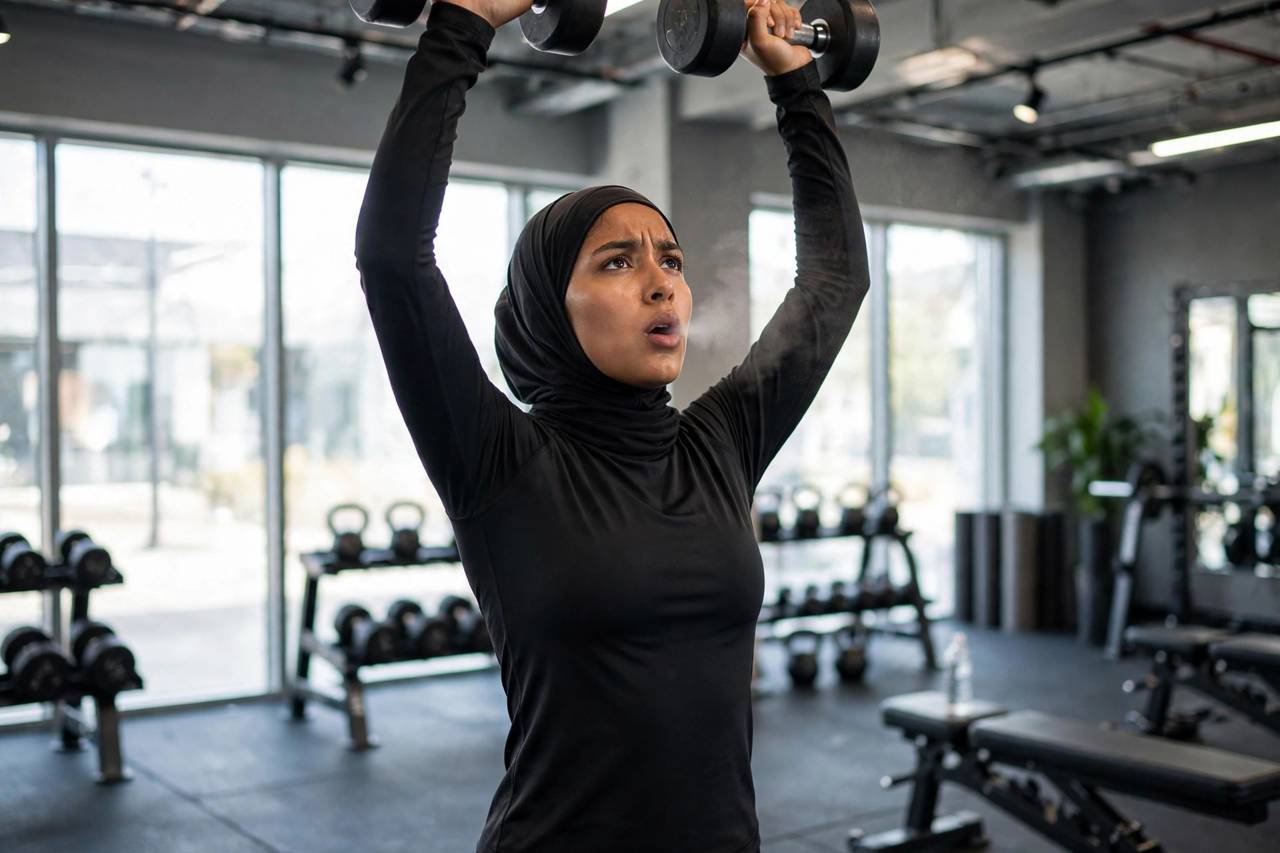
- Overhead press: inhale at the bottom, exhale pressing up.
Why this works: exhaling during exertion lets you brace your core naturally — the exhale tightens the abdominal wall, stabilizing your spine under load. Inhaling during the easy phase keeps oxygen flowing. The most common beginner error is doing it backwards or holding the breath through the whole rep.
What about the Valsalva maneuver?
Advanced lifters sometimes hold their breath and bear down hard on maximal lifts — this is the Valsalva maneuver, and it spikes intra-abdominal pressure for maximum stability. It also spikes blood pressure dramatically. For general training, continuous breathing is safer and sufficient. Leave breath-holding to competitive powerlifters under coaching, not your Tuesday leg day.
How to Breathe During Cardio
Cardio breathing is about rhythm, not force. Match your breath to your stride or pedal stroke:
- Running: the classic patterns are 3:2 (three steps inhaling, two exhaling) for easy running and 2:1 for hard efforts. The odd total means you alternate which foot strikes on the exhale, spreading impact stress evenly. If counting steps feels fussy, just aim for deep rhythmic belly breaths and let the pattern emerge.
- Cycling: breathe in rhythm with pedal strokes on climbs; on flats, steady diaphragmatic breathing is enough.
- Swimming: rhythmic exhalation underwater, quick inhalation on the breath — covered in detail in my swimming guides.
- Rowing: exhale on the drive, inhale on the recovery. One breath per stroke at moderate pace.
The universal cardio mistake is breathing too shallowly as intensity rises. When you start gasping, the fix is usually slower, deeper breaths — not faster shallow ones. Counterintuitive, but it works: deep breaths engage the diaphragm and actually move more air. For a deeper dive on the running-specific side, see my guide on how to breathe when running.
Breathing for Yoga, Stretching, and Cool-Downs
Here breathing becomes the point rather than the support act. Slow nasal breathing — roughly five to six breaths per minute — activates the parasympathetic nervous system, which is why every cool-down and yoga class on earth uses it. During stretching, exhale as you ease deeper into each position; the exhale is when muscles release. During a post-workout cool-down, five minutes of slow belly breathing will bring your heart rate down faster than sitting still and scrolling your phone. Try it once and watch your watch.
Common Breathing Mistakes
- Holding your breath on every hard rep: fine for a one-rep max attempt; terrible as a habit. You will get dizzy, see stars, and cap your rep capacity.
- Chest-only breathing: if your shoulders rise when you inhale, you are leaving capacity on the table. Drill the belly breathing until it is automatic.
- Breathing too fast during cardio: rapid shallow panting feels productive but moves less air than slower deep breaths. When in doubt, slow the breath down.
- Mouth-breathing everything: nasal breathing filters, warms, and regulates airflow. Use the nose for easy and moderate efforts; the mouth is fine when intensity demands it.
- Forgetting to breathe during core work: planks and ab circuits are where people hold their breath most. Breathe continuously — a braced core and breathing are not mutually exclusive.
Breathing Drills You Can Do Anywhere
Beyond the foundational diaphragmatic drill, three targeted exercises sharpen specific aspects of breathing:
- Box breathing (4-4-4-4): inhale four counts, hold four, exhale four, hold four. Used by everyone from athletes to military personnel for composure under pressure. Five minutes calms pre-workout nerves noticeably.
- Straw breathing: inhale normally through the nose, exhale slowly through a straw (or pursed lips). The resistance strengthens the exhale muscles and teaches complete emptying of the lungs — directly useful for cardio, where incomplete exhales are the usual problem.
- Walking breath ladders: while walking, inhale for four steps, exhale for four steps. Then 6:6, then 8:8. This trains breath control under light load and translates directly to running rhythm.
None of these require equipment or privacy. Do one per day, rotating, and your breathing mechanics will improve faster than with the foundation drill alone.
What Better Breathing Actually Changes
Let me set honest expectations, because breathing content online tends toward miracle claims. Better breathing will not add twenty pounds to your squat or turn you into a marathoner. What it reliably does, in my experience coaching:
- More reps per set: efficient oxygen delivery delays the burning, gasping wall by a rep or two on hard sets. Over months, that compounds.
- Faster between-set recovery: controlled exhales clear CO2 faster, so your heart rate drops sooner and the next set starts from a better place.
- Lower perceived effort: the same workout feels easier, which sounds trivial but is actually the mechanism behind consistency — workouts that feel awful get skipped.
- Better bracing and posture: diaphragmatic breathing and core stability are the same system. Fix one and the other improves.
Think of it as removing a handicap rather than adding a superpower. Most people train with the parking brake half-on; breathing work releases it. And unlike strength or endurance, which take months to build, breathing mechanics respond in days — it is the fastest return on investment in all of fitness training.
A 2-Week Plan to Fix Your Breathing
- Days 1–3: five minutes of lying diaphragmatic breathing daily. Notice how you breathe during normal workouts without changing anything yet.
- Days 4–7: keep the drill; start applying exhale-on-exertion to one exercise per session (squats are the best teacher).
- Days 8–10: apply the lifting pattern to your whole session. Add the 4-7-8 reset between your hardest sets.
- Days 11–14: layer in cardio rhythm breathing on one easy run, ride, or row per week. By now the belly-breathing foundation should feel natural.
Frequently Asked Questions (FAQ)
Should I breathe in through my nose or mouth when exercising?
Nose for easy to moderate efforts — it regulates airflow and keeps breathing calm. Mouth (or nose-plus-mouth) when intensity is high and you need maximum airflow. There is no prize for nasal-only sprinting; match the tool to the demand.
Why do I get a side stitch when running?
Side stitches are cramps of the diaphragm, often triggered by shallow breathing and eating too close to running. Slow down, exhale fully, and press gently into the stitch while breathing deeply — it usually releases within a minute or two.
Is it bad to hold your breath while lifting?
Brief bracing on a heavy rep is normal and not dangerous for healthy people. Habitually holding your breath through entire sets is different — it spikes blood pressure, causes dizziness, and limits performance. Breathe continuously for general training.
How do I stop getting out of breath so fast?
Two levers: fitness (which builds over weeks) and breathing efficiency (which you can fix in days). Most beginners are limited more by the second than the first — shallow, rapid breathing wastes energy. Fix the pattern with the drills above and reassess.
Can breathing exercises really improve performance?
Within realistic bounds, yes. Better breathing does not add muscle, but it lets you use the fitness you have more efficiently — more reps before fatigue, faster recovery between sets, lower perceived effort. For most recreational exercisers, that is worth more than any supplement.
What is the best breathing pattern for planks?
Slow, continuous diaphragmatic breathing — in through the nose, out through the mouth, without ever fully holding. If you cannot breathe during a plank, the plank is too advanced; drop to knees until you can.