How Long Is a Squash Match? Average Durations by Level and Format

If you’re booking a court for the first time, “how long is a squash match?” is the most practical question in the world — book too little and you’re mid-game when the next players arrive; book too much and you’re paying for an empty court. I’ve done both, and the awkward hover of players waiting by the glass door is something you only need to experience once.
The honest answer: it depends on level, format, and playing style — but there are reliable averages. Here’s how long squash matches actually last, what stretches them out, and how to plan your court time. For context on how matches are structured, see our guide to squash scoring.
In this guide:
- The Short Answer
- Match Length by Level
- The Anatomy of Match Time: Where the Minutes Go
- What Makes Some Matches Drag
- What Makes Others Fly By
- The Longest Matches Ever Played
- How Your Fitness Changes Match Length
- How Much Court Time to Book
- Squash vs Other Sports: Duration Compared
The Short Answer
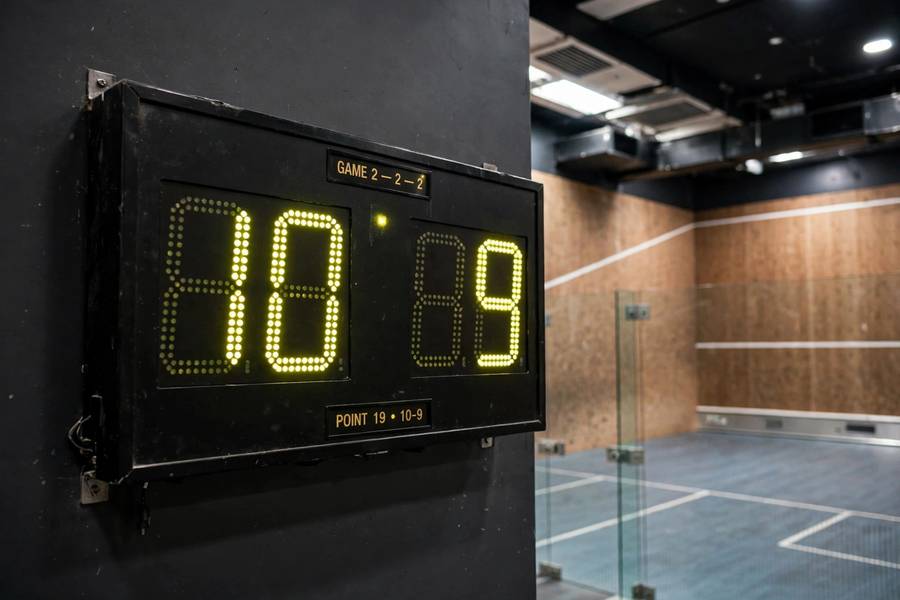
A typical club-level squash match lasts 30–45 minutes of actual play. Beginner games run shorter (20–30 minutes), and elite pro matches can stretch to 60–90+ minutes. These are playing times — add 10 minutes for warm-up and cool-down when you’re booking.

Match Length by Level
- Beginners (first few months): 20–30 minutes. Rallies are short, points come fast, and matches often end 3–0. You’ll be exhausted well before the clock is, honestly.
- Club/intermediate: 30–50 minutes. Rallies get longer, games go to 3–1 or 3–2, and fitness starts deciding things. This is the sweet spot most court bookings are built around.
- Advanced club/county: 45–70 minutes. Long rallies, tactical battles, and five-game matches become common.
- Professional: 60–100+ minutes. The longest PSA matches have exceeded two hours. Pro rallies average far more shots, and the physical chess match between games (90-second intervals, injury timeouts) adds up.
Format matters too: best-of-three matches run roughly 60% as long as best-of-five, which is why leagues use them for weeknight fixtures.
The Anatomy of Match Time: Where the Minutes Go
A 40-minute match isn’t 40 minutes of hitting. Here’s roughly where the time goes in a typical competitive club match:
- Knock-up and warm-up: 5 minutes. Hitting with your opponent before the match starts — essential, because a cold ball barely bounces and cold muscles tear.
- Rallies: 20–25 minutes of actual ball-in-play time. This is the number that surprises people — even in a long match, the ball is only live about half the time.
- Between rallies: 5–8 minutes. Toweling off, catching breath, collecting the ball, the occasional let appeal. Completely normal.
- Between games: 90 seconds each, so 3–6 minutes across a 4–5 game match. Use them — walk, breathe, reset.
- Stoppages: 0–5 minutes. Blood injuries (rare), equipment issues, or a proper argument about a let call.
Understanding this breakdown helps you pace yourself. Beginners burn out because they sprint between rallies and skip the between-game recovery, then wonder why game three feels like drowning. The experienced player walks slowly to serve, breathes deliberately, and treats the 90-second intervals as sacred. Squash rewards the player who manages dead time, not just live time.
What Makes Some Matches Drag
- Evenly matched grinders. Two fit players who retrieve everything produce 30+ shot rallies and five-game epics. Great to watch, brutal to play.
- Defensive playing styles. Players who lob, boast defensively, and refuse to attack extend every rally.
- Frequent lets and stoppages. Lots of interference appeals, toweling off, and between-game breaks add dead time.
- Hot conditions. A warm court makes the ball bouncier and rallies longer; it also forces more breaks.

What Makes Others Fly By
- Mismatched levels. A strong player against a beginner ends 3–0 in twenty minutes. This is most first games.
- Attacking styles. Players who volley, hit nicks, and go for winners end rallies in under 10 shots.
- Cold ball/court. A dead ball doesn’t bounce, rallies die fast, and games rattle through.
- Best-of-three format. Simply fewer games, less time.
The Longest Matches Ever Played
For fun — and to recalibrate your sense of what’s possible — the longest professional squash match on record lasted 2 hours and 50 minutes: Leo Au vs Shawn Delierre at the 2015 Holtrand Open, a five-game epic. The famous Jahangir Khan vs Jansher Khan battles of the 80s and 90s regularly pushed past two hours. These are extreme outliers, the product of two supremely fit players who refused to miss, but they show why the pros warm up like it’s a marathon.
At the other extreme, the shortest pro matches — a dominant world number one against a qualifier — can be done in under 25 minutes. The range is enormous, which is exactly why “how long is a squash match” has no single answer, only honest averages.
How Your Fitness Changes Match Length
Here’s the paradox beginners discover: the fitter you get, the longer your matches become. Early on, matches are short because rallies die fast and someone runs out of gas. As your fitness and consistency improve, rallies lengthen, games go to five, and your 30-minute hit becomes a 55-minute war. Your matches get longer because you got better.
This is also why squash is such an efficient workout. A competitive hour can burn 600–900 calories depending on your size and intensity, which consistently ranks squash among the most demanding calorie-burning sports. If your goal is fitness rather than competition, you don’t need long matches at all: 30 minutes of hard, continuous rallying with a cooperative partner is one of the best workouts that exists. Many players deliberately drill rather than play matches for exactly this reason — more movement, less standing around.
How Much Court Time to Book
Standard court bookings are 40 or 45 minutes, and that’s no accident — it fits a best-of-five club match plus a short warm-up for most players. My rule of thumb:
- Two beginners: 40 minutes is plenty. You’ll rarely use it all.
- Club players, best of five: 45–60 minutes to be safe.
- League night, best of three: 40 minutes per match, back to back.
- Not sure: book the hour. An unused 15 minutes beats getting bounced mid-game.
Arrive warmed up — five minutes of ghosting (shadow movement) and a knock-up — so your booked time is all match time. Squash fitness is no joke; if you’re gassing out early, some general conditioning helps. Our guide to strength training for runners covers the kind of leg and core work that transfers surprisingly well to court movement.
One more booking tip: if your club charges peak vs off-peak rates, an early-morning or lunchtime slot can be half the price of a 7pm prime-time court. Squash before work is also a magnificent habit — you’ll arrive at your desk buzzing while everyone else is still on their first coffee. Just book the shower time too.
Squash vs Other Sports: Duration Compared
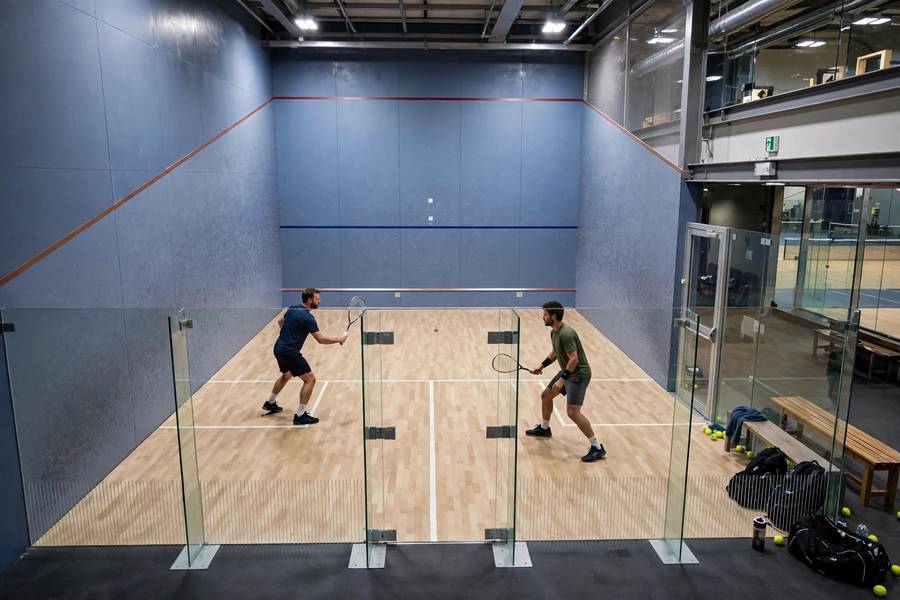
For perspective: a basketball game runs about two hours wall-clock (see how long a basketball game lasts), tennis matches are famously unpredictable (90 minutes to 5+ hours), and a 5K run is over in 20–30 minutes. Squash sits in a friendly middle ground — long enough to be a real workout, short enough to fit before dinner. That’s a big part of why busy people love it.
Compared to racquetball — squash’s close cousin — matches run a similar length, though racquetball’s faster ball and bigger court produce slightly shorter rallies on average. And compared to a round of golf, which devours four to five hours, a squash match is practically a coffee break. When someone tells you they don’t have time for sport, squash is the answer that fits in a lunch hour.
A typical club-level squash match lasts 30–45 minutes of play. Beginner matches run 20–30 minutes, while professional matches can last 60–100+ minutes depending on how evenly matched the players are and how many games the match goes to.
A single game to 11 points usually takes 5–10 minutes at club level. A best-of-five match therefore contains 3–5 games plus 90-second intervals between them.
Pros hit longer rallies with far more shots per rally, play best of five, and take full advantage of between-game intervals. Their fitness lets them sustain intensity that would end a club match in three quick games.
Book 40–45 minutes for a casual game between similar-level players, or a full hour if you’re playing best of five and want a proper warm-up. Beginners rarely need more than 40 minutes — you’ll be finished long before the clock is.
Usually not. Squash matches are far more predictable in length (mostly 30–60 minutes), while tennis matches can range from 90 minutes to several hours with no reliable upper bound. If you value knowing when you’ll be home for dinner, squash wins easily.