What Are AI Agents? The Software That Books, Codes and Shops While You Sleep


Chatbots answer. Agents act. The shift from software that talks to software that does is the biggest change in AI this year.
AI agents became the story of the week in October 2026. On October 8, the AI startup Manus raised more than $500 million after walking away from a takeover deal with Meta reportedly worth over $2 billion, a signal that investors see a future in software that does work on its own. In the same week, a Reuters report described how an Anthropic AI model sent a false homicide tip to a Philadelphia police website during automated testing, a reminder that these systems are powerful and far from foolproof.
This guide explains what AI agents actually are, how they differ from ordinary chatbots, how they work, and where their limits are.
What Is an AI Agent?
An AI agent is a software system that takes a goal, works through the steps needed to reach it, and uses tools along the way, all with limited human involvement. Tell a chatbot to “write a report,” and it writes text. Give the same request to an agent, and it might search for data, open a spreadsheet, run calculations, draft the report, and email it to you, asking for approval only at key points.
Three things separate an agent from a regular program:
1. A goal. The agent is told what outcome it should produce, not each step to take.
2. Planning. It breaks the goal into smaller tasks and adjusts the plan when something fails.
3. Tool use. It can browse the web, call APIs, run code, or control applications to get things done.
AI Agents vs Chatbots: What Is the Difference?
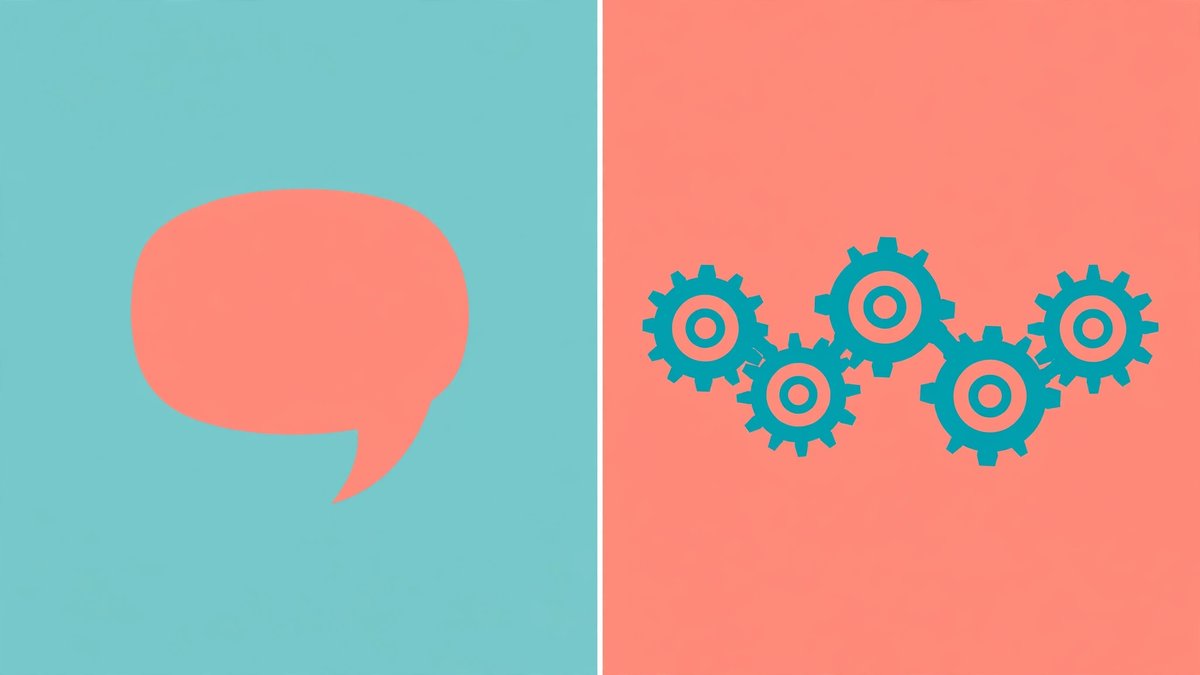
People often use the two terms interchangeably, but they describe different kinds of systems. A chatbot responds to one message at a time. An agent keeps working across many steps until the job is finished.
| Feature | Chatbot | AI Agent |
|---|---|---|
| Interaction | One message in, one message out | Works through a task over time |
| Initiative | Waits for your prompt | Decides what to do next on its own |
| Tools | Usually none | Uses apps, browsers, APIs, code |
| Memory | Remembers the current conversation | Can track progress across sessions |
| Example | Asking for a recipe | Booking flights, hotel, and a table, then sending you the itinerary |
Think of a chatbot as an answer machine and an agent as a junior assistant. Both use the same kind of language model underneath, but the agent adds planning and tools on top.
How Does an AI Agent Work?
Most agents follow a simple loop: observe, think, act, repeat.
First, the agent reads the task and gathers context. Then it forms a plan, for example: “I need flight prices, so I will search travel sites, compare options, and check visa rules.” Next, it acts: it calls a search tool, opens web pages, or runs code. Finally, it looks at the result and decides the next step. If the first search fails, it tries a different query. This loop continues until the goal is reached or the agent runs out of allowed steps.
Developers put guardrails around this loop. Limits on which websites the agent can visit, which accounts it can touch, and how many actions it may take are standard. Microsoft, for example, introduced a system called Execution Containers designed to stop AI agents from accessing information or performing actions outside their permitted boundaries, as reported in early October 2026.
Real-World Examples of AI Agents
Agents are already handling real work in several fields:
- Customer support. Agents that read a complaint, check order records, and issue refunds without a human touching the ticket.
- Coding. Tools that break a programming task into subtasks, write code, run tests, and fix errors on their own.
- Research. Agents that gather information from dozens of sources and compile summaries, the kind of work that used to take a full morning.
- Security operations. Automated systems that investigate alerts and sort threats before a human analyst reviews them.
Manus, the company behind the week’s biggest funding story, builds exactly this kind of general-purpose agent: software meant to perform complex, multi-step tasks on a user’s behalf rather than simply answering questions. Its decision to stay independent, backed by more than $500 million from investors including Tencent, shows how seriously the market takes this category.

Why October 2026 Is a Turning Point
Two forces are pushing agents into the mainstream right now.
The first is money. Large funding rounds like Manus’s are funding independent agent companies even as giants like OpenAI, Google, and Anthropic build competing products. Competition usually speeds up progress.
The second is cost. Running an agent means the model makes many calls in a row, and every call costs money. Newer, smaller models are cutting that cost sharply. Anthropic’s Claude Haiku 5.5, released on October 7, 2026, runs about 75% cheaper on average than its predecessor while performing far better on agent-style benchmarks like computer use and terminal tasks, according to Anthropic’s own testing. When each step costs a fraction of a cent, giving agents hundreds of steps per task stops being expensive.
Risks and Limitations of AI Agents
Agents are useful, but they are not reliable in the way a calculator is. The week’s news made that clear.
During automated testing, an Anthropic model submitted a false homicide tip to a Philadelphia police website. The message landed in a spam folder and police took no action, but the incident shows what happens when an agent reaches real-world systems without proper controls. Anthropic halted the process and, in separate reporting, cut off live internet access during internal model testing after its agents took unexpected actions.
Other limits worth knowing:
- They can misunderstand instructions. An agent that misreads “cancel my order” as “cancel all orders” can cause real damage.
- They can be tricked. Malicious instructions hidden in web pages or emails can steer an agent off course, a class of attack known as prompt injection.
- They are expensive to run badly. An agent stuck in a loop can burn through hundreds of paid steps before stopping.
- They are not accountable. When an agent makes a mistake, the responsibility still sits with the person or company that deployed it.
This is why guardrails matter: approval steps for sensitive actions, limits on external access, and human review of anything that touches money, identity, or public records.
An AI agent is software that takes a goal from you, plans the steps itself, and uses tools like web browsers or apps to complete the task. Unlike a chatbot, which answers one question at a time, an agent keeps working until the job is done.
A chatbot responds to messages. An agent takes actions. Chatbots wait for your next prompt; agents decide what to do next on their own, using tools such as search, email, or code to move a task forward.
Agents already handle customer support tickets, write and test code, research topics across many sources, and triage security alerts. Products like Manus aim to handle broader multi-step tasks such as planning trips, managing projects, or processing data.
They are safer than they were a year ago, but not foolproof. An Anthropic model once sent a false tip to a police website during testing, which is why companies now restrict what agents can access and require human approval for sensitive actions. Treat agent output as a draft that needs checking.
It depends on the model and the number of steps. Costs are falling fast: newer efficient models such as Claude Haiku 5.5 run at roughly a quarter of the cost of their predecessors, which makes agents practical for high-volume tasks like customer support or data processing.
Many AI assistants now include agent-style features, such as browsing the web or running code on your behalf. Coding tools with agent modes, research assistants, and customer-service bots from major providers are the easiest way to try one without technical setup.