12 Best National Parks for Hiking (Trails for Every Level)

America’s national parks contain the best hiking trail system on earth — 18,000+ miles of maintained trails, from the paved quarter-mile to the 2,650-mile Pacific Crest. I’ve hiked in 40+ parks, and the best hiking parks aren’t just the scenic ones — they’re the ones with trail variety (options for every level), the backcountry infrastructure (permits, water, safety), and the density (enough trails to fill a week without repeating).
These twelve are ranked for hikers — the day-hiker, the backpacker, and everyone between. Each includes the signature trails, the difficulty spread, and the season. For the general ranking, see our best national parks and the road trip guide.
1. Yosemite: The Hiker’s Cathedral
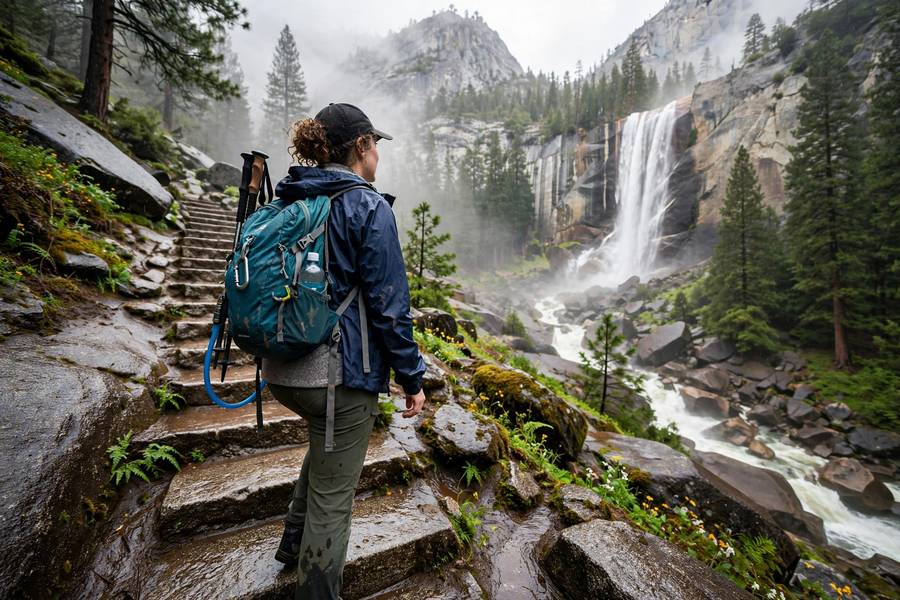
The park that defines American hiking: the Mist Trail (Vernal + Nevada Falls — 7 miles, the granite steps, the rainbow mist — the best day hike in America), the Four Mile Trail (the valley views, the switchbacks), Half Dome (the cables — the permit lottery, the 16-mile pilgrimage, the bucket list), and the High Sierra (the John Muir Trail’s start, the backcountry loops). The trail system is the densest in the park system — a week isn’t enough.
The difficulty spread: the valley floor (paved, flat — the Lower Yosemite Fall, the meadows), the valley rims (the strenuous climbs — Upper Yosemite Fall, the Four Mile — the 3,000-foot gains), and the high country (Tuolumne Meadows — the alpine, the 8,600-foot base, the Cathedral Lakes). Every level has a lifetime trail. Season: May–October (the high country opens late — the Tioga Road, usually June); the waterfalls peak in May–June.
Permits: Half Dome (the lottery — apply in March, the 300/day quota), the wilderness permits (the backcountry — reserved online, the quota system, the walk-ups). The strategy: the valley in spring (waterfalls), the high country in late summer (the meadows, the passes).
2. Zion: The Vertical Park
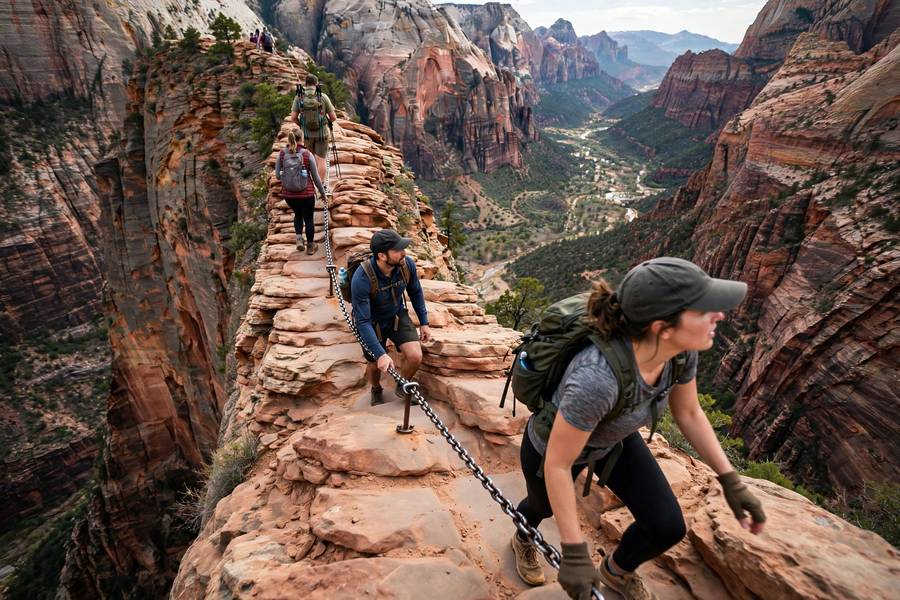
The park where the trails are the attraction: Angels Landing (the chains — the permit lottery, the 1,000-foot drops, the most thrilling 5 miles in the system), the Narrows (the Virgin River — wading upstream between 1,000-foot walls, the permit for the top-down), Observation Point (the view down on Angels Landing — the 8-mile alternative, the better view), and the Emerald Pools (the easy ones — the family trails, the waterfalls).
The canyon logic: the trails go up (the switchbacks — the Walter’s Wiggles, the Refrigerator Canyon) or in (the Narrows — the water). The heat rule (summer’s 100°F+ — the dawn starts, the water, the shade) and the flash-flood rule (the Narrows — the weather check, the ranger’s word is law). Season: March–May and September–November (the summer is the furnace, the winter is the ice — the Narrows closes).
Permits: Angels Landing (the lottery — the chains section, the timed entry), the Narrows top-down (the backcountry permit), the shuttle (the park’s mandatory shuttle — the trailheads are shuttle stops, the system works). The lodge (inside the canyon — the location, the early starts) books 6+ months ahead.
3. Glacier: The Alpine Hiking Capital
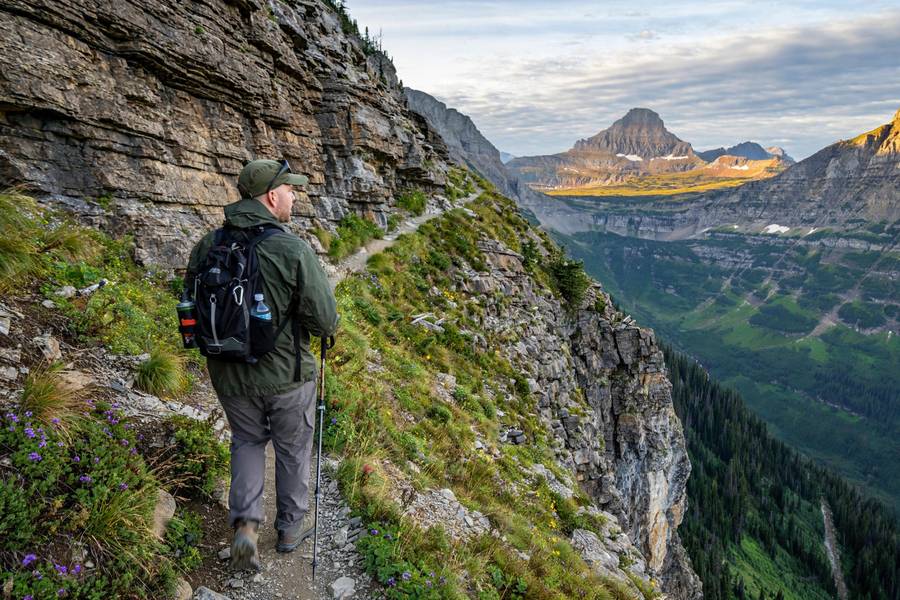
The most serious hiking park in the Lower 48: the Highline Trail (the Garden Wall — the ledge, the views, the 11 miles), Grinnell Glacier (the turquoise lake, the receding glacier — the climate-change hike), Iceberg Lake (the floating ice — the summer swim for the brave), and the backcountry (the 700+ miles, the grizzly country — the bear spray, the noise, the respect).
The alpine reality: the snow (the Going-to-the-Sun Road opens late June–early July — the trails follow), the bears (the grizzlies — the spray, the groups, the food storage — the park’s bear management is the model), and the weather (the mountain storms — the afternoon lightning, the dawn starts). Season: July–September (the short window — the snow, the road, the everything).
Permits: the backcountry (the advance reservations — the competitive ones, the walk-ups), the Sun Road (the vehicle reservation — the timed entry, the new system). The strategy: the east side (Many Glacier — the hiker’s base, the trails, the historic hotel) over the west (the crowds, the lake).
4–6. The Classics: Grand Canyon, Rocky Mountain, Olympic
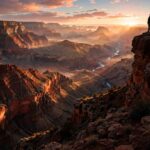
Grand Canyon: the corridor trails (Bright Angel, South Kaibab — the rim-to-river, the 5,000-foot descent, the never-hike-down-and-up-in-a-day rule), the rim trail (the 13 miles, the viewpoints, the shuttle), and the backcountry (the permits — the competitive ones, the winter is the season). The canyon’s hiking is vertical — the elevation is the difficulty, not the distance. carry-on vs checked baggage
Rocky Mountain: the alpine lakes (Bear Lake corridor — the timed entry, the Emerald/Dream/Nymph chain — the most popular trails in Colorado), Longs Peak (the 14er — the Keyhole, the 15 miles, the 3 a.m. starts), and the tundra (the Ute Trail — the above-treeline, the elk, the storms). Season: June–October (the Trail Ridge Road — the snow, the opening). how to pack light
Olympic: the three-in-one (the Hoh Rainforest — the Hall of Mosses, the 14 feet of rain; Hurricane Ridge — the alpine, the views; the coast — Rialto Beach, the tide pools, the sea stacks). The variety is the point — three ecosystems, three trail systems, one park. Season: July–September (the rainforest is year-round, the high country isn’t).
7–9. The Desert Hikers: Arches, Canyonlands, Big Bend
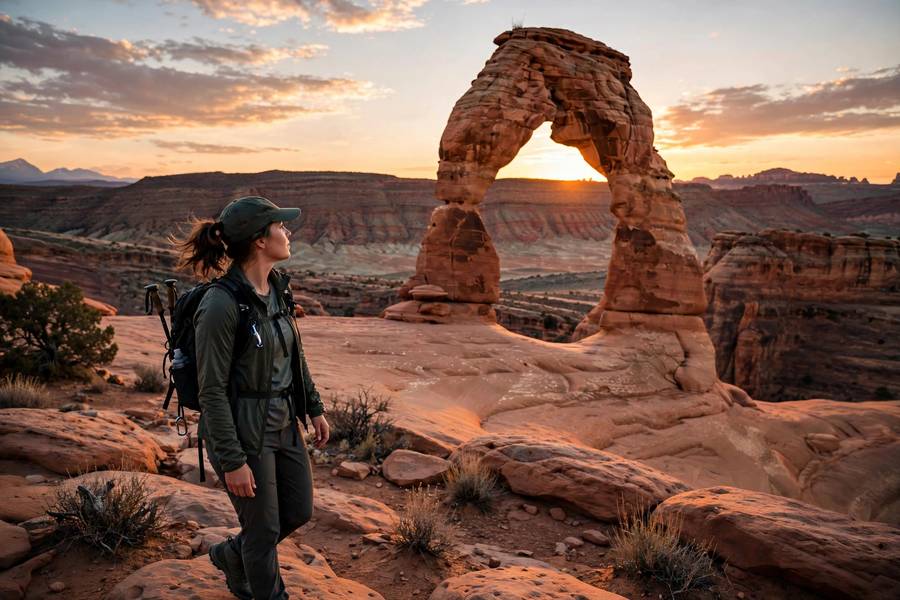
Arches: the Windows (the easy ones — the drive-up, the massive), Delicate Arch (the 3 miles — the sunset, the icon, the crowds), Devil’s Garden (the 7 miles — the arches, the primitive trail, the solitude), and the Fiery Furnace (the ranger-guided — the maze, the permit, the labyrinth). Season: March–May, September–November (the summer is the furnace).
Canyonlands: the Island in the Sky (the Mesa Arch — the sunrise, the most photographed arch, the 0.5 miles), the Needles (the backcountry — the Chesler Park, the joint trail, the serious hiking), and the Maze (the remote — the expedition, the self-reliance). The least-visited, most-wild district system — the hiker’s desert.
Big Bend: the Texas surprise — the Chisos Mountains (the Window, the South Rim — the desert alpine, the 7,000-foot island), Santa Elena Canyon (the Rio Grande, the walls), and the backcountry (the desert, the solitude, the dark skies). Season: October–April (the summer is lethal). The most remote park in Texas — the journey is the commitment.
10–12. The Specialists: Acadia, Sequoia/Kings Canyon, North Cascades
Acadia: the civilized hiking — the carriage roads (45 miles, car-free, the biking/hiking), Cadillac Mountain (the sunrise, the drive-up or the hike), the Precipice (the iron rungs, the exposure — the thrilling one), and the coast (the Ocean Path, the tide pools). The East Coast’s hiking park — the ocean + the mountains.
Sequoia & Kings Canyon: the big trees + the big mountains — the Congress Trail (the sequoias, the easy), Moro Rock (the 400 steps, the view), the High Sierra Trail (the 72 miles, the backpacking, the Whitney exit), and the Kings Canyon (the deepest canyon in America — deeper than the Grand Canyon, the trails). Season: May–October (the snow, the elevation).
North Cascades: the American Alps — the Cascade Pass (the 7 miles, the views, the glaciers), the Maple Pass Loop (the fall larches — the golden needles, October), and the backcountry (the serious, the remote, the least-visited). The park for hikers who’ve done the famous ones — the connoisseur’s choice.
Hiking Smart: Permits, Safety, and Seasons
The permit landscape (2026): the timed entries (Rocky Mountain’s Bear Lake, Glacier’s Sun Road, Arches — the systems spread), the lotteries (Half Dome, Angels Landing — apply early, have backups), and the backcountry (the wilderness permits — the advance reservations open months ahead, the walk-ups for the flexible). The rule: the famous trails need planning; the second-tier trails need only showing up.
Safety (the non-negotiables): the 10 essentials (navigation, water, food, layers, first aid — the system), the water (the desert rule — 1 gallon/person/day, the canyon rule — no water on the trail), the weather (the afternoon lightning — the alpine rule, the dawn starts; the flash floods — the slot canyons, the sky watch), and the wildlife (the bear spray — Glacier, Yellowstone, the food storage — the canisters, the hangs).
Seasons by park type: the desert (spring/fall — the summer furnace, the winter perfect), the alpine (summer — the snow, the short window), the East (spring/fall — the summer humidity, the winter ice), the Pacific Northwest (summer — the rain, the July–September window). The shoulder seasons (the crowds, the prices, the weather — the sweet spot) apply to hiking as much as everything.
Yosemite (the densest, most varied trail system), Zion (the vertical thrills), and Glacier (the alpine seriousness) are the top three. For beginners: Acadia and the Smokies. For backpackers: Sequoia/Kings Canyon and North Cascades. Every park on this list has lifetime trails.
The Mist Trail (Yosemite — Vernal/Nevada Falls), Angels Landing (Zion — the chains), the Highline (Glacier), and the Narrows (Zion — the river walk) are the consensus top four. Each is a different kind of great — waterfalls, exposure, alpine, and water.
For the famous trails: yes — Half Dome (lottery), Angels Landing (lottery), the Narrows top-down (permit). Many parks now have timed entry (Rocky Mountain, Glacier, Arches). Backcountry overnight always needs a wilderness permit. Day hiking on standard trails usually doesn’t.
Desert parks (Zion, Arches): spring/fall. Alpine parks (Glacier, Rocky Mountain): July–September. Yosemite: May–October (waterfalls peak May–June). The shoulder seasons give the best weather-to-crowd ratio everywhere.
The 10 essentials, 1 gallon of water/person/day in the desert, dawn starts in alpine areas (afternoon lightning), bear spray and food storage in grizzly country, flash-flood awareness in slot canyons, and never hike down into the Grand Canyon planning to come up the same day.