Which Is Better for Wedding Cake: Buttercream or Fondant?

You’re standing at a cake tasting, two beautiful cakes in front of you, and the baker asks “buttercream or fondant?” — and you realize you have no idea. I’ve guided hundreds of couples through this exact moment. Here’s the no-nonsense verdict.
The Quick Verdict
Choose buttercream if: taste is your priority, your wedding is indoors and climate-controlled, and you like a soft, romantic look. Choose fondant if: you want a flawless, sharp-edged modern look, it’s an outdoor summer wedding, or your design has intricate sculpted details. Choose both if: you want it all (the hybrid option below).
Taste
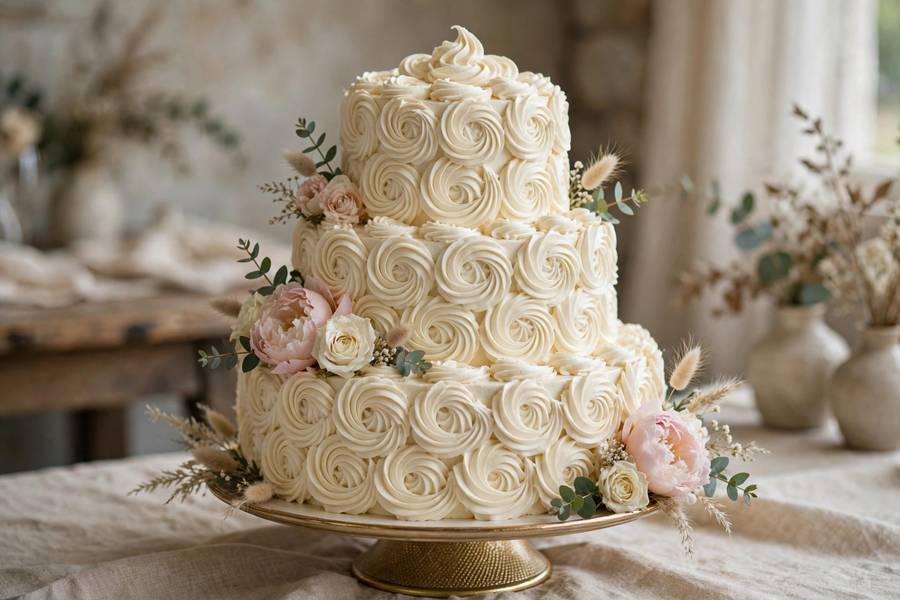
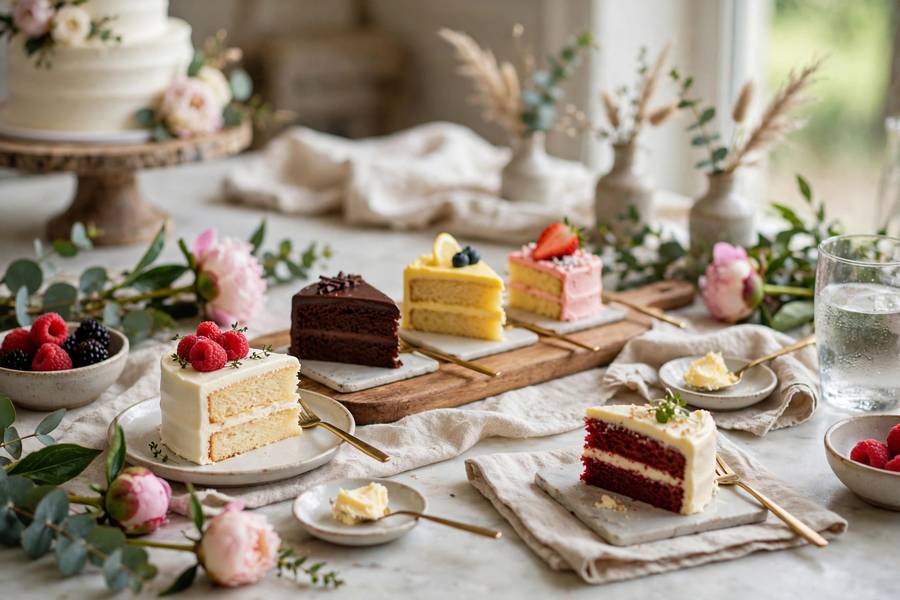
Buttercream wins on taste — real butter, real vanilla, creamy and rich. Fondant is sweet and chewy; nobody’s favorite, nobody’s enemy. But here’s the nuance: the CAKE matters more than the frosting. A delicious cake with decent fondant beats a mediocre cake with great buttercream. Always prioritize the baker’s cake quality first.
Appearance
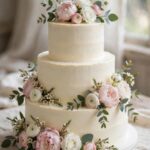
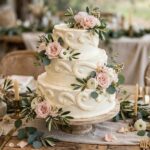
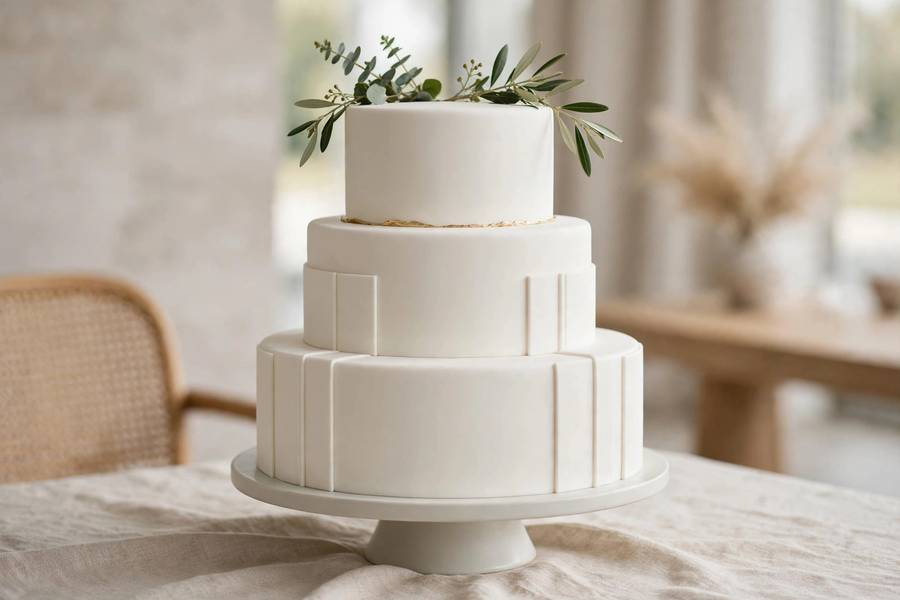
Fondant wins on looks — it’s the only way to get that perfectly smooth, sharp-edged, porcelain finish. It also handles bold colors, metallics, and sculpted details that buttercream can’t. Buttercream has a softer, more romantic look: textured swirls, rustic finishes, watercolor effects. Both photograph beautifully; they’re just different aesthetics.
Cost
Fondant typically costs 20–40% more — more labor, more skill, more expensive ingredients. For a 3-tier cake serving 100, expect roughly $500–700 buttercream versus $700–1,000+ fondant, varying hugely by market and baker.
Durability
Fondant is the workhorse: holds up in heat, humidity, and long display times. Buttercream softens above 75°F and needs climate control. For outdoor summer weddings, fondant (or the hybrid) is the safer choice. For winter or indoor weddings, buttercream is worry-free.
Dietary Considerations
Buttercream contains dairy (though vegan versions exist with plant butter). Fondant is typically dairy-free but not necessarily vegan (some contain gelatin). For allergies, discuss ingredients with your baker — both can usually be adapted.
Looking to save on the cake too? My affordable wedding ideas guide covers budget-friendly options. For the full comparison, buttercream vs fondant covers everything.
The Decision Framework
Ask yourself three questions: 1. What’s the venue? Outdoor summer → fondant. Indoor climate-controlled → either. 2. What’s the look? Sleek modern → fondant. Romantic/rustic → buttercream. 3. What matters more, taste or appearance? Be honest — there’s no wrong answer, but knowing your priority decides it. And remember the hybrid: fondant-look outside, buttercream inside. Best of both.
Baker Skill Matters More Than Frosting Type
Here’s the industry secret: a skilled buttercream artist beats a mediocre fondant worker, and vice versa. Before choosing frosting, choose your BAKER — then trust their recommendation. Ask to see: their smoothest buttercream finish (can they do sharp edges?), their cleanest fondant work (any elephant skin or tearing?), and their portfolio in YOUR style.
A great baker will tell you honestly which frosting suits your design: “That geometric design needs fondant; that rustic look wants buttercream.” A baker who says “we only do fondant” or “we only do buttercream” is telling you about their limitations, not your options.
Weather and Venue Considerations
Your venue and season should influence the choice: outdoor summer wedding? Fondant holds up better in heat; buttercream melts (American buttercream softens around 75°F, Italian meringue around 80°F). Air-conditioned ballroom? Either works. Long display time? Fondant is more stable over 6+ hours. Refrigeration available? Buttercream cakes often need chilling until close to serving.
Discuss logistics with your baker AND venue: where will the cake be stored, when is it displayed, what’s the room temperature? The most beautiful cake in the world is worthless if it’s sliding off its tiers by cocktail hour.
The Serving Reality
How the cake gets to guests matters: plated slices (venue staff plates in the kitchen) — frosting type barely matters, guests eat what’s served. Cake table self-serve — fondant’s durability helps. To-go boxes — buttercream travels better in boxes (fondant can get sticky).
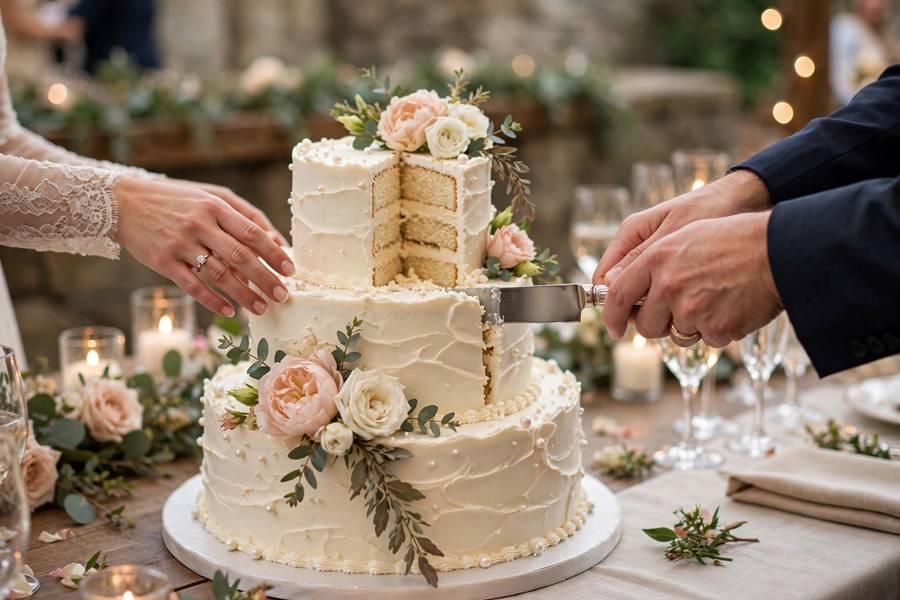
And the cutting: buttercream cuts cleanly with a warm knife; fondant needs a sawing motion and sometimes the slice gets peeled. Brief whoever’s cutting (or trust the venue staff — they’ve done it hundreds of times). The cake-cutting photo takes 30 seconds; the serving takes an hour. Plan for the hour.
The Cake Tasting: How to Do It Right
Most couples waste their cake tasting. Here’s how to make it count:
Before: eat something neutral (not a big meal — you need your palate, but not an empty stomach). Bring water (cleanse between flavors). Bring your partner AND one honest friend (your partner is biased by love; you need a critical palate). During: taste cake + frosting TOGETHER (that’s how guests eat it). Take notes (flavor, moisture, sweetness, texture — you’ll forget by the third bakery). Ask about customization (“Can you do this flavor with that frosting?”). After: don’t decide immediately. Sleep on it. The cake you keep thinking about is the one.
What to taste: the baker’s signature flavors (there’s a reason they’re signatures), one chocolate, one vanilla-based, one adventurous (you might be surprised), and BOTH frosting options on your top flavor. Red flags: dry cake (even “fresh” samples), frosting that’s grainy or greasy, a baker who won’t let you mix-and-match, or prices that balloon with “customization fees” for standard requests.
The decision: choose the baker first, the cake second. A great baker’s recommendation beats your preconceptions. And add the tasting appointments to your wedding planning checklist — 6–8 months out, before the good bakers book up.
Serving and Cutting: The Practical Side
The frosting choice affects serving:
Cutting buttercream: use a warm, dry knife (dip in hot water, wipe dry between cuts). Cuts cleanly, plates beautifully. Cutting fondant: use a sawing motion — pressing straight down cracks the fondant. The slices may need the fondant peeled for serving (or serve as-is and let guests decide). Who cuts? At most venues, the staff cuts and plates in the kitchen (you do the ceremonial first cut for photos, then they take it away). Confirm this with your venue — if YOU have to cut and serve, that’s a different plan.
Serving temperature: buttercream cakes should sit at room temperature 1–2 hours before serving (cold buttercream is hard and less flavorful). Fondant cakes are fine at room temp longer. To-go boxes: have them ready — guests love taking cake home, and it’s better than wasting it. Buttercream travels better in boxes than fondant (which can get sticky).
The cake-cutting moment: it takes 2 minutes. Don’t overthink it. Cut a small slice together, feed each other (gently — the smash is fun for 10% of couples and horrifying for 90%), smile for the camera, done. The serving is the marathon; the cutting is the photo op. Plan for the marathon.
Cake Alternatives: Beyond the Traditional Tiered Cake
Not sold on a traditional wedding cake? Options:
Cupcake towers: easier serving, no cutting fees, guests choose flavors. Less formal, more fun. Cost: often cheaper than tiered cakes. Donut walls / dessert tables: the trendy alternative — visually striking, crowd-pleasing, and (usually) cheaper. But: they don’t photograph like a cake-cutting, and they can look messy by hour 3.
Cheese wheels: for the savory couple — stacked brie, aged cheddar, stilton, decorated with figs and grapes. Dramatic, delicious, memorable. (And the “cutting” photo works just as well.) Pie: especially for fall/rustic weddings — apple, pumpkin, pecan. Homey, delicious, budget-friendly. Croissant towers / macaron towers: French-inspired, elegant, surprisingly affordable.
The hybrid: small cutting cake (for the photos and tradition) + alternative desserts for serving. You get the cake moment AND the fun. This is increasingly popular — and practical.
What to consider: serving logistics (who cuts? how?), dietary restrictions (offer at least one gluten-free/dairy-free option), and the photo moment (if you want a cake-cutting photo, you need something cuttable). The “cake” is really three things: a photo op, a dessert, and a tradition. You can fulfill each differently.
Buttercream tastes better; fondant looks more polished and handles heat better. Choose based on your venue (outdoor = fondant), desired look, and whether taste or appearance matters more to you.
Fondant requires more labor, skill, and time to apply smoothly, plus pricier ingredients. Expect 20–40% more than buttercream for the same size cake.
Yes — the hybrid option: thin fondant over buttercream, or a fondant display cake with buttercream serving cakes. Many bakers offer this.
Fondant, by far. Buttercream softens above 75°F. For summer outdoor weddings, fondant or hybrid is the safer choice.
Many peel it off — you’ll often see fondant left on plates. This is why the hybrid option (great-tasting cake underneath) is so popular.