Heat is the number one killer of CVT transmissions. Not wear, not manufacturing defects — heat. The belt-and-pulley system generates enormous friction heat by design, and when the cooling can’t keep up, the fluid breaks down, the belt slips, and the damage compounds fast. I’ve seen a single overheating event take a healthy CVT from fine to failing.
Understanding overheating — the symptoms, the causes, and the response — is the most valuable CVT knowledge you can have after fluid maintenance. For the mechanical background, see what a CVT transmission is and how it works.
Table of Contents
- Why CVTs Run Hot
- Symptom 1: Transmission Temperature Warning Light
- Symptom 2: Sudden Power Loss (Limp Mode)
- Symptom 3: Burning Smell
- Symptom 4: Slipping and Shuddering When Hot
- Symptom 5: Whining That Worsens With Heat
- What Causes CVT Overheating
- What to Do When It Overheats
- Preventing Overheating
- Frequently Asked Questions
Why CVTs Run Hot
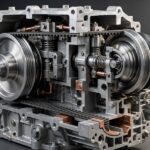
Every transmission generates heat, but CVTs are special cases. The steel belt gripping the pulley faces under tons of clamping force creates continuous friction — it’s not incidental heat like gear mesh friction, it’s the fundamental operating principle generating heat every second you drive.
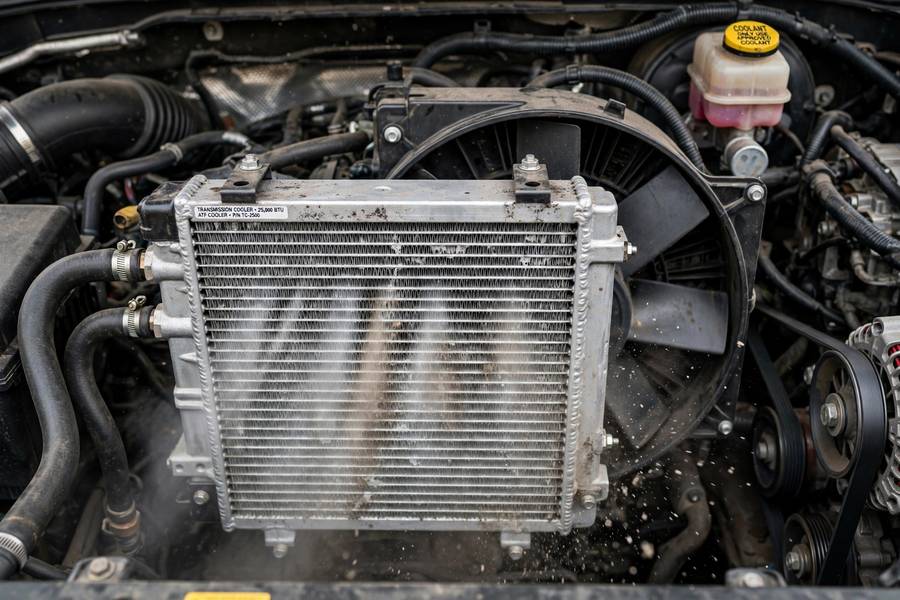
Under normal cruising, the transmission cooler (most modern CVTs have a dedicated cooler, either air-to-fluid or integrated with the radiator) handles this fine. Fluid temperatures sit in the 175–200°F range, which the fluid is designed for. The problems start when heat generation outpaces cooling: sustained high load, low airflow, high ambient temperatures, or degraded fluid that can’t carry heat as effectively.
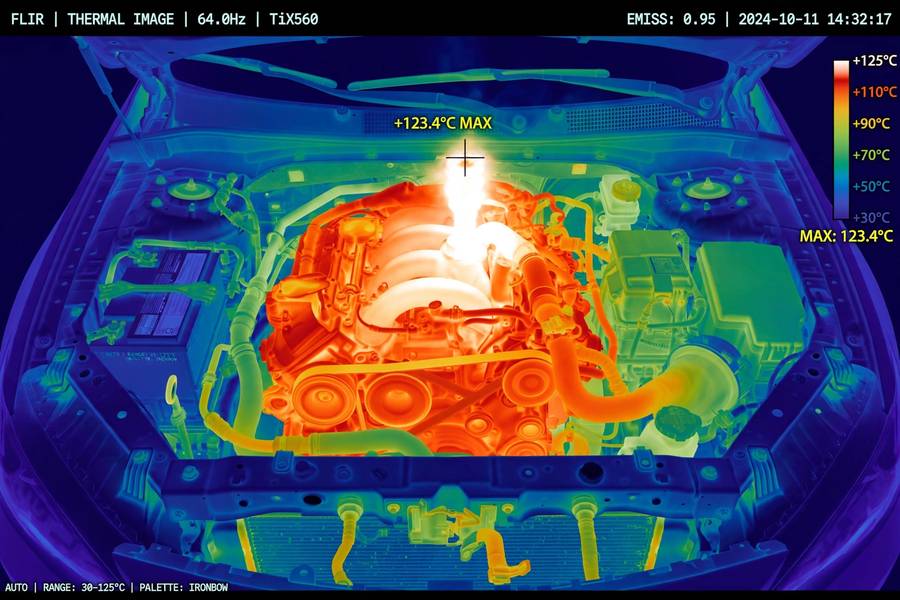
Once fluid temperatures climb past roughly 240°F, the fluid’s additive package starts breaking down — and it doesn’t recover when things cool down. That degradation is permanent. This is why overheating events have lasting consequences even if the transmission seems fine afterward.
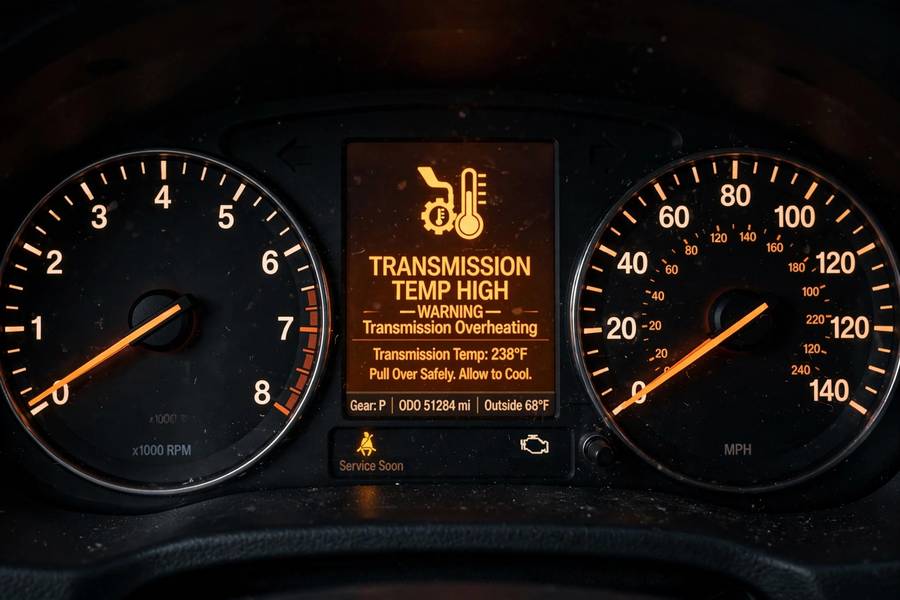
Symptom 1: Transmission Temperature Warning Light
Many modern cars have a dedicated transmission temperature warning — often a thermometer icon or a gear symbol with a thermometer. Some cars only have a generic warning; check your owner’s manual to know what yours looks like.
When this light comes on, the transmission is already hotter than it should be. This isn’t an early warning — it’s the computer telling you the situation is serious. The light typically triggers around 270–300°F fluid temperature, well into the damage zone.
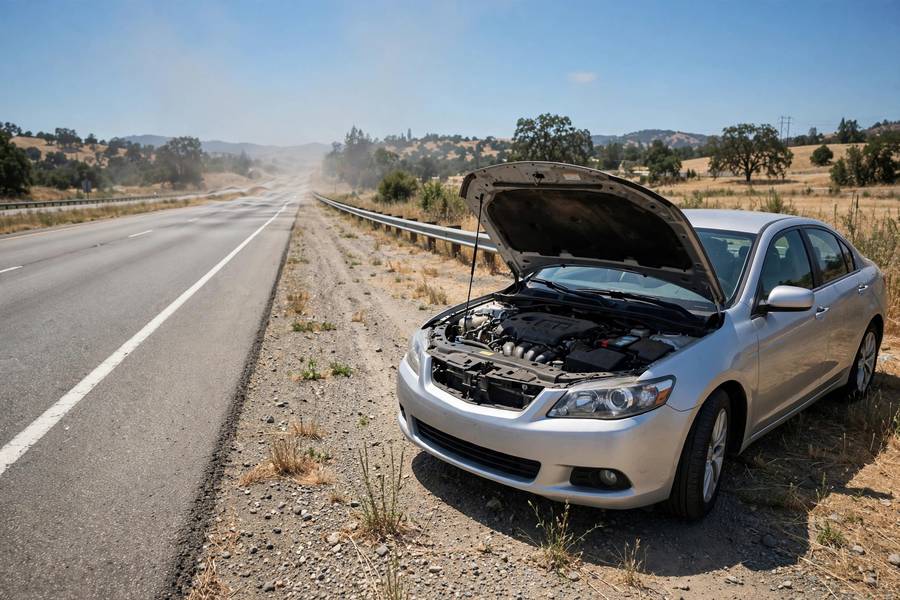
Response: back off immediately. Reduce speed, reduce load, and if the light doesn’t go out within a few minutes of gentle driving, pull over safely and let things cool. Do not “push through to the next exit 10 miles away.” Every minute at those temperatures is cooking the fluid.
Symptom 2: Sudden Power Loss (Limp Mode)
This one scares people: you’re driving along, and suddenly the car won’t accelerate properly. The engine revs but speed builds slowly, or the car caps your speed. It feels like something broke.
What’s actually happening: the transmission computer detected dangerous temperatures (or a ratio fault caused by heat-related slip) and engaged a protection strategy. It reduces engine torque, limits the ratio range, and generally neuters the car to stop the thermal spiral. Engineers call it derating or limp mode; drivers call it terrifying.
Here’s the thing: limp mode is the transmission saving itself. It’s doing exactly what it should. The correct response is gratitude and a pull-over, not frustration and a heavier right foot. Fighting limp mode — trying to force speed out of a derated transmission — is the fastest way to turn a recoverable overheat into a dead transmission.
Once cooled, most cars exit limp mode on restart. But the event should always trigger a fluid check afterward — the fluid that survived those temperatures is compromised.
Symptom 3: Burning Smell
A sharp, acrid burning smell — like scorched oil or burnt toast — while driving hard is a classic overheating indicator. What you’re smelling is transmission fluid (or sometimes fluid that has leaked onto hot exhaust components) breaking down under extreme heat.
The smell test is actually useful because it can precede the warning light. If you’re climbing a grade on a hot day and catch that distinctive burnt odor, you’re getting an early heads-up that temperatures are climbing. Back off before the computer has to intervene.
One caution: make sure the smell is actually transmission-related and not something else (overheated brakes smell similar — sharp and chemical). Transmission overheat smell usually comes with the other symptoms on this list; brake overheat smell comes after hard braking. Context tells you which.
Symptom 4: Slipping and Shuddering When Hot
Heat thins the fluid and degrades its friction properties. The practical result: a CVT that behaves perfectly when cold or at normal temperatures starts slipping or shuddering once everything heats up.
The pattern is diagnostic: fine for the first 20 minutes, then slipping on acceleration, shuddering at low speeds, or delayed engagement — all appearing as the drive goes on and temperatures climb. Let it cool, and the symptoms vanish. That’s heat-related performance degradation, and it means your cooling margin is gone.
This symptom often appears before the warning light, because the light triggers at a higher threshold than the temperature where performance starts degrading. If your CVT only misbehaves when hot, don’t wait for the light — the problem is already real.
Symptom 5: Whining That Worsens With Heat
A mild whine that’s barely noticeable when cold but grows into a pronounced howl as the transmission heats up is another heat signature. As fluid thins with temperature, the belt-pulley grip changes, and marginal fluid or worn surfaces get louder.
I use this as a fluid-health indicator: if the whine’s volume tracks temperature closely, the fluid’s viscosity characteristics are likely degraded. Fresh, healthy fluid maintains more consistent behavior across the temperature range. It’s not a perfect test, but it’s a useful data point alongside the others.
What Causes CVT Overheating
The usual suspects, roughly in order of how often I see them:
Sustained heavy load. Long grades, towing near the limit, fully loaded car in summer heat. The number one cause — pure physics.
Stop-and-go traffic in extreme heat. Low airflow over the cooler plus constant ratio changes plus 110°F ambient. Desert city summers are brutal on CVTs.
Degraded fluid. Old fluid carries heat less effectively and breaks down at lower temperatures. A transmission that never overheated on fresh fluid starts overheating on worn fluid under the same conditions.
Blocked or failing cooler. Debris blocking airflow to an external cooler, a clogged internal cooler, or a failed cooler thermostat. If your car suddenly starts running hot without any change in driving, suspect the cooling hardware.
Low fluid level. Less fluid means less thermal mass and less circulation — temperatures spike faster. A leak plus a hot day is a bad combination.
Aggressive driving. Repeated hard acceleration keeps the belt under maximum load and generates maximum heat. On a hot day, this alone can push temperatures up.
Understanding your cooling system helps here — including what coolant does in your car, since many CVT coolers integrate with the engine cooling system.
What to Do When It Overheats
If you get the warning light, limp mode, or strong symptoms:
- Reduce load immediately. Lift off the throttle, reduce speed, turn off the A/C (it adds engine load and heat).
- Find a safe place to stop. Don’t keep driving “just a little further” — every minute counts.
- Idle or shut down. Idling circulates fluid through the cooler without adding load. In extreme cases, shutting down lets everything cool faster. Either is better than driving on.
- Wait. Give it 20–30 minutes. Check that the warning is off before driving again.
- Drive gently afterward. Even after cooling, the fluid is compromised. Get home or to a shop without pushing it.
- Service the fluid soon after. This is non-negotiable. Overheated fluid is degraded fluid, and degraded fluid will cause the next overheat sooner. Learn how to check transmission fluid and get it changed.
What NOT to do: pour water on the transmission (thermal shock can crack housings), keep driving at reduced speed indefinitely (you’re still generating heat), or ignore it because the light went off (the fluid damage is done).
Preventing Overheating
The prevention list is straightforward:
- Maintain the fluid on schedule — fresh fluid handles heat better
- Back off on grades instead of holding full throttle
- Don’t tow over the rating, and take cooling breaks when towing within it
- Keep the cooler clean — check for debris blocking airflow during routine maintenance
- Fix leaks promptly — full fluid level means full cooling capacity
- Drive smoothly — hard acceleration is heat generation
- Consider an auxiliary cooler if you tow regularly or live in extreme heat (a transmission shop can advise on your specific model)
An auxiliary transmission cooler is the single best upgrade for a CVT that works hard. It’s a few hundred dollars installed and dramatically increases your thermal margin. For anyone who tows or lives where summers are brutal, it’s cheap insurance.
Frequently Asked Questions
Transmission temperature warning light, sudden power loss (limp mode), burning smell, slipping or shuddering that appears when hot, and whining that worsens with temperature. Any of these means back off and let it cool.
The fluid breaks down permanently above ~240°F, losing its friction and cooling properties. The computer may engage limp mode to protect the transmission. Repeated overheating leads to belt slip, accelerated wear, and eventual failure.
Briefly and gently to reach safety, but every minute of overheated operation damages the fluid. Pull over, let it cool for 20–30 minutes, then drive gently to a shop. Never push through an overheat warning.
Reduce load immediately, pull over safely, and idle (which circulates fluid through the cooler) or shut down for 20–30 minutes. Turn off the A/C to reduce heat load. Afterward, get the fluid changed — overheated fluid is compromised.
Yes, always. Overheating permanently degrades the fluid’s additives even if the transmission seems fine afterward. Driving on heat-damaged fluid invites the next overheat sooner and accelerates wear.