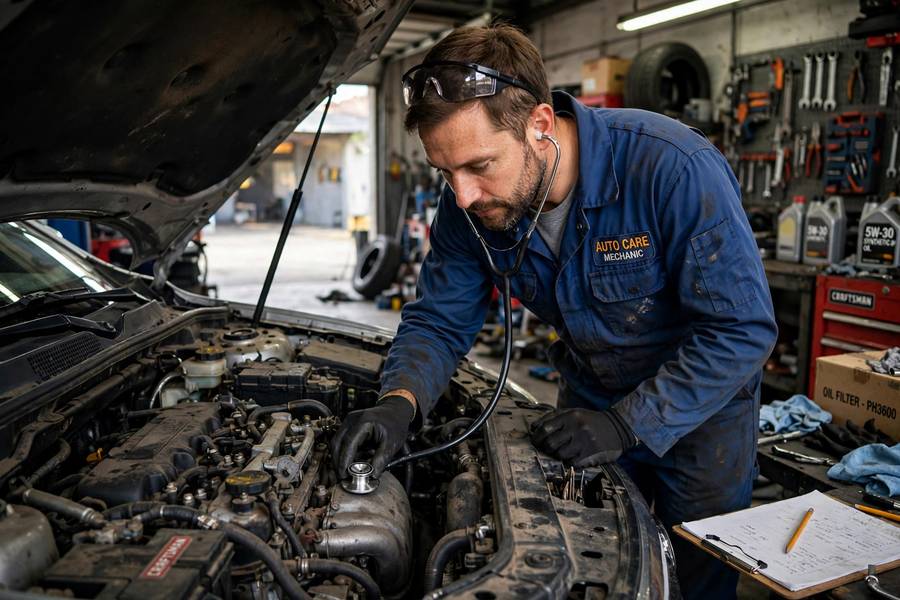
Every CVT makes some noise — a gentle hum is part of the design. But there’s a line between the normal background whir of a healthy transmission and the rising whine that means something’s wearing out. I’ve diagnosed this sound more times than I can count, and learning to tell the difference can save you thousands.
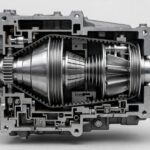
First, the context: a CVT works by running a steel belt on variable pulleys, and that contact always makes some sound. My explainer on what a CVT transmission is and how it works covers the mechanism. This article is about the noise — what’s normal, what isn’t, and what to do about each.
Table of Contents
- What a Normal CVT Sounds Like
- Cause 1: Worn or Degraded Fluid
- Cause 2: Low Fluid Level
- Cause 3: Worn Belt or Pulley Surfaces
- Cause 4: Failing Bearings
- Cause 5: Torque Converter Issues
- How to Diagnose the Whine Yourself
- What to Do About It
- Frequently Asked Questions
What a Normal CVT Sounds Like
Let’s establish the baseline, because panicking over normal sounds wastes everyone’s time.
A healthy CVT produces a subtle, consistent hum or whir that’s most noticeable under moderate acceleration. It rises slightly with engine RPM and road speed, stays smooth in character, and doesn’t change from week to week. You might hear it more with the windows down or the radio off. In many cars, road and wind noise drown it out entirely.
The key word is consistent. Normal CVT noise doesn’t evolve. It doesn’t get louder over a month. It doesn’t develop a new pitch or start appearing in situations where it didn’t before. If your transmission sounds the same today as it did a year ago, you’re almost certainly hearing normal operation.
The whine that matters is the one that changes — louder than it used to be, present under lighter throttle than before, or with a character (pitch, warble, harshness) that’s new. Change is the diagnostic signal.
Cause 1: Worn or Degraded Fluid
The number one cause of CVT whine, by a wide margin. As CVT fluid ages, it loses viscosity, its friction modifiers break down, and it accumulates microscopic metal particles from normal belt-pulley wear. The result: the belt doesn’t grip the pulleys as cleanly, and the micro-slip between belt and pulley surfaces produces — you guessed it — a whine.
The classic pattern: the whine appears gradually over thousands of miles, gets louder under acceleration (when belt load is highest), and may be accompanied by a subtle shudder at low speeds. The fluid on the dipstick looks dark and smells off.
The good news: if you catch it at this stage, a fluid change often quiets the whine significantly or eliminates it. I’ve seen cars come in whining like a siren and leave nearly silent after a proper drain-and-fill with fresh OEM fluid. The bad news: if the whine has been there for 20,000 miles, the fluid change helps but the pulley surfaces may already be scored — the noise improves but doesn’t fully disappear.
This is why I harp on fluid intervals. The whine is your transmission’s way of asking for fresh fluid. Answer promptly.
Cause 2: Low Fluid Level
CVTs are sealed systems — they don’t consume fluid. So if the level is low, there’s a leak: a pan gasket, an axle seal, a cooler line, or the torque converter seal. And low fluid in a CVT is more serious than in a conventional automatic, because the hydraulic system needs full pressure to clamp the belt.
Low-fluid whine has a distinctive character: it’s often louder when the car is cold (fluid hasn’t expanded and circulated fully) and may change pitch during turns (fluid sloshing away from the pickup). You might also notice delayed engagement or slipping alongside the noise.
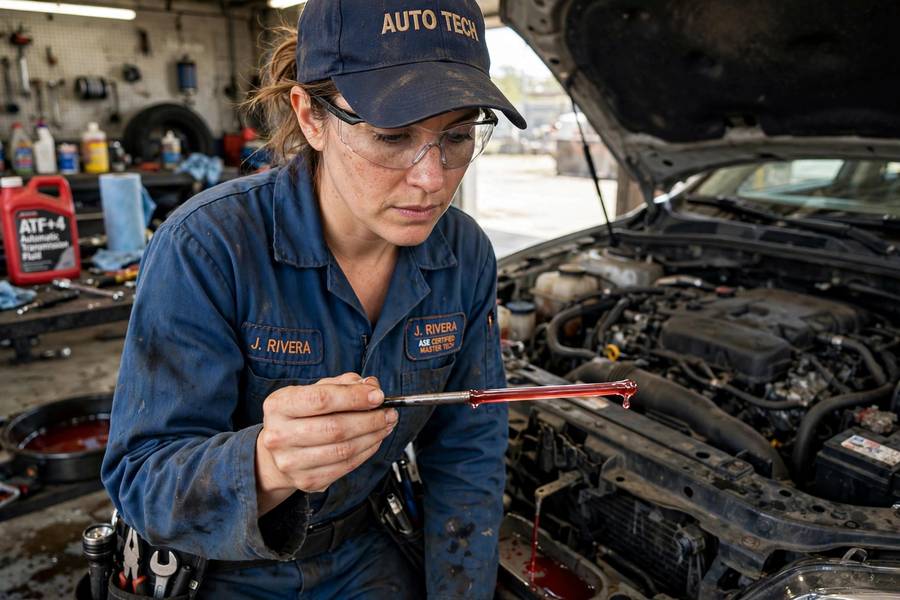
Check the level if your car has a dipstick — many CVTs don’t, in which case this needs a shop with a lift. Look for leaks underneath: CVT fluid is usually green, blue, or red depending on manufacturer, and fresh spots on the driveway are worth investigating. Learn how to check transmission fluid properly if your car allows it.
A leak fixed early is a $200 seal job. A leak ignored until the transmission runs dry is a $5,000 replacement. The whine is doing you a favor by announcing the problem.
Cause 3: Worn Belt or Pulley Surfaces
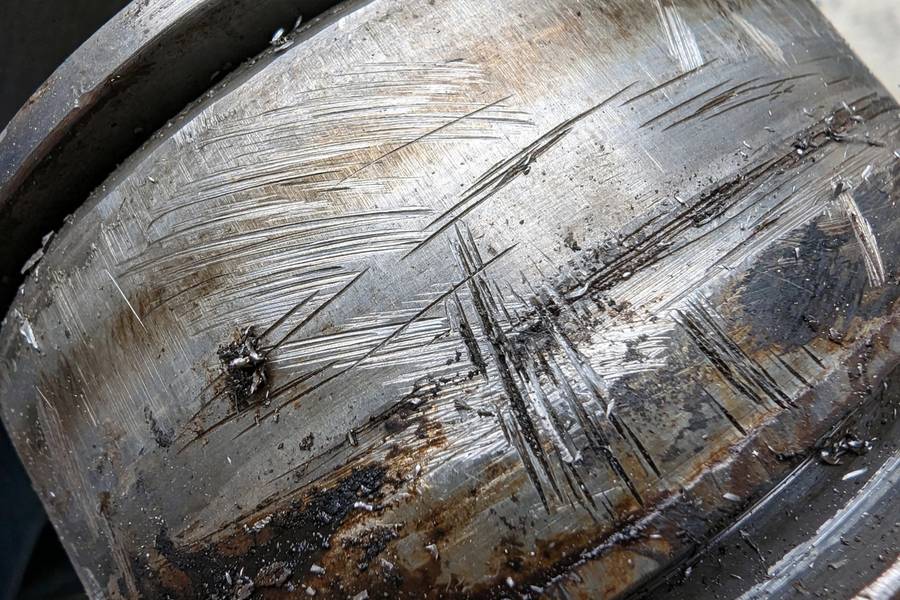
This is the serious one — actual mechanical wear of the hard parts. The steel belt and the pulley faces are precision surfaces, and when the friction interface degrades — from prolonged operation on bad fluid, overheating events, or just very high mileage — the surfaces develop scoring, pitting, or glazing.
Worn-surface whine is distinctive: it’s louder, harsher, and more metallic than fluid-related whine. It often has a cyclical character — a warble or pulsing that tracks with pulley rotation speed rather than engine RPM. And critically, a fluid change doesn’t fix it. Fresh fluid on scored pulleys is like fresh oil on a scored cylinder wall: it helps, but the damage is done.
How do you confirm it? Honestly, this usually requires a transmission specialist. The pulleys are inside the case, and inspection means disassembly. But the diagnostic logic is straightforward: whine persists after fresh fluid and correct level, gets steadily worse over weeks, metallic character — that’s mechanical wear, and the conversation shifts from “service” to “rebuild or replace.”
Cause 4: Failing Bearings
Not every transmission whine comes from the belt. CVTs contain input shaft bearings, output shaft bearings, and differential bearings, and a failing bearing produces a whine or growl that’s easy to mistake for belt noise.
Bearing whine has tells: it often changes with vehicle speed rather than engine speed (coast in neutral at 40 mph — if the noise persists unchanged, it’s downstream of the engine, likely a bearing or differential). It may also change when turning (loading and unloading wheel bearings) or get louder over a very long period — bearings usually fail slowly.
The good news about bearings: they’re replaceable without replacing the whole transmission, and the job is much cheaper than a belt/pulley rebuild. The bad news: on high-mileage units, a shop may recommend against opening the case for “just” a bearing, since the labor overlaps heavily with a full rebuild.
Cause 5: Torque Converter Issues
The torque converter — the fluid coupling between the engine and the transmission — can whine when its internal components wear. Converter whine typically appears at specific RPM ranges, often just off idle or during the lockup transition, and may come with a shudder.
Here’s a useful test: the whine from a torque converter usually changes or disappears when the converter locks up (typically in higher gears at steady cruise). Belt whine doesn’t care about lockup — it’s there whenever the belt is loaded. If your whine vanishes at steady highway speed but returns under acceleration, the converter is a suspect.
Converter problems on otherwise healthy CVTs are less common than fluid or belt issues, but they happen — especially on units with known converter weaknesses (certain Subaru and Nissan applications). A failing converter can also contaminate the fluid with debris, so converter issues have a way of becoming transmission issues if ignored.
How to Diagnose the Whine Yourself
Before you pay for a diagnosis, gather intelligence. A good shop will ask these questions, and your answers save diagnostic time:
- When did it start? Sudden onset suggests a failure (bearing, leak). Gradual onset suggests wear (fluid, belt).
- Hot or cold? Worse cold points to fluid viscosity issues. Worse hot points to overheating or thinning fluid.
- Under what load? Only under acceleration (belt load) vs. constant (bearing) vs. specific RPM (converter).
- Does it change in neutral? Coast in neutral — if the whine stays, it’s speed-related (bearings, differential). If it stops, it’s load-related (belt, converter).
- Any companion symptoms? Shuddering, slipping, delayed engagement, warning lights — each narrows the field.
- What’s the fluid like? Color, smell, level — the single most informative check you can do yourself.
Write down your answers before visiting the shop. You’ll get a faster, more accurate diagnosis, and you’ll immediately distinguish the shops that listen from the ones that just quote replacements.
What to Do About It
In order of escalation:
- Check the fluid — level, color, smell. This is step one, always.
- Service the fluid if it’s dark, burnt-smelling, or overdue. A drain-and-fill with OEM fluid is the cheapest meaningful intervention.
- Fix any leaks immediately. Top up to the correct level with the correct fluid.
- Get a professional diagnosis if the whine persists after service — a transmission specialist with CVT experience, not a general shop guessing.
- Get a second quote before authorizing major work. CVT rebuild vs. replace decisions involve real money, and specialists disagree.
And what the check engine light means is worth knowing, because a whine accompanied by a warning light means the computer has already identified something — get those codes read.
The overarching principle: whine is information. The drivers who act on it early spend hundreds. The drivers who turn up the radio spend thousands. Be the first kind.
Frequently Asked Questions
A subtle, consistent hum is normal. A whine that gets louder over time, appears under lighter throttle than before, or has a new harsh character is not normal — it usually indicates worn fluid, low fluid, or mechanical wear.
Often yes, if the whine is caused by degraded fluid — which is the most common cause. If the whine comes from scored pulley surfaces or failing bearings, a fluid change helps but won’t eliminate it.
A harsh, metallic whine that gets louder under acceleration, sometimes with a cyclical warble tracking pulley speed. Unlike fluid-related whine, it doesn’t improve with fresh fluid and worsens steadily over weeks.
Yes — low fluid reduces the hydraulic clamping force on the belt, causing micro-slip that whines. It’s often louder when cold and may change pitch in turns. Since CVTs don’t consume fluid, low level means there’s a leak to fix.
Coast in neutral at speed: bearing whine persists (it’s speed-related), while belt whine stops (it’s load-related). Bearing noise also tends to change when turning, as cornering loads and unloads the bearings.