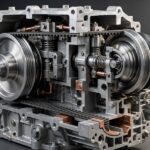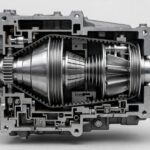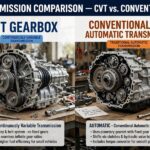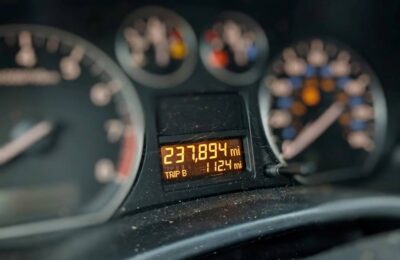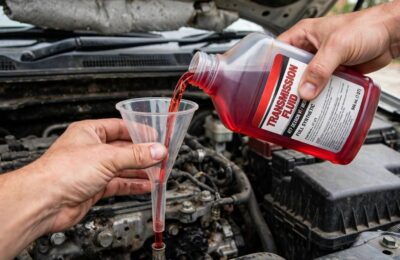
Nobody teaches you how to drive a CVT. You get the keys, you drive it like every other automatic you’ve ever owned, and you never think about it again. But a CVT isn’t every other automatic — it has a belt and pulleys instead of gears, and the way you treat that belt determines whether your transmission lives to 200,000 miles or dies at 90,000.
I’ve been driving and maintaining CVTs for years, and the habits below are the difference between the owners who brag about their trouble-free CVT and the ones who curse the day they bought one. If you need the mechanical background first, my explainer on what a CVT transmission is and how it works will get you up to speed.
Table of Contents
- Tip 1: Launch Smoothly, Always
- Tip 2: Warm It Up Before Driving Hard
- Tip 3: Back Off on Long Grades
- Tip 4: Come to a Full Stop Before Shifting
- Tip 5: Don’t Ride the Throttle in Traffic
- Tip 6: Use Engine Braking Wisely
- Tip 7: Respect the Tow Rating
- Tip 8: Don’t Neutral-Coast
- Tip 9: Listen to Your Transmission
- Frequently Asked Questions
Tip 1: Launch Smoothly, Always
This is the big one — the single habit that matters most. Every hard launch from a dead stop shock-loads the belt. The belt has to grip the pulleys and transfer full engine torque from zero, and a full-throttle launch asks it to do that violently.
Think about what’s happening mechanically: at a standstill, the pulleys are at their lowest ratio, the belt is under maximum clamping force, and you’re asking the whole system to go from zero to moving instantly. Smooth, progressive throttle lets the clamping force build with the load. Mashing the pedal creates a torque spike the belt has to absorb.
I’m not saying drive like a grandma. Normal, brisk acceleration is fine — the CVT is designed for real-world driving. What kills belts is the repeated full-throttle launch: the stoplight drag race, the “let me show what this thing can do” moment. Every one of those is a tiny bit of belt and pulley wear you’ll never get back. Save the launches for cars with real gears.
Tip 2: Warm It Up Before Driving Hard
Cold fluid is thick fluid, and thick fluid doesn’t flow through the valve body and solenoids the way the transmission computer expects. On a cold morning, your CVT’s hydraulic control is at its least precise — which means the pulley clamping force isn’t quite what it should be during those first few minutes.
The practical rule: give it 30–60 seconds of idle on cold mornings, then drive gently for the first few minutes until the temperature gauge starts moving. Don’t floor it pulling out of your neighborhood at 6 AM in January. The belt will thank you.
This applies double in winter. CVT fluid thickens significantly below freezing, and the difference between a gentle warm-up drive and an immediate highway on-ramp blast is real wear. I keep my morning driving calm until I see the temp needle move — it’s a small patience tax for a longer transmission life. (And while you’re at it, make sure your battery is healthy for those cold starts — here’s how to jump start a car safely if you ever need it.)
Tip 3: Back Off on Long Grades
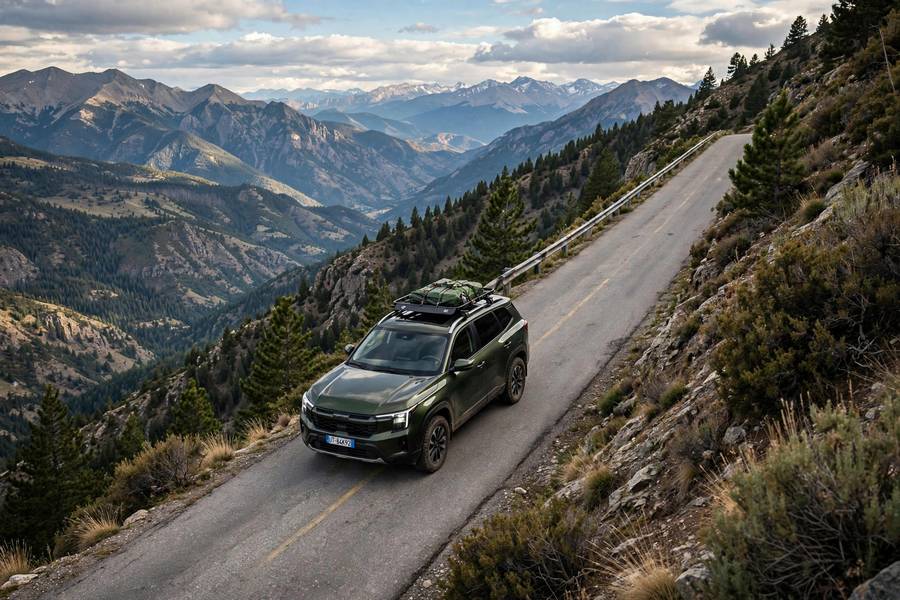
Long uphill climbs are one of the hardest things you can ask of a CVT. The transmission holds a low ratio, the engine works hard, and the belt-pulley contact generates serious heat — sustained, not brief. This is where overheating happens.
The technique: don’t try to maintain full highway speed up a steep grade with the throttle pinned. Back off 5–10 mph, let the RPMs settle, and give the transmission a break. You’ll arrive two minutes later with a transmission that’s 30 degrees cooler. That’s a trade I’ll make every time.
If your car has a manual mode or “L” range, use it on long descents too — engine braking downhill saves your brakes, and I’ll cover that in Tip 6. But uphill, the rule is simple: steady and moderate beats fast and furious.
Watch for the signs that you’re pushing too hard: a burning smell, the engine holding very high RPMs for minutes at a time, or (on cars equipped with one) a transmission temperature warning. If the warning appears, back off immediately and let things cool. Pushing through an overheat warning is how fluid gets cooked.
Tip 4: Come to a Full Stop Before Shifting
This applies to every automatic, but it’s worth stating for CVT owners: come to a complete stop before shifting between drive and reverse. Every time.
Shifting into reverse while still rolling forward (or into drive while rolling backward) forces the transmission to absorb the vehicle’s momentum through the belt and the start clutch. It’s a shock load the system wasn’t designed for. The clunk you feel is the sound of components taking abuse.
In parking lots, this means a moment of patience: stop fully, shift, wait a beat for engagement, then move. That one-second pause is the cheapest transmission insurance you’ll ever buy.
Tip 5: Don’t Ride the Throttle in Traffic
Stop-and-go traffic is where bad habits form. The pattern I see: creep forward, brake, creep forward, brake — with the throttle constantly fluttering. Each little throttle stab asks the CVT to adjust ratio, then you brake, then it adjusts again. It’s a workout for the pulleys and solenoids that accomplishes nothing.
Better technique: leave a bigger gap and roll steadily. Let the car creep at idle when traffic is barely moving — the torque converter or start clutch handles creep gracefully. When traffic moves, accelerate smoothly to match, then coast. Fewer throttle inputs, fewer ratio changes, less wear, and honestly less stress for you too.
If your car has adaptive cruise control, use it in traffic. The computer is smoother than your right foot — it modulates throttle progressively instead of stabbing at it. Your CVT will notice the difference even if you don’t.
Tip 6: Use Engine Braking Wisely
On long descents, engine braking — letting the drivetrain slow the car instead of the brake pads — is good practice. It saves your brakes from overheating, which is a genuine safety issue on mountain roads. Most CVTs handle this fine: shift to “L” or use the manual mode to hold a lower ratio.
The “wisely” part: don’t force aggressive downshifts at high speed. Dropping to a very low ratio at 70 mph spikes the engine RPMs and shock-loads the belt in the opposite direction. Let the car slow naturally, then select the lower range. And don’t engine-brake constantly in normal driving — it’s a tool for descents, not a lifestyle.
One more note: some CVTs have a dedicated downhill assist or grade logic that handles this automatically. If yours does, trust it — the engineers thought about this more than any of us have.
Tip 7: Respect the Tow Rating
CVTs and towing have a complicated relationship. Most CVT-equipped vehicles have modest tow ratings — often 1,000–1,500 pounds — and there’s a reason: sustained load at low ratios generates the heat and belt stress that kill CVTs.
If your car is rated to tow and you need to: stay well under the limit, keep speeds moderate, take breaks on long hauls to let the transmission cool, and service the fluid afterward if it was a serious tow. Towing at the ragged edge of the rating, in summer heat, up grades, is asking for an overheat event.
If you tow regularly — a boat every weekend, a camper all summer — a CVT vehicle is simply the wrong tool. Get something with a conventional automatic or a truck. No driving technique fully compensates for using the wrong transmission for the job.
Tip 8: Don’t Neutral-Coast
The old hypermiler trick of shifting to neutral on downhills to “save fuel” is bad advice for modern cars generally and CVTs specifically. Here’s why:
Modern fuel injection already cuts fuel delivery when coasting in gear — you’re not saving anything. Worse, shifting back into drive at speed forces the CVT to re-engage the belt under load, which is a shock event. And in neutral, the transmission’s internal pump (driven by the input shaft) may not circulate fluid properly to all components, since the drivetrain isn’t turning the way the system expects.
Stay in drive. Let the computer manage fuel cut. The engineers designed the coasting behavior — trust them on this one.
Tip 9: Listen to Your Transmission
The final habit isn’t a driving technique — it’s attention. Your CVT talks to you, and the drivers who get 200,000+ miles out of theirs are the ones who listen.
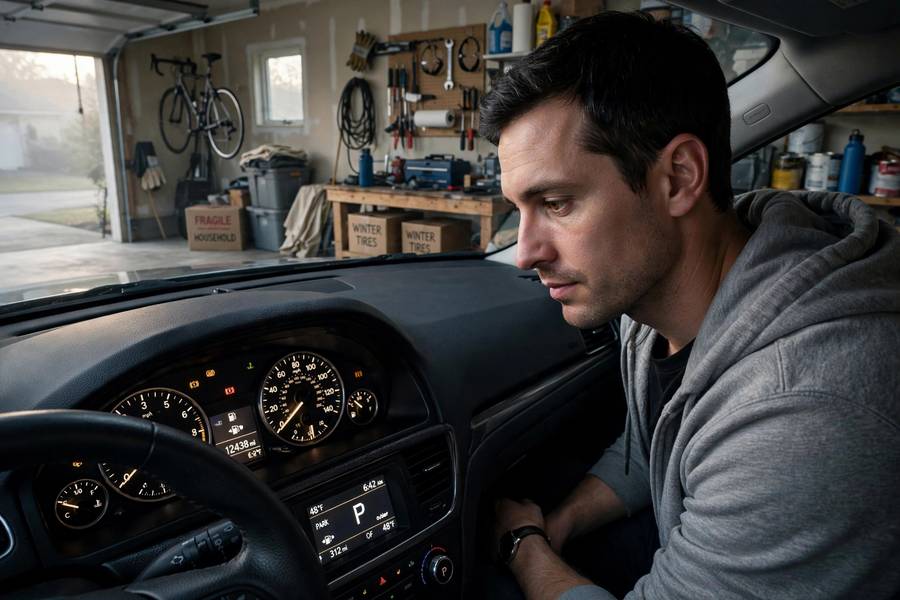
Learn your car’s normal sounds: the gentle hum under acceleration, the way the RPMs behave on your daily commute. When something changes — a new whine, a shudder that wasn’t there last month, a hesitation when pulling away — don’t turn up the radio. Note when it happens (cold or warm? uphill or flat? light throttle or heavy?) and get it checked.
Early intervention is everything with CVTs. A whine caught at month one might need a $200 fluid change. The same whine ignored for a year might need a $5,000 replacement. The transmission gives you a long warning — the only question is whether you’re the kind of driver who hears it.
Frequently Asked Questions
Mostly yes — but with smoother launches, gentler warm-ups, and more respect for sustained heavy loads. The CVT forgives normal driving but punishes hard launches and neglected warm-ups more than a conventional automatic.
Occasional full throttle won’t kill it, but repeated hard launches shock-load the belt and accelerate wear. If you want to drive hard regularly, a conventional automatic or DCT suits that style better.
Sport mode is fine — it just changes the ratio programming to hold lower ratios longer. It doesn’t harm the transmission by itself, though the harder driving it encourages can add wear over time.
Yes — use “L” range or manual mode on long descents. It’s good for your brakes. Just don’t force aggressive downshifts at high speed, which shock-loads the belt.
No — cruise control is actually gentle on a CVT because it modulates throttle smoothly. It’s one of the easiest ways to drive efficiently and reduce transmission stress on the highway.