What Is New Game Plus? The Replay Mode Explained (With Examples)

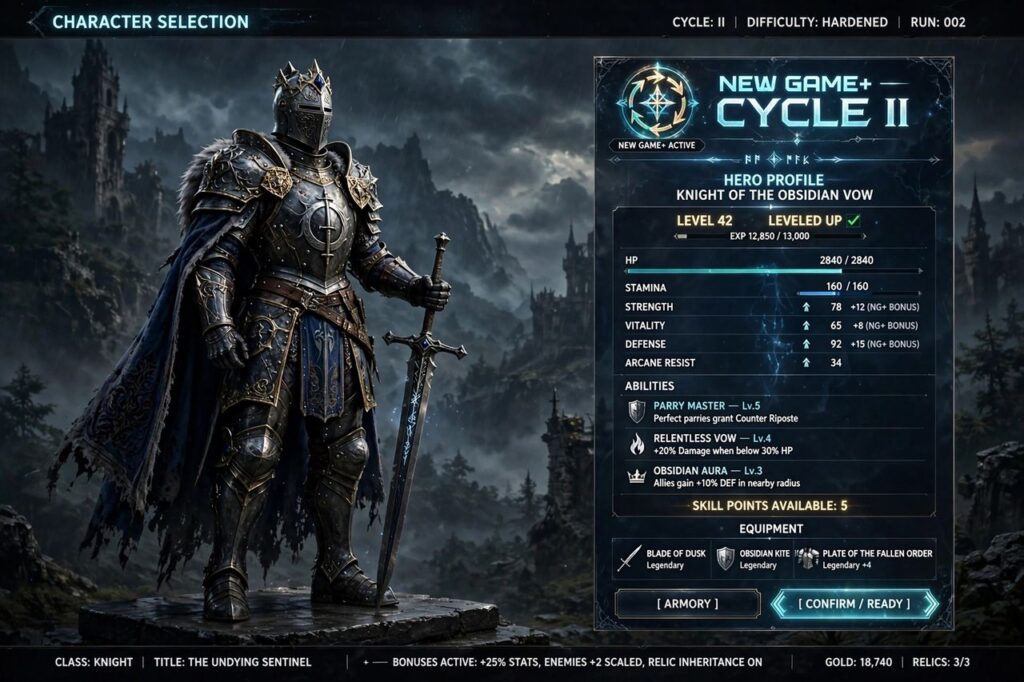
If you’ve ever asked what is New Game Plus, here’s the plain answer: New Game Plus, usually shortened to NG+, is a mode that lets you restart a game after finishing it while keeping most of what you earned the first time: your levels, gear, abilities, or upgrades. Instead of a blank slate, your second playthrough begins with your endgame character, while the game gets harder to match. If you’ve ever finished a great RPG and immediately wished you could do it all again, but stronger, that’s exactly the itch New Game Plus scratches.
The term started in older console RPGs but has become standard across genres, from soulslikes to action adventures. Below is everything about how it works, why it exists, and the games that do it best.
What Is New Game Plus, Exactly? (The Full Definition)
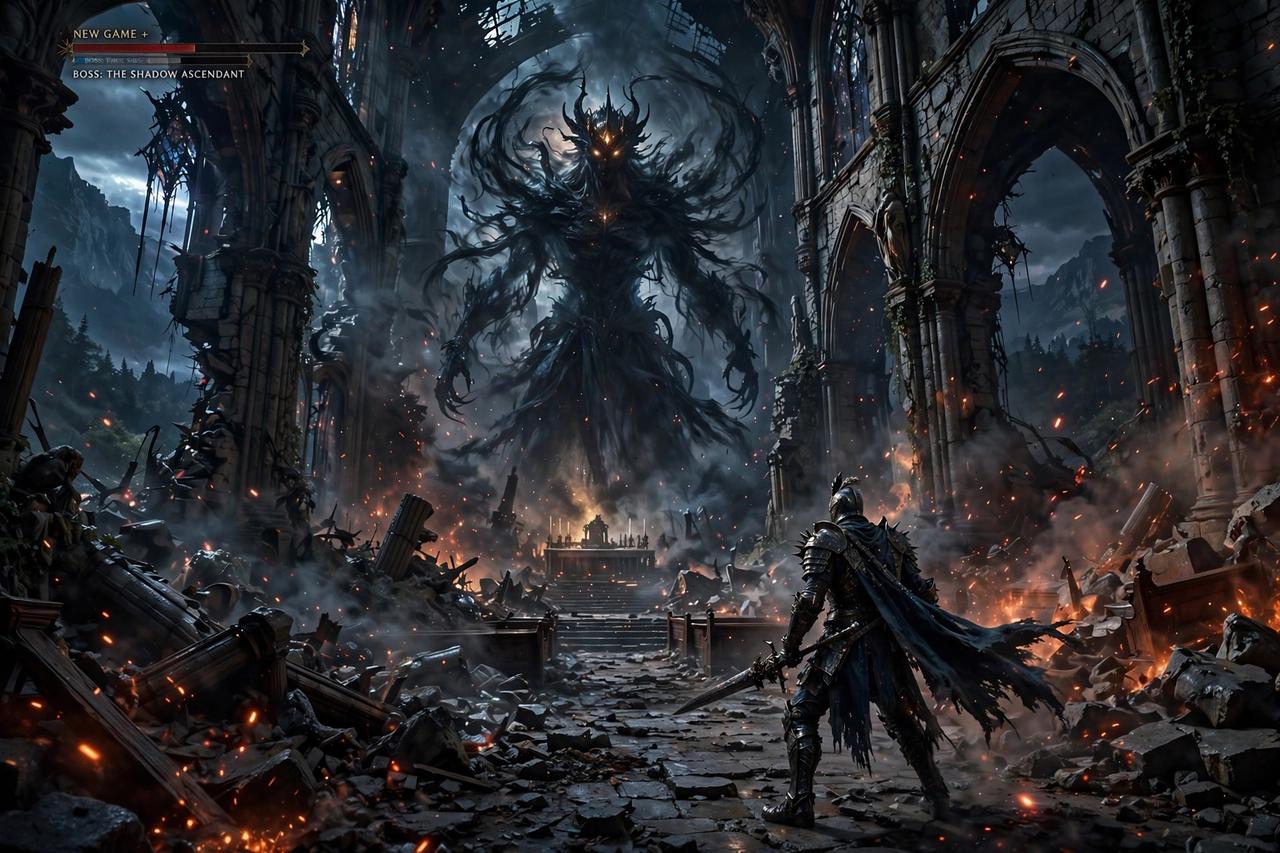
When you beat a game with an NG+ mode, you’re offered a choice: start a fresh file or begin New Game Plus. Choosing NG+ restarts the story from the beginning but carries over your character progression. Enemies typically get stronger, hit harder, and sometimes gain new attacks or behaviors, so the challenge scales with your powered-up character.
What carries over varies by game, but the common package includes:
- Character level and stats – your build stays intact
- Weapons, armor, and items – the loot you earned comes with you
- Unlocked abilities and skills – no re-learning the basics
- Currency and consumables – your stockpile transfers
What usually does NOT carry over: story progress, quest states, and key items tied to the plot. You replay the narrative fresh, just with a veteran’s toolkit.
Why Do Developers Add New Game Plus?
NG+ solves a real design problem. Players invest dozens of hours building a character, then the credits roll and that investment evaporates. New Game Plus respects the investment: it gives your build a second stage to perform on, and it lets developers tune a harder difficulty curve that would be unfair for first-timers.
It also extends a game’s life enormously. Speedrunners, build-crafters, and lore hunters all get reasons to replay, and that replayability is gold for both players and studios. Games with strong NG+ modes stay in the conversation years longer than one-and-done experiences. It’s one of many clever systems that emerge from how video games are designed and built, where replay systems are planned long before launch.
Games With the Best New Game Plus Modes
Dark Souls and Elden Ring
The FromSoftware formula is the NG+ gold standard. Each NG+ cycle raises enemy health and damage while letting you keep everything, and you can stack cycles (NG+2, NG+3, up to NG+7) into genuine masochism. Elden Ring’s NG+ is the definitive way to try the builds you skipped the first time.
Hades
Hades hides its NG+ behind story: after your first successful escape, the Heat system lets you add modifiers that make each run harder while unlocking new story content. It’s NG+ as narrative device, and it’s brilliant.
The Witcher 3
CD Projekt Red’s NG+ carries over your level, gear, and alchemy formulas into a harder version of the Northern Kingdoms, with an increased level cap to keep progression meaningful. Perfect for experiencing the story’s other choices with your ideal Geralt.
God of War (2018) and Ragnarok
Sony Santa Monica’s NG+ modes add new armor sets, new enchantments, and tougher encounters, plus the ability to skip cutscenes you’ve already seen. Ragnarok’s version is widely considered one of the most generous.
Chrono Trigger
The game that coined the term. Chrono Trigger’s 1995 NG+ let players replay with their endgame stats to discover its multiple endings, inventing the concept that every game on this list inherited.
New Game Plus vs. New Game: Key Differences
A standard new game wipes everything: level one, starter gear, tutorial enemies. NG+ keeps your power and raises the world’s. Some games blur the line with difficulty settings, but the defining feature of NG+ is progression carryover combined with scaled-up challenge. A “hard mode” without carryover is just hard mode, not NG+.
Tips for Your First NG+ Run
- Try a different build. NG+ is the perfect excuse to respec into the playstyle you ignored. Your stockpiled resources make experimenting cheap.
- Hunt what you missed. Side quests, optional bosses, and alternate endings are NG+’s real content. Keep a checklist.
- Don’t sleep on the scaling. Early NG+ feels easy because you’re overpowered, but the difficulty curve catches up fast, especially in FromSoftware games.
- Check for NG+-exclusive content. Some games hide new items, enemies, or endings behind NG+. It’s worth a quick search before you start.
How New Game Plus Differs Across Genres
NG+ isn’t one thing; it adapts to its genre. In soulslikes (Dark Souls, Elden Ring), it’s a pure difficulty ladder: same world, harder enemies, your full build, stacked across NG+7. In story RPGs (Witcher 3, Cyberpunk 207ty’s Phantom Liberty era design), it’s about experiencing alternate choices with your ideal character. In roguelikes (Hades), NG+ mechanics are woven into the narrative itself, with new dialogue and story beats rewarding replays. In action games (God of War, Resident Evil), NG+ often unlocks new gear tiers and lets you skip cinematics for a power-fantasy victory lap. The best implementations match the mode to what players loved most about the first run.
Games That Reinvented the Second Playthrough
Some games go beyond standard NG+. NieR: Automata famously requires multiple “playthroughs” that aren’t replays at all: routes B, C, D, and E reveal entirely new perspectives, characters, and endings, making the second run essential rather than optional. Resident Evil 4‘s NG+ unlocks the Chicago Typewriter and lets you demolish the game as a reward for mastery. Chrono Cross offered NG+ with the ability to recruit missed characters. And Undertale‘s “genocide route” only truly makes sense as a second-run concept, a dark mirror of the pacifist path. These games prove NG+ can be a narrative device, not just a difficulty slider.
Is New Game Plus Worth It?
One exception to my rule: story-driven games with branching narratives reward second runs more than most, because your first playthrough was necessarily incomplete. If a game advertises meaningful choices, the second run isn’t repetition, it’s the other half of the experience. That’s when NG+ stops being a bonus mode and becomes the point.
Honest answer: it depends on why you play. If you love optimizing builds, chasing alternate endings, or mastering combat, NG+ is the best content in the game. If you play for story and felt satisfied by the ending, a second run can dilute the magic; you’re better off playing something new. My rule: start NG+ only if you can name something specific you want from it, a build, an ending, a boss rematch. “I guess I’ll keep playing” is how great games become chores.
How to Know You’re Ready for New Game Plus
Not every finished game deserves a second run, and not every player is ready. You’re ready for NG+ when three things are true: you have a build idea you didn’t try (the lightning mage, the pacifist run, the weird weapon), you missed content you actually care about (an ending, a boss, a questline), and the combat still feels good rather than exhausting. If you’re starting NG+ out of obligation or because you don’t know what to play next, take a break instead. Games are better when you return hungry.
Preparation helps: respec before starting if the game allows it, stock up on consumables that carry over, and check whether any missable items are NG+-exclusive so you can plan your route. Some players keep a checklist from their first run; the completionist’s second run is a different, deeply satisfying game.
New Game Plus vs. Replayability: What Really Matters
Here’s a contrarian take: NG+ is not the same as replayability, and games with the best NG+ modes aren’t always the most replayable. True replayability comes from systems that generate new experiences: randomized runs, branching narratives, multiplayer. NG+ is a structured second helping of a fixed experience. The games that nail both, Hades with its Heat system, Elden Ring with its build variety, understand the difference. When someone asks what is new game plus good for, the honest answer is: it’s good for mastery, completion, and experimentation, not for novelty. Judge it on those terms and you’ll never be disappointed.
Bad New Game Plus: What Goes Wrong
There’s also the opposite problem: NG+ that’s too generous. A few games shower the second run with so many carryover advantages that all tension evaporates, and the mode becomes a screenshot simulator rather than a game. The sweet spot, the one Dark Souls and Hades both nail, is a second run that respects what you earned while still demanding something new from you. Power without challenge is as hollow as challenge without reward.
Not all NG+ is created equal, and the failures are instructive. The classic sin is no scaling: carrying an endgame build into an unchanged world turns the second run into a boring victory lap. Another is stripping too much: some games reset key abilities for “story reasons,” which defeats the purpose. The worst is NG+ as an afterthought, unlocked but untested, with broken difficulty spikes. The lesson: great NG+ is designed from the start, with a difficulty curve built for powered-up players and meaningful new goals. When evaluating a game’s NG+, ask what the second run offers that the first didn’t. If the answer is “the same thing, easier,” skip it.
Frequently Asked Questions
Does New Game Plus delete your original save?
No. Starting NG+ creates a new save slot or playthrough while your completed save remains intact. You can always go back to your finished game.
Is New Game Plus harder than the base game?
Generally yes, by design. Enemies deal more damage and have more health to compensate for your carried-over power. The early hours may feel easy, but the challenge ramps up.
What does NG+ stand for in gaming?
NG+ stands for New Game Plus. Higher cycles are labeled NG+2, NG+3, and so on, each typically harder than the last.
Which game invented New Game Plus?
Chrono Trigger (1995) is credited with coining the term and popularizing the concept, letting players replay with endgame stats to find its multiple endings.
Do all games have New Game Plus?
No. It’s common in action RPGs and soulslikes but far from universal. Many narrative games, competitive multiplayer titles, and shorter indies skip it entirely.