How to Meal Plan for the Week: A System That Works


I used to meal plan the way most people do: find a pretty sample menu online, buy everything on its ingredient lists, cook enthusiastically for three days, then watch the rest rot in the fridge while we ordered takeout. If that sounds familiar, the problem is not your willpower — it is the method. Sample menus fail because they were designed for someone else’s life. What actually works is learning how to meal plan for the week as a system: a repeatable framework built around your schedule, your pantry, and food you will genuinely eat. I have run this system in my kitchen for years, through busy seasons and picky eaters, and it has never once required a sample menu.
This guide gives you the whole system: theme nights that eliminate daily decisions, inventory-first planning that cuts waste, a batch framework that makes cooking efficient, and a shopping method that keeps the whole thing under an hour a week.
The System, Not the Menu: Why Frameworks Beat Plans
A sample menu answers “what should I eat this week?” A system answers “how do I decide what to eat every week, forever, without thinking hard?” The difference matters because your schedule, energy, and cravings change weekly — a rigid menu shatters on contact with a late workday, while a system bends. The system has four parts: theme nights, inventory-first planning, batch cooking, and a fixed shopping rhythm. Each one removes a category of decisions, and together they make weeknight dinners nearly automatic.
Start by accepting imperfection. A system you follow at 80 percent beats a perfect menu you abandon by Thursday. Plan five dinners, not seven — real life includes leftovers, takeout, and the night nobody feels like cooking. Building slack into the plan is not cheating; it is what makes the plan survivable.
Theme Nights: Kill the Daily “What Is for Dinner?”
The hardest part of meal planning is not cooking — it is deciding. Theme nights eliminate the decision by assigning each night a category. Mine look like this: Monday is soup or salad (light start), Tuesday is tacos or Mexican-inspired (fast, flexible), Wednesday is pasta (pantry-friendly), Thursday is sheet-pan or stir-fry (one-vessel cooking), Friday is homemade pizza or fun food. Your themes should reflect what your household actually likes — the categories are just containers.
Themes work because they narrow infinite choice to a manageable set. “What is for dinner?” becomes “What kind of tacos?” — a much easier question. They also make shopping predictable: you always need tortillas, you always need pasta, you always need pizza dough ingredients. Over time, themes become family traditions, which is a bonus no sample menu offers. Rotate themes seasonally if you like — grilling themes in summer, slow-cooker themes in winter — but keep the structure constant.
Inventory-First Planning: Shop Your Kitchen Before the Store
Most people plan meals, then shop for everything the meals require. Flip it: look at what you already have first, then plan around it. Open the fridge, freezer, and pantry and list what needs using — the half bag of spinach, the chicken thighs in the freezer, the rice that has been there for months. These become the anchors of the week’s plan. This one habit cuts food waste dramatically and shrinks the grocery bill, because you stop buying duplicates of things you already own.
The practical method: keep a running “use first” list on the fridge — a whiteboard or a piece of paper where anyone can add items approaching their prime. When planning day comes, the list tells you what the week must include. Build two or three meals around use-first items, fill the rest with theme nights, and you have a plan that wastes almost nothing. Freezer inventory matters too: label everything with contents and date, and do a monthly freezer meal from the backlog before buying more protein.
The Batch Framework: Cook Once, Eat Twice (or Thrice)
Batch cooking is the engine of the system, but forget the image of spending all Sunday cooking twenty containers. The framework has three levels, and you only need the ones that fit your life. Level one is “cook once, eat twice”: deliberately make double of anything that reheats well — soups, stews, casseroles, grain bowls — and the second half is tomorrow’s lunch or dinner. Zero extra effort, one extra meal.
Level two is component batching: instead of full meals, prep versatile components. A big batch of grains, a tray of roasted vegetables, a protein (shredded chicken, seasoned ground meat, baked tofu), and two sauces. These combine into different meals all week — bowls, wraps, salads, stir-fries — without anything feeling like leftovers. Components take about an hour on a weekend and eliminate weeknight cooking down to assembly. Our guide on what batch cooking is breaks down the method in detail if you want to go deeper.
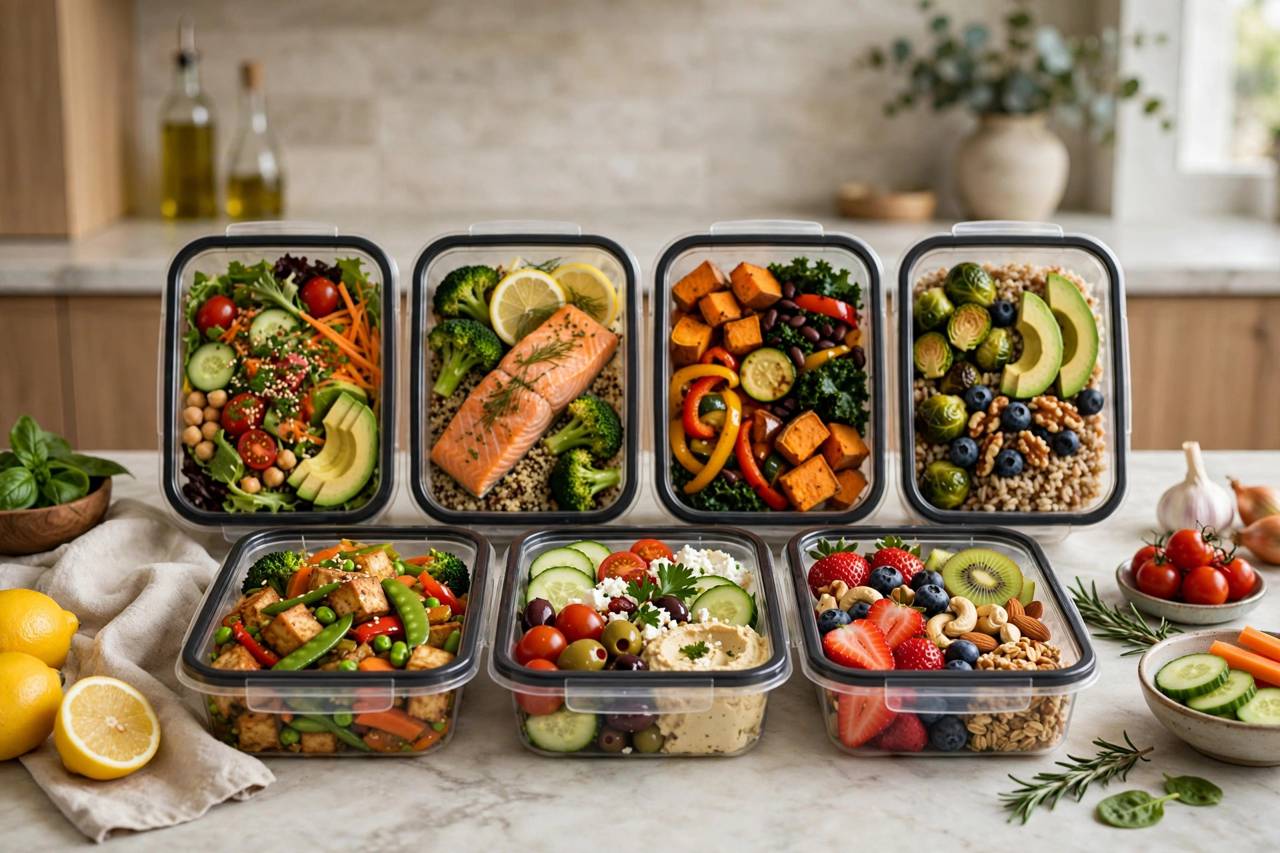
Level three is full meal prep: complete meals portioned into containers. This suits people with the least weeknight time — everything is grab-and-go. The trade-off is repetition and a bigger weekend time investment. Most households thrive on levels one and two; level three is there when life demands it. Choose the level that matches your actual week, not your aspirational one.
How to Meal Plan for the Week: The 30-Minute Weekly Session
Here is the actual weekly workflow, start to finish. Pick a consistent day — the day before your main grocery run. Step one (5 minutes): check the calendar. Late nights, events, eating out — mark the nights you will not cook and do not plan meals for them. Step two (5 minutes): inventory. Check the use-first list, glance at fridge and pantry, note what must be used.
Step three (10 minutes): assign meals to nights using themes plus inventory anchors. Write it where everyone can see it — fridge whiteboard, shared note, chalkboard. Visibility matters: a plan nobody can find is not a plan. Step four (10 minutes): make the grocery list from the plan, organized by store section (produce, dairy, meat, pantry, frozen). A section-organized list turns shopping into a single efficient pass instead of a zigzag.
That is thirty minutes, once a week. The first two weeks feel deliberate; by week four it is a habit that runs on autopilot. Keep a binder or digital note of “greatest hits” — meals everyone liked — and rotate through them. You do not need new recipes weekly; you need a reliable rotation of twenty or so meals that the system cycles through.
The Shopping System: One Trip, No Impulse Spiral
The plan only works if shopping supports it. Shop once a week, from the list, after eating — the classics are classics because they work. Stick to the store’s perimeter for fresh food and venture into aisles only for list items. The list is a contract with your planned self; every impulse buy is a future food-waste problem and a meal-plan deviation.
Build a master pantry list of staples you always keep — oils, vinegars, spices, canned tomatoes, beans, grains, broths — and maintain it separately from the weekly list. When a staple runs low, it goes on a running “restock” note. This separates the two kinds of shopping: weekly fresh buying (driven by the meal plan) and staple maintenance (driven by the restock note). Together they mean you never stand in the store wondering what you need, and you never come home missing the one ingredient dinner requires.
Handling Real Life: Picky Eaters, Busy Weeks, and Plan Failures
Systems survive contact with reality only if they flex. Picky eaters: use the “deconstructed” approach — components served separately so everyone assembles their own plate from the same batch. Taco night, bowl night, and pasta night are picky-eater-proof by design. Do not cook separate meals; cook modular ones.
Brutal weeks: drop to level-one batching and lean on the freezer. This is what the freezer backlog is for — the system includes its own emergency reserve. A week of freezer meals and rotisserie chicken is not failure; it is the system working as designed. Gentle weeks: try one new recipe, add it to the greatest-hits rotation if it lands.
When the plan fails — and some weeks it will — diagnose, do not despair. Did you over-plan and schedule seven ambitious meals? Plan five next time. Did the components go uneaten? Your household may prefer full meals to assembly. Did shopping take forever? The list needs better organization. The system improves with each iteration because you are tuning it to your real life, which is exactly the point.
Frequently Asked Questions (FAQ)
How far ahead should I meal plan?
One week is the sweet spot for most households — long enough to shop efficiently, short enough to stay flexible. Plan five dinners, not seven, and let leftovers, freezer meals, and real life fill the gaps. Monthly planning works for very stable routines but breaks down fast when schedules shift.
What if I hate eating the same thing twice?
Use component batching instead of full-meal prep: the same roasted vegetables and grains become a bowl on Monday, a wrap on Tuesday, and a soup on Wednesday. Same components, different meals. And theme nights give variety within structure — taco Tuesday is never the same tacos twice.
How do I start meal planning on a tight budget?
Inventory-first planning is the budget move: build meals around what you own before buying anything. Add one meatless night (beans, lentils, and eggs are the cheapest proteins), buy produce in season, and treat the freezer as a savings account for sale-priced protein. The system cuts the two biggest budget leaks — waste and impulse buying — automatically.
Should I prep all my meals on Sunday?
Only if that fits your life. Full Sunday prep is level three of the batch framework — effective but time-intensive. Most people do better with level one (cook double, eat twice) plus a short component-prep session. Start small, add more prep only if weeknights still feel hard.
How do I meal plan for one person?
Cook normal recipes and embrace the freezer: portion half into freezer containers labeled with contents and date, and you have built a personal frozen-meal library. Component batching scales perfectly to one — a batch of grains and roasted vegetables lasts one person most of the week in different combinations.
What is the biggest meal planning mistake?
Planning aspirationally instead of realistically — seven new recipes, no slack, no accounting for late nights. The plan that survives is the boring one: familiar meals, theme nights, built-in leftovers, and five planned dinners instead of seven. Boring plans get followed; exciting plans get abandoned.
The Bottom Line
Knowing how to meal plan for the week was never about finding the perfect sample menu — it is about running a small system: theme nights to kill decisions, inventory-first planning to cut waste, batch cooking at whatever level fits your life, and one organized shopping trip. Thirty minutes a week, and dinner stops being a daily crisis. Start this week with just theme nights; the rest of the system will follow.