How to Marinate Chicken Quickly (30-Minute Methods)


You forgot to marinate the chicken. Dinner is in an hour. The recipe said “marinate overnight,” which was excellent advice yesterday and completely useless right now. I have been there more times than I will admit — and after years of testing in my own kitchen, I can tell you the truth: you do not need overnight. With the right techniques, thirty minutes can deliver chicken that tastes like it marinated all day. Here is how to marinate chicken quickly: the three methods that actually speed things up, the acid rules that keep you out of trouble, and the base marinades I reach for on busy weeknights.
First, a quick bit of food science, because it explains everything below. Marinades work in two ways: flavor (oils, herbs, spices, aromatics coating and penetrating the outer layers of the meat) and tenderness (acids and enzymes gently breaking down proteins). Here is the key insight most recipes bury: marinades penetrate only a short distance into meat — they are a surface treatment, not a deep soak. That is actually great news for quick marinating, because it means the strategies that maximize surface contact are the ones that work fastest.
How to Marinate Chicken Quickly: The Three 30-Minute Methods
These are the techniques I use when time is short, ranked by how much they accelerate things.
Method 1: Pierce and score. Use a fork to poke holes all over the chicken, or score thicker pieces with shallow cuts. This is the simplest speed trick in existence: more surface area and more channels mean the marinade reaches more of the meat, faster. For chicken breasts, I also pound them to an even thickness — not just for the marinade, but because even thickness means even cooking, which is half the battle with chicken breasts. Five minutes of prep, dramatically better results.
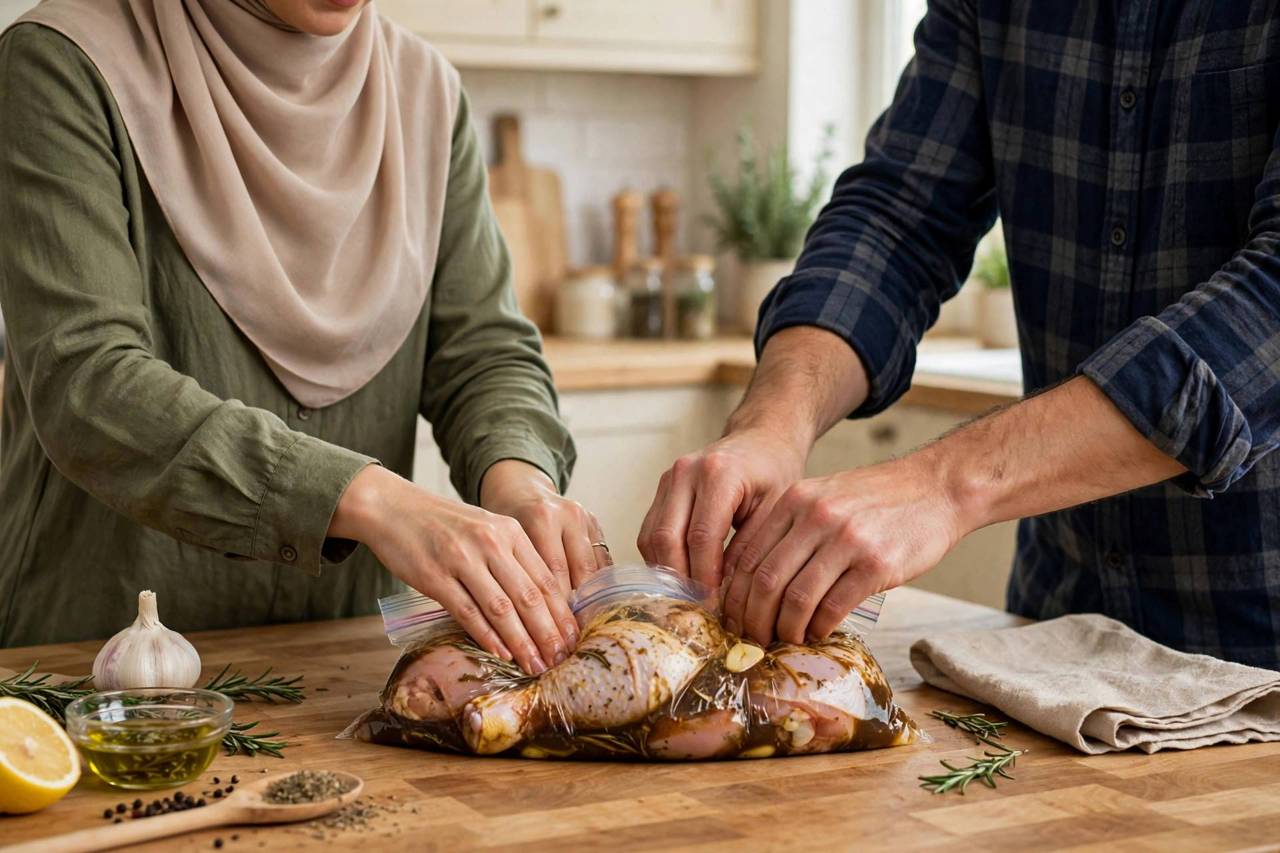
Method 2: Massage and agitate. Put the chicken and marinade in a zip-top bag, press out the air, and massage it for a minute or two — then massage again every ten minutes. The physical agitation keeps fresh marinade in contact with the meat’s surface instead of letting it sit in a stagnant layer. It sounds almost too simple, but the difference between “sat in marinade” and “massaged in marinade” over thirty minutes is genuinely noticeable. Your hands are the accelerator.
Method 3: The vacuum effect. If you have a vacuum sealer, this is the power move. Vacuum-sealing chicken with marinade pulls air out of the meat’s surface and forces marinade into the tiny gaps — it is the closest thing to time travel in cooking. No vacuum sealer? The poor man’s version works surprisingly well: use a zip-top bag and press out as much air as possible before sealing, which creates a mild version of the same effect. Every bit of air you remove is marinade pressed closer to the meat.
Combine all three — pierce, bag with minimal air, massage periodically — and thirty minutes genuinely rivals hours of passive marinating. I have served this chicken to guests who assumed it marinated all afternoon. It did not. It marinated during one episode of television.
The Acid Rules: Speed Without Ruining the Texture
Acids — citrus juice, vinegar, yogurt, wine — are the workhorses of quick marinades because they act fast. But fast-acting means easy to overdo, and over-marinated chicken has a distinctive, unpleasant texture: mushy on the outside, chalky, almost mealy. Here are the time limits I follow in my kitchen:
High-acid marinades (lots of lemon, lime, or vinegar): 30 minutes to 2 hours maximum. Citrus is the most aggressive — lime juice in particular can start “cooking” the surface (like ceviche) surprisingly quickly. These are your best friends for quick marinating precisely because they work fast, but respect the clock.
Medium-acid marinades (yogurt, buttermilk, moderate vinegar): 30 minutes to 4 hours. Dairy acids are gentler — yogurt-based marinades are famously forgiving, which is why tandoori-style chicken can sit for hours without turning to mush. For a quick marinade, thirty minutes in yogurt with spices is one of the best flavor-to-effort ratios in cooking.
Low-acid marinades (oil, herbs, soy sauce, aromatics without much citrus or vinegar): 30 minutes to overnight. These are the safest for longer sits but the slowest to build flavor — for quick marinating, they need the help of the pierce-and-massage methods above.
The golden rule: match the acid level to your available time. Only have thirty minutes? Go high-acid and let chemistry do the heavy lifting. Have all afternoon? A gentler marinade gives you a wider margin of error. And never reuse marinade that touched raw chicken unless you boil it first — that is a food safety non-negotiable.
Three Base Marinades for Busy Weeknights
Every marinade I make starts from one of these three bases. Learn them and you can improvise endlessly.
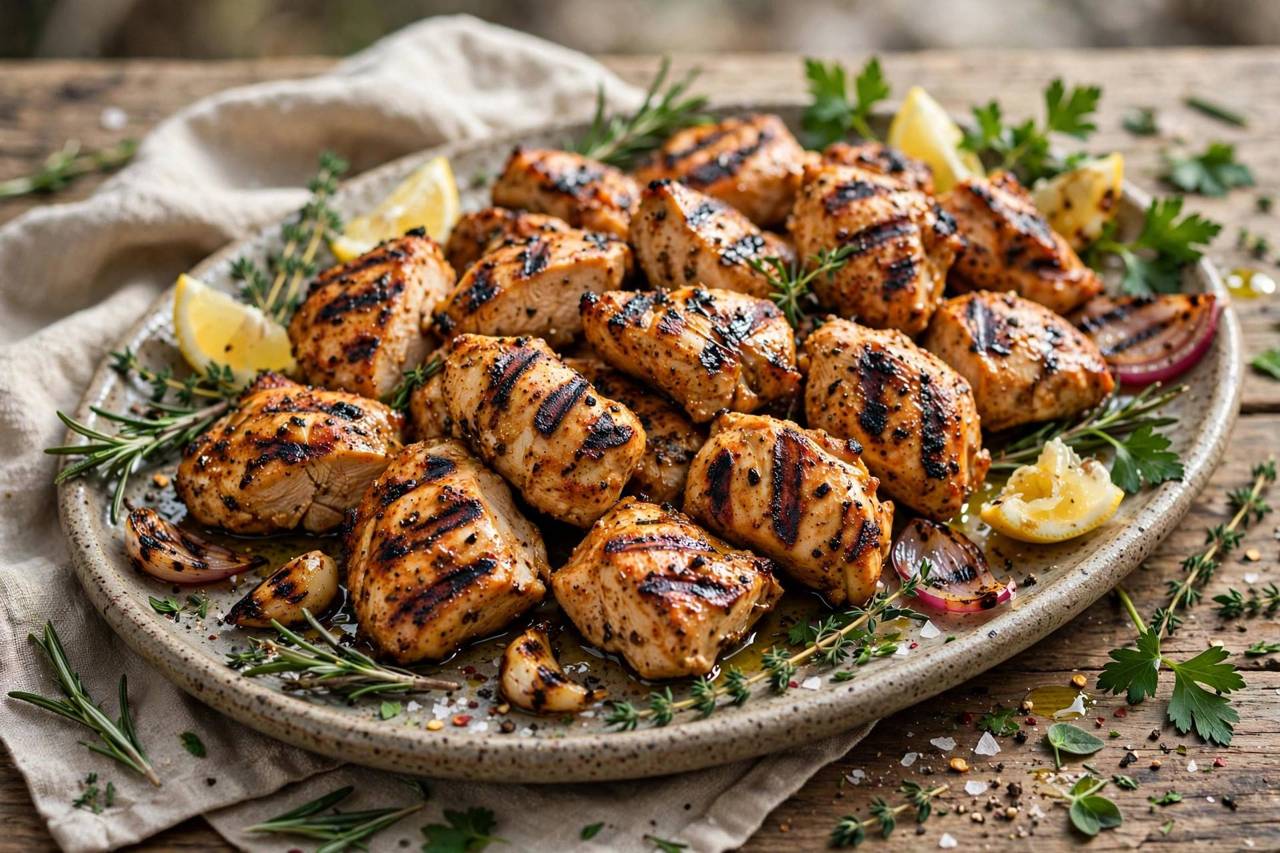
1. The citrus-herb workhorse. Olive oil, lemon juice, minced garlic, chopped rosemary or thyme, salt, black pepper. Thirty minutes, then grill or roast. This is the marinade I make when I cannot think — it has never once disappointed me. The lemon works fast, the herbs perfume the surface, and the oil helps everything brown beautifully.
2. The yogurt-spice hug. Plain yogurt, grated ginger, minced garlic, cumin, paprika, turmeric, salt, a squeeze of lemon. This is the weeknight tandoori shortcut: the yogurt tenderizes gently, the spices bloom into it, and thirty minutes gives you remarkably deep flavor. Fantastic grilled, roasted, or broiled. If you only learn one marinade from this article, make it this one.
3. The soy-sesame umami bomb. Soy sauce, sesame oil, rice vinegar, honey, grated ginger, garlic, a pinch of chili flakes. The soy brings salt and umami that penetrate quickly; the honey helps with caramelization. Thirty minutes, then cook hot and fast. This one is dangerously good on thighs and wings.
The formula underneath all three: fat + acid + salt + aromatics. Fat carries flavor and aids browning. Acid tenderizes and brightens. Salt penetrates deeper than any other ingredient — do not skip it. Aromatics (garlic, herbs, spices, ginger) perfume the surface. Once you see the formula, you can build a marinade from whatever is in your fridge, and it will work.
Quick Marinating by Cut: Breasts, Thighs, and Wings
Different cuts need slightly different handling. Chicken breasts are the trickiest — lean, thick in the middle, prone to drying out. Pound to even thickness, pierce, and favor the yogurt or moderate-acid marinades; aggressive citrus on a long sit can make the exterior mushy while the thick center stays bland. Thirty minutes is the sweet spot.
Chicken thighs are the most forgiving cut in existence — higher fat, more connective tissue, harder to overcook and harder to ruin. They take to quick marinating beautifully and tolerate stronger acids and slightly longer times. If you are nervous about the whole enterprise, start with thighs. They want you to succeed.
Wings and drumsticks have lots of surface area relative to their size, which makes them ideal for quick marinating — more surface means more flavor pickup per minute. Score the skin, massage well, and thirty minutes is plenty. These are also the cuts where the vacuum-bag trick shines brightest.
One universal tip: pat the chicken dry before cooking. Marinade left pooling on the surface steams instead of sears. Pat it dry, then cook hot — you want the browning that the marinade’s sugars and proteins make possible. Wet chicken in a hot pan is a tragedy; dry chicken in a hot pan is dinner. I also let quick-marinated chicken rest at room temperature for the last ten minutes of its marinating time while the pan or grill heats up — it is still safely within food-safety limits for that short window, and chicken that is not ice-cold cooks more evenly.
Food Safety: The Non-Negotiables
Quick marinating does not mean careless marinating. Always marinate in the refrigerator, never on the counter — even for thirty minutes, the fridge is the rule. Bacteria multiply fast at room temperature, and “it was only half an hour” is not a defense your stomach will accept.
Never reuse marinade that has touched raw chicken as a sauce unless you bring it to a full boil first. If you want a sauce, set some marinade aside before it touches the chicken — I do this every time, in a separate little bowl, and it takes ten seconds.
Do not over-marinate. The time limits above are real. Chicken left in strong acid for many hours does not get more flavorful — it gets mushy. Set a timer. Your future self, the one eating dinner, will thank your past self, the one who set the timer.
And the internal temperature rule never changes: chicken is done at 165°F (74°C) at the thickest part, measured with a thermometer, not guessed by color. Juices running clear is folklore; the thermometer is fact. I test every recipe I publish, and I thermometer every chicken I cook. No exceptions.
Frequently Asked Questions
How long should you marinate chicken if you are in a hurry?
Thirty minutes is genuinely effective if you pierce the meat, use a zip-top bag with the air pressed out, and massage periodically. High-acid marinades (citrus, vinegar) work fastest. Do not exceed two hours in strong citrus marinades or the texture suffers.
Does poking holes in chicken help marinade penetrate?
Yes — piercing with a fork or scoring with shallow cuts increases surface area and creates channels for the marinade, noticeably speeding up flavor absorption. Combined with massaging in a bag with minimal air, it is the most effective quick-marinating technique.
Can you marinate chicken too long?
Absolutely. Over-marinating, especially in acidic marinades, breaks down the surface proteins too far and produces mushy, mealy texture. Respect the time limits: 30 minutes to 2 hours for high-acid marinades, longer only for gentle dairy or oil-based ones.
Should you marinate chicken at room temperature to speed it up?
No — always marinate in the refrigerator. Room-temperature marinating invites bacterial growth, and the modest speed gain is not worth the food safety risk. The pierce, massage, and vacuum techniques speed things up safely instead.
Can I reuse leftover chicken marinade?
Only if you boil it first to kill bacteria from the raw chicken. The safer habit: reserve some fresh marinade in a separate container before it touches the meat, and use that as your sauce. It takes seconds and eliminates the risk entirely.