How Does Impeachment Work? The Process, Step by Step

Impeachment is one of the most misunderstood processes in American government. If you have ever wondered how does impeachment work, you are not alone — even politically engaged people often confuse it with removal from office, criminal prosecution, or both. In reality, impeachment is best understood as the political equivalent of an indictment: the House of Representatives formally accuses an official of wrongdoing, and the Senate then holds a trial to decide whether to convict and remove them. It is rare, it is deliberately difficult, and it has happened only a handful of times in more than two centuries. Here is the full process, step by step, from the constitutional foundations to the final Senate vote.
The Constitutional Foundation
The framers of the Constitution built impeachment into Article II, Section 4: the President, Vice President, and all civil officers of the United States may be removed for “Treason, Bribery, or other high Crimes and Misdemeanors.” That last phrase is doing most of the work, and it has been debated since the founding. It does not mean ordinary crimes only, and it does not mean only serious felonies — historically it has been understood to cover abuses of public trust and power that may not violate any criminal statute. Alexander Hamilton described impeachable offenses as those “which proceed from the misconduct of public men, or, in other words, from the abuse or violation of some public trust.” In practice, Congress decides what qualifies, which makes impeachment inherently political as well as legal. The House holds “the sole Power of Impeachment” under Article I, and the Senate holds “the sole Power to try all Impeachments.” That division is the skeleton of the whole process: accusation in one chamber, trial in the other, with the Chief Justice presiding when the President is the one on trial.
Step by Step: From Investigation to House Vote
Impeachment typically begins long before any formal vote. A House committee — often the Judiciary Committee — investigates allegations, holds hearings, subpoenas documents, and hears testimony. This investigative phase can last months and functions like a grand jury proceeding, gathering evidence and building the case. If the committee concludes the evidence warrants it, it drafts articles of impeachment: formal charges, each one a separate accusation, written in precise legal language. The committee votes on whether to recommend each article to the full House. Then the entire House of Representatives debates and votes. Each article is voted on separately, and each requires only a simple majority — 218 of 435 members if all are present — to pass. The moment the House approves even one article, the official has been impeached. That word, standing alone, means accused by the House. It does not mean removed, and it does not mean guilty. Three U.S. presidents have been impeached — Andrew Johnson in 1868, Bill Clinton in 1998, and Donald Trump twice, in 2019 and 2021 — and none were removed by the Senate. That gap between impeachment and removal is the most important thing to understand about the process.
The Senate Trial
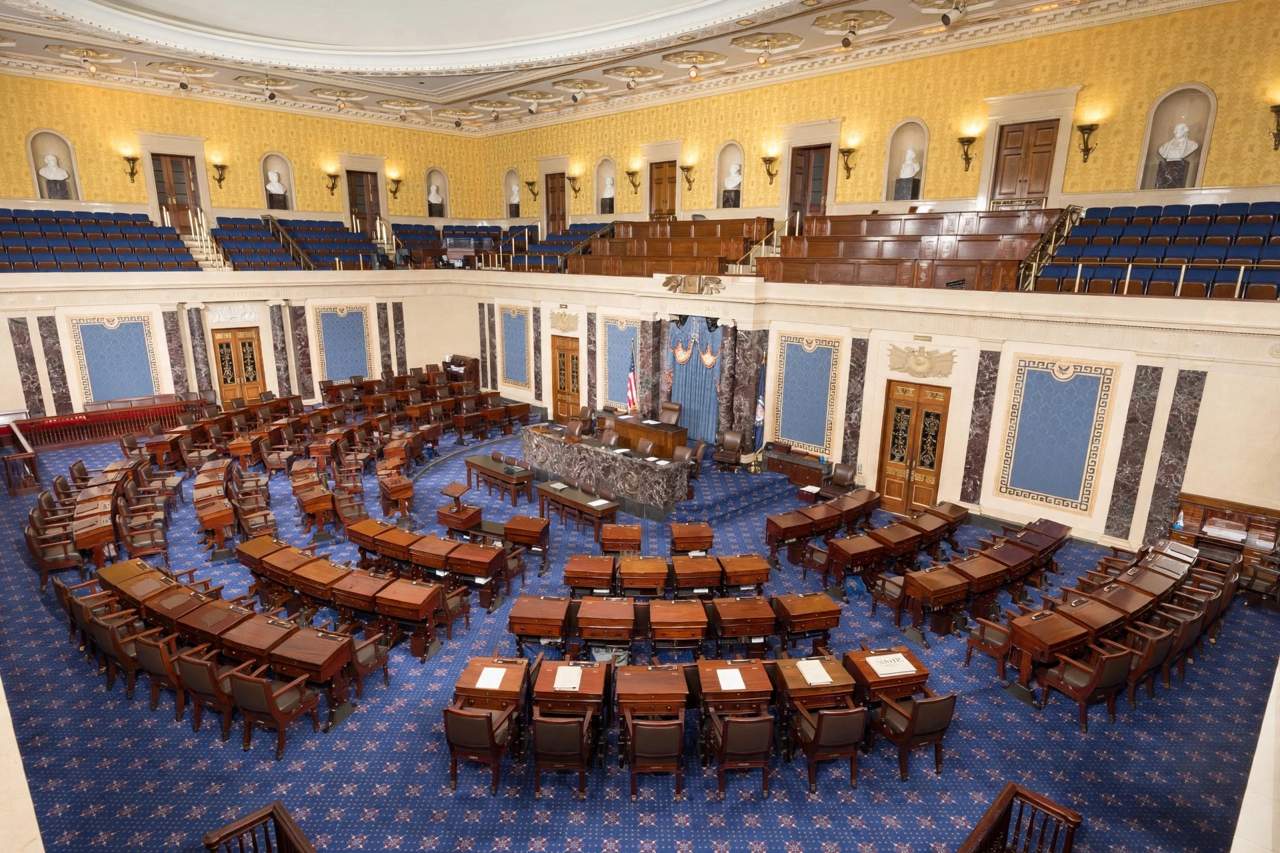
Once the House impeaches, the action moves to the Senate, which conducts the trial. House members appointed as “managers” act as the prosecution, presenting the case. The impeached official mounts a defense with their own lawyers. Senators serve as the jury — all one hundred of them — and when the President is on trial, the Chief Justice of the Supreme Court presides, mainly to keep order rather than to rule on substance. The Senate sets its own trial rules by agreement, which means procedures can vary: how much time each side gets, whether witnesses are called, how evidence is handled. After arguments conclude, the Senate deliberates and votes on each article separately. Conviction requires a two-thirds supermajority — 67 senators if all are present — a threshold deliberately set high so that removal demands broad consensus, not a partisan majority. If convicted on any article, the official is removed from office immediately, and the Vice President (or next in the line of succession) takes over. The Senate may then hold a separate simple-majority vote to bar the person from holding future federal office. If the Senate acquits, the official stays in office, and the process ends.
Impeachment Is Not a Criminal Trial
This distinction causes endless confusion, so it deserves emphasis. Impeachment is a political process with political consequences — removal from office and possible disqualification from future office. It is not a criminal proceeding, and its penalties are limited to those political outcomes. The Constitution says explicitly that a person convicted in an impeachment trial remains “liable and subject to Indictment, Trial, Judgment and Punishment, according to Law” — meaning criminal prosecution can follow separately, in regular courts, with all the usual protections. The standards of evidence differ too. There is no “beyond a reasonable doubt” requirement written into the impeachment process; senators vote their judgment, and the two-thirds threshold is the safeguard. Double jeopardy does not apply between impeachment and criminal prosecution because they are different proceedings in different systems. This is also why an acquittal in the Senate has no bearing on whether someone could later face criminal charges, and why a criminal acquittal would not prevent Congress from impeaching. The two tracks run on parallel rails.
Who Can Be Impeached — and the Historical Record
The Constitution covers the President, Vice President, and “all civil Officers of the United States,” which in practice has meant federal judges and cabinet officials alongside presidents. Fifteen federal judges have been impeached in American history, and eight were convicted and removed — judges, with their lifetime appointments, are actually the most frequent targets. One cabinet secretary, Secretary of War William Belknap in 1876, was impeached (he resigned before the trial, and the Senate acquitted). One senator, William Blount in 1797, was impeached, though the Senate ultimately decided senators were not impeachable “civil officers” and expelled him instead. Members of Congress are now understood to be removable only by expulsion, not impeachment. As for presidents: Andrew Johnson was impeached over Reconstruction-era clashes with Congress and survived conviction by a single vote. Bill Clinton was impeached over perjury and obstruction related to a personal scandal and was acquitted. Donald Trump was impeached first over dealings with Ukraine and then over the January 6 Capitol attack, and was acquitted both times. Richard Nixon resigned in 1974 before the full House could vote, facing near-certain impeachment and likely conviction.
Why Impeachment Is Designed to Be Hard
The framers had watched parliamentary systems where governments fell on simple no-confidence votes, and they deliberately chose a harder path. The two-chamber structure, the simple majority to accuse but two-thirds to convict, the fixed presidential term — all of it was engineered to make removal possible but difficult, reserved for genuine crises rather than policy disagreements. That design explains both the rarity of impeachment and the controversy around each case: because the standard of “high Crimes and Misdemeanors” is ultimately interpreted by politicians, every impeachment becomes a debate about whether the process is being used as intended or as a weapon. Supporters of the design argue the high bar protects the separation of powers and prevents constant destabilization of the executive. Critics argue it makes accountability nearly impossible in polarized times, since a president whose party holds more than a third of the Senate is effectively insulated. Both readings have evidence behind them. What is not in dispute is the intent: impeachment was built as an emergency brake, not a routine tool — difficult to pull by design, because the alternative the framers feared was a legislature that could decapitate the executive at will.
How Does Impeachment Work Compared to Other Removal Methods?
Impeachment gets the headlines, but it is only one of several ways American officials can be removed — and comparing them clarifies what makes it unique. Members of Congress cannot be impeached at all; instead, each chamber can expel its own members with a two-thirds vote, a power used sparingly throughout history. Federal judges serve “during good Behaviour” and can only be removed through impeachment, which is why eight judges — not presidents — make up the majority of impeachment convictions. For the presidency specifically, the 25th Amendment provides a separate path: if the Vice President and a majority of the cabinet declare the President unable to discharge their duties, power transfers to the Vice President. This is designed for incapacity — a medical crisis, not misconduct — and Congress can sustain the transfer over the President’s objection with a two-thirds vote in both chambers. State-level officials face yet another mechanism: recall elections, where voters themselves can remove governors and legislators mid-term, a power that does not exist at the federal level. Criminal prosecution, meanwhile, runs on a completely separate track and does not remove anyone from office by itself — a convicted official technically keeps their position until removed through one of the political mechanisms. Impeachment stands apart because it is the only federal process that combines accusation, trial, and removal for misconduct, deliberately placed in the legislature’s hands as a check on the executive and judiciary alike.
Frequently Asked Questions
Does impeachment mean the president is removed from office?
No. Impeachment by the House is an accusation, similar to an indictment. Removal happens only if the Senate then convicts by a two-thirds vote. Three presidents have been impeached and none were removed; Richard Nixon resigned before a House vote.
What are “high crimes and misdemeanors”?
The phrase comes from Article II of the Constitution and has been understood since the founding to cover abuses of public trust and power, not just ordinary crimes. Congress ultimately interprets what qualifies in each case, which is why the definition remains debated.
Can a president be criminally prosecuted after impeachment?
Yes. The Constitution explicitly states that impeachment conviction does not shield anyone from subsequent criminal indictment and trial in regular courts. Impeachment and criminal prosecution are separate processes with separate consequences.
Who presides over an impeachment trial?
The Senate conducts the trial with all one hundred senators as jurors. When the President is on trial, the Chief Justice of the Supreme Court presides. For other officials, the Vice President or Senate president pro tempore typically presides.
Has any president been removed through impeachment?
No. Andrew Johnson (1868), Bill Clinton (1998), and Donald Trump (2019 and 2021) were all impeached by the House and acquitted by the Senate. Nixon resigned in 1974 while impeachment proceedings were underway.