What Is the Most Dangerous Volcano in the World? It Depends on the Danger You Mean

Let me begin the way I begin this lesson in class: by refusing the question’s shape. “Most dangerous volcano” sounds like it should have a name for an answer, the way “tallest mountain” does. It does not — and the first thing worth learning is why. Danger is not a property a volcano carries alone. A useful way to hold it is as a product of two things: how hazardous the volcano itself is, multiplied by how many people are exposed to it. A violent volcano in an empty landscape endangers almost nobody; a modest one inside a crowded region can be catastrophic.
This article will not crown a winner, because the authorities who count these things do not crown one either. What it will do is show you the three criteria the danger is actually judged by — people nearby, history’s death tolls, and eruption style — and the names that rise to the top of each.
Why There Is No Official “Most Dangerous” List
The Smithsonian’s Global Volcanism Program — the body that maintains the world’s volcano database — publishes counts, eruption histories, and population data. What it does not publish is a ranking of the world’s most dangerous volcanoes, and that absence is deliberate, not an oversight. Any ranking would have to decide, in advance, how much weight to give a volcano’s power against the number of people in its reach, and that decision changes the answer completely — as the three criteria below will show. Notice, too, that most of these sit on one belt — the Pacific Ring of Fire concentrates the hazard and the population together, which is precisely why the exposure half of the equation matters so much.
Danger equals hazard times exposure. Every claim in this article is tied to one side of that multiplication or the other, and I would encourage you to check any “most dangerous” list you meet elsewhere against the same standard: which criterion is it using, and does it say so? The Global Volcanism Program’s own caution about counting applies here with full force: even the underlying numbers change as new research is published and criteria are revised — a league table built on shifting numbers, with unstated weights, is entertainment wearing a lab coat.
Criterion 1: How Many People Live Nearby?
Exposure first, because it is the half of the equation people forget. The Global Volcanism Program has applied the LandScan population dataset to its volcano database, counting how many people live within set distances of each volcano. The radii matter — a figure without its radius is meaningless — so every number in this table carries its distance with it.
| Volcano | People living nearby | Within | Last eruption |
|---|---|---|---|
| Campi Flegrei (Italy) | 2,234,109 | 5 km | 1538 |
| Vesuvius (Italy) | 3,907,941 | 30 km | 1944 |
| Merapi (Indonesia) | 4,348,473 | 30 km | 2024 |
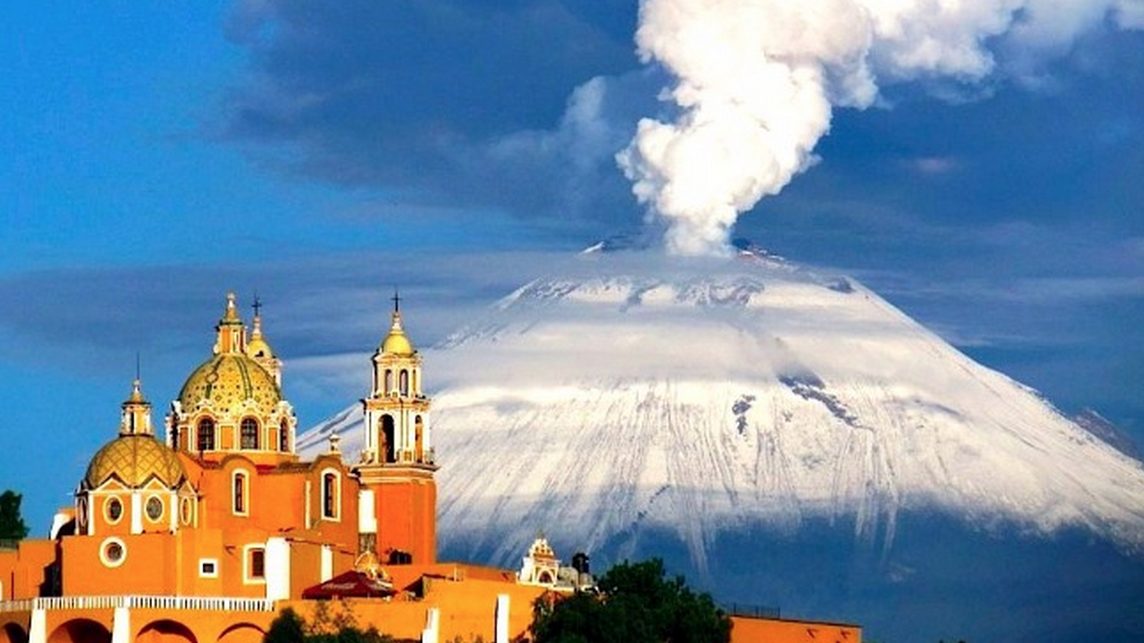
| Popocatépetl (Mexico) | 26,509,510 | 100 km | Still erupting (2024) |
| Gede-Pangrango (Indonesia) | 40,640,105 | 100 km | 1957 |
Read the table the way it asks to be read. Campi Flegrei’s figure is the most startling per kilometer: more than 2.2 million people within just 5 km of a caldera system whose last eruption was in 1538 — a long silence sitting inside a dense modern population. Merapi pairs over 4.3 million people within 30 km with a last eruption in 2024: exposure and current activity in the same row. And at the 100 km radius the numbers become metropolitan in scale — over 26 million people in Popocatépetl’s circle, over 40 million in Gede-Pangrango’s.
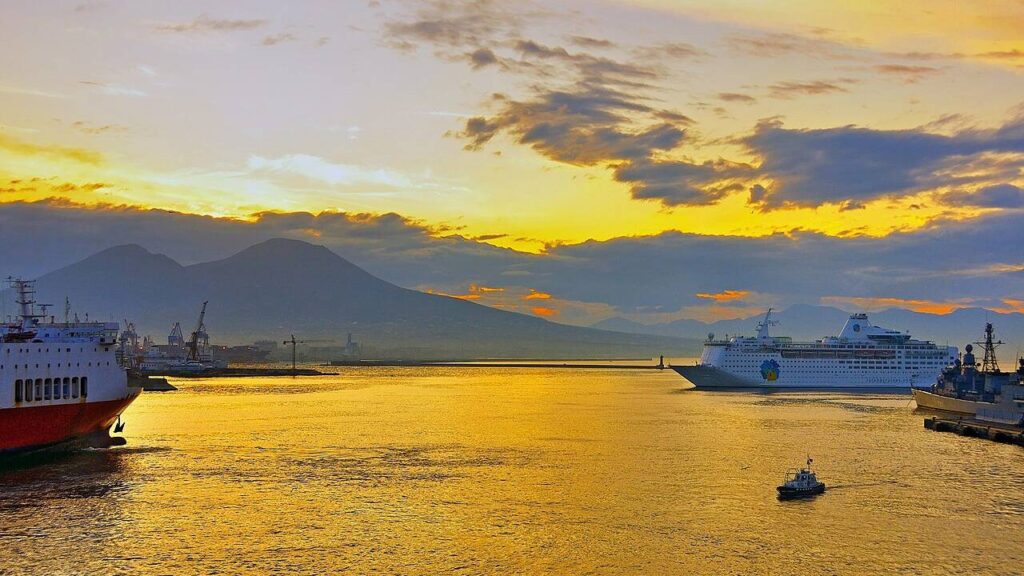
One more reading of the table is worth your time, because it corrects a famous name. Vesuvius — the volcano most people picture when they hear “dangerous” — is out-exposed by three others in this table: 3,907,941 people within 30 km is an enormous exposure by any standard, yet Merapi places more people inside that same 30 km radius, the two 100 km entries count their nearby populations in the tens of millions, and Vesuvius’s last eruption was in 1944. Fame tracks history and story; exposure tracks the present. The two lists overlap less than you would expect, and a danger ranking that simply repeats the famous names is answering the wrong question. None of these volcanoes needs to be the world’s most powerful to be among its most dangerous. They need only be powerful enough, near enough people.
Criterion 2: What History Says — The Deadliest Eruptions
The second criterion looks backward: which eruptions have actually killed the most people? The USGS’s table of the deadliest eruptions since 1500 gives the documented core of the answer — and its most instructive column is not the death toll but the cause.
| Eruption | Year | Deaths | Main cause |
|---|---|---|---|
| Tambora (Indonesia) | 1815 | 92,000* | Starvation |
| Krakatau (Indonesia) | 1883 | 36,417 | Tsunami |
| Mont Pelée (Martinique) | 1902 | 29,025 | Pyroclastic flows |
| Nevado del Ruiz (Colombia) | 1985 | 25,000 | Mudflows |
| Unzen (Japan) | 1792 | 15,000 | Volcano collapse, tsunami |
*Tambora’s toll is source-dependent: the USGS table lists 92,000 in total, while BBC Science Focus gives an estimate of at least 71,000 deaths, largely through starvation. Both figures are printed here because both are documented; neither is “the” exact number.
Three lessons hide in this table. First, the deadliest eruption in recorded history killed mostly indirectly — Tambora’s toll came through starvation after the eruption wrecked harvests, not from the blast itself. Second, water is the great multiplier: Krakatau and Unzen killed mainly by tsunami, Ruiz by mudflows — the volcano supplied the trigger, and the landscape supplied the weapon. Third, and most important for the “dangerous” question, is Ruiz. Its eruption was not one of history’s giants; it was a comparatively small eruption whose mudflows reached a town. Twenty-five thousand people died because the exposure was there. If you take one row from this article into every future argument about dangerous volcanoes, take that one.
Pelée’s row deserves a second look for the opposite reason — its toll came from pyroclastic flows, the hazard behind Pelée’s place on this list — a hazard so fast that exposure at close range leaves almost no margin at all.
Criterion 3: How It Erupts
The third criterion is the volcano’s own behaviour: how explosively does it erupt? Volcanologists grade eruptions on the Volcanic Explosivity Index, judged mainly by the volume of material ejected and the height of the eruption column — the scale our guide to volcano types uses when explaining why some types of volcanoes are more dangerous than others. Explosive style matters because it determines which hazards arrive and how fast: pyroclastic flows, ash columns reaching 20,000 to 30,000 feet where commercial aircraft fly, collapse, and the tsunamis and mudflows of the table above.
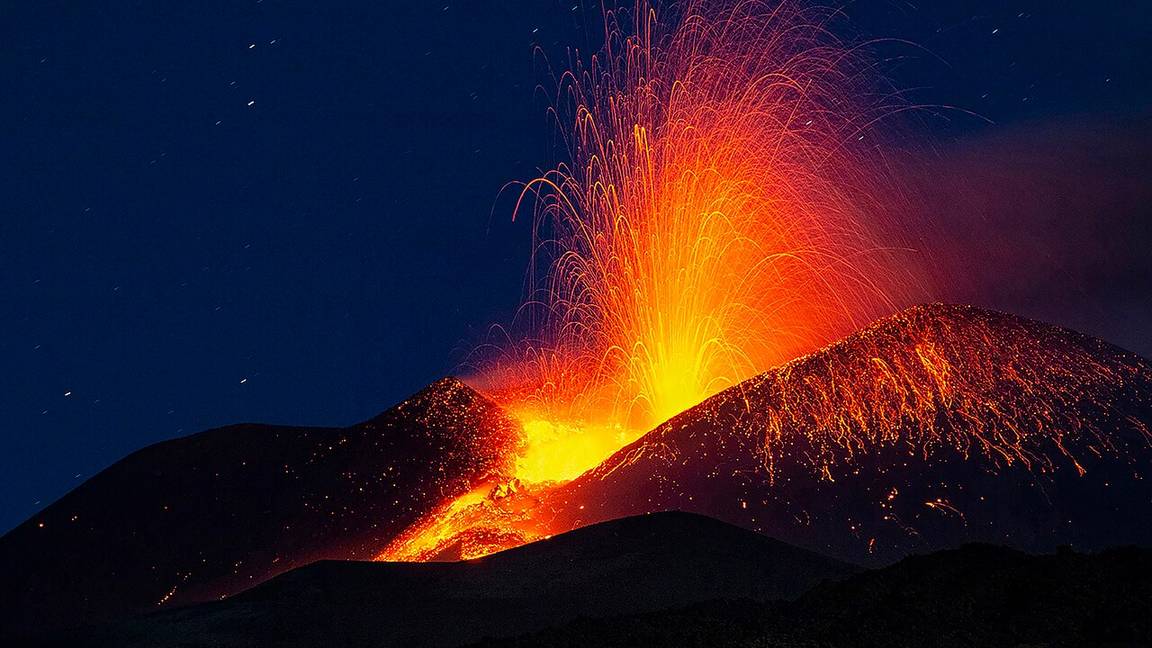
And this criterion carries its own warning, which I put to students as a rule: quiet is not the same as safe. El Chichón, in Mexico, had long been assumed dormant — it had no recorded eruption in over 600 years. In 1982 it erupted explosively, with an estimated 1,900 deaths. Measured on the explosivity scale, that eruption was a VEI 5 — respectable, nowhere near the top of the range — which is the sharpest possible illustration of this criterion’s limit: the scale grades the eruption, not the danger, and a mid-scale eruption of a long-quiet volcano killed almost two thousand people. The volcano that has not erupted in your lifetime, or in recorded local history, may simply be a volcano on a long interval.
Scale the point up and it becomes national: the United States alone has 169 active volcanoes, and more than half of them could erupt explosively. A criterion based on behaviour must therefore be a criterion based on capability, not on recent conduct — which is exactly why rankings built on “what erupted lately” mislead.
The Outlier: Yellowstone
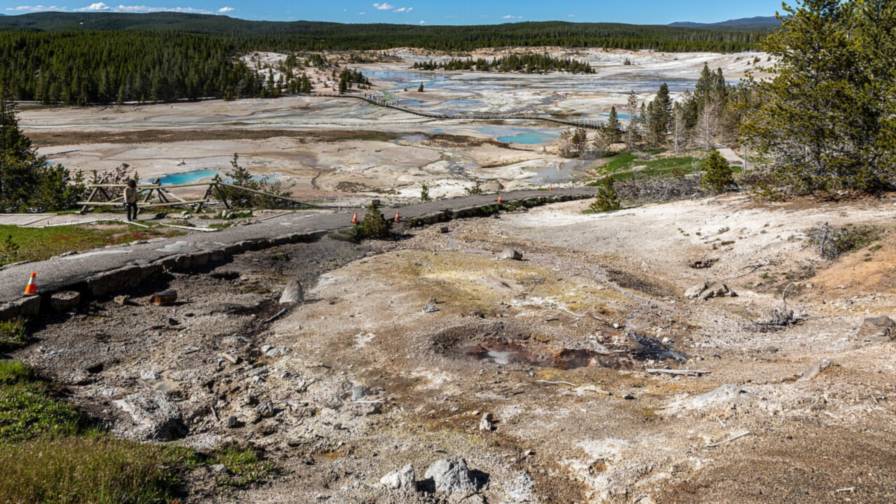
Every discussion of dangerous volcanoes eventually arrives at Yellowstone, so let us place it honestly, in its own category. By destructive ceiling, nothing else competes: a caldera-forming supereruption there would have regional devastation and years-to-decades of global climate effects. By probability, it sits at the opposite extreme from everything else in this article — the USGS approximates the yearly chance of another caldera-forming eruption at about 1 in 730,000, roughly the probability of a large asteroid hitting Earth, and notes there is no evidence one is imminent. The USGS adds that the chances of such an eruption are exceedingly small in the next few thousand years. Highest conceivable impact, lowest realistic likelihood: Yellowstone is not a contender for “most dangerous” in any practical sense. It is the reminder that the question itself has (at least) two axes, and this volcano maxes one while minimizing the other.
So… Which One Is It?
Now the criteria can be combined, and the honest answer can be given in their terms rather than as a coronation. If the danger you mean is people in immediate reach, the names are Campi Flegrei — millions within a few kilometers, silent since 1538 — and Merapi, pairing millions nearby with eruptions in the present decade. If the danger you mean is reach across a whole region, Popocatépetl, with over 26 million people within 100 km and an ongoing eruption, is the name the criterion produces. If the danger you mean is demonstrated killing power, history’s table answers with Tambora, Krakatau, and Pelée — and warns, through Ruiz, that the next entry may come from a volcano nobody ranked. That is not an evasion; it is the structure of the subject. “Most dangerous” is three questions wearing one coat, and now you have all three answers — each tied to its criterion, each tied to its source.
It is also, not incidentally, how the professionals allocate their own attention: scientists focus their monitoring efforts on active volcanoes, especially those that might affect populated areas — hazard and exposure, multiplied, exactly as this article has done.
Frequently Asked Questions
No. The Global Volcanism Program, which keeps the world volcano database, does not publish a danger ranking — because any ranking has to choose how to weigh a volcano’s power against the people exposed to it, and that choice changes the result. This article therefore judges by criteria instead: population nearby, historical death tolls, and eruption style.
Tambora, in 1815. The USGS table of deadliest eruptions lists 92,000 deaths in total, mostly from starvation after the eruption; BBC Science Focus gives an estimate of at least 71,000. The two figures differ because counting deaths from famine across a region is estimation, not arithmetic — both are documented, and both are far above any other eruption’s toll.
Only on one axis. Its worst-case eruption is the largest imaginable, but its yearly probability is approximately 1 in 730,000, with no evidence of an imminent catastrophic event — or, the USGS adds, of an imminent smaller lava eruption either. On the criteria that govern real-world danger — people exposed and demonstrated behaviour — volcanoes like Merapi and Popocatépetl stand ahead of it.
Partly because the same volcanism that creates the hazard creates the reason to stay: volcanic materials weather into some of the most fertile soils on Earth, which have supported farming and civilizations for centuries. The exposure figures in this article — millions within a few kilometers — are the modern size of a very old bargain.