How to Host a Game Night People Will Beg You to Repeat

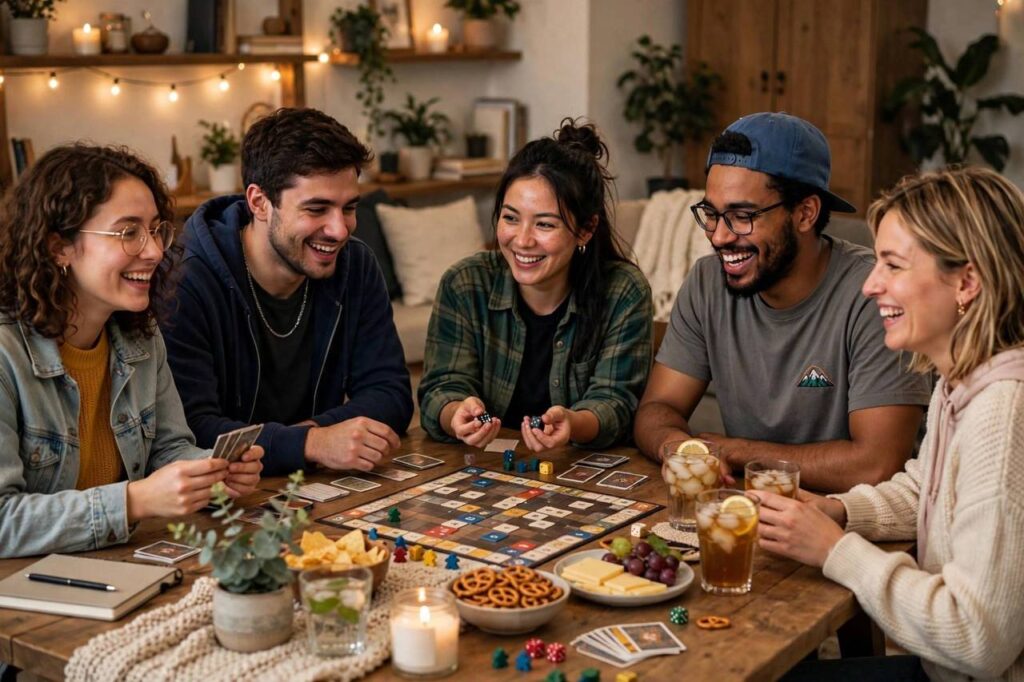
Okay, real talk: the best game nights aren’t about having the biggest board game collection or the fanciest snacks. They’re about that magical moment when everyone’s laughing too hard to breathe, someone’s dramatically accusing their best friend of betrayal over a card game, and nobody’s checking their phone. I’ve hosted dozens of game nights — some legendary, a few gloriously chaotic — and I’m going to share the exact playbook that turns a regular evening into the night everyone talks about for weeks. Here’s how to host a game night that actually works — from guest list to game selection to the energy management most hosts miss.
Start With the Guest List (Size Matters More Than You Think)
Here’s my strategic take: 4 to 6 people is the sweet spot for most game nights. Why? Because most of the best games are designed for exactly that range, turns stay snappy, and everyone actually gets to talk to everyone. With 8+ players, you’re limited to party games, half the group zones out during long turns, and the energy fragments.
That said, big-group game nights can be amazing — you just need to plan differently (more on that below). The key principle: match your games to your headcount before anyone arrives. Nothing kills momentum like spending 30 minutes figuring out which of your games works for seven people.
Also, think about the mix. A great game night group has a blend of competitive spirits and chill vibes. If you’re inviting someone who’s never played a modern board game, that’s fantastic — just make sure your opening game is welcoming, not a three-hour strategy epic that requires a rules lecture.
How to Host a Game Night: Choose Your Games Like a Strategist
This is where most hosts go wrong. They pick their favorite heavy strategy game and watch their guests’ eyes glaze over during a 25-minute rules explanation. Instead, build your evening like a playlist: opener, main event, closer.
The opener (15-30 minutes): Something light, funny, and easy to learn while people are arriving and settling in. Think party games, quick card games, or dexterity games. The goal is laughter and zero rules friction. This is also your buffer for late arrivals — nobody misses anything important.
The main event (60-90 minutes): Now you bring out the good stuff. A meatier game with real decisions — cooperative games are brilliant here because they get everyone talking and strategizing together, and nobody gets eliminated early. If your group loves competition, a mid-weight strategy game with lots of player interaction works beautifully.
The closer (20-30 minutes): End on a high note with something quick and punchy. A fast card game, a bluffing game, or a rematch of the opener. Never end with the game that overstayed its welcome — always leave them wanting more.
Pro tip from many nights of experience: learn the rules BEFORE your guests arrive. Watch a tutorial video, play a practice round solo, whatever it takes. A host who can teach a game in five confident minutes is worth their weight in gold. A host reading the rulebook aloud for twenty minutes is a vibe killer.
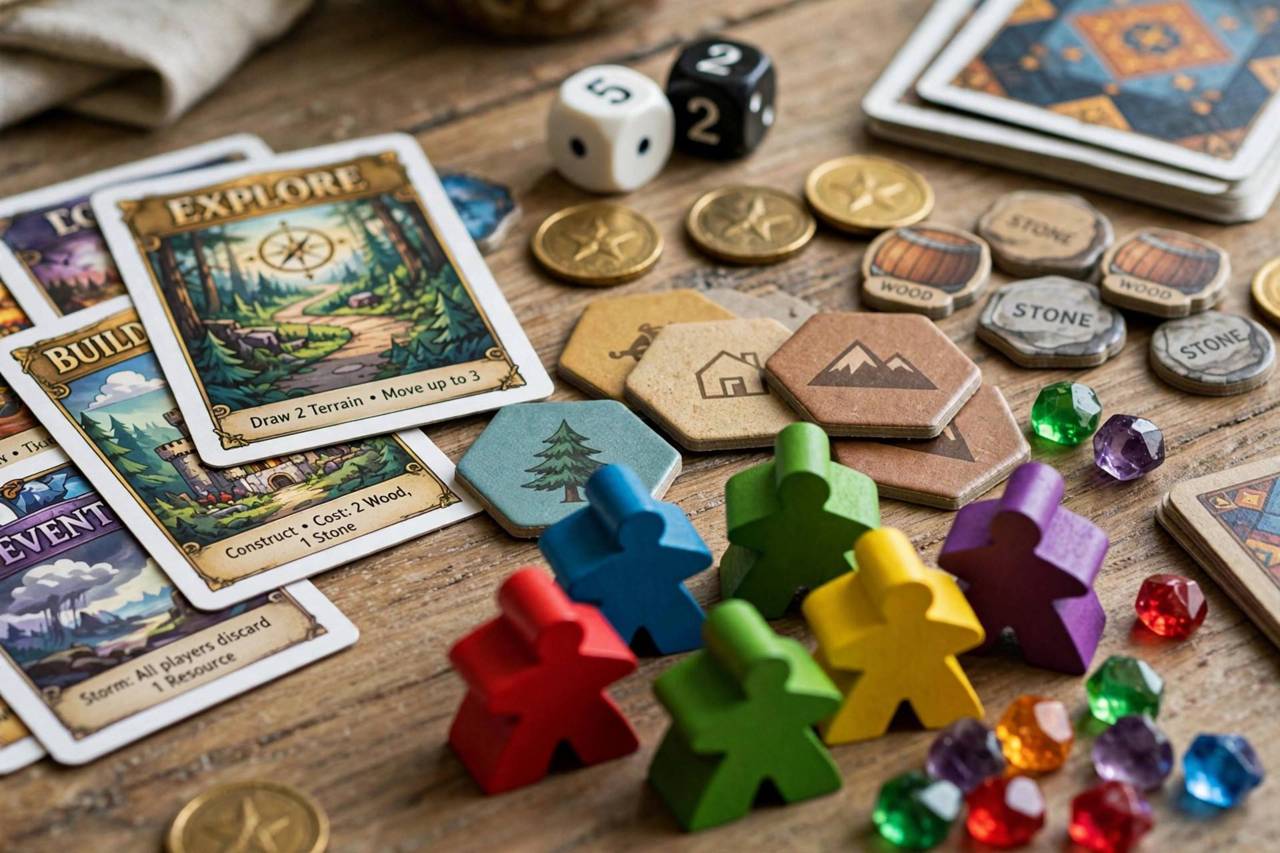
Set Up Your Space for Maximum Fun
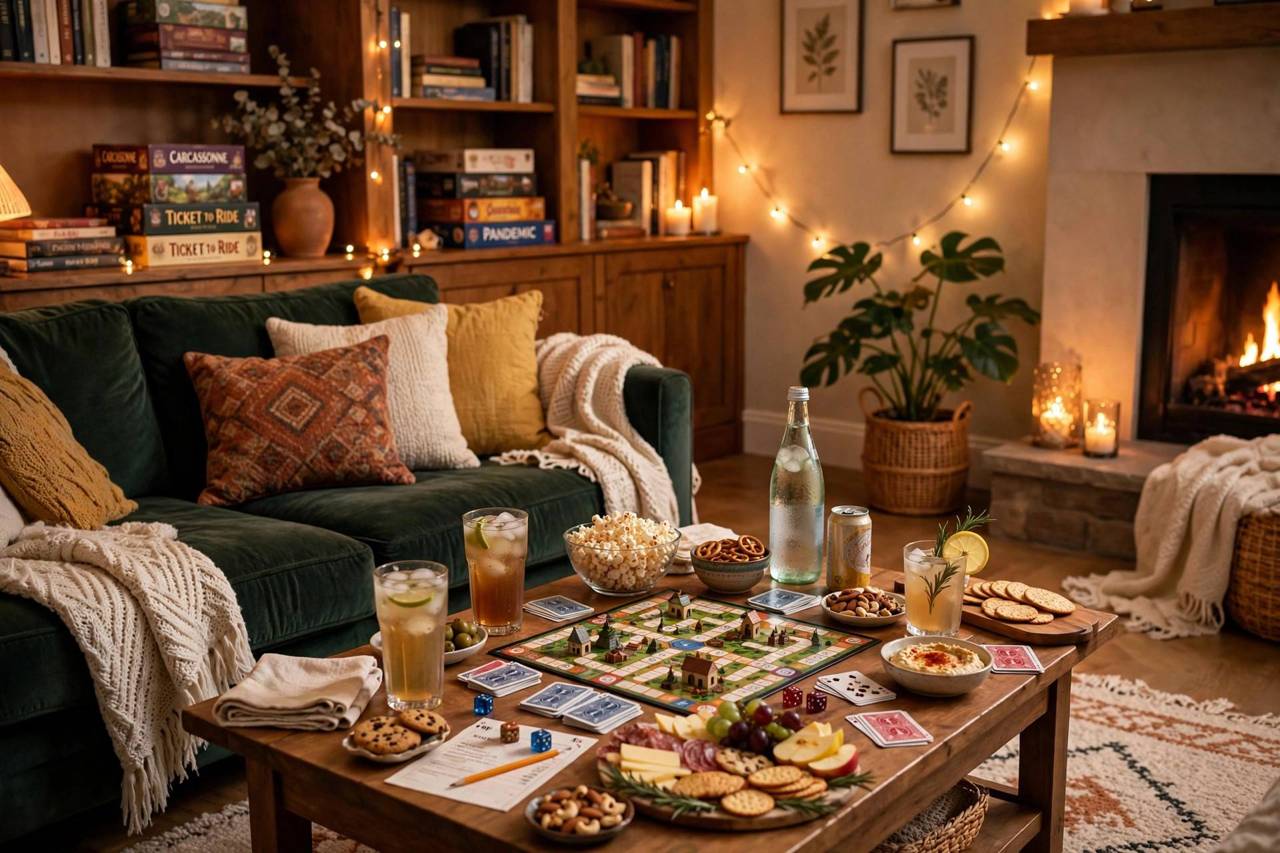
You don’t need a dedicated game room — but a little setup goes a long way:
- One big table is ideal. Everyone should be able to reach the center comfortably. Clear it completely before guests arrive — no mail piles, no random clutter.
- Lighting matters. Bright enough to read cards easily, warm enough to feel cozy. Harsh overhead fluorescents are the enemy of atmosphere.
- Seating for everyone, equally. Nobody should be perched on an armrest while others lounge. Borrow chairs if you need to.
- A side table for food and drinks. Keep snacks and beverages OFF the main game table. One spilled drink on a beloved board game is a tragedy; a side table prevents it entirely.
- Background music, low. A chill playlist at conversation level fills awkward silences during setup without competing with the games.
Food and Drinks: Keep It Game-Friendly
The golden rule of game night food: nothing greasy, nothing that requires two hands, nothing that stains. Your games will thank you. My go-to spread:
- Finger foods: popcorn, pretzels, veggie platters, cheese and crackers, skewers — things you can grab in one hand between turns.
- Slow-cooker win: a pot of chili, pulled pork sliders, or meatballs that guests can serve themselves whenever. Zero hosting stress.
- Drinks: have water readily available (hydrated gamers are happy gamers), plus whatever your group enjoys. Batch cocktails or a simple punch bowl beat playing bartender all night.
- Dessert: cookies or brownies. Always. This is non-negotiable.
Ask about dietary restrictions when you invite people — it’s a small gesture that makes everyone feel welcome. And if you’re new to hosting gatherings in general, the principles overlap a lot with hosting a dinner party — timing, prep-ahead strategies, and reading the room all transfer beautifully.
The Host’s Secret Weapons: Energy Management
Here’s the strategic layer most hosting guides miss: you’re not just managing games and food, you’re managing energy. Watch the room like a game designer watches playtesters.
Read the table. If energy dips — people checking phones, side conversations taking over — that’s your signal to wrap up the current game and switch gears, not to push through. The best hosts pivot gracefully.
Manage the competitive intensity. Every group has That Player who takes things a little too seriously. Seat them next to the chillest person. Choose at least one cooperative game. And if someone’s having a rough night (losing everything), quietly steer the next pick toward something luck-based where anyone can win.
Handle rules disputes with grace. They will happen. My rule: the host makes a quick ruling, we move on, and we look it up later. Five minutes of rules lawyering kills more fun than any wrong ruling ever could. Keep a “house rule, moving on” attitude and the night stays smooth.
Include everyone. If someone’s quiet, draw them in — ask their opinion on a group decision in a co-op game, or team them up with an experienced player. The goal is that everyone leaves feeling like they were part of something, not that they watched others have fun.
Game Night Formats for Different Groups
The classic (4-6 players): The opener-main-closer structure described above. This is your bread and butter.
The big bash (8-12 players): Split into two tables running parallel games, then bring everyone together for a big party game finale. Or run a tournament bracket with a silly prize. The key is avoiding the “seven people watching two people take long turns” trap.
The couples’ night: Two-player-friendly games shine here, or team-based games (couples vs. couples adds a delightful dynamic). Keep it to 2-3 games max and leave plenty of social time.
The family night: Choose games with simple rules but real decisions — kids smell condescension a mile away. Cooperative games are perfect because the adults can guide without dominating, and everyone wins or loses together.
The virtual game night: For far-flung friends, pick games designed for online play or with good digital implementations. Video chat on a separate device, one person shares the game screen, and it works surprisingly well.
Timing: When to Start, When to End
Start time matters more than people think. A 7 PM start gives everyone time to arrive, settle, snack, and play the opener by 7:30. Starting at 8 or later compresses everything and someone always has to leave early.
As for ending: plan your last game to finish by 10:30-11 PM for a weeknight, and let weekend nights breathe a little longer. The host sets the energy — when you start yawning and tidying, people take the hint gracefully. And always, always end with the group wanting one more game. That’s how you guarantee the next invitation gets an instant yes.
After the Night: The Little Things That Build Tradition
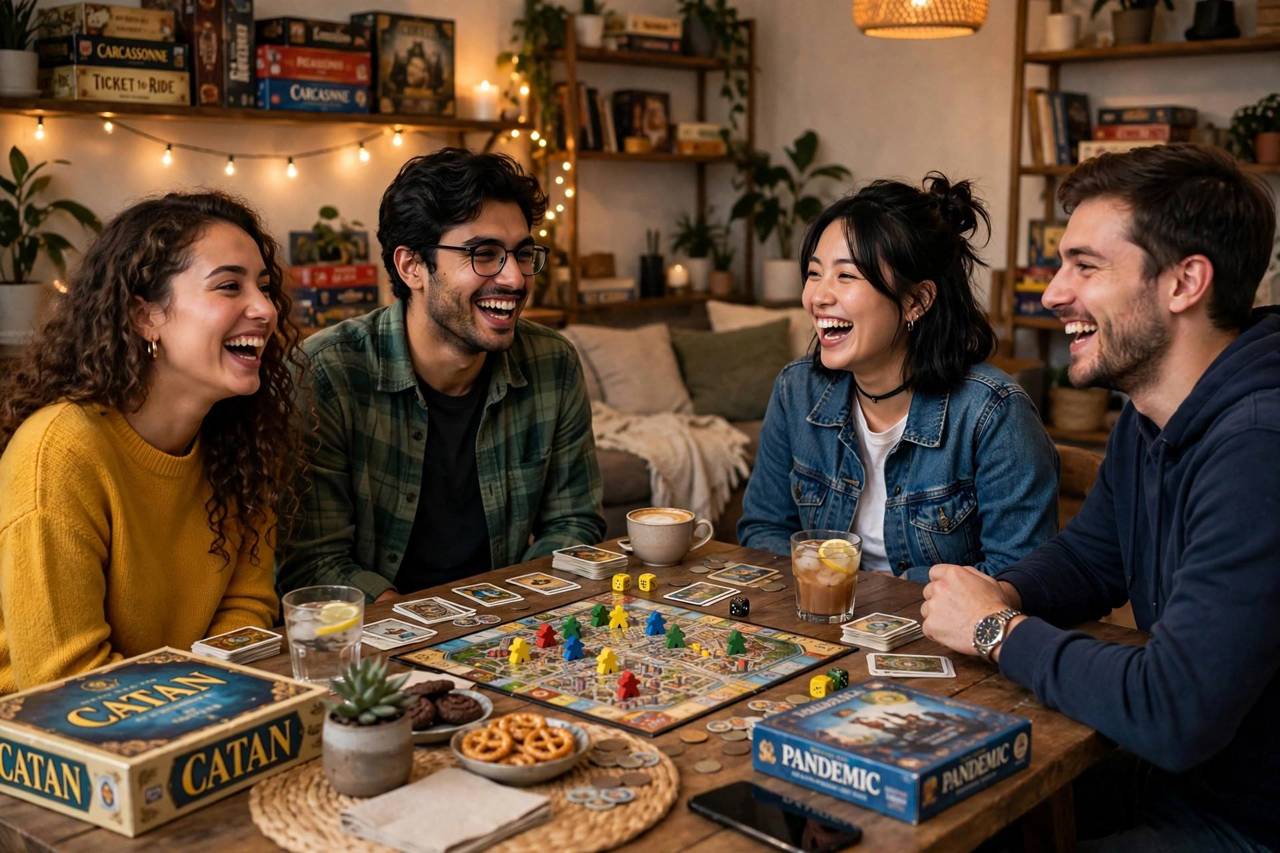
The best game nights become traditions — monthly, seasonal, whatever rhythm works. A few touches that make it stick:
- A group chat for voting on the next date and game picks. Let guests suggest games — it builds investment.
- A silly trophy for the night’s champion. It can be the ugliest thing from a thrift store. The worse it looks, the better the tradition.
- Rotate hosting if the group is into it. Different homes, different vibes, shared effort.
- Remember what worked. Keep a note on your phone: which games were hits, who loved what, any dietary notes. Next time, you’re already ahead.
At the end of the day, remember what you’re really hosting: not a game tournament, but an evening of genuine human connection with a playful wrapper. The games are the excuse. The laughter, the friendly rivalries, the inside jokes that get born at 10 PM over a card table — that’s the real prize. Now go send that group text. You now know how to host a game night people will remember — and your legendary evening starts with a single message.
FAQ
How many people should I invite to a game night?
Four to six is the sweet spot for most game nights — it matches the player counts of the best games and keeps turns snappy. For larger groups of 8-12, plan party games or split into two tables running parallel games.
What are the best games for people who’ve never played board games?
Start with party games or light card games with simple rules and lots of laughter — things you can teach in under five minutes. Save the complex strategy games for later in the evening or for a group that’s already hooked.
How long should a game night last?
Plan for 3-4 hours total: 30 minutes of settling in and opener game, 60-90 minutes for the main game, and a quick closer. Start around 7 PM so you’re not rushed, and always end while energy is still high.
What food should I serve at a game night?
Stick to one-handed, non-greasy finger foods — popcorn, pretzels, veggie platters, skewers, slow-cooker options guests can serve themselves. Keep all food and drinks on a side table, away from the games.
How do I handle someone who gets too competitive?
Seat them next to a chill player, include cooperative games where everyone works together, and steer late-night picks toward luck-based games where anyone can win. A quick, graceful house ruling on disputes keeps things from escalating.
Keep Reading
- Best Board Games for Family Game Night (By Age Group)
- Xbox Game Pass October 2026 Games: Battlefield 6 and Valor Mortis Lead 9 New Arrivals — Full List With Dates
- Best Board Games for Family Night: 18 Picks Everyone Will Love