What Is Edge Computing? Explained in Simple Terms

Every time you ask your phone a question, a small miracle happens behind the scenes. Your voice travels hundreds of miles to a giant data center, gets decoded, gets an answer, and travels all the way back — in about a second.
But what if it didn’t have to travel at all? What if your device could just think for itself, right there in your hand?
That is the whole idea behind edge computing. Let me make this simple: instead of sending every bit of data on a long round trip to a faraway cloud, you process it close to where it was created — at the “edge” of the network. The result is faster responses, less internet traffic, and systems that keep working even when the connection drops.
What Is Edge Computing? (The Simple Definition)
Here is the plain-language version: edge computing means doing the computing at or near the physical place where the data is created, instead of inside a big centralized data center or cloud.
The “edge” is simply wherever the action happens. A factory floor sensor. A security camera on your porch. Your phone. A self-driving car. All of these are edges, because all of them create data exactly where they sit.
Think of it like cooking. The cloud is a catering kitchen across town — amazing equipment, but you have to drive there and back. The edge is your own kitchen: if you just want toast, you use your own toaster. Quick, urgent work happens locally; only the heavy lifting goes to the cloud. The payoff is speed (no round trip) and bandwidth savings (you send the answer, not the raw footage).
The Smart Fridge Example That Explains Everything
Picture a smart fridge with a little camera inside that watches the shelves. In the old cloud-only world, it would stream video to a data center around the clock, the cloud would analyze the footage, notice the milk is gone, and send you a notification. That is an enormous amount of video flying across the internet for a very tiny answer: “buy milk.”
In the edge world, the fridge has a small computer built in. It watches the shelf itself and only contacts the cloud when something actually matters — “milk is running low, egg count is down.” The video of your kitchen never leaves your kitchen.
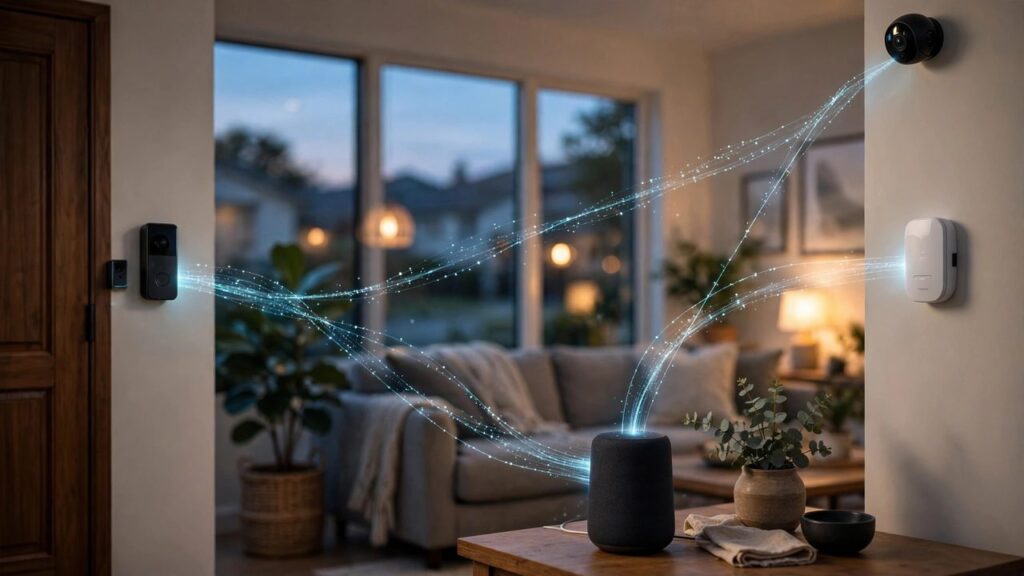
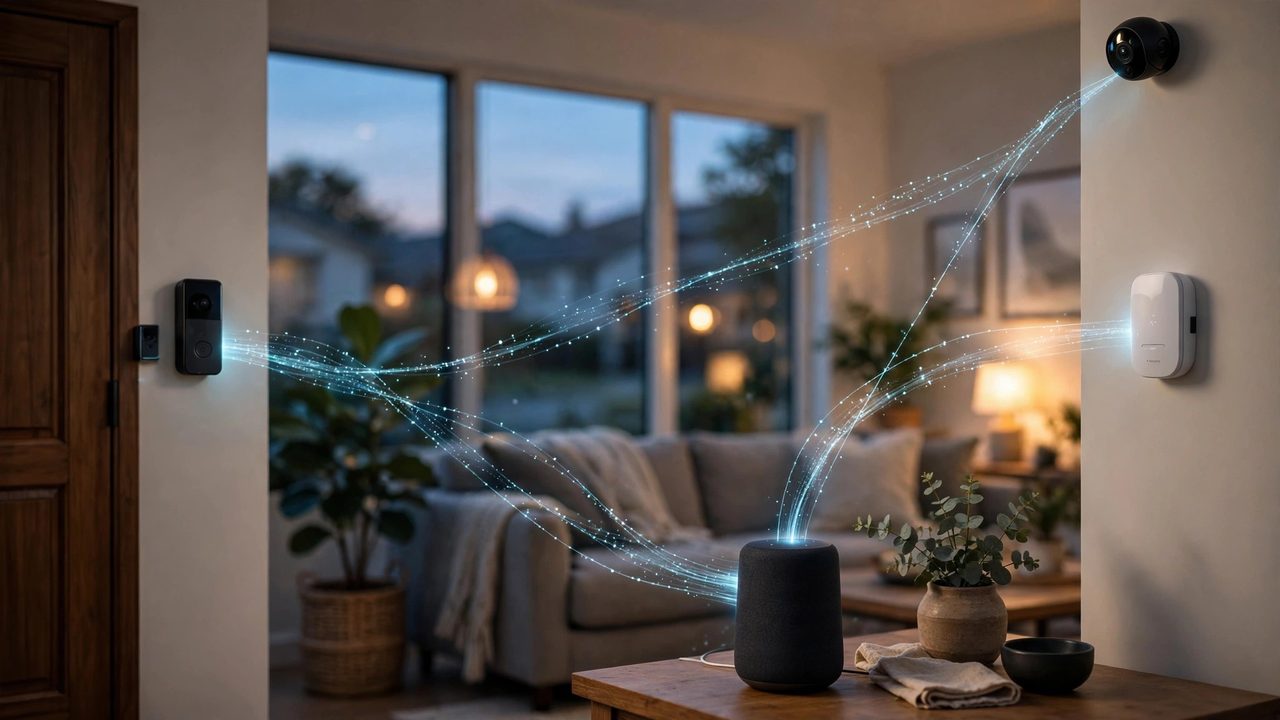
Your video doorbell does the same: it decides locally — “that shape is a person, ring the chime” — instead of streaming every passing car to a server. A smart TV works the same way with voice commands — it detects the wake word and handles simple requests on the device instead of sending every sentence to a server. One idea, three wins: privacy (footage stays home), speed (no round trip), bandwidth (no nonstop uploading). You’ll see this pattern repeat from factory robots to hospital monitors.
How Edge Computing Works, Step by Step
The workflow always follows the same three moves, no matter the industry.
Step 1: Devices Generate Data
Sensors, cameras, phones, and machines produce raw data — temperature readings, video frames, vibration signals. The volume is enormous, and honestly, most of it is boring. A factory sensor might report “all normal” ten thousand times a day.
Step 2: Local Edge Systems Process It
Right there — on the device or a nearby edge gateway — a local computer filters and analyzes the data, asking the only question that matters (“is this normal?”) and discarding the noise. This local chatter runs over your own network; if you want a refresher on how that works, how WiFi works breaks it down.
Step 3: Only Important Results Go to the Cloud
The cloud gets the highlights reel, not the raw footage. Aggregated statistics, alerts, and the occasional batch of data used to retrain the models. The cloud is still essential — it is where long-term storage lives and where the smarter, heavier analysis happens — but it no longer has to drink from the firehose.
That division of labor is the whole trick. The edge handles the “right now,” the cloud handles the “big picture,” and each one does what it is best at.
The 3 Problems Edge Computing Solves
Networks have three hard limits, and edge computing is the answer to all three.
1. Bandwidth
Bandwidth — how much data a connection can carry — isn’t infinite. One HD camera streams gigabytes daily; a factory full of them chokes the pipe. Edge fixes this by sending insights instead of raw streams: “Shelf 4 is empty” is a few bytes; the video it replaced was gigabytes.
2. Latency
Latency is the round-trip delay, and some decisions can’t afford it. A webpage loading late? Nobody cares. A car braking late? Catastrophic. Edge processing kills the round trip, so decisions land in milliseconds — the same reason cloud gaming is moving processing closer to players.
3. Congestion
Even with enough bandwidth, too many devices shouting at once jams everything. Back in 2017, Gartner predicted 20.4 billion connected devices by 2020 — a forecast that’s now history, but the point stands: with billions of devices talking at once, keeping chatter local is the only sane option.
Momentum is real: a TechTarget-cited survey found 27% of respondents had already implemented edge computing and 54% found the idea interesting. And Gartner once forecast that by 2025, 75% of enterprise-generated data would be created and processed outside centralized data centers — a prediction, not a fact, but a sign of how seriously the industry took the shift.
Edge vs Cloud vs Fog Computing
These three get mixed up constantly, so here is the clean version.
Cloud computing is the centralized model: data travels to big data centers, gets processed there, and results travel back. Best for heavy computation, massive storage, and long-term analysis. Weakness: distance means delay, and moving everything costs bandwidth.
Edge computing is the opposite end: processing happens right at the data source — on the device itself or a gateway inches away. Best for real-time decisions where milliseconds matter. Weakness: a single device can’t match a data center’s muscle.
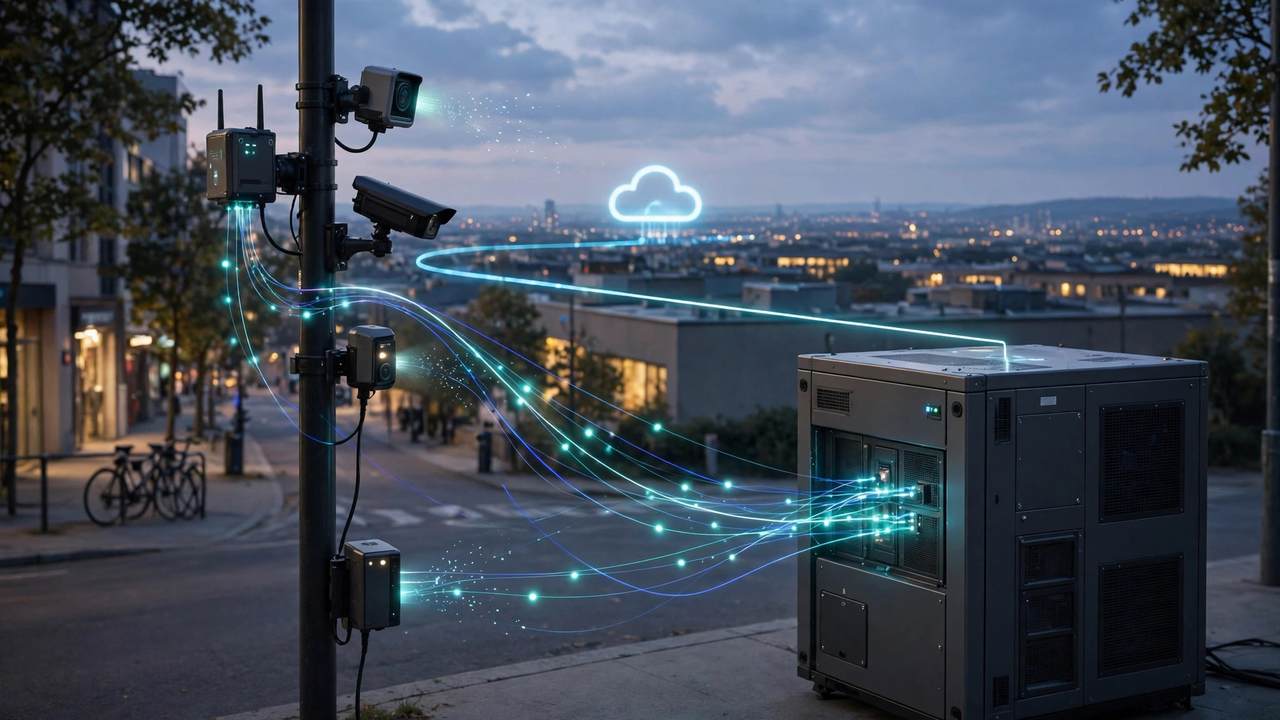
Fog computing sits in between, like a middle layer. Fog nodes — think local servers in a building or on a factory floor — extend the cloud toward the edge. They aggregate and pre-process data from many edge devices before passing the refined results up to the cloud. It is a hierarchy: devices at the bottom, fog in the middle, cloud at the top.
In practice you stack all three: the camera decides locally (edge), a building server finds patterns across cameras (fog), the corporate cloud keeps the monthly report (cloud).
Real-World Examples
This is not theory. Edge computing is already running in places you interact with every week.
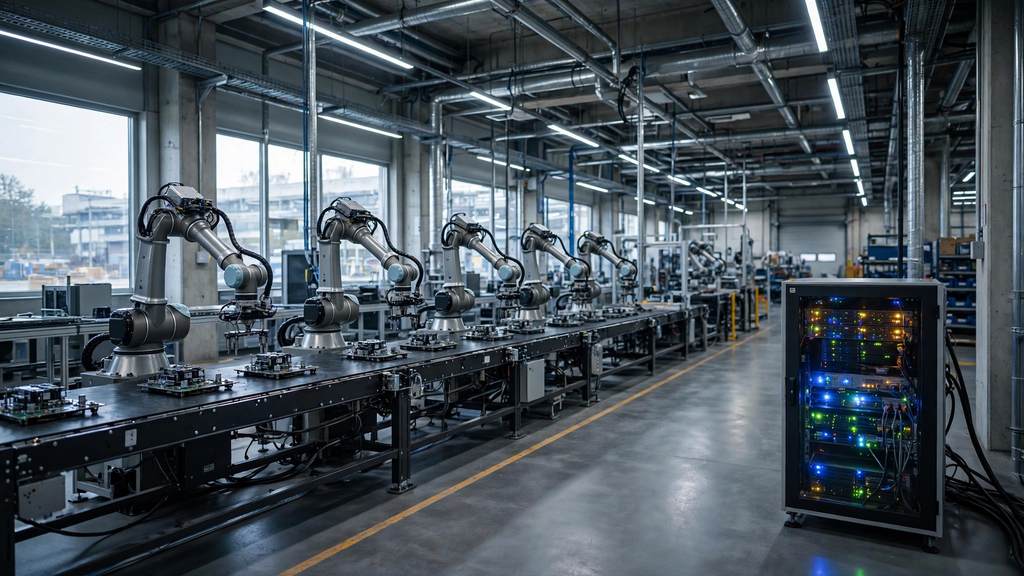
Manufacturing. Vibration sensors on factory motors detect tiny changes that predict breakdowns days in advance. The analysis happens on the shop floor — because waiting for a cloud round trip to catch a failing machine defeats the purpose.
Retail. Smart shelves track inventory in real time, and checkout cameras spot suspicious patterns. Decisions happen in the store, instantly, without streaming every shopper’s face to a data center.
Healthcare. Patient monitors watch vital signs around the clock and raise alerts the moment something drifts. When seconds matter, you do not want the analysis sitting in a queue behind someone’s cat video.
Smart cities. Traffic cameras and lights adjust signal timing based on actual congestion, right at the intersection. No round trip, no waiting — the light just responds to the road.
Autonomous vehicles. A self-driving car generates enormous amounts of sensor data and must react in milliseconds. There is no version of this that works by asking a distant server for permission to brake.
One standout: in indoor farming, edge systems monitoring plants locally cut grow time by 60%, according to TechTarget — simply by deciding on the spot instead of waiting on remote analysis.
Pair edge processing with low-latency networks like 5G and you get both: instant local decisions plus a fast pipe for whatever still needs the cloud.
Benefits of Edge Computing
Let’s stack up the wins clearly.
Speed. No round trip means decisions in milliseconds instead of seconds. This is the headline benefit and the reason autonomous vehicles and industrial safety systems exist at all.
Lower bandwidth costs. Sending answers instead of raw data slashes how much you upload. For businesses with thousands of sensors, this is real money saved every month.
Reliability. Edge systems keep working when the cloud is unreachable — a factory doesn’t stop because the internet hiccuped.
Privacy. Data that never leaves the building can’t leak from a data center. For healthcare, retail, and homes, keeping sensitive data local is a genuine advantage.
Drawbacks and Challenges (Yes, There Are Some)
Here is the part the vendors skip in their marketing. Edge computing is not magic — it trades one set of problems for another.
Privacy gets complicated. Data stays local — good. But edge also means more devices collecting data in more places, each one a potential exposure point.
Reliability is harder to guarantee. A data center is a fortress: climate-controlled, guarded, redundant everything. An edge device might be bolted to a factory wall in 40-degree heat or sitting on a dusty shelf. Maintaining thousands of scattered devices is genuinely harder than maintaining one server room.
Security is a bigger surface. Every edge device is a door, and now you have thousands of doors. Many are physically accessible to strangers, run simpler software, and rarely get patched. A cloud server has a professional security team; a smart sensor has… whatever shipped in the box.
The honest summary: edge computing solves bandwidth, latency, and congestion beautifully, but it asks you to take on distributed security and maintenance instead. Go in with eyes open.
Edge Computing vs IoT — Not the Same Thing
People use these terms interchangeably, and they shouldn’t. They describe different things.
IoT (the Internet of Things) is about the devices — the sensors, cameras, wearables, and smart gadgets that collect data. It is the “what.”
Edge computing is about where the processing happens — locally, near the data source, instead of in a distant cloud. It is the “where.”
You can have one without the other: dumb sensors streaming to the cloud are IoT without edge; on-device photo search is edge without much IoT. They pair beautifully, but they aren’t the same idea.
And edge systems don’t need constant internet for their core job — they process locally and sync whenever the connection returns.
Frequently Asked Questions
What is edge computing in simple words?
Processing data close to where it’s created — on the device or a nearby system — instead of sending everything to a distant cloud. Faster, leaner on bandwidth, and resilient when the connection drops.
Does edge computing replace cloud computing?
No. The two are partners, not rivals. Edge computing handles fast, local, real-time decisions, while the cloud handles long-term storage, heavy analysis, and training the models that edge devices run. Most real systems use both, stacked in layers.
Is edge computing the same as IoT?
No. IoT refers to the connected devices themselves — sensors, cameras, smart gadgets. Edge computing is a processing approach: doing the computing near those devices instead of in a faraway cloud. They work well together but describe different things.
Can edge computing work without an internet connection?
Yes, that is one of its strengths. Edge systems process data and make decisions locally, so their core job continues during an outage. They sync results and updates with the cloud once the connection returns.
What are real examples of edge computing?
Video doorbells detecting people locally, factory sensors predicting failures, self-driving cars braking in milliseconds, smart traffic lights, retail smart shelves, and patient monitors raising instant alerts.
Is edge computing secure?
It is a trade-off. Keeping data local reduces exposure to data-center breaches, but thousands of scattered devices create a larger attack surface, and many sit in physically accessible places with simpler software. Edge security requires protecting many small doors instead of one big one.