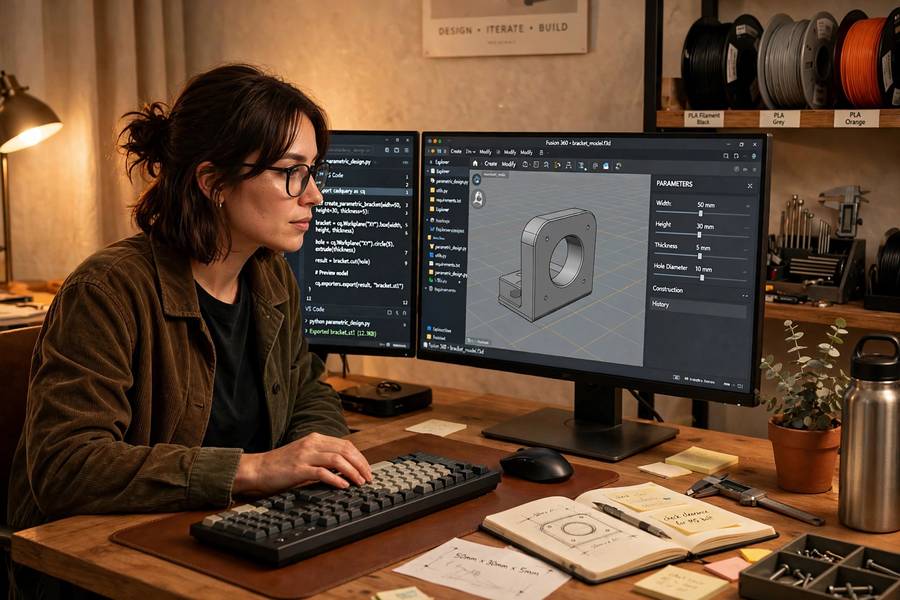
Every few years, the design world invents a new term for using computers cleverly, and every few years I have to explain that the new term is mostly the old term wearing different clothes. Computational design is the umbrella — the big tent under which parametric design, generative design, algorithmic design, and a half-dozen other labels all gather. Understanding the umbrella matters because the labels underneath keep multiplying, and without the big picture you can’t tell which new term is a real idea and which is a vendor’s rebrand. If you came here from the generative side, what generative design is covers one important room in this house.
Table of Contents
- The Definition That Actually Helps
- The Family Tree: What Lives Under the Umbrella
- Design as Computation: The Core Shift
- A Brief History of the Idea
- The Skill Set: What Computational Designers Actually Do
- Where It Shows Up in the Real World
- Computation Is Not Automation
- How to Tell the Real Thing from the Rebrand
- Frequently Asked Questions

The Definition That Actually Helps
Most definitions of computational design are either circular (“design using computation”) or so broad they include using a calculator. Here’s the one I use: computational design is the practice of expressing design intent as explicit, computable logic — rules, relationships, and algorithms — rather than as fixed geometry. Instead of drawing the thing, you describe the system that generates the thing.
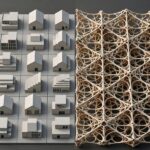
The distinction is between the artifact and the recipe. A conventional designer produces a drawing: this is the building, these are its dimensions. A computational designer produces a system: given these inputs (site, program, sun angles), produce the building that satisfies these relationships. Change the inputs and the system produces a new building. The design isn’t the output; the design is the logic that produces outputs.
This is why computational design scales in ways conventional design doesn’t. A hand-drawn facade can have dozens of unique panels before the drafter gives up. A computed facade can have ten thousand unique panels, each responding to its solar exposure, because the computer doesn’t get bored. The logic handles the repetition; the designer handles the logic.
The Family Tree: What Lives Under the Umbrella
The umbrella covers several related but distinct practices. Parametric design: design as a system of parameters and relationships — you build the model, you drive it. Generative design: design as search — you define the problem, the algorithm explores. Algorithmic design: design as explicit step-by-step procedures — you write the recipe. Performance-driven design: design guided by simulation feedback — daylight, energy, structural analysis scoring the options. And data-driven design: design informed by datasets — user behavior, material databases, precedent libraries.
These overlap constantly. A parametric model with an evolutionary solver is doing generative design. A generative study scored by energy simulation is doing performance-driven design. An algorithmic facade script fed by solar data is doing all three at once. The labels describe emphases, not territories — which is exactly why the umbrella term exists. Arguing about whether something is “parametric” or “generative” is usually less productive than asking what logic is doing the work.
The family keeps growing. Machine learning is adding new members: learned design priors, surrogate-model-driven search, diffusion models for concept generation. Each new method gets its own label, its own conference track, its own vendor pitch. The umbrella holds them all, because they’re all the same fundamental move: replacing fixed geometry with computable logic.
Design as Computation: The Core Shift
The deep idea underneath all of this is a shift in what the designer authors. In conventional practice, you author the solution. In computational practice, you author the problem space and the search strategy — and the solutions emerge. This is a genuine cognitive shift, and it’s why computational design has a learning curve that isn’t just about software.
It changes how you think about mistakes, too. In conventional design, a mistake is a wrong line. In computational design, a mistake is wrong logic — and wrong logic produces wrong outputs at scale, instantly, across thousands of elements. The leverage is enormous in both directions. I’ve seen a one-line logic error propagate through a facade of eight thousand panels, and I’ve seen a one-line fix improve all eight thousand simultaneously. The power and the danger are the same thing: the logic doesn’t know which of its consequences you intended.
It also changes the designer’s relationship with surprise. Computational systems produce unexpected results constantly — emergent patterns, unanticipated optimizations, forms nobody predicted. The skilled computational designer learns to distinguish productive surprise (the system found something genuinely good) from logic errors wearing a surprise costume. That judgment — surprise triage — is one of the field’s core skills, and it’s almost entirely tacit.
A Brief History of the Idea
The idea is older than the software. In the 1960s, architects like Christopher Alexander were writing about design as pattern languages — rule systems for generating good form. Ivan Sutherland’s Sketchpad (1963) introduced constraint-based drawing: the computer maintaining relationships between geometric elements. The 1970s brought shape grammars — formal rule systems for generating architectural styles. The intellectual foundations were laid decades before the tools caught up.
The tools arrived in waves. CAD in the 1980s computerized drafting but kept the artifact model — you drew lines, just digitally. Parametric modeling in the 1990s and 2000s (CATIA in aerospace and automotive, then Grasshopper in architecture) introduced the relationship model. The 2010s added the search model: generative solvers, cloud compute, optimization at scale. Each wave kept the previous ones — nobody threw away drafting — but each moved the authorship further upstream, from lines to relationships to search strategies.
The history of artificial intelligence runs on a parallel track, and the two histories keep intersecting: expert systems in the 1980s promised design automation and underdelivered; machine learning in the 2010s delivered search and simulation acceleration that actually worked. Computational design absorbed both the hype and the real gains, and the field’s veterans have the scar tissue to prove it.

The Skill Set: What Computational Designers Actually Do
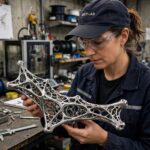
So what does a computational designer actually do all day? Less coding than you’d think, more thinking than you’d expect. The core activities: translating design intent into explicit logic (the hardest part — most designers carry their intent tacitly, and making it explicit is genuinely difficult); building and debugging parametric and algorithmic models; setting up and interpreting simulations; curating generative results; and — the underrated one — communicating the logic to collaborators who don’t think computationally.
The technical skills are real: scripting (Python mostly, sometimes C#), parametric modeling environments, simulation tools, data handling. But the differentiating skill is systems thinking — the ability to see a design problem as a network of relationships and constraints rather than as an object. Some designers have this naturally; others develop it. It’s the thing that separates someone who can operate the software from someone who can think with it.
There’s also a social skill the job requires: translation. The computational designer sits between the design team (which thinks in form and experience) and the logic (which thinks in parameters and constraints). Making the logic legible to non-computational collaborators — showing them what the parameters mean, what the options represent — is half the job. The best computational designers are bilingual: fluent in both design culture and computation.
Where It Shows Up in the Real World
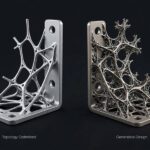
The applications span every design discipline. Architecture: parametric facades, generative massing, performance-optimized layouts. Product design: generative brackets and housings, parametric product families. Automotive and aerospace: structural optimization, part consolidation. Fashion and textiles: algorithmic patterns, generative prints. Urban planning: generative zoning studies, traffic-optimized layouts. Even graphic design has its computational wing: generative identities, data-driven visualization.
What unites these isn’t the software — the tools differ wildly by discipline — it’s the move from artifact to system. The fashion designer writing a script that generates print variations and the engineer running a topology optimization are doing the same fundamental thing: authoring logic instead of geometry. The disciplines discovered this independently, which is why the terminology is such a mess. Everyone invented their own word for the same shift.
The maturity varies. Aerospace and automotive have the deepest integration — the economics demand it. Architecture has the richest culture — the schools drove it. Product design is catching up fast. The pattern is consistent: wherever the design problem involves repetition, variation, or performance optimization, computational methods eventually win.
Computation Is Not Automation
The misconception I spend the most time correcting: computational design does not automate design. It automates the consequences of design decisions — the propagation, the variation, the evaluation — but the decisions themselves remain human. The computer explores the space; the human defines the space and judges what comes back.
This matters because the automation narrative leads to bad investments: buying software expecting it to replace designers, then being disappointed when it requires more skilled operators than the old workflow. Computational design raises the skill floor, not just the capability ceiling. The teams that thrive are the ones that invest in people — training, hiring, giving the computational folks a seat at the table early. The teams that struggle bought the tool and skipped the people.
There’s a deeper point. Design involves values — what matters, what’s beautiful, what’s right — and values can’t be computed. They can be encoded as objectives and constraints, but the encoding is itself a design act, done by a human. Every computational system embodies its authors’ values in its logic. The question is never whether humans are in the loop; it’s where in the loop they stand, and whether they know they’re there.
How to Tell the Real Thing from the Rebrand
Practical advice for navigating the terminology jungle. When someone pitches you “computational design” (or any of its children), ask three questions. First: what logic is actually doing the work — is there a real parametric model, a real search, real simulation, or is it a conventional workflow with a fashionable label? Second: who authors what — does the human define the system and judge the outputs, or is someone claiming the computer does the designing? Third: what’s the evidence — shipped projects, measured results, or renders and promises?
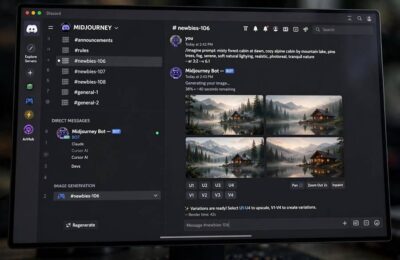
The honest practitioners will answer all three precisely. They’ll show you the logic, describe the human’s role without embarrassment, and point to built work. The rebranders will stay vague on all three — lots of “AI-powered,” no specifics on what’s computed, no built work to show. How Midjourney works is genuinely computational, for the record — it’s just a different kind of computation than engineering optimization, and conflating the two is its own category of confusion.
The umbrella is big enough for all of it. The trick is knowing which room you’re standing in.

Frequently Asked Questions
Computational design means expressing design intent as computable logic — rules, relationships, and algorithms — instead of fixed geometry. Rather than drawing the final object, you create a system that generates it, so changing inputs produces new variations automatically.
Computational design is the umbrella term covering all logic-driven design methods. Generative design is one method under it, where algorithms search a design space against defined goals. Parametric design, algorithmic design, and performance-driven design are other members of the family.
Core skills include scripting (usually Python), parametric modeling tools, simulation software, and data handling. The differentiating skill is systems thinking: seeing design problems as networks of relationships. Communication matters too, translating computational logic for non-technical collaborators.
No. It automates the consequences of design decisions — propagation, variation, evaluation — but the decisions remain human. It actually raises the skill floor: teams need trained people to build the logic, interpret results, and encode the values the system optimizes for.
It is used in architecture (parametric facades, generative massing), product design, automotive and aerospace (structural optimization), fashion (algorithmic patterns), urban planning, and graphic design. Anywhere involving repetition, variation, or performance optimization is a candidate.