What Is a Let in Squash? Lets vs Strokes, Made Simple


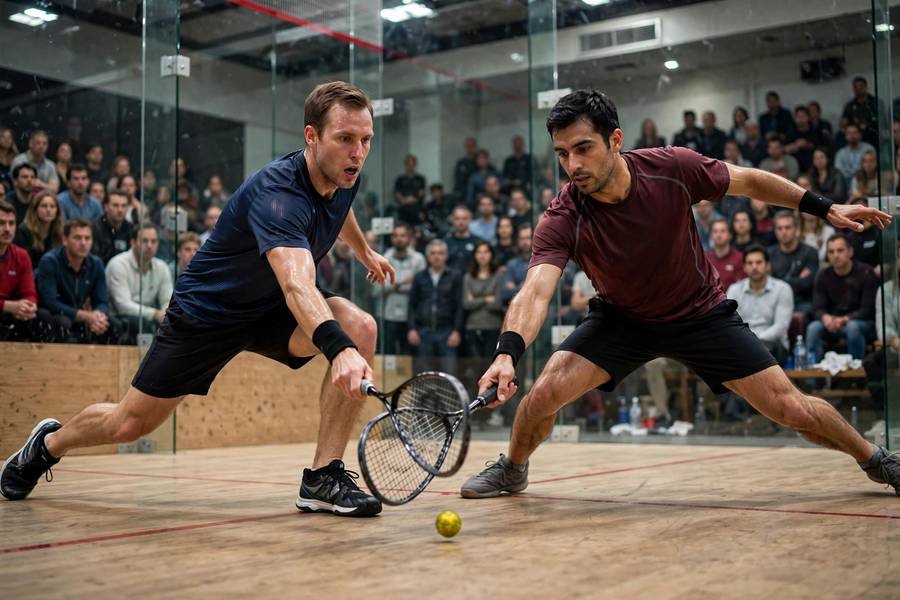
“Let please!” Two words that stop a squash rally cold — and start about half of all club arguments. If you’re new to squash, the let rule probably seems like bureaucratic fuss over nothing. It’s not. It’s the mechanism that makes a shared-court sport playable, and truly understanding it will save you points, bruises, and friendships.
This guide explains what a let is in squash, when it’s called, how it differs from strokes and no lets, and the etiquette of appealing. For the complete interference system, see our guide to squash faults explained.
In this guide:
- The Let in One Paragraph
- When Lets Are Called: Real Examples
- Let vs Stroke: The Crucial Difference
- Let vs No Let
- How to Ask for a Let (Without Starting a Fight)
- Lets in Casual Play: The Unwritten Rules
- Famous Let Controversies
The Let in One Paragraph
A let is a replayed rally, nothing more. When a player is unfairly prevented from playing the ball — blocked by their opponent, denied a clear swing, or otherwise interfered with through no fault of their own — they can appeal, and the referee (or the players, in casual games) may call a let: nobody wins or loses the point, and the rally is played again from the serve… no, from the point of interruption, with the same server and score. It’s a reset button for unfairness.
When Lets Are Called: Real Examples
Theory is dry; examples stick. Here are the classic let situations you’ll actually see:
- The blocked swing. You’re set to hit a backhand, but your opponent is standing where your racket needs to go. You stop (correctly — never swing through someone) and appeal. If you were stretched and unlikely to win the rally, that’s a let.
- The traffic jam. Both players chase a loose ball, arrive together, and neither can play it cleanly. Mutual, accidental, nobody’s fault — let.
- The late clear. Your opponent hits and starts to clear, but slowly — you’re already moving to the ball and have to check your run. If you couldn’t have won the point anyway, let.
- The safety stop. Your opponent is directly between you and the front wall. You refuse the shot for safety. This is always the right decision, and it’s always at least a let — player safety outranks everything.
- Outside interference. A ball rolls in from the next court, a light buzzes and dies, someone opens the court door mid-rally. Not anyone’s fault — let, replay it.
Notice the pattern: something went wrong, it wasn’t really anyone’s fault (or wasn’t serious enough to award the point), so the fair outcome is to try again.
Let vs Stroke: The Crucial Difference
This is the distinction that matters most. Both start with interference, but they end very differently:
- Let = replay. Interference happened, but the blocked player probably wouldn’t have won the rally. Nobody is punished; the point is replayed.
- Stroke = point awarded. The interference was serious AND the blocked player was in position to hit a winning shot. The obstructed player wins the point outright.
The referee’s test is a hypothetical: if the interference hadn’t happened, would this player have won the rally? Set up for an easy put-away, blocked cold — that’s a stroke. Stretched wide, off balance, blocked — that’s a let. Same interference, different outcomes, because the opportunity denied was different.
Example: your opponent leaves a loose ball in the middle and then stands in your path as you step in for the kill. You’re balanced, racket ready, ball sitting up — that’s a stroke, point to you. Same situation but you’re diving full-stretch and would have been lucky to get the ball back — that’s a let. Learn to feel this distinction and you’ll appeal correctly instead of hopefully.

Let vs No Let
Sometimes the answer is neither — a no let, where the appeal is denied and play continues (or the rally result stands). No lets happen when:
- You weren’t getting there anyway. Appealing from three meters away with no chance of reaching the ball is fishing, and refs see through it instantly.
- You caused it. You took a terrible line to the ball and ran into your opponent. The interference is your own fault — no let.
- You didn’t try. You stopped, stood still, and appealed instead of making an effort to play around the obstruction. The rules require genuine effort before the appeal.
- Minimal contact, no effect. A tiny brush that didn’t affect anyone’s play. Play on.
The “make an effort” rule is the one that burns beginners. You must show the referee you were trying to get to the ball. Move first, appeal second. Players who stop early hoping for a cheap let get no lets — and a reputation.
How to Ask for a Let (Without Starting a Fight)
The mechanics: stop play immediately, raise your hand or racket, and say “let please” clearly. Do not play the shot and then appeal — playing on waives your right to the call. Do not keep rallying “just in case” — that’s not a thing. Stop, appeal, accept the decision.
The etiquette matters as much as the mechanics. Appeal calmly, even when you’re sure. Accept the call instantly, even when you’re sure the ref is wrong — especially in casual play, where there’s no ref and your opponent is the ref. The players who handle let calls gracefully get more generous calls in return; it’s human nature, and squash runs on it. I’ve watched players win the let-call battle over a season purely by being the person everyone wants to give the benefit of the doubt to.

Lets in Casual Play: The Unwritten Rules
Without a referee, you and your opponent officiate together, and the conventions are:
- Be generous with lets. In doubt, replay it. The point isn’t worth the argument, and generous lets keep games flowing and friendly.
- Concede obvious strokes. If you know you blocked someone cold on a winner, say “your point” before they even appeal. This earns enormous respect and costs you one point.
- Never appeal a safety stop against yourself. If someone stops because you were in their swing path, that’s on you. Acknowledge it.
It also helps to know the court’s geography cold — our guide to squash court dimensions shows exactly where the service boxes and quarter courts sit, so you can judge interference positions accurately.
Ten-second rule. Discuss a disputed call for ten seconds max, then move on — replay the rally if you can’t agree. The evening matters more than the point.
Famous Let Controversies
Even at the top, lets cause drama. Pro squash has had its share of disputed stroke/let calls deciding major finals — the 2010s rivalry matches between Ramy Ashour, Nick Matthew, and Mohamed ElShorbagy featured several officiating controversies that fans still argue about. The pattern is always the same: interference at full speed, a split-second decision, and two world-class athletes seeing it completely differently. If the best players and best referees in the world can’t always agree, cut yourself some slack at club night.
The deeper lesson from the pro controversies: the let system works because it’s judgment-based, not despite it. A rigid automatic rule couldn’t handle the infinite variety of on-court traffic. Human judgment — imperfect, debatable, and generally fair — is the right tool for the job. And staying mobile enough to avoid interference situations in the first place is a fitness issue as much as a tactical one — the conditioning work in our strength training for runners guide helps you arrive early instead of appealing late.
A let is a replayed rally. When a player is unfairly prevented from playing the ball — blocked by an opponent, denied a clear swing, or affected by outside interference — the point is replayed with no one winning or losing it. It’s the fair reset for accidental or minor interference.
A let replays the rally (interference happened but the blocked player probably wouldn’t have won). A stroke awards the point to the blocked player (the interference was serious and denied them a likely winning shot). The test is whether the player would have won the rally without the interference.
Stop play immediately when an opponent blocks your path to the ball or your swing, when a safety issue forces you to stop, or when outside interference disrupts the rally. Say ‘let please’ clearly — but only after making a genuine effort to play the ball.
No, not ever. Playing on waives your right to appeal — you must stop immediately and appeal before hitting the ball. This is one of the most commonly misunderstood parts of the rule.
A no let denies an interference appeal completely, so the rally result stands. It’s given when the appealing player wouldn’t have reached the ball anyway, caused the interference themselves, or didn’t make a genuine effort to play through it.