
Bali has an image problem, and it’s not the island’s fault. Search it online and you’ll drown in infinity pools and “hidden gems” with a queue of forty people. I’ve been three times — 2018, 2022, and 2025 — and the Bali I love barely appears in any of that.
The real Bali is the 6 a.m. offering ceremony on a village lane, the warung where lunch costs $2, the waterfall you hike to at dawn and share with nobody. This guide is about that Bali — what’s worth the hype and what isn’t.
Table of Contents
- Pick Your Base (This Decides Everything)
- Temples Worth Your Early Morning
- The Waterfalls Actually Worth the Hike
- Ubud: Culture, Rice Terraces, and Monkeys
- Beaches and Beach Towns: An Honest Ranking
- Nusa Penida and the Islands
- Eat Like This Every Day
- The Spa and Wellness Scene (Worth It)
- What to Skip
- Practical Bali: Money, Transport, Timing
- Frequently Asked Questions
Pick Your Base (This Decides Everything)
Bali is bigger than it looks on a map and traffic is slower than you can imagine — a “30-minute drive” routinely takes 90. Where you stay determines what you actually experience, so pick based on your trip style, not the prettiest hotel photos.
Ubud (inland, cultural heart): rice terraces, temples, yoga, art markets. Best for first-timers who want the “real Bali” feel. Stay 4–5 days minimum.
Canggu (southwest coast): surf, cafes, digital nomads, sunsets. Great energy, terrible traffic. Best for a younger, social trip.
Uluwatu (southern cliffs): dramatic coastline, surf breaks, clifftop temples. Quieter and more spread out — you’ll want a scooter or driver.
My pattern across three trips: split the stay — four days in Ubud, four on the coast. Single-base trips waste hours in traffic; two bases let Bali come to you.
Temples Worth Your Early Morning
Bali has thousands of temples (pura), and they’re working religious sites, not museums — you’ll see daily offerings of flowers and rice on doorsteps everywhere, which is half the magic. A few stand above the rest.
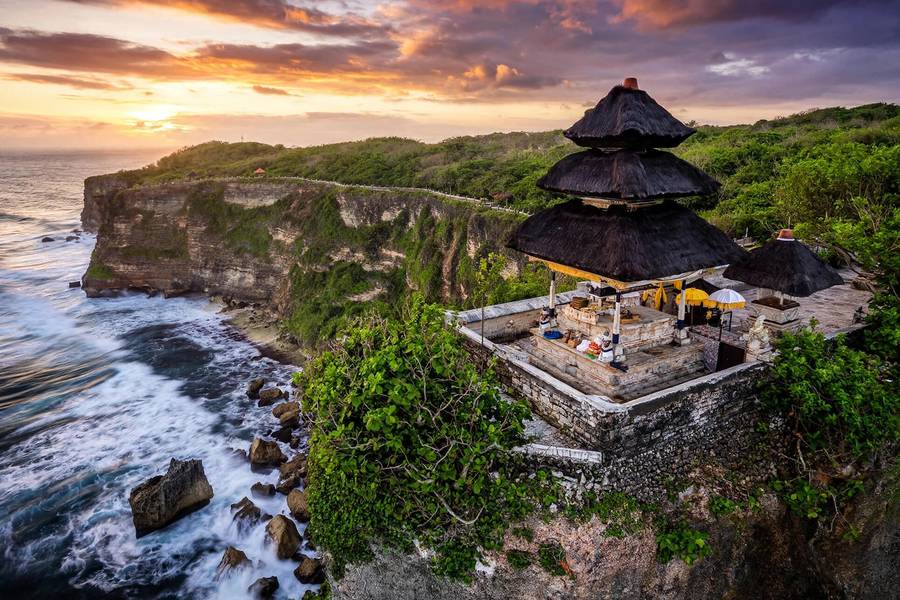
Uluwatu Temple sits on a 70-meter cliff above crashing surf, and at sunset with the kecak fire dance performance (6 p.m., ~$7), it’s genuinely spectacular. The monkeys here are professional thieves — hold everything tight.
Tanah Lot, the sea temple on its rock offshore, is the postcard shot. It’s beautiful at sunset but the crowds are intense. Go at sunrise instead — nearly empty, and the light on the rock is better.
Tirta Empul is the water purification temple where Balinese Hindus bathe under 13 fountains. You can participate respectfully (rent a sarong, follow the local guide’s lead, ~$3 entry). I did the purification ritual on my second trip and it was one of the most moving hours of my travels — not as a tourist attraction, as a guest in someone’s faith.
Besakih, the “mother temple” on Mount Agung’s slopes, is the holiest and least touristed of the majors. It’s a 2-hour drive from the south, which keeps the crowds thin. Worth it if temples are your thing.
Temple etiquette that matters: wear a sarong and sash (provided or rentable at every temple), never stand higher than the priest, don’t point your feet at shrines, and if a ceremony is happening, watch quietly from the edges. During menstruation, Balinese custom asks women not to enter temples — respect it without debate.
The Waterfalls Actually Worth the Hike
Bali’s interior is waterfall country, and the good ones require effort — which is exactly why they’re good.
Sekumpul (north Bali): a cluster of seven falls in a jungle gorge, the tallest dropping 80 meters. The trek down is steep (budget 45 minutes each way, hire the local guide for ~$10 — it’s required and worth it). I arrived at 8 a.m. and had the main falls to myself for twenty minutes. By 11 a.m. the tour groups arrived. Morning is everything here.
Tegenungan (near Ubud): the easy one — 20 minutes from town, short walk down, big powerful falls. It’s busy by midday but genuinely impressive, and the best waterfall option if you’re short on time.
Tibumana: a short jungle walk to a curtain waterfall in a narrow canyon. Quiet, swimmable, and my favorite “easy” waterfall on the island.
Ubud: Culture, Rice Terraces, and Monkeys
Ubud is Bali’s cultural capital and its tourist capital simultaneously. The center is busy — but the magic is all within a 15-minute walk or scooter ride.
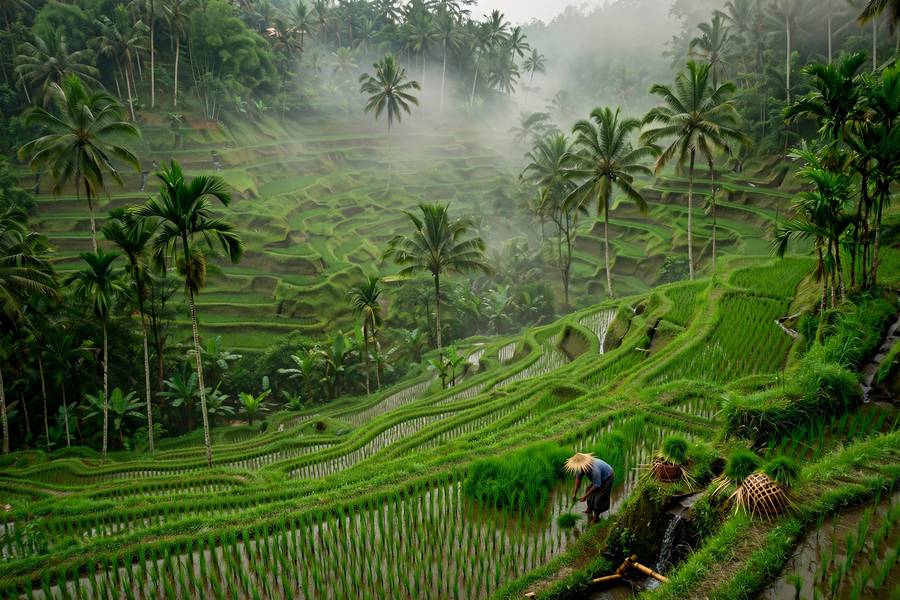
Tegalalang Rice Terraces at sunrise (before 7 a.m.) are the Bali of dreams: layered emerald paddies, mist, farmers already working. By 10 a.m. it’s a carnival. Pay the small donations at the viewpoints (a few thousand rupiah each) cheerfully — this is farmers’ land and their livelihood.
The Sacred Monkey Forest is fun if you go early (8 a.m. opening, ~$6) — ancient banyan trees, mossy temples, and macaques that will absolutely steal your sunglasses, water bottle, and dignity. Don’t bring food, don’t show your teeth (it’s aggression to them), and keep the phone grip tight.
Ubud’s art market and palace: the palace (free, donations welcome) hosts traditional dance performances most evenings (~$7). The art market is good for souvenirs if you haggle with a smile; start at a third of the asking price.
My favorite Ubud ritual: the Campuhan Ridge Walk at 5:30 p.m. — a free grassy ridge trail above the river valley, golden light, hardly anyone there. Then dinner at a warung in the back streets. Total cost: dinner.
Beaches and Beach Towns: An Honest Ranking
Bali’s beaches are good, not great — if beaches are your whole trip, the Gili Islands or Nusa Penida beat the mainland. But each beach town has a distinct personality:
Uluwatu’s cliff beaches (Padang Padang, Bingin, Nyang Nyang): dramatic, surfy, harder to access — you climb down cliffs. Padang Padang is tiny and fills by 10 a.m. Nyang Nyang is a 20-minute trek and often nearly empty. Effort correlates with reward here.
Seminyak: upscale beach clubs, sunset cocktails ($8–12), wide sandy beach. Polished, pricey, fun for a night or two.
Canggu (Batu Bolong, Echo Beach): surf breaks, beach bars, the island’s best cafe scene. Black sand, strong currents — swim carefully.
Sanur: calm, shallow, sunrise-facing. The best mainland swimming beach and genuinely relaxing.
Amed (northeast, 2.5 hours): black-sand beaches, the USS Liberty shipwreck for snorkeling/diving, and a sleepy fishing-village feel that’s increasingly rare. My favorite overnight escape from the south’s chaos.

Nusa Penida and the Islands
Nusa Penida (45-minute fast boat from Sanur, ~$12 each way) is Bali’s greatest-hits island: Kelingking Beach’s T-rex cliff, Angel’s Billabong, Broken Beach, Crystal Bay. It’s stunning and increasingly crowded — go on a weekday, start at 7 a.m., and stay overnight if you can so you’re there before and after the day-trippers.
Honest warning: Penida’s roads are rough — some are barely roads. Hire a local driver for the day (~$35–45) rather than renting a scooter unless you’re experienced.
The Gili Islands (2-hour fast boat from Padang Bai): Gili Trawangan for parties, Gili Air for the sweet spot, Gili Meno for honeymoon quiet. No motor vehicles — bicycles and horse carts. Two or three nights minimum.
Eat Like This Every Day
Balinese food at a warung (family-run eatery) is one of travel’s great bargains. Nasi campur — rice with a bit of everything: chicken, fish, vegetables, sambal, crackers — runs $1.50–3 and it’s the best lunch on the island. Babi guling (roast suckling pig) is the ceremonial dish; Ibu Oka in Ubud is the famous spot (~$5). Mie goreng and nasi goreng at any warung: $2, always good.
My rule: the smaller and more local the warung, the better the food. Follow the scooters — where locals park, eat.
Coffee: Bali grows excellent coffee. Try kopi tubruk (Balinese brewed coffee, strong and sweet, ~$1) at a warung.
The Spa and Wellness Scene (Worth It)
This is one Bali cliché I’ll defend completely. A 60-minute Balinese massage costs $8–12 at a good local spa — the same treatment is $120+ at home. The technique (deep tissue meets aromatherapy, with the flower bath if you’re feeling fancy) is genuinely excellent.
My approach: one massage every two or three days. At those prices it’s not indulgence, it’s maintenance — especially after waterfall hikes and scooter days.
What to Skip
Kuta: loud, crowded, traffic-choked, and the beach is the island’s least appealing. There’s no reason to stay here in 2026 unless the airport proximity matters.
The swing-and-nest photo attractions: as covered — expensive queues for staged photos.
“Hidden beach” tours that aren’t hidden: if a beach has a parking lot and a ticket booth, it’s not hidden. The real hidden ones you find by asking your homestay host.
Dolphin shows and turtle “conservation” photo ops: several operations in the south keep animals in poor conditions for tourist photos — skip them.
Practical Bali: Money, Transport, Timing
Money: Indonesia uses rupiah; $1 ≈ 16,000 IDR (check current rates). Cash is king at warungs and markets. ATMs are everywhere but use ones attached to banks, and decline the ATM’s conversion rate (always pay in rupiah). Budget travelers live well on $30–40/day; mid-range comfort is $60–100.
Transport: hire a private driver for day trips ($35–50 for 8–10 hours — your hotel can arrange it). For getting around town, ride-hailing apps (Grab/Gojek) are cheap and easy. Scooters ($5–7/day) are the local way but only if you can actually ride — Bali’s roads injure overconfident tourists daily.
Timing: dry season (April–October) is best; July–August is peak crowds and prices. Pack smart for it — my international packing guide covers the tropical version of this. Shoulder months (April–May, September–October) are my pick: good weather, thinner crowds, better rates.
Visa: most nationalities get 30-day visa-on-arrival (~$35). Check current requirements before you fly.
Three trips in, Bali keeps surprising me — usually at 6 a.m., usually involving an offering or a waterfall I had to work to reach. That’s the slow travel payoff: the island rewards the unhurried. Skip the swing queue. Set the alarm instead. And if you want your exploring to tread lightly, read up on ecotourism — Bali’s reefs and rice terraces need visitors who care.

Frequently Asked Questions
Ten days is ideal: 4–5 in Ubud for temples, rice terraces and waterfalls, and 4–5 on the coast or islands. A week works if you pick one base and accept you’ll miss things; anything under five days means spending most of it in traffic.
Ubud for culture and first-timers, Canggu for surf and social life, Uluwatu for dramatic coastlines and quieter stays, Sanur for calm beaches and families. Splitting your stay between Ubud and one coastal base beats a single base because of traffic.
April to October is the dry season with the best weather. July–August brings peak crowds and prices, so the shoulder months of April–May and September–October offer the best balance of weather, thinner crowds, and better rates.
Not by Western standards. Budget travelers live well on $30–40 per day, mid-range comfort costs $60–100, and local warung meals run $1.50–3 while a 60-minute Balinese massage costs just $8–12. Luxury resorts exist but aren’t required for a great trip.
Skip Kuta (crowded and charmless), the staged swing-and-nest photo attractions with long queues and high prices, and animal photo operations like dolphin shows. The real experiences — temples at dawn, waterfalls, warung meals — cost little and deliver far more.
Hire a private driver ($35–50 for a full day) for sightseeing, use Grab or Gojek ride-hailing for short trips, and only rent a scooter ($5–7/day) if you’re an experienced rider — Bali’s roads injure overconfident tourists regularly. Fast boats connect Sanur to Nusa Penida and Padang Bai to the Gili Islands.