


Ask five academics what distinguishes a thesis from a dissertation and you’ll get six answers — and one of them will be annoyed you asked. The confusion is understandable: the terms are used differently in different countries, different fields use them loosely, and half the internet uses them interchangeably.
Let me clear this up the way I would for a student planning their next degree. Thesis vs dissertation isn’t actually mysterious once you separate the three things people conflate: the degree level, the project’s purpose, and the regional vocabulary. Let’s take them one at a time.
Table of Contents
- The Short Answer
- The US Convention: Thesis = Master’s, Dissertation = Doctorate
- The UK (and Rest of World) Convention: Reversed
- Purpose: What Each One Is Actually For
- Length, Scope, and Originality: How They Compare
- The Defense: What You’re Actually Being Tested On
- Which Will You Write? A Guide by Degree
- Practical Advice for Either Project
- Frequently Asked Questions

The Short Answer
In the United States (the convention most of you are asking about):
- A thesis culminating research project of a master’s degree. It demonstrates mastery of existing knowledge and the ability to conduct independent research.
- A dissertation is the culminating research project of a doctoral degree (PhD). It must make an original contribution to knowledge in the field.
One sentence version: a thesis shows you understand the conversation; a dissertation adds something new to it.
But — and this is where everyone gets confused — in the UK and much of the rest of the world, the terms are flipped. More on that below. When in doubt, check which country the person talking is in before assuming you know what they mean.
The US Convention: Thesis = Master’s, Dissertation = Doctorate
This is the system used across American universities, and it’s the one behind most of the “thesis vs dissertation” questions online.
Master’s thesis: Typically 50–100+ pages (varies hugely by field — humanities theses run longer, STEM theses can be shorter but denser). You choose a topic, conduct original research or deep analysis, and write it up under a faculty advisor’s supervision. Many master’s programs offer a thesis track and a non-thesis track (coursework + exams or a capstone project instead). The thesis track is the one to choose if you might ever pursue a doctorate — it proves you can do sustained independent research.
Doctoral dissertation: Typically 150–300+ pages, representing several years of work. This is the big one — the project your entire PhD builds toward. It must contain original research that contributes new knowledge to your field. You’ll defend it orally before a committee of faculty experts. If you want the full picture of what this entails, our guide to what a doctoral dissertation involves goes deeper.
The relationship between them is sequential and hierarchical: the thesis is a training ground; the dissertation is the professional debut. Many PhD students wrote a master’s thesis first and will tell you the dissertation felt like the thesis’s much larger, much more demanding older sibling.
The UK (and Rest of World) Convention: Reversed
In the United Kingdom — and in many countries following the British academic tradition — the terminology flips:
- A dissertation is the project at the master’s or undergraduate level.
- A thesis is the project at the doctoral level.
So a British PhD student writes a thesis. An American PhD student writes a dissertation. They’re describing the same kind of project with opposite words.
This is the source of roughly 90% of internet arguments on the topic. Two people, both correct, using mirrored vocabulary. If you’re reading advice about “writing your dissertation” and the author is British, mentally translate: they might mean your master’s project, not your PhD.
Practical tip: when applying internationally, mirror the institution’s own terminology. And if a professor uses the “wrong” word for your country, don’t correct them — half the faculty I know use the terms interchangeably anyway.
Purpose: What Each One Is Actually For
Beyond vocabulary, the projects serve different purposes — and understanding the purpose makes everything else click.
A thesis (master’s level) exists to prove competence. The question it answers is: can this student identify a research problem, engage the existing literature, apply appropriate methods, and produce a coherent, well-argued document? The research should be real and rigorous, but it doesn’t have to change the field. A thorough, well-executed synthesis or a modest original study is exactly right.
A dissertation (doctoral level) exists to prove contribution. The question it answers is: has this scholar produced something the field didn’t have before? That could be new data, a new theory, a new method, or a genuinely new interpretation. “Original contribution to knowledge” is the formal standard, and committees take it seriously — it’s what separates a PhD from a very long master’s.
This difference in purpose explains the difference in everything else: length, timeline, scrutiny, and the emotional weight students attach to them. A thesis is a final exam in research form. A dissertation is your entrance ticket to the profession.
Length, Scope, and Originality: How They Compare
| Master’s Thesis (US) | Doctoral Dissertation (US) | |
|---|---|---|
| Typical length | 50–100+ pages | 150–300+ pages |
| Timeline | 1–2 semesters | 2–5+ years (within the PhD) |
| Originality bar | Rigorous; originality welcome but not required | Must contribute new knowledge |
| Supervision | One advisor, regular check-ins | Advisor + full committee |
| Defense | Sometimes; often informal | Formal oral defense, standard |
| Audience | Department faculty | The field itself |
Caveats: STEM dissertations are often collections of published papers stapled together with an introduction (shorter page counts, denser content). Humanities dissertations are book-length monographs. Professional doctorates (EdD, DBA) have their own conventions. Your department’s handbook is the real authority — general guides like this one are the map, not the territory.
The Defense: What You’re Actually Being Tested On
Both projects may end with a defense — you presenting and answering questions — but what’s being tested differs.
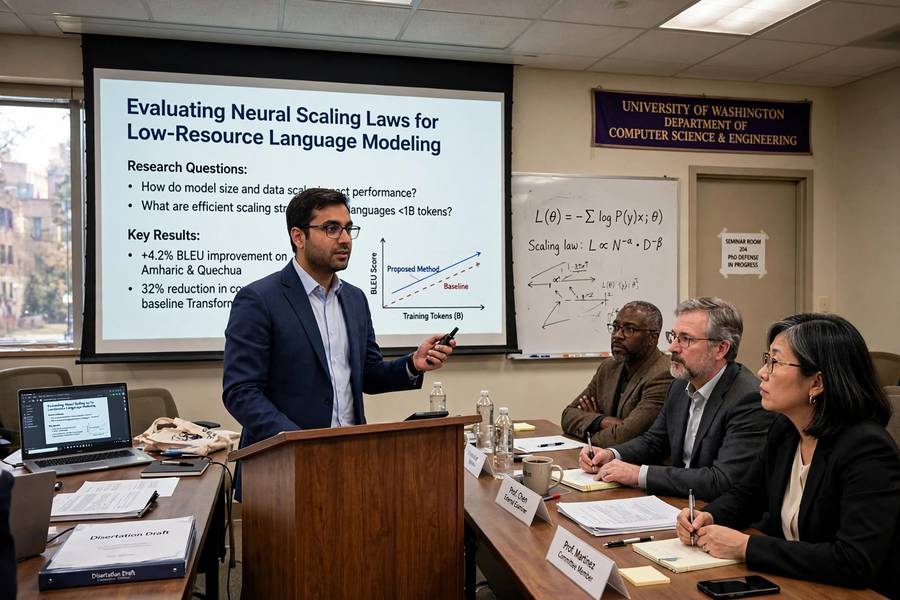
Thesis defense (when required): Can you explain what you did, why you did it that way, and what it means? The committee is checking understanding and rigor. It’s challenging but collegial — they want you to pass.
Dissertation defense: Can you defend your contribution against expert scrutiny? Committee members will probe your methods, your interpretation, and your claim to originality. It’s still the case that most candidates pass (committees don’t let you defend until you’re ready), but the intellectual bar is genuinely higher. You’re being examined as a peer-in-training, not as a student.
My advice for preparing: know your document cold, anticipate the three hardest questions your committee could ask, and remember that “that’s a limitation I acknowledge in chapter four” is a perfectly good answer. Defenses reward honesty about weaknesses more than bluffing — the same principle behind good exam preparation: know what you know, and know what you don’t.
Which Will You Write? A Guide by Degree
- Bachelor’s degree: Usually neither — a capstone, senior project, or (in the UK) an undergraduate dissertation.
- Master’s degree (US): A thesis, if you choose the thesis track. Coursework-only and project-based tracks are common alternatives.
- Master’s degree (UK): A dissertation.
- PhD (US): A dissertation. Always. This is non-negotiable.
- PhD (UK): A thesis.
- Professional doctorates (EdD, DBA, etc.): Usually a dissertation or applied doctoral project — focused on practice rather than pure theory.
If you’re master’s-bound and doctorate-curious: take the thesis track. It’s the best preparation for doctoral work, the best signal to PhD admissions committees, and the best way to find out whether you actually enjoy sustained independent research before committing five years to it.
Practical Advice for Either Project
Whichever one you’re writing, the survival strategies are the same — I’ve watched hundreds of students go through this:
- Pick a narrow topic. The #1 mistake is scope creep. A tight, finishable question beats a grand, unfinishable one. You can always expand later; you can’t defend what you never finish.
- Write from day one. Don’t “research first, write later.” Write memos, write summaries, write bad drafts. Writing is thinking, and the students who write continuously finish faster.
- Meet your advisor regularly. Advisors can’t help with problems they don’t know about. Monthly minimum; biweekly is better. Bring written progress, not vibes.
- Read three excellent examples from your own department before you start. Not famous ones — recent, successful ones from your program. They show you exactly what “good enough” looks like there.
- Protect your timeline backwards. Set the defense date, then work backwards through chapter deadlines. Projects without interim deadlines expand to fill all available time — and then some.
- Take care of yourself. This sounds like a platitude until you’re in month fourteen. Sleep, movement, and one non-academic thing you enjoy aren’t luxuries; they’re what keep the work sustainable.
And one thing nobody tells you: finishing feels less like triumph and more like relief mixed with mild disbelief. That’s normal. The pride arrives about three months later, when someone cites your work or you see the bound copy on a shelf. (Educational approaches differ wildly across a lifetime of learning — from Montessori classrooms to doctoral defenses — but the finish line always feels the same: quieter than you expected, and earned.)

Frequently Asked Questions
In the US, a thesis is the research project for a master’s degree (demonstrating research competence); a dissertation is the doctoral project (requiring an original contribution to knowledge). In the UK the terms are reversed.
A doctoral dissertation is longer — typically 150–300+ pages over several years, versus 50–100+ pages for a master’s thesis completed in one to two semesters. Length varies significantly by field.
In the US, master’s students write a thesis (on the thesis track); in the UK, a dissertation. Doctoral students write a dissertation in the US and a thesis in the UK. Check your program’s terminology.
Yes. Strong master’s theses are often adapted into journal articles or conference papers. Talk to your advisor about publishable findings early — framing the project with publication in mind makes conversion much easier.
A doctoral dissertation is harder by design — it requires original contributions to knowledge, takes years, and faces a formal defense before expert faculty. A master’s thesis is scoped as a one-to-two-semester demonstration of research competence.
No. Many US master’s programs offer non-thesis tracks: coursework plus exams, capstone projects, or portfolios. Take the thesis track if you might pursue a doctorate — it proves independent research ability to PhD admissions committees.