Things to Do in Rome: An Honest Guide

A first trip to Rome in August can be a disaster: 104°F, shoulder-to-shoulder crowds at every sight, gelato melting down your wrist. Rome wins visitors over only once they learn which season, which hour, and which line is worth standing in. This is the guide to hand any first-timer before a miserable August trip.
Table of Contents
- The Big Three: Yes, They’re Worth It
- The Colosseum: How to Actually Enjoy It
- The Vatican: A Half-Day Done Right
- The Pantheon and the Historic Center
- Trastevere: Rome’s Best Neighborhood
- Testaccio and Monti: Where Romans Actually Eat
- The Free and Nearly-Free Wonders
- Day Trips Worth the Train Ride
- What to Skip (An Honest List)
- When to Go and How Long to Stay
- Frequently Asked Questions
The Big Three: Yes, They’re Worth It
The Colosseum, the Vatican Museums, and the Pantheon are the three sights every Rome article lists, and here’s the honest truth: they’re listed everywhere because they’re genuinely extraordinary, and they hold up to repeat visits. The trick isn’t whether to see them — it’s how.
The single most important decision: book timed-entry tickets online, in advance, for everything. The days of showing up and queuing are over for anyone who values their time. The Colosseum’s standard ticket (€18) sells out days ahead in high season; the Vatican Museums (€20) sell out weeks ahead. Set a calendar reminder the day tickets release.
Second decision: go early. The Colosseum at 8:30 a.m. opening and the Vatican at 8 a.m. are different universes from the same places at noon. This cannot be overstated. An hour of quiet in the Sistine Chapel-adjacent corridors before the tour buses arrive is worth more than any upgrade.
The Colosseum: How to Actually Enjoy It
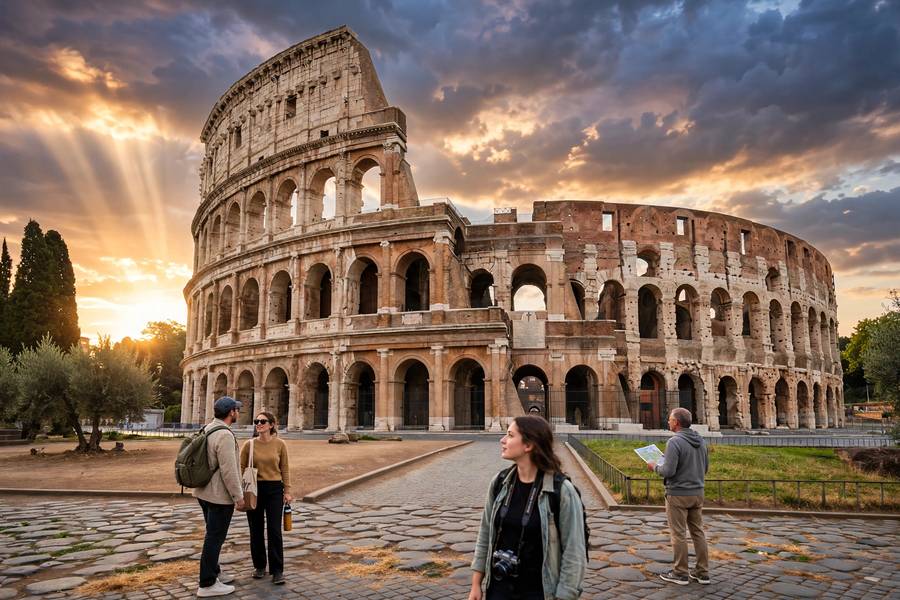
The surprise: the best Colosseum moment isn’t inside. It’s the view from the terrace of the Vittoriano monument or the rooftop of a bar on Via di San Giovanni in Laterano at sunset, with the whole amphitheater glowing. Go inside in the morning, come back outside at golden hour.
Skip: the gladiator-costumed photo people outside (aggressive, overpriced, and occasionally scammy about the price after the photo). Also skip the “skip the line” sellers on the street — you already bought a timed ticket online, so there’s no line to skip.
The Vatican: A Half-Day Done Right
The Vatican Museums are 7 kilometers of corridors. You cannot see all of it and you shouldn’t try — museum fatigue is real and the Sistine Chapel deserves you at your freshest, not your most footsore.
The smart route: enter at 8 a.m., head straight toward the Raphael Rooms and Sistine Chapel before the crowds thicken. Then work backward through the galleries you’re actually interested in — the Gallery of Maps is stunning — and skip the rest. Nobody is grading you.
The Sistine Chapel is worth the entire trip. It’s smaller than you expect, darker than the photos, and completely overwhelming. Sit on the bench along the wall, give yourself twenty minutes, and just look. (Photography is prohibited and the guards enforce it — put the phone away and be present.)
St. Peter’s Basilica is free and separate from the museums. Climb the dome (€8 for stairs, €10 with elevator partway) — the 551 steps are narrow and the final stretch tilts, but the view over St. Peter’s Square is Rome’s best panorama. Go late afternoon for the light.
A common mistake: trying to do the Vatican Museums and the Colosseum on the same day. Don’t. Each deserves a half-day minimum, and cramming them together turned both into a blur. Split them across two mornings.
The Pantheon and the Historic Center
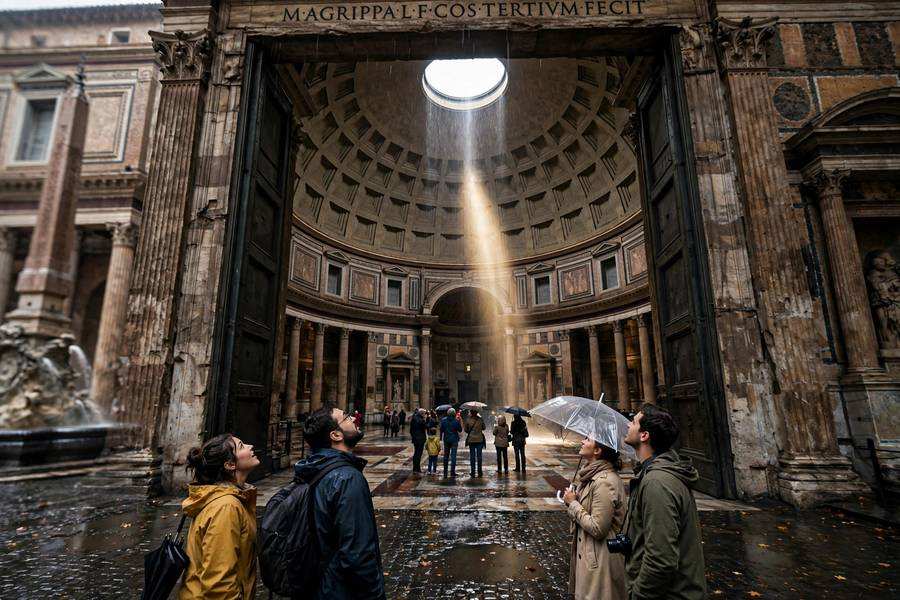
The Pantheon (€5 entry, book online) best-preserved building of ancient Rome — a 2,000-year-old concrete dome with a 9-meter hole in the top, still the largest unreinforced concrete dome in the world. It is, honestly, more breathtaking than the Colosseum.
Go when it rains. If you’re lucky enough to be in Rome on a rainy day, get to the Pantheon. Rain falls through the oculus in a shimmering column, drains through holes in the marble floor, and the whole building becomes a piece of performance art. It’s one of the great travel moments anywhere.
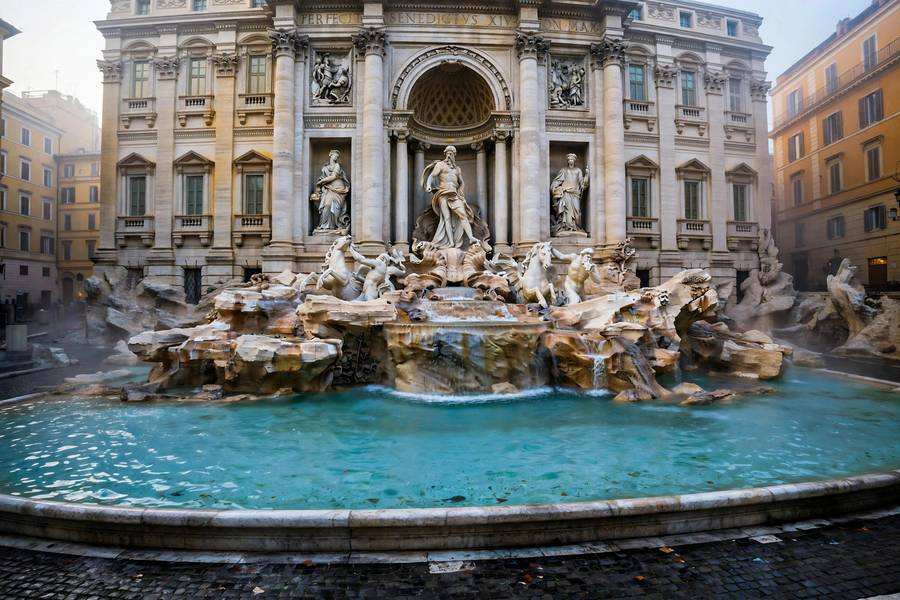
The historic center around it — Piazza Navona, the Trevi Fountain, the Spanish Steps — is all walkable. Trevi Fountain before 7 a.m. is a different place: quiet, glowing, magical. At 2 p.m. it’s a wall of selfie sticks. This is Rome’s whole deal: timing is everything.
Trastevere: Rome’s Best Neighborhood
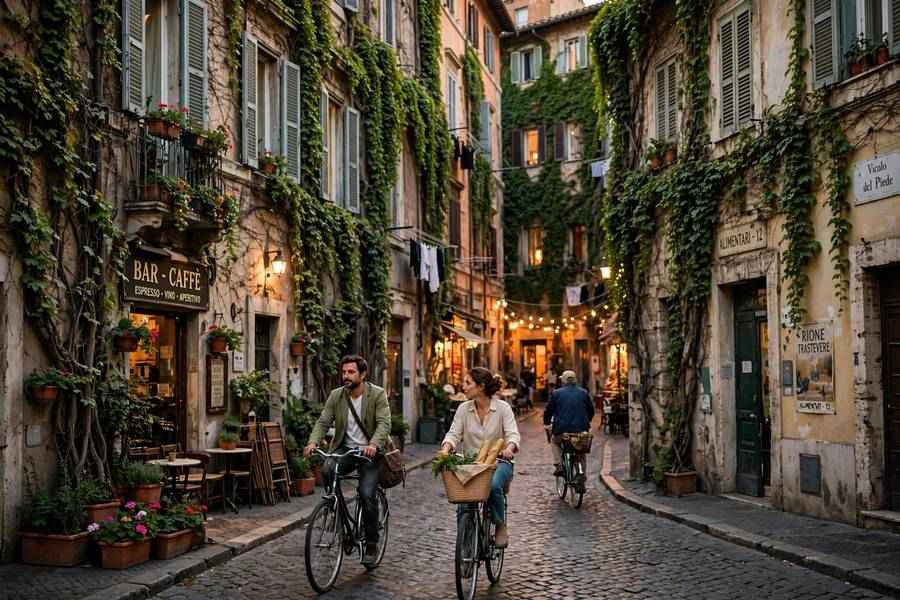
Cross the Tiber and Trastevere feels like the Rome of movies — ivy-draped ochre buildings, laundry strung across alleys, old men arguing over cards outside bars. It’s touristy now — no point pretending otherwise — but the bones are real and the evenings are wonderful.
Do: wander without a map in the late afternoon, have an aperitivo in Piazza Santa Maria in Trastevere, then dinner somewhere on a side street away from the main squares. Eat: supplì (fried rice balls, €2–3 from a forno), and a proper carbonara — guanciale, pecorino, egg, black pepper, nothing else. If the menu lists cream in the carbonara, leave.
Testaccio and Monti: Where Romans Actually Eat
If Trastevere is where visitors go for atmosphere, Testaccio is where Romans go for dinner. It’s a working-class neighborhood with the city’s best traditional food: cacio e pepe, amatriciana, trippa. Trapizzino (a pocket of pizza bianca stuffed with slow-cooked fillings, €4–5) was born here and it’s the perfect cheap lunch.
Monti, near the Colosseum, is the vintage-and-wine-bar neighborhood — great for an evening stroll after the morning’s ancient history. The Mercato Monti on weekends has vintage clothes and local designers.
The rule that never fails: eat where the menu is in Italian first and the tables are full of people speaking Italian. It’s not snobbery — it’s statistics.
The Free and Nearly-Free Wonders
Rome rewards the broke and the curious. The first Sunday of every month, state museums (including the Colosseum) are free — go early because everyone knows this. Churches are free and many are masterpieces: Santa Maria del Popolo has two Caravaggios, San Luigi dei Francesi has three more, and Santa Maria sopra Minerva has Michelangelo’s Christ.
The Orange Garden (Giardino degli Aranci) on the Aventine Hill is free, quiet, and has a framed view of St. Peter’s through the pines. The keyhole at the Priory of the Knights of Malta — a few steps away — frames St. Peter’s dome perfectly through a keyhole. There’s usually a line; it’s worth ten minutes of it.
The best free thing: walking the Appian Way (Via Appia Antica) on a Sunday, when it’s closed to cars. Ancient Roman road, aqueduct ruins, umbrella pines, catacombs along the way. Rent a bike at the start (€4/hour) and ride. It feels like leaving the city entirely.
Day Trips Worth the Train Ride
Ostia Antica (30 minutes by train, €1.50 metro ticket): Rome’s ancient port city, remarkably preserved — apartment blocks, a theater, mosaics, a forum — with a fraction of Pompeii’s crowds. It rivals Pompeii and takes only half a day.
Tivoli (1 hour): Hadrian’s Villa and Villa d’Este, the latter with its famous fountain gardens. A full day, best combined with an early start.
Orvieto (1h15 by train): a hilltop Umbrian town with a jaw-dropping cathedral facade and white wine in cliffside caves. If Rome’s intensity is getting to you, this is the antidote.
Skip as a day trip: Pompeii. It’s 3+ hours each way from Rome and deserves an overnight in Naples or Sorrento. Doing it as a day trip from Rome means six hours of trains for three hours of ruins.
What to Skip (An Honest List)
The Spanish Steps: pretty staircase, that’s it. Walk past, don’t plan around them.
Overpriced restaurants near major sights: the closer to the Colosseum/Vatican/Trevi, the worse the food-to-price ratio. Walk ten minutes in any direction and quality doubles while prices drop.
The “hop-on hop-off” bus: Rome’s center is walkable and the bus sits in the same traffic you’d walk past. The metro (limited but useful) and your feet are better.
August: it bears repeating. August in Rome is brutally hot, half the authentic restaurants close for Ferragosto, and the crowds peak. Come in April–May or September–October instead.
When to Go and How Long to Stay
Best months: April, May, September, October. Warm, manageable crowds, everything open. Good: March and November (cooler, cheaper, occasional rain). Avoid: August.
How long: four full days minimum. Day 1: Colosseum + Forum + Monti evening. Day 2: Vatican morning + Trastevere evening. Day 3: Pantheon, historic center, churches. Day 4: Appian Way or Ostia Antica + Testaccio dinner. Five or six days lets you add Tivoli or just slow down — and Rome rewards slowing down more than almost any other city.
If you’re still sorting the practical side, the guides on how to apply for a passport and what to pack for international travel cover the logistics so you can focus on the carbonara.
Frequently Asked Questions
Four full days is the minimum to see the major sights without rushing: the Colosseum and Forum, the Vatican, the historic center, and one slower day for Trastevere or the Appian Way. Five to six days lets you add a day trip to Ostia Antica or Tivoli.
Yes, absolutely. Timed-entry tickets for the Colosseum (€18 standard; €24 with arena access) sell out days ahead in high season and Vatican Museums tickets (€20) sell out weeks ahead. Book online as soon as your dates are firm, and choose the earliest morning slot available.
April–May and September–October offer the best combination of pleasant weather, manageable crowds, and fully open restaurants. Avoid August, when extreme heat, peak crowds, and restaurant closures for Ferragosto make the city miserable.
Yes, but go before 7 a.m. Early morning the fountain is quiet and magical; by afternoon it’s packed with selfie sticks. The same timing rule applies to most of Rome’s outdoor sights.
Trastevere for atmosphere and evenings, Monti for a central base near the Colosseum with local character, and Testaccio for food lovers on a budget. Avoid staying right next to the main sights, where hotels are overpriced and restaurants cater to tourists.
Skip the gladiator-costumed photo people outside the Colosseum, restaurants within sight of major attractions, the hop-on hop-off bus (the center is walkable), and street sellers offering “skip the line” tickets — your pre-booked timed ticket already skips the line.