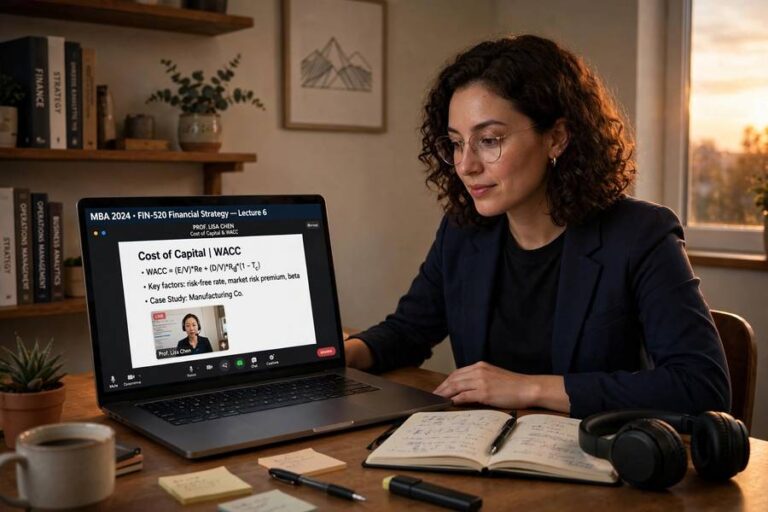
Part Time Online MBA Programs: How to Earn Your Degree While Working


Every year, at least a few of the working professionals who come to my advising sessions ask me the same question: “Rachel, can I really earn an MBA without quitting my job?” And my answer is always the same — yes, absolutely, but only if you pick the right kind of program. That’s exactly what part time online MBA programs were built for.
I’ve spent over a decade in education, and I’ve watched part time online MBAs go from a niche option to one of the most practical paths to a graduate business degree. These programs are designed for people with full-time jobs, families, and real responsibilities — people who can’t press pause on their lives for two years of full-time study.
In this guide, I’ll walk you through how part time online MBA programs actually work, how long they take, what they cost, and how to choose one that fits your life instead of taking it over.
What Is a Part Time Online MBA, Really?
A part time online MBA is a Master of Business Administration degree designed to be completed alongside full-time employment. Instead of taking three or four courses per semester like full-time students, you take one or two. And instead of commuting to campus, most of your coursework happens online.
Here’s what surprises most of my students: the degree itself is identical to the full-time version. Your diploma won’t say “online” or “part time” on it. Employers see an MBA from an accredited school, full stop. The difference is purely in the pacing and the delivery method.
These programs typically cover the same core subjects as traditional MBAs — finance, marketing, operations, organizational behavior, strategy, and data analytics — plus electives you can tailor to your interests. The online format just gives you the flexibility to learn around your work schedule.
How Part Time Online MBA Programs Work
Every program structures things a little differently, but most part time online MBAs share a few common features. Let me break down the ones that matter most when you’re comparing options.
Synchronous vs. Asynchronous Learning
This is the first thing I tell my students to check. Synchronous classes meet at scheduled times over video — you’re expected to show up live, just like a regular class. Asynchronous classes let you watch lectures and complete work on your own schedule within weekly deadlines.
Most part time online programs use a mix, with a heavy lean toward asynchronous. If you’re working unpredictable hours or have kids at home, asynchronous-heavy programs give you much more breathing room. If you thrive on live discussion and real-time accountability, a synchronous program might suit you better. If you want a clearer picture of how this style of learning functions day to day, my breakdown of what e-learning actually looks like in practice walks through the formats in detail.
Cohort vs. Self-Paced Formats
In a cohort model, you move through the program with the same group of students from start to finish. This builds real relationships — some of my former students still do business with people from their MBA cohorts. In a self-paced model, you take courses on your own timeline, which offers maximum flexibility but less community.
Honestly? For most working professionals, the cohort model is worth it. The networking alone pays for itself. But if your schedule is genuinely chaotic, self-paced might be the only realistic option — and that’s fine too.
Residencies and Immersions
Some programs include short on-campus residencies — usually a long weekend or a full week, once or twice during the degree. These are great for meeting classmates face to face and building relationships with faculty. Before you enroll, check how many residencies a program requires and factor the travel into your budget and calendar.

How Long Does a Part Time Online MBA Take?
Most part time online MBA programs take 2.5 to 4 years to complete, depending on how many courses you take per term. Programs usually require 36 to 60 credit hours. Taking one course per term puts you closer to four years; taking two puts you closer to two and a half.
A few programs offer accelerated part time tracks that you can finish in about two years, but I’ll be honest with you — two courses per term on top of a full-time job is intense. I’ve seen students burn out trying to rush it. The whole point of a part time program is sustainability.
My practical advice: start with one course in your first term. See how it feels alongside your actual work and life. You can always add a second course later once you know your rhythm. It’s much easier to speed up than to recover from burnout.
What Do Part Time Online MBA Programs Cost?
Tuition for part time online MBA programs varies enormously — anywhere from $20,000 to over $150,000 for the full degree. Public universities tend to sit at the lower end, while prestigious private schools charge premium prices.
Before you panic at the numbers, remember a few things:
- Employer tuition assistance is common. Many companies offer $5,250 per year in tax-free tuition benefits (the IRS limit), and some offer much more. Ask your HR department before you assume you’re paying alone.
- You’re still earning while you learn. Unlike a full-time MBA where you give up two years of salary, a part time program lets you keep your paycheck. That changes the math dramatically.
- Scholarships exist for part time students too. They’re less common than for full-time students, but merit-based and diversity scholarships are out there. Always ask the admissions office.
- Compare cost per credit, not sticker price. Two programs with similar total costs can have very different credit requirements.
When I advise students on the money question, I always frame it as a return-on-investment calculation, not just a cost. An MBA is one of the most useful degrees for career changers precisely because it tends to pay for itself through promotions and salary increases — but only if you finish, which brings me back to choosing a pace you can sustain.
What to Look for When Choosing a Program
With hundreds of programs out there, here’s the checklist I give my own students:
Accreditation First, Always
Look for AACSB accreditation — it’s the gold standard for business schools worldwide. Regional accreditation is the minimum. An MBA from an unaccredited school can be worse than no MBA at all, because employers will question it.
Schedule Flexibility That Matches Your Life
Ask specific questions: Are lectures live or recorded? How many hours per week do current students actually spend on coursework? Are exams scheduled or take-home? The answers matter more than any brochure.
Career Services for Online Students
Some schools treat online students as second-class citizens when it comes to career support. Ask whether online students get the same access to recruiters, career coaching, and alumni networks as on-campus students. A program that can’t answer this clearly is a red flag.
Faculty Quality
Are the online courses taught by the same professors who teach on campus, or by adjuncts hired just for the online program? Same faculty usually means the same rigor — and the same diploma value.

Who Should (and Shouldn’t) Consider One
A part time online MBA is a great fit if you:
- Have 2+ years of work experience and want to move into management or switch industries
- Need to keep earning a full-time salary while studying
- Are self-disciplined enough to study without a classroom holding you accountable
- Want the credential and the network without relocating
It might not be the right fit if you’re looking for a dramatic career reset that requires an internship (full-time programs handle that better), or if you know you struggle with self-directed learning. There’s no shame in that — knowing your learning style is a strength, not a weakness.
One more thing: modern study tools can make a real difference in how manageable the workload feels. I often point my students toward AI tools that can lighten a student’s workload, especially for research and summarizing dense readings.
How to Apply While Working Full Time
Applying to MBA programs while working is a project in itself, so treat it like one. Here’s a realistic timeline:
- 6 months out: Research programs, check accreditation, and talk to alumni. Most schools will happily connect you.
- 4 months out: Prepare for the GMAT or GRE if your target schools require it (many online programs have waived tests for experienced professionals — always check).
- 3 months out: Line up recommenders. Give them plenty of notice and a bullet list of your accomplishments to make their job easier.
- 2 months out: Draft your essays. The best MBA essays are specific — one concrete story beats five vague claims about “leadership.”
- 1 month out: Polish, proofread, and submit. Don’t apply to more than 4–5 programs; each application deserves real effort.
If you’re comparing specific schools, my guide to the best online MBA programs is a good starting point for narrowing your list.

Final Thoughts
A part time online MBA is one of the most practical investments a working professional can make — but only if you go in with clear eyes. Choose an accredited program, pick a pace you can actually sustain, and use your employer’s tuition benefits if you have them.
I’ve watched students transform their careers through these programs: the analyst who became a director, the engineer who moved into product management, the teacher who pivoted into ed-tech leadership. The degree opens doors, but the discipline you build earning it while working full time? That changes how you see yourself. And that might be the most valuable part of all.
Frequently Asked Questions
Yes. As long as the program is accredited (ideally AACSB), employers treat a part time online MBA the same as a full-time one. Your diploma doesn’t distinguish between formats, and many employers actually respect the discipline it takes to earn a degree while working.
Plan for 10–15 hours per week per course. Most part time students take one or two courses per term, so expect 10–30 hours of weekly study time on top of your job. Starting with one course is the safest way to find your rhythm.
Some programs accept students with little experience, but most prefer 2–5 years. MBA coursework assumes professional context — case studies and discussions are far richer when you’ve actually worked in an organization. If you’re fresh out of undergrad, consider gaining experience first.
Many do not. A growing number of online programs offer GMAT/GRE waivers, especially for applicants with strong work experience or prior graduate degrees. Always check each school’s current policy, as requirements change frequently.
Many schools allow it, though it depends on the program’s structure and visa considerations for international students. If you think you might want this flexibility, ask about it during the admissions process rather than assuming.