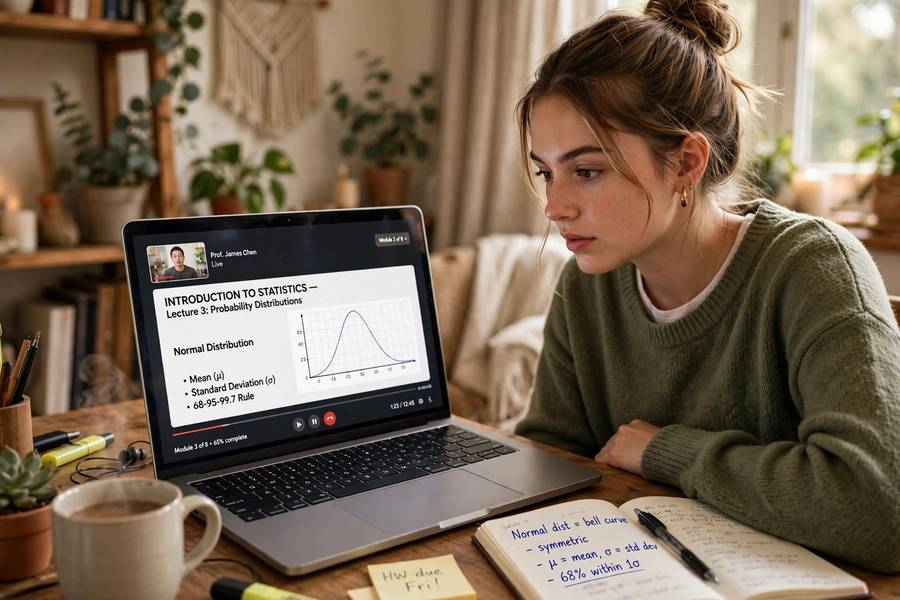
When I started tutoring, “online learning” meant a grainy video and a PDF. Today my students take entire courses on their phones between shifts, earn certificates from universities they will never visit, and learn languages from an app that nags them daily. E-learning has quietly become one of the main ways the world learns — but most people using it have never been taught how to do it well.
Whether you are considering an online degree, your school just went hybrid, or you are eyeing a skills course, here is the full picture: what e-learning actually is, the different forms it takes, where it shines, where it struggles, and how to make it work for you.
Table of Contents
- E-Learning Defined
- The Main Types of E-Learning
- Where E-Learning Shines
- The Honest Downsides
- E-Learning vs Traditional Classroom
- How to Succeed as an E-Learner
- Choosing the Right Platform or Course
- Frequently Asked Questions
E-Learning Defined
E-learning (electronic learning) is education delivered through digital devices — typically the internet. That covers a huge range: a university degree taught entirely over video calls, a ten-minute phone tutorial on fixing a sink, a corporate compliance module, and an interactive coding playground all count.
The unifying idea is not the technology. It is the shift from “learning happens in a specific place at a specific time” to “learning happens wherever you are, whenever you choose.” That shift changes everything about how we study — for better and for worse.
The Main Types of E-Learning
Synchronous: Live and Together
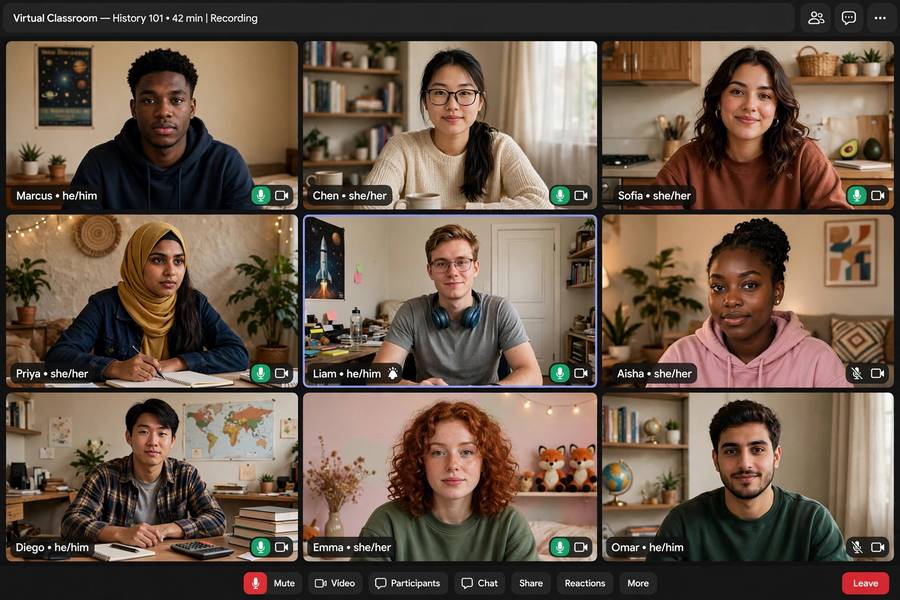
Synchronous e-learning happens in real time: live video lectures, virtual classrooms, scheduled webinars. You show up at a set time and interact with an instructor and classmates live.
Strengths: structure, immediate answers, social accountability. Weaknesses: scheduling conflicts, time zones, and the particular exhaustion of back-to-back video calls.
Asynchronous: On Your Schedule
Asynchronous learning is pre-recorded and self-paced: video courses you watch anytime, discussion boards, assignments with flexible deadlines. This is the dominant form of e-learning and the reason a nurse working nights can earn a degree.
Strengths: total flexibility, rewindable content, learn at 2x speed. Weaknesses: requires serious self-discipline; easy to fall behind silently.
Blended/Hybrid: The Mix
Blended learning combines online and in-person elements — say, recorded lectures at home plus weekly in-person labs or discussions. Many schools landed here after experimenting with fully remote teaching, and the evidence suggests it is often the best of both worlds when designed well.
Microlearning and Mobile Learning
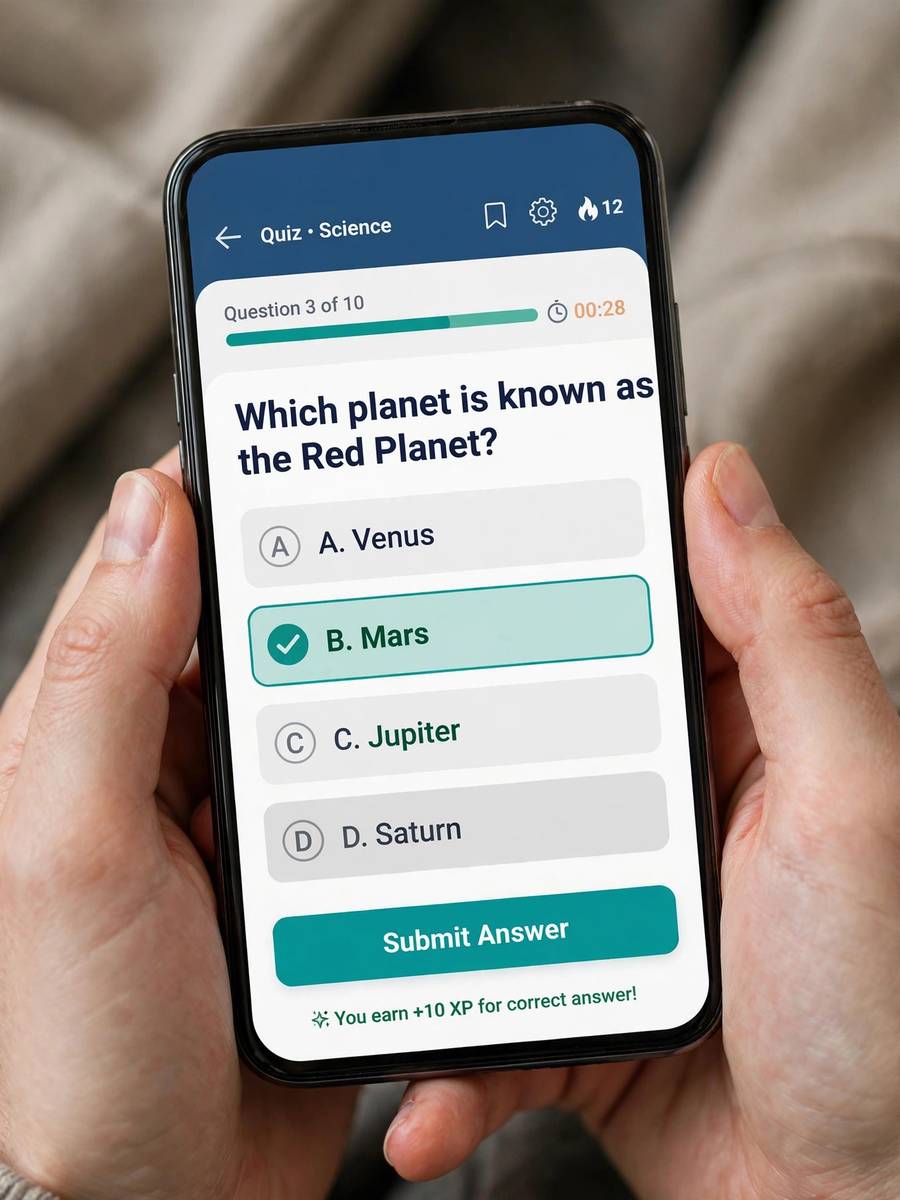
Bite-sized lessons (3–10 minutes) delivered on phones: language apps, quiz apps, short skill videos. Perfect for filling dead time and building habits, less suited to deep, complex subjects.
Gamified and Simulation-Based
Points, streaks, leaderboards, virtual labs, scenario simulations. Gamification drives engagement brilliantly for some learners; simulations (virtual chemistry labs, flight simulators) let you practice things that would be dangerous or expensive in real life.
Where E-Learning Shines
- Access. A student in a rural town can take courses from world-class instructors. Geography stops being destiny.
- Flexibility. Learn around jobs, kids, and life. Pause, rewind, rewatch — the lecture waits for you.
- Pace control. Speed through what you know, linger on what you do not. Try doing that in a lecture hall of 300.
- Cost. Quality online courses often cost a fraction of in-person equivalents — and many excellent ones are free.
- Variety. Niche subjects that no local school offers — from ancient Greek to game design — are one search away. Language learning is the classic example: here’s how to learn a new language faster using exactly these tools.
The Honest Downsides
I would be doing you a disservice to skip this part, because these are the reasons e-learners quit:
- Isolation. Learning alone at a screen can feel lonely. The casual hallway conversations and study groups of campus life do not happen by default online.
- Self-discipline demands. Without fixed class times, procrastination thrives. Completion rates for self-paced courses are famously low — often under 15%.
- Tech and environment gaps. Unreliable internet, no quiet space, an old device — these hit disadvantaged learners hardest.
- Limited hands-on practice. Some skills (labs, clinical work, performance) translate poorly to screens, though simulations keep improving.
- Credential skepticism. Improving fast, but some employers still weigh traditional degrees more heavily — check your field.
E-Learning vs Traditional Classroom
Neither wins outright; they win at different things. Classrooms win at community, spontaneous discussion, hands-on work, and structure for students who need it. E-learning wins at flexibility, access, pacing, and cost.
The research consensus is refreshingly undramatic: well-designed e-learning produces learning outcomes roughly equal to well-designed classroom instruction. Design and student engagement matter far more than the medium. A great online course beats a boring lecture; a great teacher beats a mediocre video series.
How to Succeed as an E-Learner
This is the part most guides skip, and it is the part that determines whether you finish. After watching hundreds of students navigate online courses:
1. Build Your Own Structure
No one will build it for you. Put study blocks in your calendar like appointments. Same time, same place, every week. Treat them as non-negotiable.
2. Create a Dedicated Space
Even a corner of a table that is “where I study” helps. Keep your note-taking setup ready so starting takes seconds, not twenty minutes of hunting for chargers.
3. Engage Actively, Not Passively
Watching videos is not studying. Pause every 10–15 minutes and summarize from memory — that is active recall applied to video. Take notes by hand or in an app. Do the practice problems instead of nodding along.
4. Manufacture Accountability
Join the course forum. Find one study buddy. Tell someone your weekly goals. Post progress publicly. Isolation kills completion; even thin social threads help enormously.
5. Fight the Rewind Trap
Rewatching a confusing section five times feels like diligence, but if you still cannot explain it afterward, you need a different explanation — not a sixth viewing. Search for alternative tutorials, ask in forums, or work a practice problem instead. The same principle powers good exam prep generally — see how to study for final exams for a full system.
6. Protect Your Attention
Close other tabs. Phone on silent, ideally in another room. Online learning happens on the world’s most distracting device — you have to defend your focus deliberately.
Choosing the Right Platform or Course
Before enrolling, check: Is there a clear syllabus with learning objectives? Are there practice opportunities with feedback (not just videos)? Can you preview content or read reviews? Is the credential recognized in your field if that matters to you? And honestly — does the format match your discipline level? If you know you need external structure, favor synchronous or cohort-based courses over pure self-paced ones.
E-Learning for Different Ages
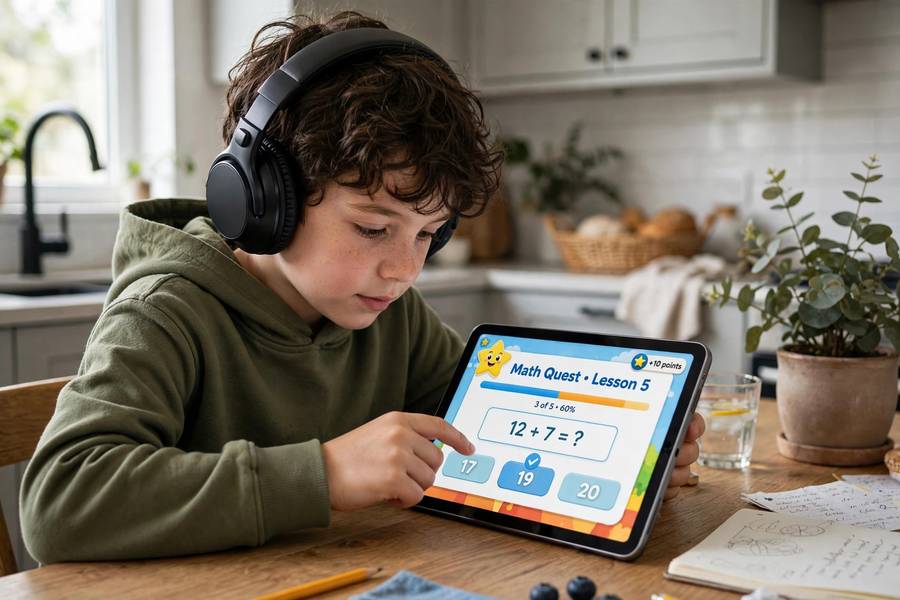
E-learning looks very different across life stages. Young children need short, interactive sessions with heavy parent involvement — passive video does little for them. Teenagers benefit from structured courses with clear deadlines and peer interaction to counter isolation. Adults and professionals thrive with self-paced microlearning fitted around work, prioritizing immediately applicable skills. The common thread: the younger or less self-directed the learner, the more structure and human contact the program must provide.
For more on learning at every stage, browse our Education guides.
Frequently Asked Questions
E-learning is education delivered through digital devices, usually the internet — from full online degrees to short phone tutorials. Its defining feature is learning anywhere, anytime, rather than in a fixed classroom at a fixed hour.
The main types are synchronous (live classes), asynchronous (self-paced recorded courses), blended (online + in-person mix), microlearning (short mobile lessons), and gamified/simulation-based learning.
Research shows well-designed e-learning produces roughly equal learning outcomes to classroom instruction. Course design and student engagement matter far more than the medium itself.
Isolation, lack of structure, and procrastination. Self-paced courses often have completion rates under 15%. Building a fixed schedule and finding accountability (study buddy, forum, public goals) dramatically improves finishing odds.
Increasingly, yes — especially from accredited institutions. It varies by field, so check expectations in your industry before enrolling in a program chosen mainly for its credential.
Study in scheduled blocks, keep a dedicated space, close other tabs, silence your phone, and engage actively — pause videos to summarize from memory instead of just watching.