How to Create a Budget Binder: A Calm, Simple System

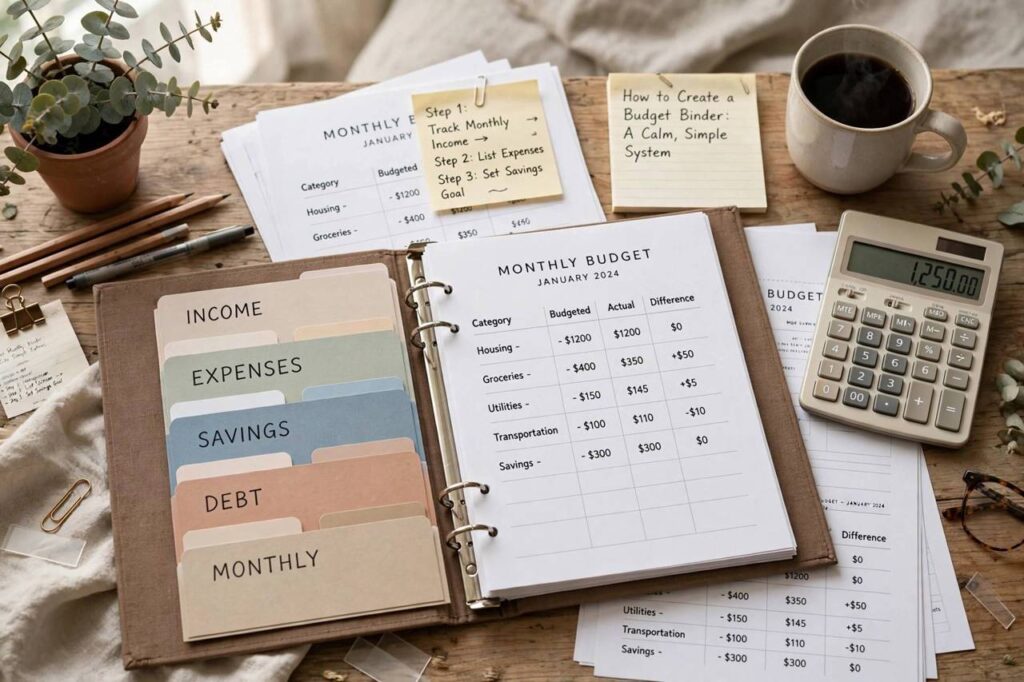
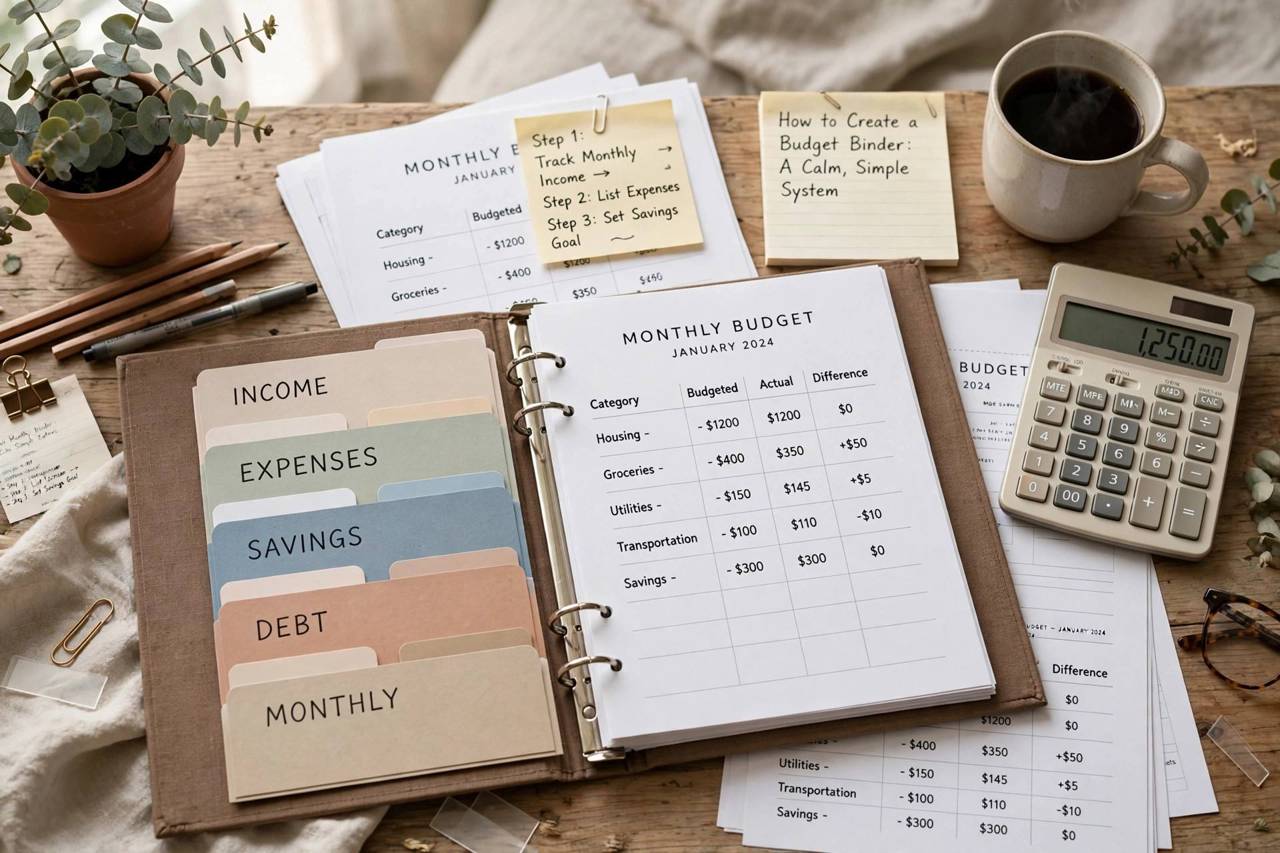
Learning how to create a budget binder is really about building one small habit: looking at your money on purpose, once a week, in a place that feels calm instead of stressful. A budget binder is simply a physical binder where your financial life lives on paper: your monthly budget, your bills, your savings goals, your spending, all in labeled sections you can flip through with a cup of tea. No apps demanding attention, no spreadsheets you dread opening. Just paper, a pen, and ten quiet minutes. Here is how to set one up so it actually gets used.
I want to say something first that most money advice skips: a budget binder is not about restriction. It is about attention. Most of us don’t overspend because we are reckless; we overspend because we are not looking. The binder is just a gentle way to start looking. Be kind to yourself in the process, especially in the first month when the numbers might surprise you.
What You Will Need
Keep the supplies simple so you start today instead of shopping for a week. You need a binder, any size works, though 1.5-inch gives growing room; a set of tab dividers, at least eight; a hole punch; a pen you enjoy writing with, because you will use it weekly; and printed or hand-drawn tracking sheets. Optional but lovely: washi tape, stickers, or colored pens if decorating makes you more likely to open the thing. The prettiest binder in the world is useless in a drawer; the plain one you actually use is perfect.
As for the tracking sheets, you can print free templates or draw your own with a ruler. Hand-drawn sheets work just as well and have a charm that printables lack. The sections below tell you exactly which pages go where.
Section 1: Monthly Budget
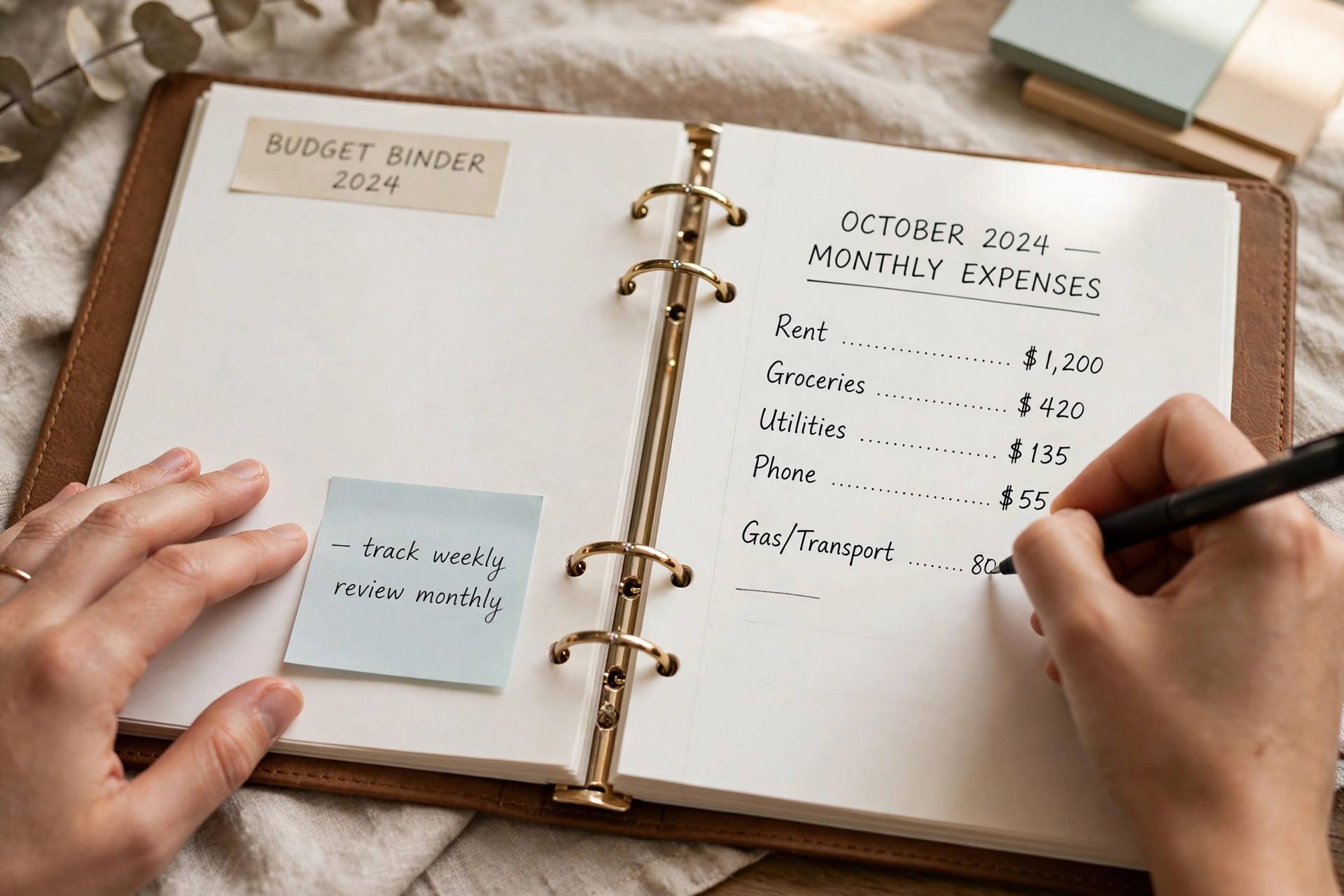
This is the heart of the binder. Each month gets a fresh budget page with three columns: expected income, planned spending by category, and actual spending filled in as the month goes. Start with your take-home pay, then list fixed expenses first: rent or mortgage, utilities, insurance, loan payments, subscriptions. Then variable ones: groceries, transport, personal spending. Whatever is left is assigned deliberately: savings, debt payoff, or a small fun fund. Every dollar gets a job before the month begins.
The first month is reconnaissance, not perfection. You are learning what you actually spend, which is always different from what you think you spend. Adjust next month’s plan with real numbers. By month three, the budget starts feeling like it fits.
Section 2: Bill Tracker
Missed bills are usually an organization problem, not a money problem. A bill tracker page lists each recurring bill, its due date, its typical amount, and a checkbox for paid. Review it during your weekly check-in and pay anything due in the next seven days. Many people find that simply writing bills down ends late fees within two months, because nothing slips through anymore.
Add a notes column for the fiddly details: which card the bill charges, the login, the confirmation number habit. Future you will be grateful.
Section 3: Savings Goals
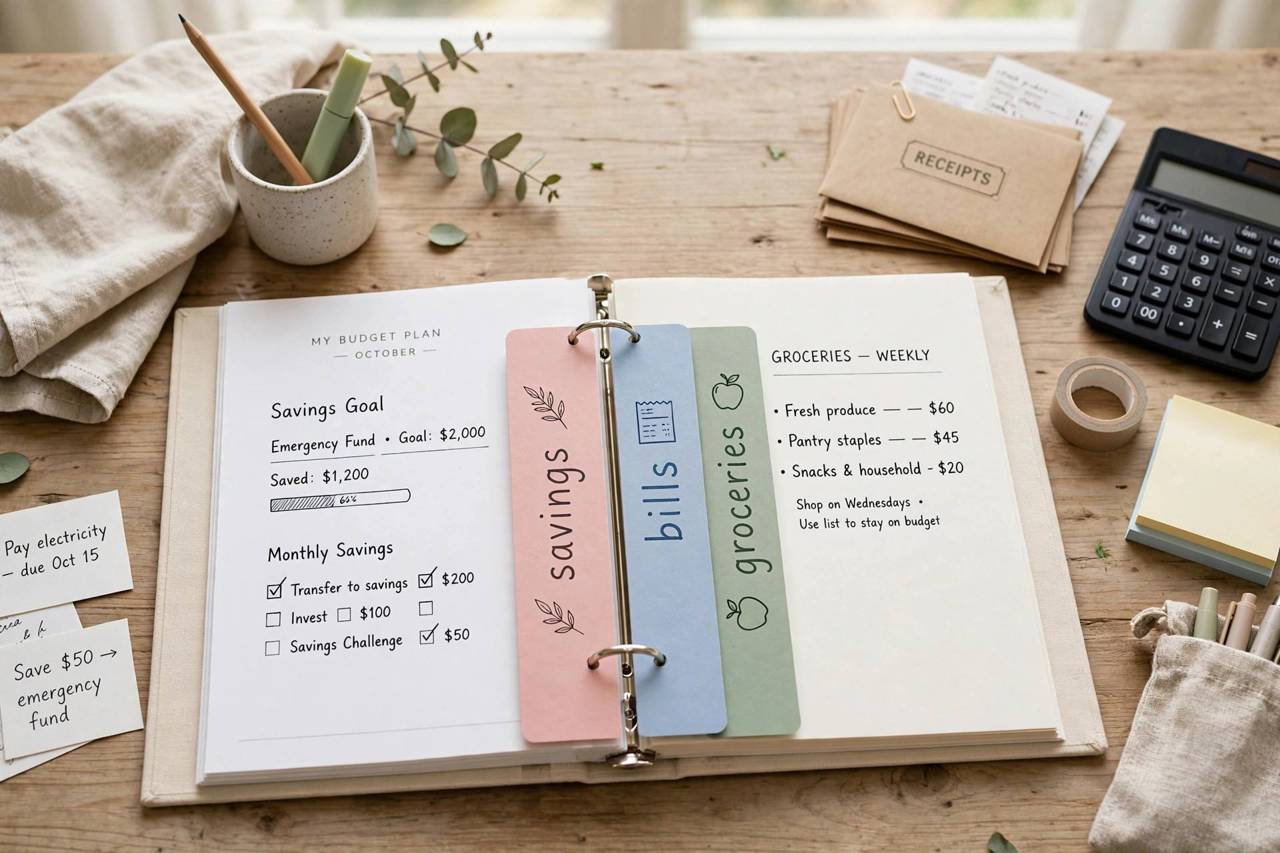
Money without a purpose drifts. Give every savings goal its own page: the goal name, the target amount, the deadline, and a progress bar you color in as you go. Emergency fund, vacation, new laptop, holiday gifts, each gets a tracker. Watching a bar fill in by hand is weirdly motivating in a way app notifications never manage.
Fund the goals with whatever the monthly budget allows, even if it is small. Five dollars a week toward an emergency fund is $260 a year, which covers the flat tire or the vet visit that would otherwise go on a credit card. Small and steady beats ambitious and abandoned.
Section 4: Debt Payoff Plan
If you carry debt, give it a section with dignity, not shame. List each debt: creditor, balance, interest rate, minimum payment. Then choose a strategy and write it on the page. The avalanche method, highest interest first, saves the most money. The snowball method, smallest balance first, builds momentum fastest. Either works; the one you will stick with is the right one.
Track the balances monthly and watch them shrink. There is something powerful about seeing a number get smaller in your own handwriting. Celebrate milestones: every $1,000 gone deserves a little acknowledgment.
Section 5: Spending Log
This is the section that changes behavior. A simple daily log: date, what you bought, amount, category. It takes thirty seconds per entry. You don’t need to justify anything; just write it down. Within two weeks, patterns appear on their own. The daily coffee, the subscription you forgot, the takeout that quietly became a habit. Awareness does most of the work without any scolding.
Review the log weekly with curiosity, not judgment. Ask what surprised you, not what you did wrong. Then adjust next month’s budget categories to match reality instead of fighting it.
Section 6: Meal Planning and Grocery Budget
Groceries are the budget category with the most slack for most households, which makes them the highest-leverage section. Keep a weekly meal plan page next to a grocery list built from it. Planning meals before shopping cuts both the bill and the food waste, and it ends the 6 p.m. what-are-we-eating panic that leads to takeout.
Track grocery spending separately for a month. Most people discover one or two leaks: the premium items bought on autopilot, the produce that goes bad, the third weekly trip that doubles impulse buys. One planned trip a week with a list is the simplest fix in personal finance.
The Weekly Check-In: Ten Minutes That Make It Work
The binder only works if you open it. Pick a standing time, Sunday evening works for many people, and spend ten minutes: update the spending log, check the bill tracker for the coming week, glance at savings progress, and note anything surprising. Put on music, make tea, keep it pleasant. The moment the check-in feels like punishment, the system dies.
If you miss a week, just do the next one. The binder doesn’t judge; it just waits. Two missed weeks is a pause, not a failure. The people who succeed with budget binders aren’t the disciplined ones; they are the ones who keep coming back after drifting.
Using Your Binder for Big Goals
Once the monthly system hums, the binder becomes a planning tool for bigger things. Saving for a wedding? A dedicated section with the venue, vendor, and decor budgets turns a scary number into manageable pieces, much like the approach in our guide to planning a wedding on a small budget. Holiday spending, a home down payment, a career break: all of them get less intimidating when they live on labeled pages with progress bars.
How to Create a Budget Binder That Survives Real Life
The perfect binder that lasts three weeks is worse than the messy one that lasts three years. Build yours for imperfection. Leave blank pages between sections for the categories you haven’t thought of yet. When a month goes badly, write one honest sentence about what happened instead of abandoning the binder; the sentence turns a failure into data. Do a thirty-minute annual review every January: which sections did you actually use, which gathered dust, what does this year’s binder need? Evolve the system instead of restarting it. The binder is a living document, not a test you pass once.
Budget Binder Printables: What to Include
If you prefer printed sheets to hand-drawn ones, assemble a starter pack: a monthly budget worksheet, a bill tracker with due dates, a savings goal tracker with a progress bar, a debt payoff sheet listing balances and rates, a daily spending log, and a weekly meal plan with grocery list. Print three months’ worth at a time so restocking never becomes an excuse. Keep a digital backup of your templates so a spilled coffee is an inconvenience, not a disaster. And remember the rule: the sheets serve the habit, not the other way around. If a sheet goes unused for two months, remove it.
When to Upgrade Beyond the Binder
The binder is a starting point, not a forever system, and knowing when to evolve is part of the skill. If your finances grow complex, multiple income streams, investments, a small business, consider graduating to a spreadsheet or app for the number-crunching while keeping the binder for planning and reflection. Many people end up with a hybrid: digital for accuracy, paper for intention. The binder did its job if it taught you to look at your money regularly; whatever tool keeps that habit alive is the right next step.
One Last Thought Before You Start
You don’t need the perfect binder; you need a started one. Grab any binder, label five dividers with the sections above, and fill in this month’s budget tonight, imperfectly. The system will shape itself around your life within a month. Future you, calmer about money and clearer about where it goes, will be glad you began.
Frequently Asked Questions
What sections should a budget binder have?
At minimum: monthly budget, bill tracker, savings goals, debt payoff, and spending log. Add meal planning, gift tracking, or project budgets as needed. Start with five sections and grow; a bloated binder you avoid is worse than a slim one you use.
Is a budget binder better than a budgeting app?
Neither is objectively better; it depends on you. Binders win for people who avoid apps, like writing by hand, or want money time to feel calm and screen-free. Apps win for automatic transaction imports. Many people use both: app for tracking, binder for planning.
How much time does a budget binder take each week?
About ten minutes for the weekly check-in, plus thirty seconds per spending-log entry during the week. The monthly setup takes thirty to sixty minutes the first time, then about fifteen minutes in later months.
What if my income is irregular?
Budget from your lowest typical month, not your average. In good months, the surplus goes to savings or debt; in lean months, the plan still holds. A zero-based budget rebuilt each month handles irregular income better than a fixed template.
How do I stay motivated to keep using it?
Make it pleasant: a nice pen, a calm weekly ritual, progress bars you color in. Review savings goals often, because visible progress is the best motivator. And forgive missed weeks instantly; the system works when you return to it, not when you are perfect.