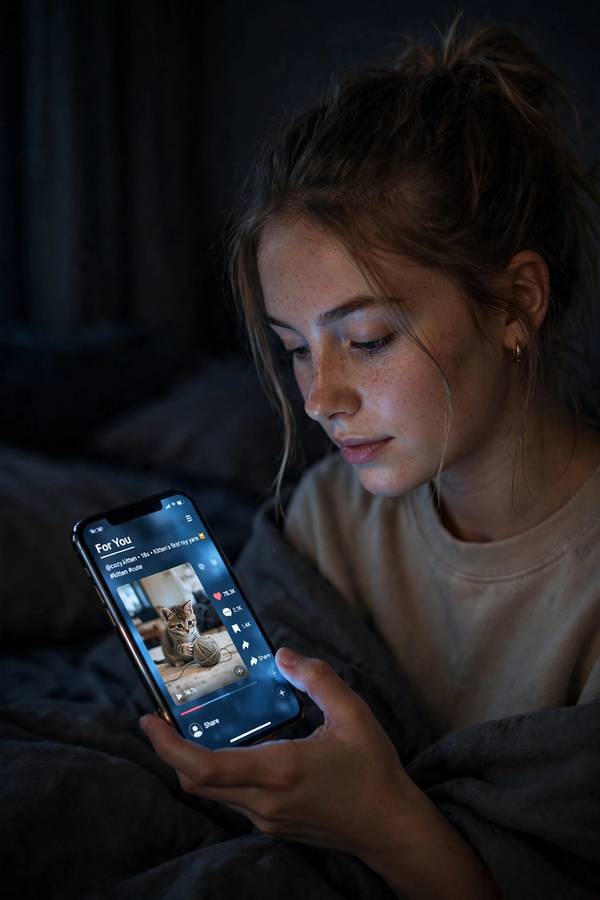
TikTok figured out what you like faster than any app in history — sometimes within an hour of installing it. Friends have told me, half-joking and half-disturbed, that the app seemed to know their niche interests before they’d told anyone. A colleague opened a fresh account and within twenty videos was getting content about a hobby she’d never mentioned online. It felt like mind-reading. It wasn’t. It was the fastest-learning recommendation system ever built, and understanding it explains both the magic and the unease.
This guide breaks down how TikTok’s For You Page actually works: the signals it reads, why short video is a cheat code for machine learning, and what the algorithm optimizes for. The broader context is in how recommendation algorithms work.
Table of Contents
- The For You Page: TikTok’s Whole Product
- Why Short Video Is a Machine Learning Cheat Code
- The Signals: Everything You Do Is a Vote
- Watch Completion: The King Signal
- How New Videos Get Their Chance
- The Feedback Loop (and the Filter Bubble)
- What TikTok Optimizes For
- Training Your For You Page
- Frequently Asked Questions
The For You Page: TikTok’s Whole Product
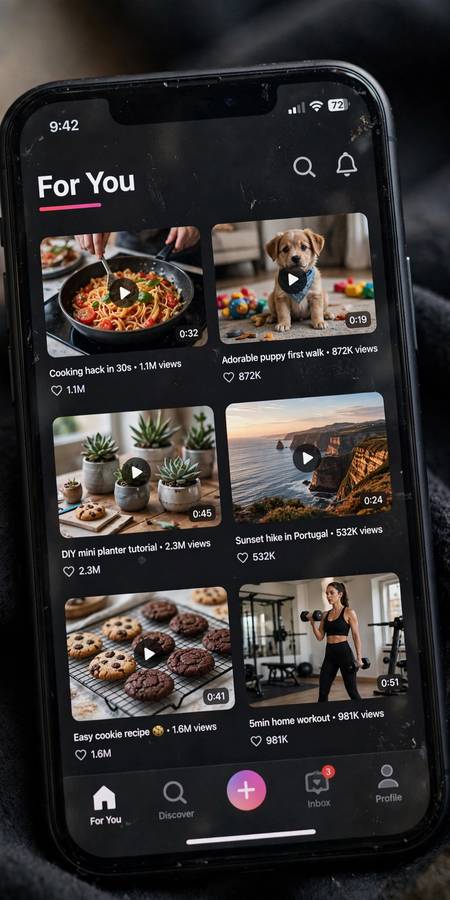
Open TikTok and you land on the For You Page (FYP) — an endless vertical feed of videos chosen for you. There’s a Following tab, but it’s secondary; the FYP is the product. Unlike older social apps where you built a feed by following accounts, TikTok builds your feed from your behavior, starting from zero.
This was the radical bet: that an algorithm could entertain you better than your own choices. Every previous platform assumed you knew what you wanted and gave you tools to find it. TikTok assumed the algorithm could figure out what you wanted faster than you could articulate it — and it was right, to a degree that reshaped the entire industry. Every major platform now has a TikTok clone because the FYP proved the model.
The feed is also full-screen and singular: one video at a time, no grid, no choosing. This design isn’t aesthetic — it’s instrumental. One video at a time means every swipe is a clean, unambiguous signal about exactly one piece of content. The interface is a data-collection machine disguised as entertainment.
Why Short Video Is a Machine Learning Cheat Code
Here’s the technical insight that explains TikTok’s speed: short videos generate learning signals at an extraordinary rate.
Consider what one minute of TikTok usage produces: you might watch four 15-second videos to completion, skip two after two seconds, replay one, like one. That’s eight clean behavioral data points in sixty seconds. One minute of YouTube might produce a single data point — you clicked a ten-minute video and you’re still watching it; the system won’t know if you liked it for nine more minutes.
Machine learning systems improve with data volume, and TikTok collects behavioral data roughly an order of magnitude faster than long-form platforms. More data per session means faster convergence on your taste profile, which means better recommendations sooner, which means more engagement, which means more data. It’s a flywheel, and the short format is what spins it.
This is also why TikTok can cold-start a new user so fast. Twenty videos — maybe three minutes of swiping — gives the system enough signal to build a rough taste profile. Twenty videos on YouTube would take hours. The format is the advantage.
The Signals: Everything You Do Is a Vote
TikTok has described its recommendation inputs, and they’re comprehensive. Every interaction is a signal:
Watch behavior. Did you watch to the end? Did you rewatch? Did you skip after one second? Watch time per video, completion rate, and replays are the core signals — implicit, abundant, and hard to fake.
Engagement actions. Likes, comments, shares, follows, favorites. Explicit and strong, but rarer than watch signals — most users watch far more than they tap.
Video information. Captions, hashtags, sounds, effects used. The content’s own features help the system understand what a video is about and match it to interested users. Sounds are particularly powerful — audio trends propagate through the system as discoverable clusters.
Device and account signals. Language preference, country, device type. Coarse, but useful for the initial cold start before behavioral data accumulates.
Negative signals. “Not interested” taps, videos you consistently skip, accounts you hide. The system tracks rejection as carefully as attraction.
The crucial point: you cannot use TikTok passively. There is no neutral scrolling. Every second of watch time, every skip, every linger is training the model. The FYP is a mirror that updates in real time — which is why it can feel like it’s reading your mind. It’s reading your thumbs.
Watch Completion: The King Signal
If you remember one thing about TikTok’s algorithm, make it this: completion rate dominates.
A video that 80% of viewers watch to the end will be pushed far and wide, almost regardless of likes. A video with a million likes but a 20% completion rate will stall. This makes intuitive sense — finishing a video is the purest expression of “this held my attention” — and it shapes everything about TikTok content.
It’s why videos hook you in the first second (“wait for it,” the mid-sentence start, the visual shock). Creators aren’t being annoying; they’re optimizing for the metric that matters. It’s why videos got shorter, then stabilized — the system rewards the completion, so creators engineer for it. And it’s why rewatchability is gold: a video that loops seamlessly gets completion rates above 100%, which the algorithm reads as extraordinary engagement.
For viewers, the implication is worth sitting with: the system promotes what holds attention, not what’s valuable. The most completed video in your feed isn’t the most informative or the most true — it’s the most gripping. Attention and quality correlate less than we’d like.
How New Videos Get Their Chance
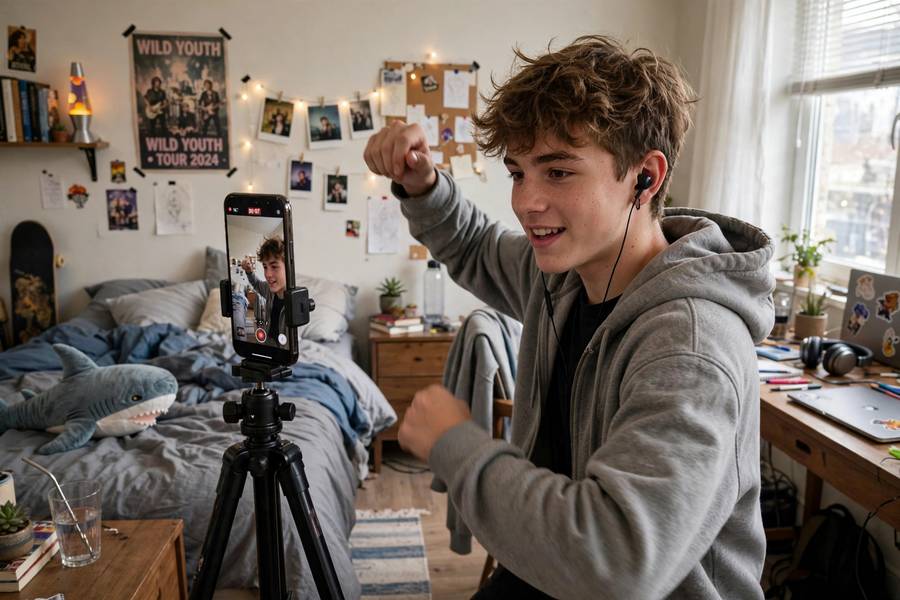
A common question: with billions of videos, how does anything new get seen? TikTok’s answer is staged distribution — a brilliant solution to the cold-start problem.
Every new video gets an initial audience: a small batch of users whose profiles suggest they might like it. The system watches the response — completion rate, engagement, skips. If the metrics clear a threshold, the video graduates to a larger batch. Then larger. Each stage is a test, and videos climb as far as their engagement carries them.
This is why unknown creators can explode overnight. The system doesn’t care about follower counts for distribution — a video from a zero-follower account gets the same initial test as one from a star. What matters is performance in the test batches. It’s the most meritocratic distribution system in media history, and also the most volatile: virality is a series of passed tests, and most videos fail early.
The batch sizes and thresholds are tuned continuously, and TikTok also injects diversity — showing you videos outside your established interests to test new taste dimensions. Without this exploration, the feed would collapse into pure repetition. The system is always, quietly, probing for the edges of your taste.
The Feedback Loop (and the Filter Bubble)
The FYP’s learning speed is also its danger. The loop runs: you watch → the system learns → it shows more of what you watched → you watch more → it learns more. Within days, a new account can converge on a narrow content diet — the same jokes, the same viewpoints, the same aesthetic.
This is the filter bubble at maximum velocity. Older platforms took months to narrow your world; TikTok can do it in a weekend. And because the content is so engaging — the system is genuinely good at finding what grips you — there’s little friction prompting you to look elsewhere.
The research on harms is still developing, but the mechanism deserves honest attention: a system that optimizes for engagement, learns at unprecedented speed, and serves content with no social context will amplify whatever holds attention — including content that’s misleading, extreme, or unhealthy. Questions about what AI bias is apply here too: the system doesn’t need to be intentionally biased to produce skewed outcomes; it just needs to optimize engagement on biased human attention.
TikTok has added “refresh” features and diversity injections to combat narrowing, and they help somewhat. But the fundamental dynamic — fast learning plus engagement optimization equals convergence — is structural.
What TikTok Optimizes For
Strip away the details and TikTok optimizes for one thing: time spent in the app. Retention, session length, daily active use. Every signal, every ranking decision, every exploration tradeoff serves that objective.
This isn’t evil — it’s the business model. But it means the FYP is not optimized for your informedness, your wellbeing, your productivity, or your joy in any deep sense. It’s optimized for the metric that sells ads. The content that maximizes your time in app is content that’s gripping, novel, and endless — which describes both wonderful creativity and compulsive sludge.
Knowing the objective function is the user’s superpower. When you feel the pull of the infinite scroll, you’re feeling the optimization working as designed. The designers made it effortless to continue and effortful to stop. Noticing that is the first step to using the app on your terms.
Training Your For You Page
You can’t opt out of the algorithm, but you can train it:
Use “not interested” — long-press a video and tap it. This is the strongest negative signal, and most users never touch it. Ten deliberate taps can noticeably shift your feed.
Curate your likes and follows. The algorithm weighs explicit actions heavily. Like what you want more of; follow creators who represent the feed you want.
Don’t hate-watch. Watching something to the end because it outrages you teaches the system you want more outrage. The algorithm can’t tell the difference between fascination and fury — both look like engagement. Scroll past quickly instead.
Use the refresh feature. TikTok offers a feed refresh that resets your recommendations. Useful when the feed has converged somewhere you don’t like.
Set time boundaries. The system’s objective is your time; your objective probably isn’t. App timers, grayscale mode, or just the discipline of deciding before you open the app — the algorithm can’t optimize around a user who leaves on purpose.
Frequently Asked Questions
TikTok’s For You Page ranks videos using your behavioral signals — watch completion, replays, likes, shares, skips — matched against video features like sounds and hashtags. New videos get tested in small audience batches and expand based on engagement. The system learns your taste profile from every interaction.
Short videos generate behavioral data far faster than long-form content — a minute of scrolling can produce eight or more clean data points (completions, skips, replays). This high signal density lets the algorithm build a rough taste profile within minutes of a new account’s first session.
Watch completion rate — the percentage of viewers who watch a video to the end. Videos with high completion get pushed to wider audiences almost regardless of like counts. Rewatches are even stronger, since looped videos can exceed 100% completion.
Far less than on other platforms. TikTok distributes videos based on content performance in staged test batches, not follower counts — a zero-follower account’s video gets the same initial test as a star’s. This interest-graph model is why unknown creators can go viral overnight.
Use TikTok’s feed refresh feature to reset recommendations, tap “not interested” on unwanted content, and deliberately like and follow the creators you want more of. Avoid hate-watching — finishing videos you dislike teaches the algorithm to show more of them.