How Do Celebrities Get Verified on Social Media?

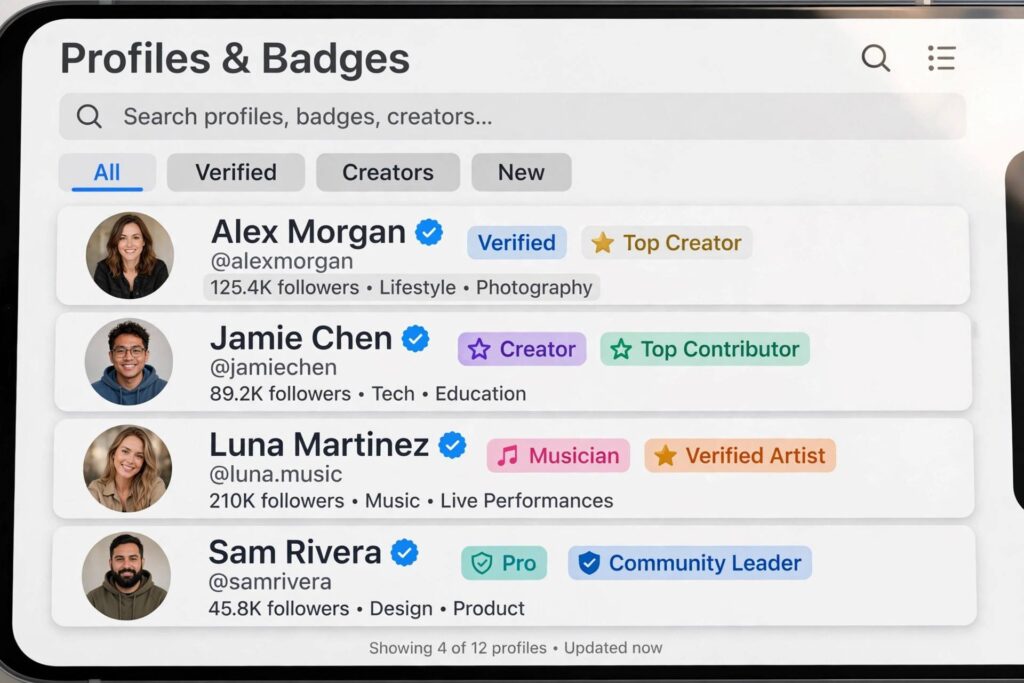
That little blue checkmark next to a celebrity’s name looks simple. It is not. Behind it sits a whole system of identity verification, impersonation battles, PR strategy, and — in recent years — a genuinely confusing mess caused by platforms selling checkmarks to anyone with a credit card. So how do celebrities get verified on social media in the current landscape? The answer is different on every platform, it has changed dramatically in the last few years, and understanding it explains a lot about what you see in your feeds — including which “celebrity” accounts are real and which are scams wearing a costume.
I follow celebrity social media the way some people follow sports — professionally, obsessively, and with a finely tuned nonsense detector. The verification story is really two stories: the old system, where platforms decided who was notable enough to verify, and the new system, where verification is increasingly something you buy. Celebrities live at the intersection of both, and the result is messier than most people realize. Let us sort it out platform by platform.
How Do Celebrities Get Verified on Social Media? The Two Eras
First, the history, because it explains everything. Era one: platform-granted verification. For most of social media’s history, verification was something platforms gave you. You applied (or your publicist did), submitted proof of identity and notability — press coverage, an official website, a Wikipedia page, that kind of thing — and the platform decided whether you were notable enough. The checkmark meant “this platform confirms this person is who they claim to be and is a public figure.” It was an identity tool with a status component.
Era two: paid verification. Starting in the early 2020s, major platforms began selling verification as a subscription. Pay a monthly fee, verify your identity with a government ID, and you get a checkmark. The checkmark now means “this person proved their identity to the platform” — full stop. Notability is no longer part of the deal. This broke the old mental model completely: a checkmark no longer tells you someone is famous. It tells you someone paid and showed ID.
Celebrities mostly straddle both eras. Genuinely famous people are still recognizable as notable, but the visual language — the checkmark — no longer distinguishes them from a subscriber. Platforms have responded with various patches: different badge colors, “official” labels, legacy notable markers. The result is a verification landscape where you need to know what each badge type means on each platform. Which brings us to the platform tour.
Instagram and Facebook: Meta Verified
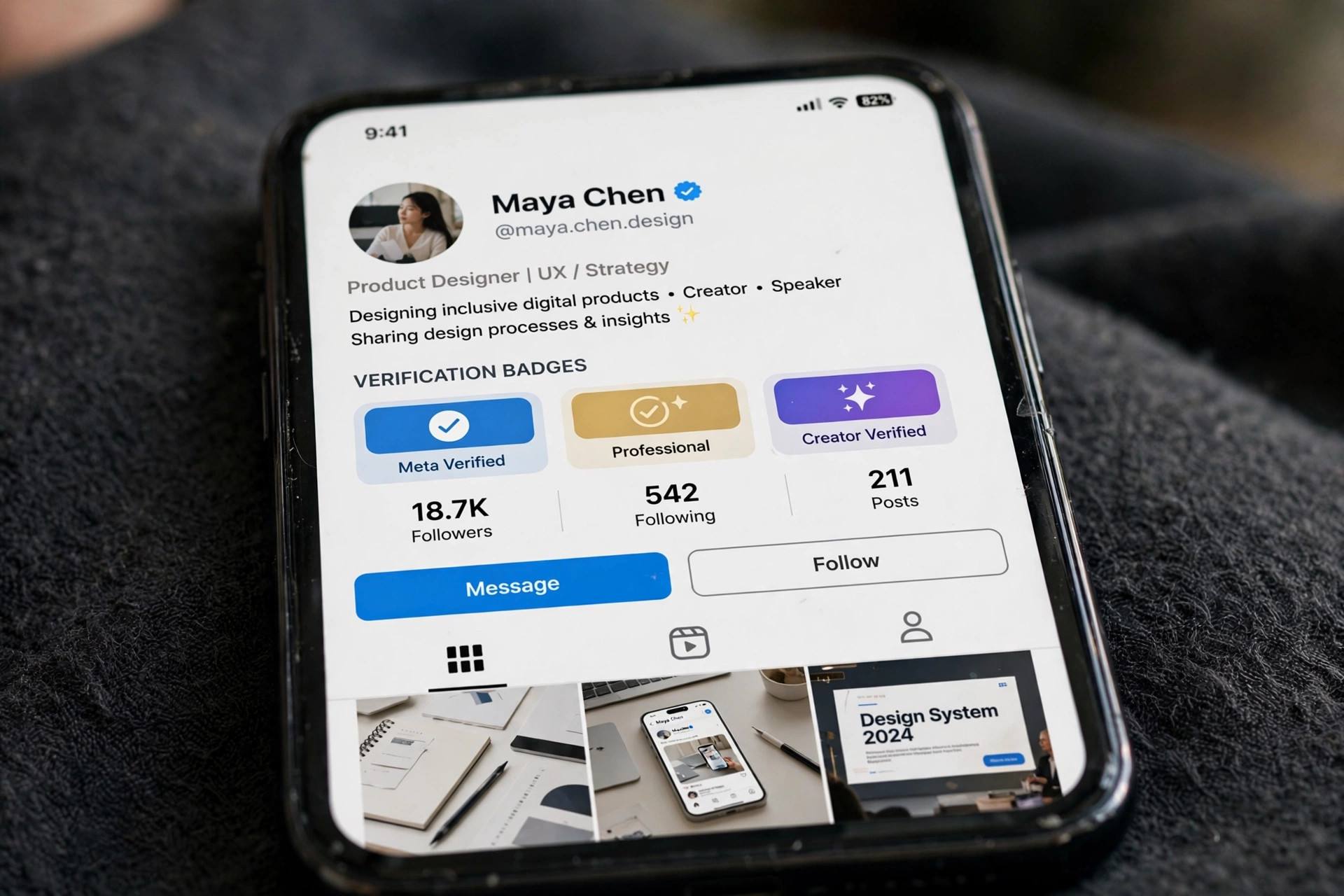
Meta runs verification across Instagram, Facebook, and Threads through Meta Verified, a paid subscription. Anyone — celebrity or not — can subscribe, verify identity with a government ID, and receive a checkmark. For celebrities, the process is the same mechanics with higher stakes: their teams ensure the account is secured, the identity documents match the public persona, and the profile is locked down against impersonation.
The impersonation-protection angle is the real story for celebrities on Meta’s platforms. Famous people are impersonated constantly — fake accounts running crypto scams, fake giveaways, fake DMs asking fans for money. Verification helps fans distinguish the real account, and Meta gives verified accounts additional impersonation monitoring and account support. For a celebrity’s team, the subscription is less about status and more about defensive infrastructure: the checkmark, the monitoring, and the direct support channel when a fake account needs to be taken down fast.
What to watch for as a fan: the checkmark alone no longer proves fame, but the combination of a checkmark, a massive follower count, and a long account history is still a strong authenticity signal. And never, ever send money to a “celebrity” who DMs you first — real celebrities do not do that, checkmark or not. If you want to understand the machinery deciding what you see from these accounts, how the Instagram Explore algorithm works is the companion piece.
X (Twitter): The Most Confusing System
X has the most convoluted verification setup, so let us be careful. There are now multiple checkmark colors: gold checkmarks for official organizations and companies, gray for government accounts, and blue for everyone else — including both legacy notable accounts and paid subscribers. The blue checkmark, which used to mean “notable and verified,” now primarily means “subscribed to the premium tier and identity-verified.”
For celebrities, this created genuine chaos when the system changed — impersonation spiked immediately, because anyone could buy the visual marker that used to signal authenticity. X added an “Official” label for some notable accounts as a patch, but its application has been inconsistent. The practical upshot: on X, a blue checkmark tells you almost nothing about notability anymore. Follower count, account age, and whether the account is linked from the celebrity’s official website are far more reliable authenticity signals than the badge.
Celebrity teams on X now treat verification as one layer among several: the subscription for the badge and features, plus active monitoring for impersonators, plus clear linking from official channels so fans have a canonical source of truth. It is more work than the old system, for a less trustworthy badge. Nobody in PR loves this arrangement, but it is the water everyone swims in now.
TikTok and YouTube: Notability Still Matters
TikTok’s verification has stayed closer to the old model: the platform grants verification badges to accounts it deems notable and authentic, and there is no straightforward pay-for-a-badge path for regular users. For celebrities, TikTok verification typically comes through the platform’s media partnerships teams or through the standard application with proof of notability — press coverage, presence on other verified platforms, official representation. TikTok also faces enormous celebrity impersonation, and its verification is a meaningful authenticity signal precisely because it cannot simply be purchased.
YouTube uses a verification checkmark for channels with 100,000+ subscribers that pass authenticity review — the subscriber threshold is public and the review confirms the channel genuinely represents the creator or brand. For celebrities, this is usually handled by their digital teams or networks, and it is relatively straightforward: big audience plus proof of identity equals badge. YouTube’s system is the least controversial of the major platforms, mostly because the subscriber threshold does the notability filtering automatically.
The pattern across these two: where verification cannot be bought, the badge still means something close to the old meaning. Scarcity preserves signal. It is a useful rule of thumb for the whole landscape.
The Impersonation Problem: Why This Actually Matters
Let us talk about why any of this matters beyond celebrity trivia, because it genuinely affects regular people. Fake celebrity accounts are among the most effective scam vehicles on social media. The playbook is consistent: clone a celebrity’s photos and bio, buy or fake verification markers where possible, then DM fans with “exclusive opportunities” — investment schemes, fake giveaways that require “processing fees,” romance scams, charity frauds. The victims are real, the losses are real, and the platforms play whack-a-mole with thousands of these accounts.
This is the strongest argument for understanding verification systems: it is self-defense. Knowing that a checkmark can be purchased changes how you evaluate that DM from your favorite actor. The rules are simple and absolute: real celebrities do not DM fans asking for money, gift cards, or crypto. Real giveaways never require payment to claim a prize. And if an account’s follower count, post history, and linked official website do not all line up, walk away.
Celebrities themselves are victims here too — their likeness is the raw material for the scam, and their teams spend real resources on takedowns. Some have sued impersonators; most rely on platform reporting systems, which vary wildly in responsiveness. The paid verification tiers at least come with better support channels, which is part of why celebrity teams pay for them even when they do not need the status.
What Verification Means for Regular Creators and Businesses
The democratization of verification — checkmarks for anyone willing to pay and prove identity — actually created something useful for non-celebrities. Small businesses, independent creators, and professionals can now get the impersonation protection and credibility signals that used to be reserved for the famous. If you run a business account, the subscription calculus is straightforward: the cost is modest, the impersonation monitoring is real, and customers increasingly look for the badge as a trust signal. Our overview of the best social media platforms for small business covers where that trust signal matters most.
For aspiring creators, though, keep perspective: a checkmark does not make you notable, and audiences know it. The badge protects identity; it does not confer status. The creators who benefit most are those with something to protect — an existing audience, a business, a reputation. If you are starting from zero, the money is better spent on literally anything that improves your content.
And a final note on the business of being famous online: verification is now one line item in the modern celebrity’s digital infrastructure, alongside social media management, content strategy, and brand partnerships. The checkmark that once was the status symbol is now just the entry ticket. The real status is the audience — which, come to think of it, was always the point. Speaking of the business side, celebrity endorsement deals are where that audience gets monetized, and the verification badge is part of what makes the whole machine trustworthy enough to work.

Frequently Asked Questions
Can anyone get verified on social media now?
On most major platforms, yes — paid verification subscriptions (like Meta Verified or X Premium) give any user a checkmark after identity verification with a government ID. The checkmark now primarily proves identity, not fame. TikTok and YouTube remain closer to the notability-based model.
Does a blue checkmark mean someone is a celebrity?
Not anymore. Since platforms began selling verification, a checkmark means the account holder verified their identity (and usually pays a subscription) — not that they are notable. Follower count, account history, and links from official websites are better indicators of genuine celebrity status.
How can I tell if a celebrity account is real?
Check for consistency across signals: a verification badge plus a large follower count, a long post history, and — most reliably — a link to the social account from the celebrity’s official website. Be deeply skeptical of any “celebrity” account that DMs you first, especially asking for money.
Why do celebrities get impersonated so often?
Because their fame is monetizable by scammers. Fake accounts exploit fans’ trust to run investment scams, fake giveaways, romance scams, and charity fraud. Verification systems, takedown processes, and fan education are the main defenses, and all three are imperfect.
Do celebrities pay for verification?
Many do now, on platforms with paid tiers — less for the status and more for the impersonation monitoring, account security features, and priority support channels that come with the subscription. On platforms without paid verification, their teams go through the standard notability-based application process.