What Is Pedro Pascal Famous For? Career Breakdown


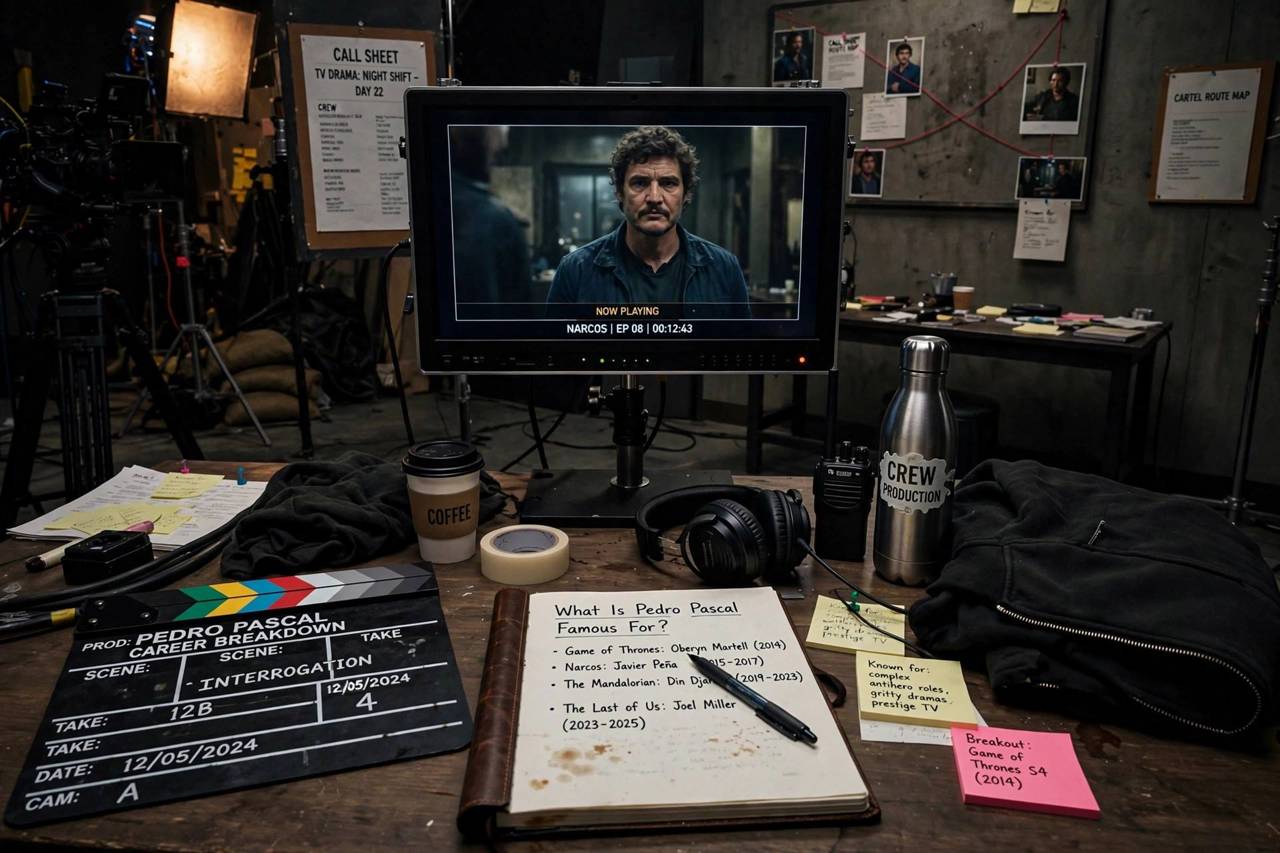
If you have watched prestige television in the last decade, you already know his face, even if the name took a while to stick. So what is pedro pascal famous for? He is a Chilean-American actor who broke through in his late thirties and became one of the most in-demand leading men in Hollywood, famous for playing Oberyn Martell in Game of Thrones, the title character in The Mandalorian, and Joel Miller in The Last of Us.
What makes his story unusual is the timeline. Pascal spent nearly two decades grinding through one-episode guest spots on procedural dramas before his career detonated. He is the rare overnight success that took twenty years, and that long apprenticeship is written all over his performances: nothing about him feels rushed.
What Is Pedro Pascal Famous For? The Roles That Made Him
The role that changed everything was Oberyn Martell, the charismatic “Red Viper” of Dorne, in season four of Game of Thrones. Pascal appeared in only seven episodes, but he stole every scene he was in. Oberyn was charming, dangerous, funny, and tragic, and Pascal played all of those notes at once. His death scene remains one of the most talked-about moments in the show’s history, and it turned a working character actor into a star.
From there, he headlined Narcos on Netflix as DEA agent Javier Peña, holding his own across two seasons of a gritty crime saga. Then came the role that made him a household name without ever showing his face: Din Djarin, the Mandalorian, in Disney’s Star Wars series. Acting almost entirely behind a helmet, Pascal conveyed warmth, humor, and grief through voice and body language alone, a genuine technical feat.
The third pillar of his fame is Joel Miller in HBO’s The Last of Us, a grieving smuggler turned reluctant father figure in a post-apocalyptic world. The performance earned him widespread critical acclaim and major award nominations, cementing his status as a dramatic heavyweight rather than just a genre favorite.
The Long Road Before the Breakthrough
Pascal, born José Pedro Balmaceda Pascal in Santiago, Chile, in 1975, moved to the United States as a child after his family sought political asylum. He studied acting at New York University’s Tisch School of the Arts and then did what thousands of actors do: auditioned relentlessly and booked tiny parts.
For years he was the guy with one line on Law & Order, Buffy the Vampire Slayer, and The Good Wife. He has spoken openly about nearly quitting acting in his early thirties, kept going partly through the encouragement of friends, including his longtime friend Sarah Paulson. That history matters because it explains his reputation in the industry: by all accounts, he is famously kind, professional, and grateful on set, the opposite of a diva.
There is a lesson in the arc that fans love. He did not become famous at twenty-two and flame out. He became famous at thirty-nine, with two decades of craft behind him, and he has handled the spotlight with unusual grace ever since.
Why Audiences Love Him: The Pascal Persona
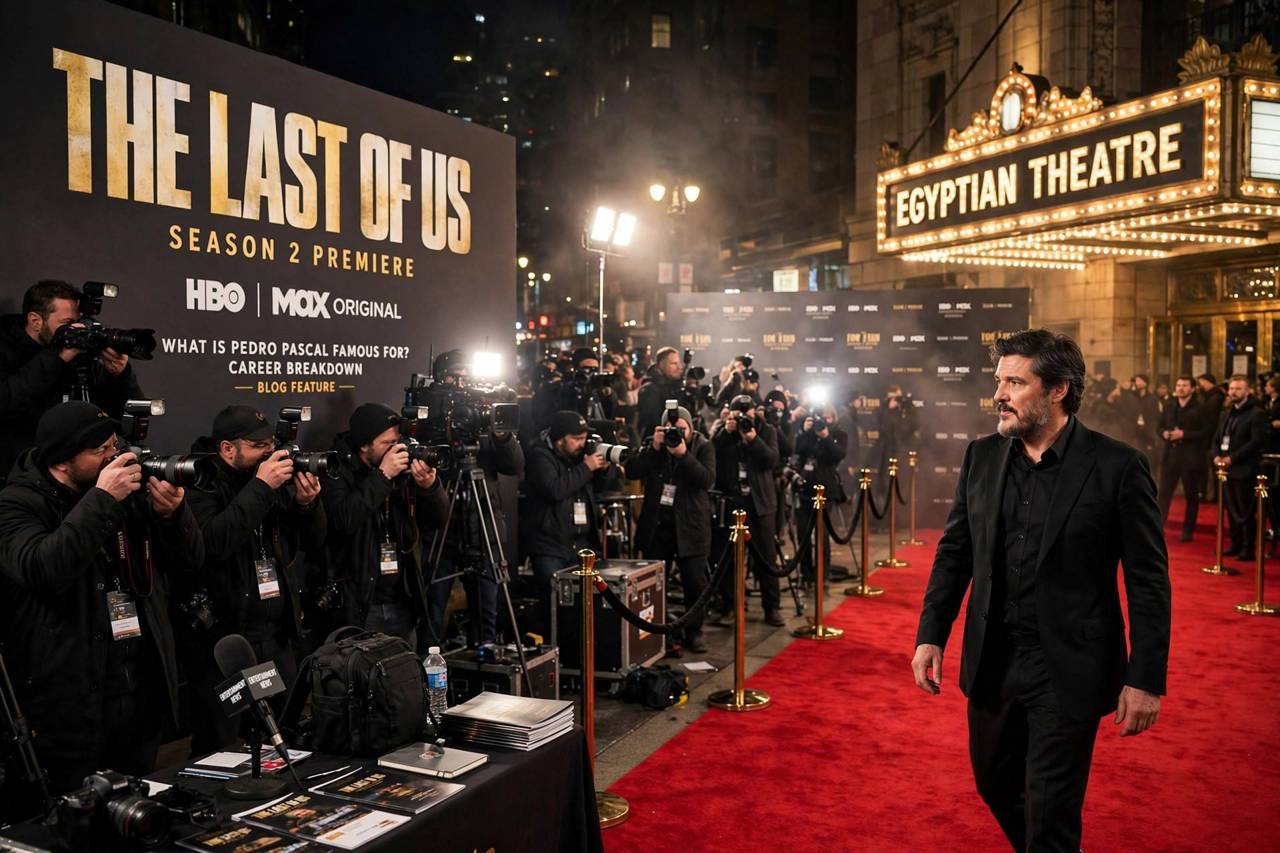
Part of Pascal’s fame is the performances, but a big part is the persona. He has become an internet favorite, a genuine meme factory, thanks to his expressive reactions, his self-deprecating humor in interviews, and his habit of showing up to premieres in effortlessly cool outfits. The “daddy” discourse, the viral red-carpet moments, the talk-show anecdotes: he leans into the attention with a wink rather than pretending it embarrasses him.
He also occupies a specific lane in Hollywood: the sensitive tough guy. His most famous characters are warriors and survivors who are quietly falling apart inside. That combination of physical presence and emotional vulnerability is catnip for audiences, and very few actors do both as convincingly.
Actors who share his orbit have noted his generosity as a scene partner. famous method actors take a range of approaches to the craft, and Pascal’s style leans toward instinct and emotional availability rather than rigid technique, which gives his performances their lived-in quality.
Pascal on the Big Screen
While television made him famous, film has been catching up fast. He played the scene-stealing villain Maxwell Lord in Wonder Woman 1984, went full comedy in The Unbearable Weight of Massive Talent opposite Nicolas Cage, and has stacked up leading roles in major studio films. His casting as Reed Richards, Mister Fantastic, in Marvel’s Fantastic Four reboot signals that the industry now sees him as a franchise anchor.
He has also stayed loyal to interesting directors and smaller projects between the blockbusters, which is how you build a career that lasts past the hot streak. The pattern is consistent: one massive tentpole, then something with actual texture.
What Is Next for Pedro Pascal?
His upcoming slate keeps him at the center of Hollywood’s biggest franchises while leaving room for prestige work. The Fantastic Four films, a return to the Star Wars universe on the big screen, and continued awards-season presence with The Last of Us keep him booked years out.
What is striking is how little the fame seems to have changed the working method. Directors still describe the same actor who spent twenty years in guest spots: prepared, generous, funny, and completely serious about the work. If there is a secret to his particular kind of stardom, it is probably that. The industry finally noticed what the craft was doing all along.
Pedro Pascal’s Most Underrated Performances
Everyone knows the big three roles, but the deeper cuts reward attention. His turn in the indie film Prospect as a grizzled space prospector showed he could carry a quiet, strange little movie on presence alone. His guest arc on The Mentalist, years before fame, already displayed the charisma that would later detonate.
On stage, where he started, Pascal earned serious theater credentials in New York, including work at prestigious off-Broadway houses. Stage actors who transition to screen often bring a vocal precision and physical discipline that reads as “natural talent” on camera; it is actually training, and Pascal has it in abundance.
His comedic work deserves more credit too. Hosting Saturday Night Live, he was loose, game, and genuinely funny, the rare dramatic actor who does not treat comedy as a chore. The Unbearable Weight of Massive Talent let him play an eccentric billionaire superfan, and he stole scenes from Nicolas Cage, which is not a sentence you write lightly.
The Internet’s Favorite: Memes and Moments
Pascal’s off-screen persona became its own phenomenon. His expressive face launched a thousand reaction memes. His red-carpet appearances, particularly his effortlessly stylish suits and his habit of looking genuinely delighted to be there, made him a fashion favorite. His interviews, full of self-deprecating stories and visible emotion, endeared him to audiences tired of guarded celebrities.
He has also used his platform with unusual directness, speaking openly about his family’s history, his identity, and causes he supports. In an era of media-trained caution, his candor stands out. Fans do not just admire the performances; they feel they know the person, and the person seems worth knowing.
This goodwill compounds. Directors want to work with actors who elevate a set. Studios want stars audiences already love. Pascal’s reputation as a kind, professional collaborator is not just nice trivia; it is a career asset that keeps the phone ringing.
The Craft Behind the Charm
Watch his performances closely and a pattern emerges: stillness. Pascal rarely overplays. As Joel Miller, some of his most devastating moments are silent, a look held a beat too long, a hand that almost reaches out and does not. That restraint is the mark of an actor who trusts the camera to do half the work.
His voice work as the Mandalorian deserves special mention. Acting behind a helmet removes the face, an actor’s primary instrument, leaving only vocal tone, timing, and body language. That the character became one of the most beloved in Star Wars history is a testament to how much Pascal communicates with how little.
Nearly twenty years of small roles taught him economy. He learned to build a complete character in a single scene because for years, a single scene was all he got. Now that he gets whole series, that discipline scales into performances with remarkable depth and zero waste.
Pascal’s Advocacy and Public Voice
Pascal has spoken candidly about his family’s exile from Chile and his support for LGBTQ+ rights, including his close relationship with his sister. He does not do the careful, noncommittal celebrity activism; he says what he believes plainly and takes the consequences. In an industry that rewards vagueness, the directness is notable.
He has also been open about mental health, anxiety, and the strangeness of sudden fame in middle age. That honesty resonates with fans who see their own struggles reflected, and it deepens the connection beyond fandom into something closer to trust.
None of this feels calculated. If anything, his public voice sometimes seems to surprise even him, mid-interview emotion and all. But the consistency over years suggests it is simply who he is: a person who spent decades being overlooked and has no interest in being careful now.
Frequently Asked Questions
What is Pedro Pascal most famous for?
He is most famous for three roles: Oberyn Martell in Game of Thrones, Din Djarin in The Mandalorian, and Joel Miller in The Last of Us. Each one reached a massive global audience.
How old was Pedro Pascal when he became famous?
He was 39 when Game of Thrones season four aired in 2014. Before that he had spent nearly twenty years working as a character actor in small television roles.
Is Pedro Pascal in the Marvel movies?
He was cast as Reed Richards, also known as Mister Fantastic, in Marvel’s Fantastic Four reboot, making him part of the Marvel Cinematic Universe.
Where is Pedro Pascal from?
He was born in Santiago, Chile, and moved to the United States as a child. He is a Chilean-American citizen.
Does Pedro Pascal actually wear the Mandalorian helmet?
He performs the voice and many scenes, though stunt performers handle some of the physical work in the suit. His performance relies heavily on vocal acting and body language.