Houthi Attacks Explained: What’s Behind the October 2026 Escalation


Houthi attacks on Saudi Arabia have escalated sharply in October 2026, turning what was already one of the Middle East’s longest-running conflicts into its most dangerous phase in years. In the span of a week, Houthi missiles and drones struck Riyadh’s international airport repeatedly, killed civilians, forced a suspension of airport operations, and triggered Saudi retaliatory strikes across Yemen. Airlines have been warned to avoid Saudi airspace, and governments from Beijing to Washington are urging restraint. Here’s what has happened, who the Houthis are, and why this escalation matters far beyond Yemen’s borders.
The October 2026 Escalation: What Happened
The current crisis unfolded over days. On Thursday, October 8, a Houthi attack on King Khalid International Airport in Riyadh killed three people, the first in a string of strikes on the Saudi capital’s main airport. On Saturday, October 10, another Houthi strike hit the airport, killing one person and wounding eleven, a day after the earlier deadly attack had already forced a suspension of operations there. Saturday’s attack was described as the deadliest on Saudi soil in more than a decade.
On Monday evening, October 12, air raid sirens sounded across Riyadh and residents heard explosions. The Saudi-led military coalition said Tuesday that its forces had intercepted three drones north of the capital. The Houthis, meanwhile, said they had fired a ballistic missile toward King Khalid International Airport, which they claimed had been hammered by a string of attacks in recent days.
On Tuesday, October 13, the Houthis reported that multiple airstrikes had hit areas under their control in Yemen. Their al-Masirah satellite channel said two strikes hit the Red Sea island of Kamaran, a third struck Qanawis district about 55 kilometers northwest of the port city of Hodeida, and further strikes were reported in Jawf province on the Saudi border. The Houthis blamed Saudi Arabia, which did not immediately comment, and said they had shot down a Saudi drone over their stronghold province of Saada.
Who Are the Houthis?
The Houthis, formally known as Ansar Allah, are an Iran-backed rebel movement that has controlled Yemen’s capital Sanaa and much of the country’s north for years. They emerged from Yemen’s northern highlands and seized Sanaa in 2014, eventually becoming the de facto authority over the most populated parts of the country. A Saudi-led coalition has fought them in support of Yemen’s internationally recognized government, producing one of the world’s worst humanitarian crises over the past decade.
The group’s attacks on Saudi Arabia are not new. The Houthis have launched drones and missiles at Saudi cities, airports, and oil facilities for years. What is new in October 2026 is the scale and deadliness: repeated strikes penetrating to the heart of the Saudi capital, civilian casualties at an international airport, and a tempo of attacks that has forced both sides into an open cycle of retaliation.
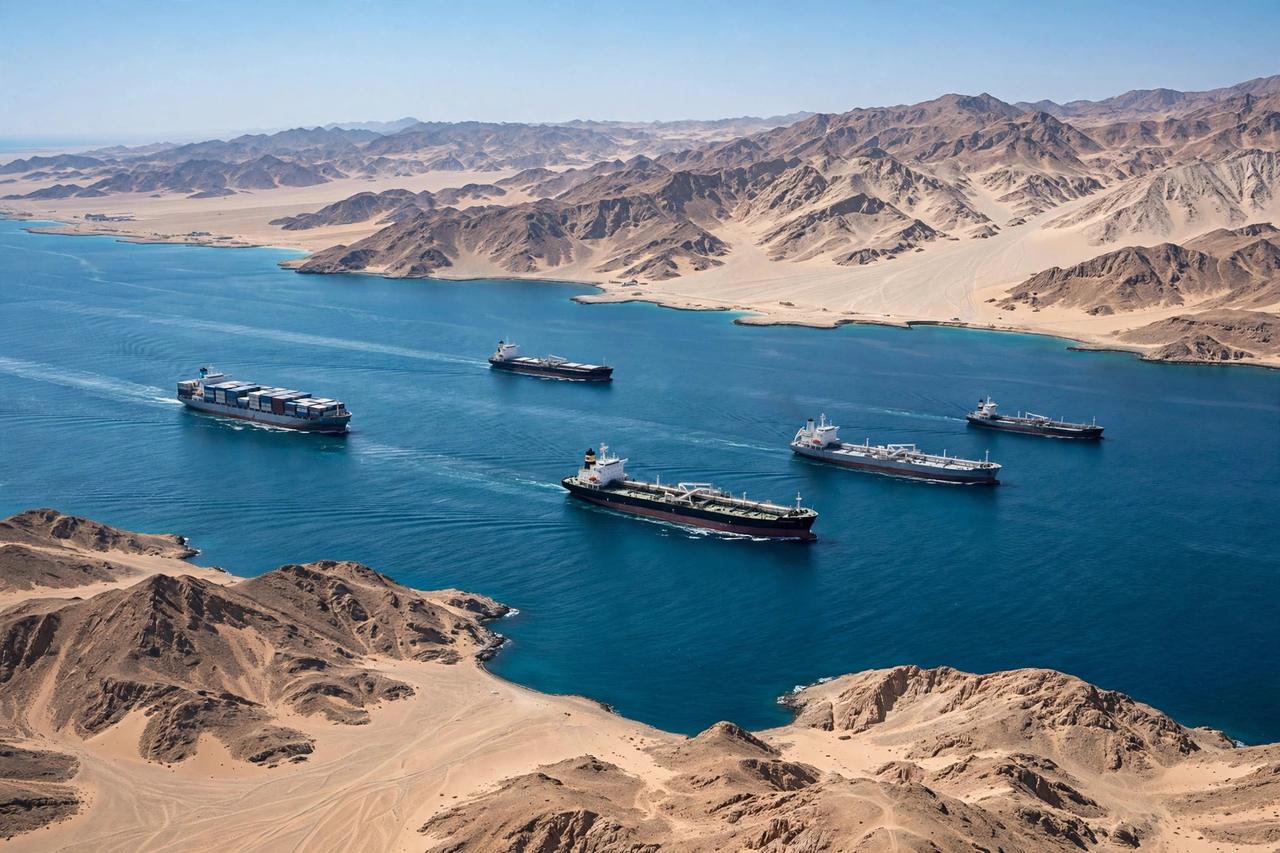
The Houthis have also spent the past several years attacking commercial shipping in the Red Sea, one of the world’s most important trade routes, claiming to target vessels linked to Israel. Those attacks pushed shipping costs up globally and drew US and allied naval responses. The October escalation extends the group’s reach to Saudi energy infrastructure and Red Sea tankers as well.
Why Saudi Arabia Is the Target
The logic is the war itself. Saudi Arabia leads the coalition fighting the Houthis, so Riyadh treats the group as a direct military adversary. The Houthis treat Saudi territory, airports, and oil infrastructure as legitimate targets in a conflict that has never truly paused. The October strikes are an attempt to impose costs on the kingdom and to demonstrate that the group can reach the capital at will.
There is also a pressure dimension. On Tuesday, the Saudi-led coalition ordered the evacuation of a facility belonging to a Yemeni oil company in Sanaa ahead of a planned military operation in the Yemeni capital. The Houthis responded with a blunt warning: any targeting of Sanaa would be met with a tough and painful response in Riyadh. Each side is now explicitly threatening the other’s capital, which is how escalations stop being tit-for-tat and start becoming open-ended.
Aviation Safety and the Airspace Warning
One of the most consequential developments has been the Houthi-controlled foreign ministry’s warning to international airlines that flights to Saudi airports are unsafe, with an exception only for those serving the holy sites of Mecca and Medina. Warnings like that carry weight with carriers and insurers: even without a formal closure, the perceived risk reshapes flight routes, raises insurance costs, and can cut connectivity to a major regional hub.
For travelers, the practical effect is uncertainty. Airport operations at King Khalid International were suspended after the weekend attacks, and repeated drone interceptions over the capital mean disruptions can recur with little notice. Anyone flying to or through Saudi Arabia in the coming weeks should expect schedule changes and check directly with their airline.
The International Response
China condemned the attacks on Monday, October 12, with foreign ministry spokeswoman Mao Ning saying Beijing condemned the attacks that caused heavy casualties and expressed serious concern about the intensification of the conflict. China called on the parties to avoid actions that escalate regional tensions and to resolve disputes through dialogue and negotiation.
The United States and other governments have long been involved in the Yemen conflict, and the October escalation lands at an already crowded moment for Middle East diplomacy. The strikes on Saudi oil facilities and Red Sea tankers add an energy dimension to the crisis, echoing the way attacks on energy infrastructure in other conflicts have pushed up global prices. The combination of airport strikes, energy targeting, and shipping threats makes this one of the most multifaceted escalations the region has seen in years.
What to Watch Next
Several things will determine whether this escalation burns out or keeps climbing. First, whether the Saudi-led coalition’s planned operation in Sanaa goes ahead and how the Houthis respond. Second, whether the pattern of airport strikes continues, since each one forces Saudi air defenses to prove themselves again and keeps civilian aviation in the crosshairs. Third, whether the Red Sea shipping attacks widen, which would turn a bilateral conflict into a global economic problem.
The deeper question is whether either side still sees a diplomatic off-ramp. Years of war have taught both camps that military pressure can produce leverage, but October 2026 is showing how quickly leverage-seeking becomes city-targeting. For now, the pattern is retaliation layered on retaliation, and the people most exposed are civilians in Riyadh, Sanaa, and the crowded shipping lanes of the Red Sea.
The Yemen War in Brief: How We Got Here
To make sense of the October 2026 escalation, you need the backstory. Yemen’s war began in 2014 when the Houthis seized Sanaa, and it exploded into a regional conflict in 2015 when Saudi Arabia assembled a coalition to restore the internationally recognized government. What followed was one of the world’s worst humanitarian crises: years of airstrikes, a naval blockade, famine conditions, and cholera outbreaks, with civilians bearing almost all of the cost.
The Houthis, meanwhile, consolidated control over the north, built up an arsenal of drones and ballistic missiles with Iranian support, and learned to strike deep into Saudi territory. Earlier in the war, their most infamous attack hit Saudi oil facilities at Abqaiq in 2019, temporarily knocking out half the kingdom’s oil production. The pattern since has been cyclical: Houthi strikes on Saudi targets, Saudi airstrikes on Houthi-held Yemen, diplomatic efforts that flicker and fade.
Starting in late 2023, the Houthis added a new dimension by attacking commercial shipping in the Red Sea, claiming to target vessels linked to Israel. Those attacks rerouted global trade around Africa, raised shipping costs worldwide, and drew in US and allied naval forces. The October 2026 escalation is significant because it combines all three fronts at once: strikes on the Saudi capital, threats to energy infrastructure, and pressure on Red Sea shipping. That combination is what has governments worried this is not just another cycle.
Why This Escalation Is Different
Yemen watchers have seen cycles of escalation before, so what makes October 2026 stand out? Three things. First, the casualty count on Saudi soil: repeated deadly strikes on an international airport in the capital cross a threshold that earlier cross-border attacks did not. Second, the simultaneity: airport strikes, energy infrastructure targeting, and Red Sea shipping threats are happening together, multiplying the pressure on Riyadh and on global markets. Third, the explicit capital-for-capital threats: both sides are now openly warning that the other’s capital is a target, which removes the ambiguity that used to keep escalations bounded.
None of this means a wider regional war is inevitable. Both sides have incentives to avoid an all-out confrontation, and back-channel diplomacy in Yemen’s war has a long history of quietly capping escalations. But the margin for miscalculation is thinner than it has been in years, and civilians in both countries are the ones living inside that margin.
Frequently Asked Questions About the Houthi Attacks
What happened at Riyadh’s airport in October 2026?
Houthi missiles and drones struck King Khalid International Airport repeatedly in early October 2026. An attack on October 8 killed three people, and a strike on October 10 killed one person and wounded eleven, forcing a suspension of airport operations.
Who are the Houthis?
The Houthis, or Ansar Allah, are an Iran-backed rebel group that controls Yemen’s capital Sanaa and much of northern Yemen. They have been fighting a Saudi-led coalition backing Yemen’s internationally recognized government for years.
Why are the Houthis attacking Saudi Arabia?
Saudi Arabia leads the military coalition fighting the Houthis in Yemen, so the group targets Saudi airports, cities, and oil infrastructure to impose costs on the kingdom and demonstrate its long-range strike capability.
Are Saudi airports safe for travelers right now?
The Houthi-controlled foreign ministry has warned international airlines that flights to Saudi airports are unsafe, and operations at Riyadh’s main airport were disrupted in October 2026. Travelers should expect possible schedule changes and check with their airline before flying.
How has Saudi Arabia responded?
The Saudi-led coalition has intercepted drones over Riyadh, carried out airstrikes in Houthi-held areas of Yemen, and announced a planned military operation in Sanaa after ordering the evacuation of an oil facility in the capital.
What about the Red Sea shipping attacks?
Alongside the Saudi strikes, the Houthis have continued targeting Saudi oil facilities and tankers in the Red Sea, one of the world’s most important shipping routes, raising concerns about global trade and energy costs.