Catchy Business Name Ideas List: 100+ Names That Stick in 2026

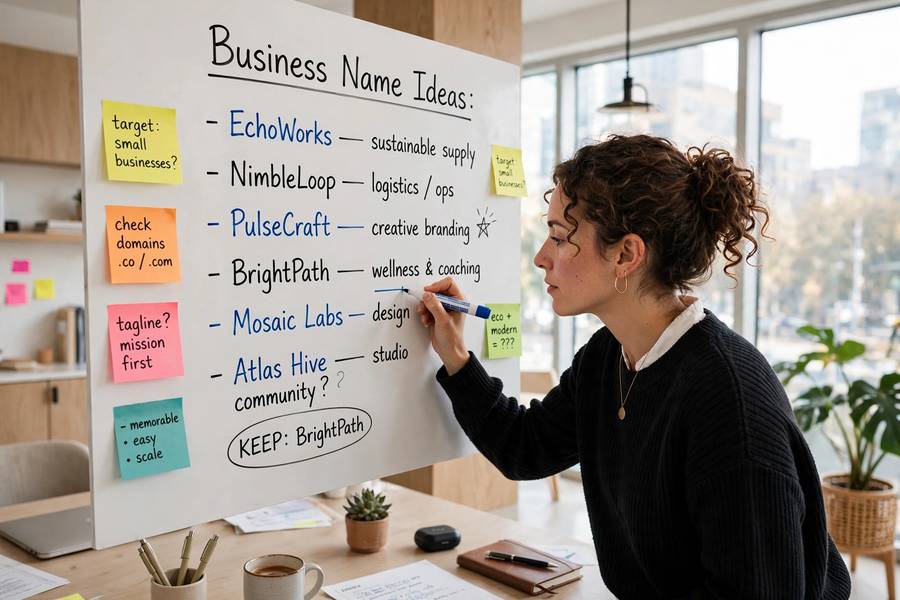
A catchy name does half your marketing before you spend a dollar. It’s the difference between a customer remembering you at the dinner table and your flyer going straight in the bin. I’ve named enough ventures to know the uncomfortable truth: most founders pick their name in an afternoon and regret it for a decade.
This isn’t a random generator dump. Below is a curated list of 100+ catchy names organized by style and industry — plus the formula that makes names stick, so you can judge any name (including your own) like a pro. For the full naming process, read my guide on how to name a business first, then come back and pick from this list.
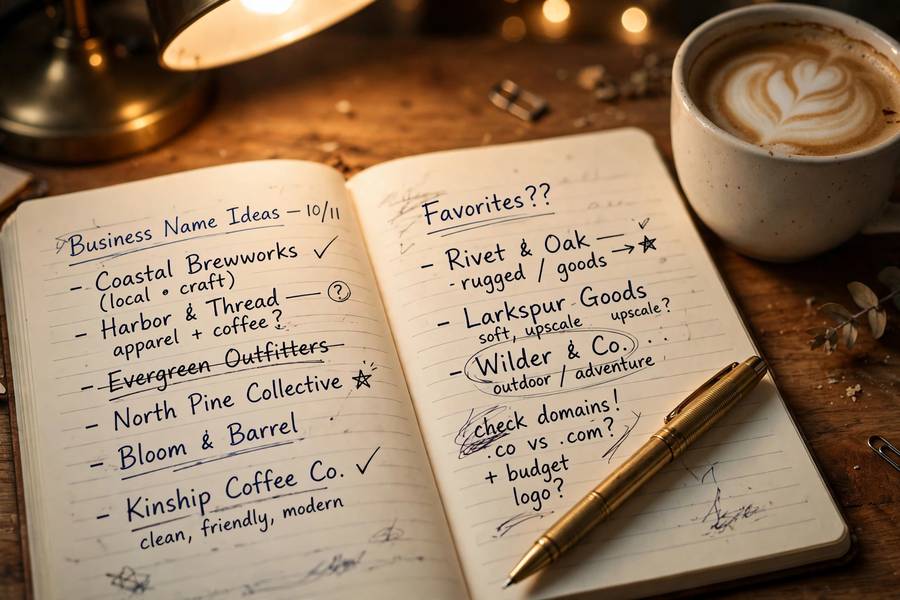
What Makes a Name Catchy The Sticky Formula
Before the list, understand why some names stick and others slide off. Catchy names share four traits:
1. Rhythm. Two syllables beat five. Alliteration helps (Snap Social, Bright Bite). Names you can say in one breath win.
2. Surprise. An unexpected word pairing creates a memory hook: “Purple” anything, “Rocket” anything. The brain remembers what breaks the pattern.
3. Imagery. Names that paint a picture (Stonebridge, Copperline) are remembered better than abstract ones (Synergix, Velora).
4. Say-it-once spelling. If you have to spell it over the phone twice, it’s not catchy — it’s a liability. Every awkward spelling costs you word-of-mouth.
Keep this formula next to you while reading the list. The best name for your business is the one that scores on all four. And remember: a formula gets you candidates, but only testing picks winners — the sections below cover both.
Catchy Name Formulas: 5 Combos That Work
If the list below sparks nothing, build your own with these proven combinations:
Noun + verb (SparkleSquad, MoveMakers). Implies action and result — the customer pictures the job getting done.
Adjective + noun (Golden Crust, Velvet Lens). The adjective sets the mood; the noun says what you sell. Classic and flexible.
Founder or place + trade (O’Malley’s Plumbing, Hudson Dental). Instant trust in local services — a real name beats an invented one when customers invite you into their home.
Invented + real (Snapcraft, ByteBloom). Coin a word for uniqueness, anchor it with a real one for meaning. Most funded startups name themselves this way.
The statement (The Salty Spoon, The Fixery). “The” plus a vivid noun signals confidence — you own that category in the customer’s mind.
Pick a combo, generate twenty variants in one sitting, then run the survivors through the test gauntlet below.
Short and Punchy One-Two Word Names
These work across industries — adapt the flavor words to yours:
- Brightline
- Copperfox
- Northbeam
- Swiftlane
- Boldmark
- Clearpath
- Ironwood
- Snapcraft
- Bluepeak
- Quickstone
- Freshline
- Goldrush Studio
- Primepick
- Wildroot
- Trueform
- Silverline Co.
- Brightspot
- Oakline
- ZippyWorks
- Clearcut
Why they work: two syllables or two short words, concrete imagery (fox, oak, stone), zero spelling ambiguity. Say any of these once in a conversation and the listener can find you later. Pro tip: say each finalist out loud as a sentence — “I booked Brightline” — before judging it. Names live in speech before they live on signage.
Catchy Names for Service Businesses
Service names need trust plus memorability — customers are inviting you into their home or handing you their money:
- SparkleSquad (cleaning)
- FixRight (handyman)
- LawnLogic (landscaping)
- PipeDream Plumbing
- BrightHome Pros
- The Tidy Team
- VoltEdge Electric
- PetPal Care
- MoveMakers
- ShineWorks Detailing
- Handyman Hero
- GreenThumb Crew
- RapidRepair Co.
- The Organized Home
- DetailDoctors
- PaintPerfect
- DrainBrains
- Mow & Go
- The Fixery
- PristinePro
The pattern: action word + benefit, or a playful twist on the trade. “DrainBrains” is funny enough to remember and clear enough to understand. That’s the sweet spot — and it’s the same logic behind what branding actually means at the small-business level: a name that does marketing work.

Catchy Names for Food and Drink Brands
Food names should trigger appetite or curiosity:
- The Salty Spoon
- Crumb Culture
- Sip & Savor
- Golden Crust Co.
- The Hungry Fox
- Broth & Barrel
- SugarRush Bakery
- The Daily Grind Coffee
- Pickle & Pine
- Forkful
- The Copper Kettle
- Zest Kitchen
- Munchkin Meals
- The Tipsy Tomato
- Dough Re Mi
- Sizzle & Smoke
- The Cozy Crumb
- Brew & Bloom
- Taco Theory
- The Rolling Pin
Food naming rewards playfulness — puns that would be unprofessional in finance are assets here. “Dough Re Mi” is groan-worthy and unforgettable, which is exactly the point.
Catchy Names for Tech and Online Businesses
Tech names skew short, modern, and slightly abstract — but the best still hint at what they do:
- Clickwise
- DataNest
- Cloudhop
- PixelForge
- Swiftstack
- Loopwork
- Brightbot
- CodeCanvas
- Nexora
- TaskTonic
- Flowbit
- Screenwise
- AppArc
- Zenith Labs
- Quantia
- DevDock
- Metricly
- Softshade
- ByteBloom
- Launchlane
Caution for tech: the abstract-name trend produces a sea of forgettable “-ly” and “-io” names. If you go abstract, make sure the domain and social handles are actually available before you fall in love — that check kills more tech names than any other filter. One exception: if you’re building developer tools, a slightly cryptic name is fine — developers remember clever. For consumer products, clarity wins. Match the name’s personality to the buyer’s, not yours.
Catchy Names for Creative and Lifestyle Brands
Creative businesses can be the most expressive — the name is a portfolio piece:
- The Gilded Page (stationery)
- Wildflower Studio
- Ink & Ember (tattoo/design)
- The Velvet Lens (photography)
- Paper Trail Co.
- Hue & Cry Design
- The Maker’s Mark
- Thread & Thistle
- Golden Hour Goods
- The Curated Closet
- Moss & Stone (home goods)
- The Crafty Corner
- Bloom Theory
- Iron & Ivy
- The Painted Door
- Wander & Whim (travel goods)
- The Cozy Nook
- Fern & Field
- The Artful Home
- Story & Stitch
Plus a few wildcards that work anywhere: 101. Brightside Co. 102. The Daily Hustle 103. North & Noble 104. Golden Standard 105. True North Goods.
One caution for creative names: don’t let cleverness outrun clarity. “Hue & Cry” is memorable only if the tagline says “branding studio.” Pair every expressive name with a descriptive subtitle until the market knows you.
How to Test a Name Before You Commit
A list gives you candidates. Testing picks the winner. Run every finalist through this gauntlet:
The phone test. Call a friend and say the name once. Ask them to spell it back and Google it. If they can’t, kill it. The phone test is the most brutal and the most honest — run it before anything else.
The trademark search. Check your country’s trademark database (USPTO in the US, IPO in the UK) for conflicts in your industry class. A name you can’t protect is a name you rent.
The domain and handle check. You don’t need the perfect .com anymore, but you need consistency — same name across domain, Instagram, and TikTok. If it’s taken everywhere, move on.
The five-year test. Say it as a bigger company: “Welcome to [Name], now with 40 employees.” Does it still fit, or does it sound like a side hustle? Names should scale.
The stranger test. Tell five people who don’t know your business the name, then ask what they think you sell. If three or more are confused, the name is too clever.
The gut check. After all the logic, sleep on the top two. The one you’re still excited about in the morning is usually the one. Data informs the shortlist; instinct picks the winner.
Remember that a name is the start of a brand, not the brand itself — I explain what a startup actually is versus what founders think it is, and the same gap applies to naming: the name opens the door, the business has to walk through it.
After You Pick: The 48-Hour Lock-In
Once a name survives testing, move fast — names are first-come, first-served:
Register the domain the same day, even if the site isn’t ready. Park it.
Grab the social handles — Instagram, TikTok, X, Facebook — with the exact same name. Consistency is the asset.
Start the trademark process. Common-law use protects you only where you operate; a filing protects you everywhere you might go.
Create the Google Business Profile so you own the local listing from day one.
Announce it. Tell your first customers the story behind the name — a name with a story spreads; a name without one just sits there.
Frequently Asked Questions
Catchy names have rhythm (short, sayable), surprise (an unexpected word pairing), imagery (paints a picture), and simple spelling. Two-syllable names with alliteration or concrete nouns stick best in memory.
Generators are fine for brainstorming raw material, but their output is generic and often trademark-risky. Use this list and the sticky formula to create or refine names, then verify trademarks and domains yourself.
Check three places: your country’s trademark database for your industry class, domain registrars for matching domains, and social platforms for handle availability. A name taken in any of these needs rethinking.
In food, creative, and local service businesses, yes — a good pun is memorable and shareable. In finance, legal, medical, or B2B services, puns undermine trust. Match the tone to the industry.
Aim for 1-3 words and under 15 characters total. Shorter names are easier to remember, spell, fit on signage, and use as domains and social handles.
Yes, but it costs you: rebranding means new signage, domains, SEO losses, and customer confusion. That’s why testing a name before launch — trademark, domain, phone test — saves far more than it costs.