Best Stretches for Lower Back Pain: 8 That Actually Work


Lower back tightness is the modern epidemic — hours of sitting, weak glutes, and a core that forgot its job description. The good news: for most people, the right stretches done consistently make a real difference within a couple of weeks. These are the best stretches for lower back pain that I actually prescribe — the ones with the best return on time invested, safe for beginners, and effective enough that you’ll feel the difference.
Quick but important note: I’m a coach, not a doctor. These stretches help with general tightness and discomfort from sitting, inactivity, or training. If you have sharp pain, numbness, pain radiating down your leg, or pain after an injury or fall, see a medical professional before stretching — don’t try to stretch your way through something that needs diagnosis.
Why Your Lower Back Hurts (Usually)
Here’s what most people get wrong: the lower back is rarely the actual problem — it’s the victim. The culprits are usually tight hip flexors (from sitting) pulling your pelvis forward, weak glutes forcing your lower back to do their job, tight hamstrings limiting hip movement, and a weak deep core failing to stabilize your spine.
That’s why the best lower-back routine doesn’t just stretch the lower back — it addresses the hips, hamstrings, and glutes around it. Stretch the victim and fix the criminals. This full-picture approach is also why back workouts matters: a stronger back handles daily life without complaining.
The 8 Best Stretches for Lower Back Pain
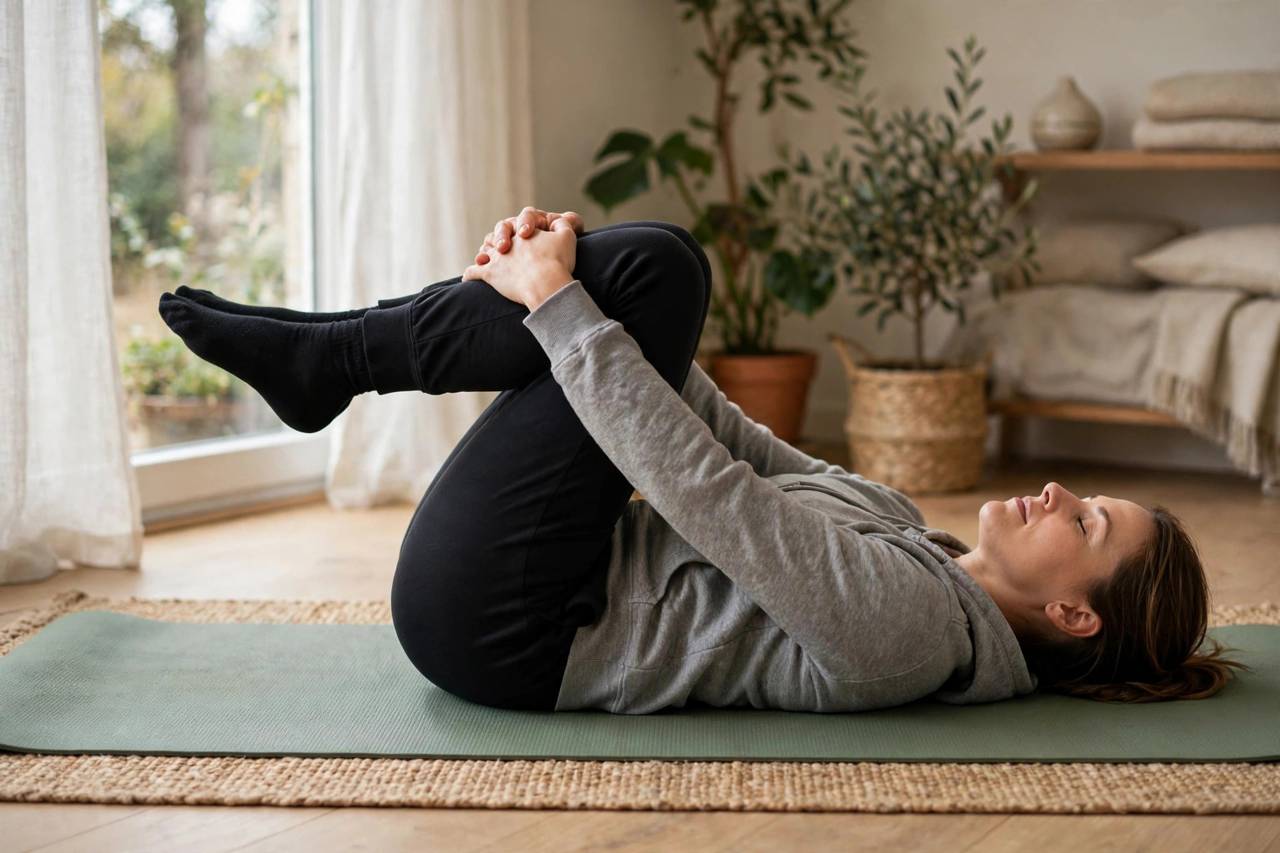
1. Knee-to-chest stretch. Lie on your back, pull one knee toward your chest, hold 20-30 seconds, switch. Then pull both knees in. This gently decompresses the lumbar spine — simple, safe, effective. Do it every morning before you get out of bed.
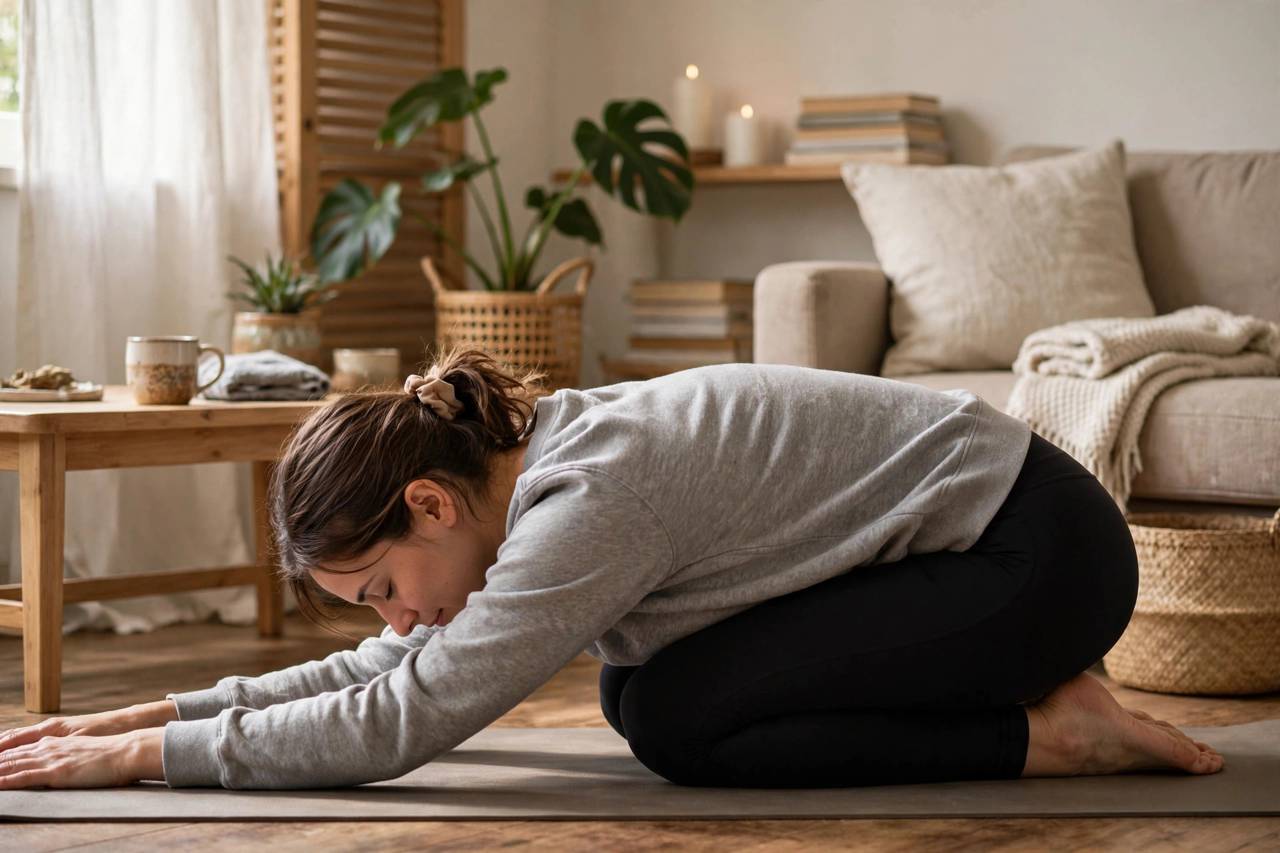
2. Child’s pose. Kneel, sit back on your heels, arms extended forward, forehead to the floor. Let your lower back round and relax completely. Hold 30-60 seconds, breathing deeply. This is the reset button for a tight back.
3. Cat-cow. On all fours, alternate between arching your back (cow, inhale) and rounding it (cat, exhale). 10 slow reps. This mobilizes every segment of the spine and teaches your back to move again after a day of sitting still.
4. Supine spinal twist. Lie on your back, arms out in a T, drop both knees to one side while keeping shoulders down. Hold 30 seconds per side. This stretches the spinal rotators and the muscles along the spine — the ones that get stiff and achy from sitting.
5. Piriformis stretch (figure-4). Lie on your back, cross one ankle over the opposite knee, and pull the bottom leg toward you. The piriformis is a deep hip muscle that, when tight, mimics sciatica-like symptoms. 30 seconds per side.
6. Kneeling hip flexor stretch. Half-kneeling position, tuck your pelvis under (squeeze the glute of the kneeling leg), and shift forward gently. Tight hip flexors yank your pelvis into anterior tilt all day — this is the antidote. 30 seconds per side, and don’t arch your lower back to “get more stretch.”
7. Standing hamstring stretch. Foot on a low step or bench, hinge at the hips with a flat back until you feel the stretch behind your thigh. Tight hamstrings limit hip hinging, forcing the lower back to round during everyday bending. 30 seconds per leg.
8. Sphinx / cobra pose. Lie face down, prop up on your forearms (sphinx) or hands (cobra), letting your lower back extend gently. This is especially good if your back feels worse from too much sitting/flexion — it moves the spine the opposite direction. Hold 30 seconds, breathe, relax into it.
The 10-Minute Daily Routine
Do these in order, once a day — morning or evening, whenever you’ll actually do it:
- Cat-cow — 10 reps
- Knee-to-chest — 30 seconds per leg, then both
- Supine spinal twist — 30 seconds per side
- Piriformis figure-4 — 30 seconds per side
- Kneeling hip flexor stretch — 30 seconds per side
- Child’s pose — 60 seconds
That’s it — about ten minutes. Consistency beats intensity here: ten minutes daily outperforms an hour once a week. Put it in your calendar like an appointment for the first two weeks until it’s habit. Most people notice real improvement within 10-14 days.
Morning or evening? Honestly, whenever you’ll actually do it — consistency beats timing. That said, there’s a case for each. Morning sessions loosen the overnight stiffness (your spine literally hydrates and stiffens overnight — totally normal) and set the tone for the day. Evening sessions unwind the accumulated tension of sitting and pair well with winding down. If you can only pick one, pick the one you’ll stick with for 30 days. After 30 days it stops being a routine and starts being a habit, and habits don’t need motivation.
Breathe into the stretch. This sounds like yoga-class fluff, but it’s biomechanics: slow exhales activate your parasympathetic nervous system, which literally reduces muscular guarding. For every stretch in the routine, inhale to settle in, then exhale and let yourself sink a fraction deeper. Five slow breaths per stretch. You’ll get noticeably more range with less effort — and it turns the routine into ten genuinely pleasant minutes instead of a chore.
Stretches to Be Careful With
Toe touches / standing forward folds with straight legs. Fine for hamstrings, but aggressively rounding to touch your toes loads the lumbar discs. Hinge at the hips, keep a flat back, bend the knees if needed.
Deep backbends. Cobra is gentle; full wheel pose or aggressive backbends can aggravate certain back issues. Earn your way there gradually.
Twisting stretches with force. Gentle supine twists are great; cranking your torso with your arms or having someone push you deeper is not. Never force a stretch — discomfort is information, sharp pain is a stop sign.
The rule for all stretching: you should feel a gentle pull, never sharp pain. Breathe into the stretch, don’t bounce, and back off if anything feels wrong. Stretching should leave you feeling better than when you started — if it doesn’t, stop and reassess.
Beyond Stretching: What Actually Fixes It Long-Term
Stretching manages symptoms; strength fixes causes. For lasting relief, add:
Glute strengthening. Glute bridges, clamshells, then progress to deadlifts and hip thrusts. Strong glutes take load off the lower back — this is the single highest-impact change for most people. hip thrust technique is worth learning properly.
Core stability. Dead bugs, bird dogs, side planks. Not crunches — stability exercises that teach your core to brace your spine during movement.
Move more during the day. The best stretch for a back destroyed by sitting is… not sitting for 8 hours straight. Stand up every 30-60 minutes, walk, change positions. No stretching routine outruns a full day of stillness.
Check your setup. If you work at a desk, your chair, monitor height, and keyboard position matter. And if you’re building a training space, home gym guidance helps you set up somewhere you’ll actually use consistently — because the best routine is the one you do.
Think of it as a system: stretch daily for relief and mobility, strengthen 2-3 times weekly for resilience, and move throughout the day for maintenance. Do all three and your back stops being a daily topic of conversation — which is the goal.
If I had to rank the long-term fixes by impact, walking would be near the top — and it’s the one people dismiss because it seems too simple. A daily 20-30 minute walk does three things stretching alone can’t: it rhythmically loads the spine (which nourishes the spinal discs), it activates the glutes (the muscles that should be stabilizing your pelvis but go dormant from sitting), and it breaks up the static posture that causes most desk-worker back issues. It’s not a workout; it’s maintenance. The people I train who add a daily walk to their stretching routine consistently report the biggest improvements — not from the fanciest stretch, but from the simplest habit.
The Sitting Problem: Desk Habits That Undo Your Stretching
Here’s the uncomfortable truth about stretching for back tightness: ten minutes of stretching can’t fully offset ten hours of sitting. If you stretch every morning and then fold yourself into a chair like a lawn chair until 6 p.m., you’re bailing water with a sieve. The stretching still helps — but fixing the sitting multiplies the results.
The 30-minute rule. Your spine isn’t designed for stillness; it’s designed for movement. Set a timer and stand up every 30 minutes — not for a workout, just for 60 seconds. Walk to the window, roll your shoulders, do a gentle standing backbend with your hands supporting your lower back. These micro-breaks do more for daily back comfort than most people expect, because they interrupt the slow creep of stiffness before it sets in.
Fix the chair setup. You don’t need a $1,500 ergonomic throne, but three things matter: feet flat on the floor (or on a footrest), knees roughly level with hips, and lumbar support — a small cushion or rolled towel in the small of your back counts. The classic back-killer is the “C-slump”: pelvis tucked, lower back rounded, shoulders forward. If you catch yourself in the C-slump, scoot your hips back in the chair and let the backrest do its job.
Hip flexors are the hidden culprit. Sitting shortens the hip flexors (the muscles at the front of your hips), and tight hip flexors tilt the pelvis forward, which arches the lower back and loads it all day. A simple half-kneeling hip flexor stretch — one knee down, other foot forward, gently push hips forward — held for 60 seconds per side after work, addresses the root cause that pure back stretching misses.
One important note: stretching is great for the stiffness and tightness most desk workers feel. But if you’re dealing with sharp pain, pain shooting down a leg, numbness, or pain after an injury or fall, skip the self-help and see a medical professional or physical therapist first. Knowing when stretching isn’t the answer is part of training smart.
FAQ
What is the best stretch for lower back pain?
The knee-to-chest stretch, child’s pose, and cat-cow are the safest, most effective starting points. For lasting relief, also stretch the hip flexors and piriformis — the lower back is usually the victim of tight hips, not the root cause.
How often should I stretch my lower back?
Daily is ideal — even 10 minutes makes a real difference within two weeks. Consistency matters far more than duration or intensity.
Should I stretch if my lower back hurts?
Gentle stretching is fine for general tightness and achiness. But sharp pain, numbness, radiating leg pain, or pain after an injury needs medical evaluation first — don’t stretch through symptoms that need diagnosis.
Is child’s pose good for lower back pain?
Yes — it’s one of the best. It gently decompresses the lumbar spine, stretches the muscles along the spine, and the relaxed position lets everything release. Hold for 30-60 seconds, breathing deeply.
Can stretching fix lower back pain permanently?
Stretching manages symptoms well, but lasting relief usually requires strengthening too — especially the glutes and deep core — plus moving more during the day. Stretch daily, strengthen 2-3 times weekly, and break up long sitting.
Is walking good for lower back tightness?
For the garden-variety stiffness most people feel from sitting, yes — walking is one of the best things you can do. It’s gentle, rhythmic spinal movement that increases blood flow without impact, and it wakes up the glutes and core muscles that support your back. Start with 15-20 minutes at a comfortable pace; consistency matters far more than speed or distance. If walking increases your pain rather than easing it, that’s useful information — ease off and check in with a professional.