Best Arm Exercises at Home: 14 Moves With Zero Commute

I have trained clients in commercial gyms, garage gyms, and living rooms, and I will tell you something the fitness industry does not like admitting: for arm training specifically, home beats the gym. Arms need a handful of movements, moderate weights, and consistency; they do not need cable towers and twelve machines. Everything in this article uses dumbbells, bands, or bodyweight in a normal living room. Fourteen moves, organized by equipment, plus the 30-minute home arm workout I give clients who train exclusively at home. The gym-based master list is my best arm exercises guide.
The Home Setup: What You Need
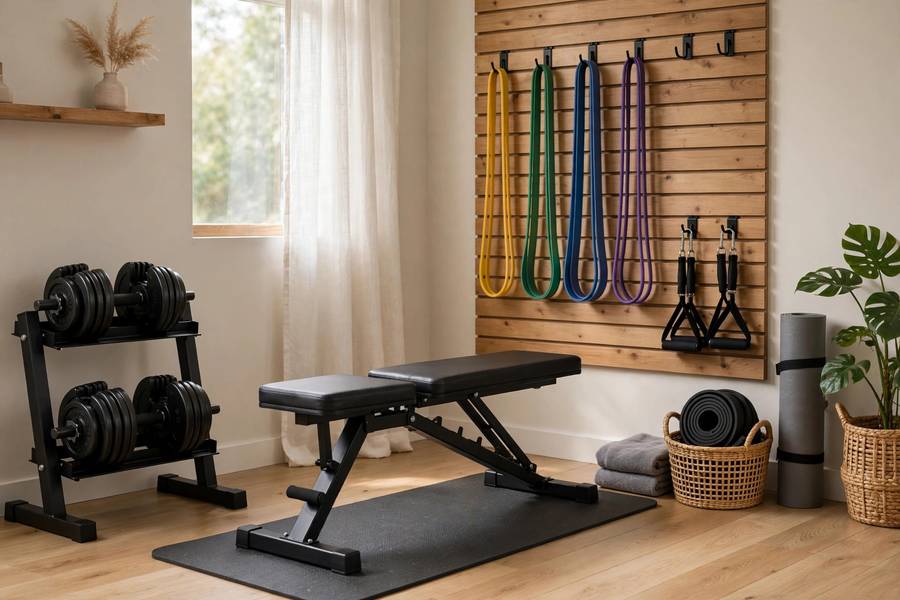
The complete kit: one pair of adjustable dumbbells, one set of resistance bands with a door anchor, and a sturdy chair. That is it, and it costs less than three months of a typical gym membership. Adjustable dumbbells are the priority purchase because arm exercises need different weights: you will curl more than you lateral-raise, and fixed dumbbells force awkward compromises. Bands are the second purchase because they provide the constant tension that dumbbells cannot, especially for pushdowns and curls. The chair handles dips. Clear a 6×6 foot space. Put on music. You now own a fully equipped arm gym.
Dumbbell Moves: 6
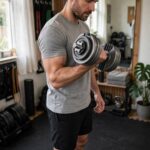
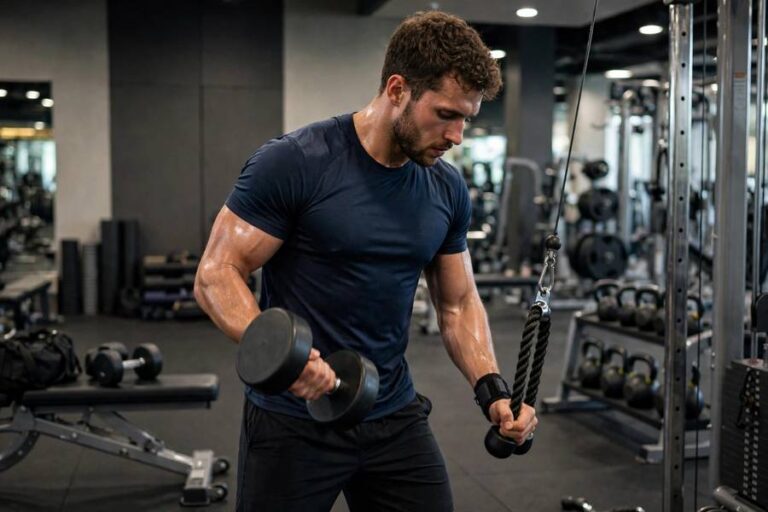
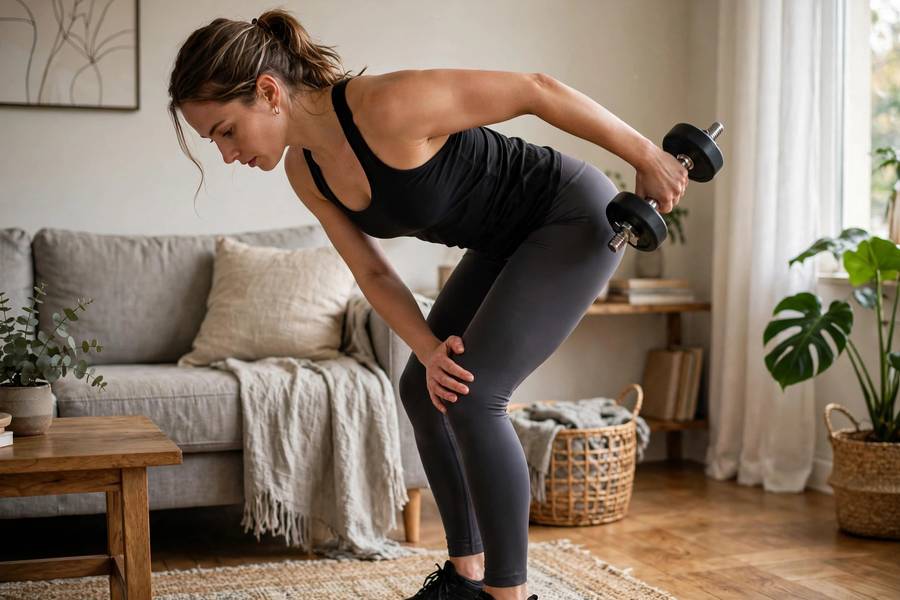
1. Standing bicep curls: 3×12. Elbows pinned, 2-second lowering. The foundation. 2. Hammer curls: 3×10. Palms in; builds brachialis thickness. 3. Overhead tricep extensions: 3×12. One dumbbell, both hands, deep stretch behind the head. 4. Tricep kickbacks: 3×12 per arm. Bent over, upper arm parallel to floor, extend the elbow fully and squeeze. Light weight, strict form; this is a finisher, not an ego lift. 5. Zottman curls: 3×10. Curl up with palms facing you, rotate to palms-down at the top, lower slowly. Biceps on the way up, forearms on the way down; two exercises in one rep. 6. Dumbbell floor press with close grip: 3×10. Lie on the floor, dumbbells together over your chest, press up. The close grip shifts the work to the triceps. My best dumbbell exercises guide covers the full dumbbell menu beyond arms.
Resistance Band Moves: 4
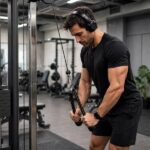
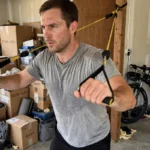
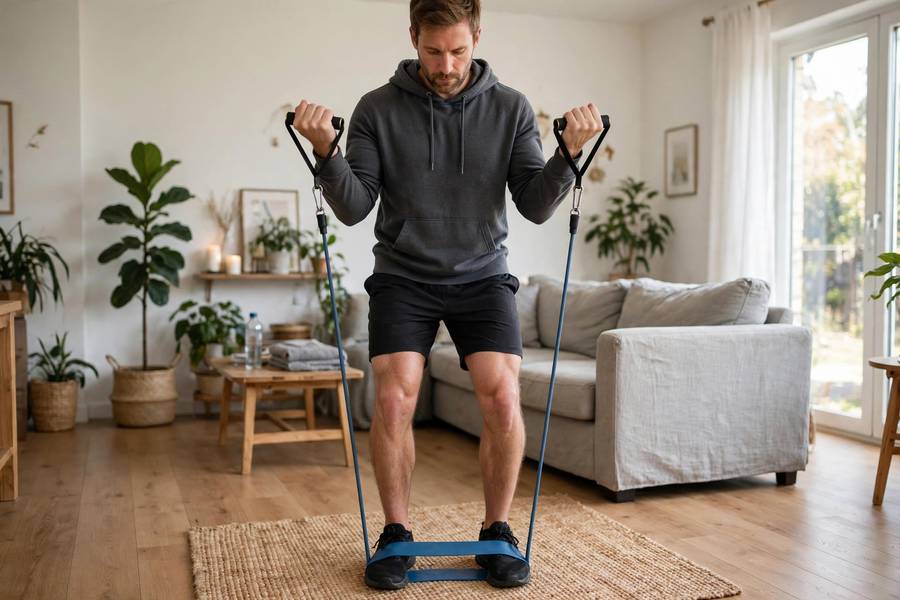
7. Band pushdowns: 3×15. Anchor the band in a door, elbows pinned, press down to full extension. The constant tension hammers the triceps harder than free weights at the bottom of the rep. 8. Band curls: 3×15. Stand on the band, curl with palms up. Step wider for more resistance. 9. Overhead band extensions: 3×12. Band anchored low behind you, press overhead. Stretches the long head under tension through the full range. 10. Band hammer curls: 3×12. Neutral grip, same as dumbbell hammers. Bands shine here because the resistance increases as you curl, matching the strength curve.
Bodyweight Moves: 4
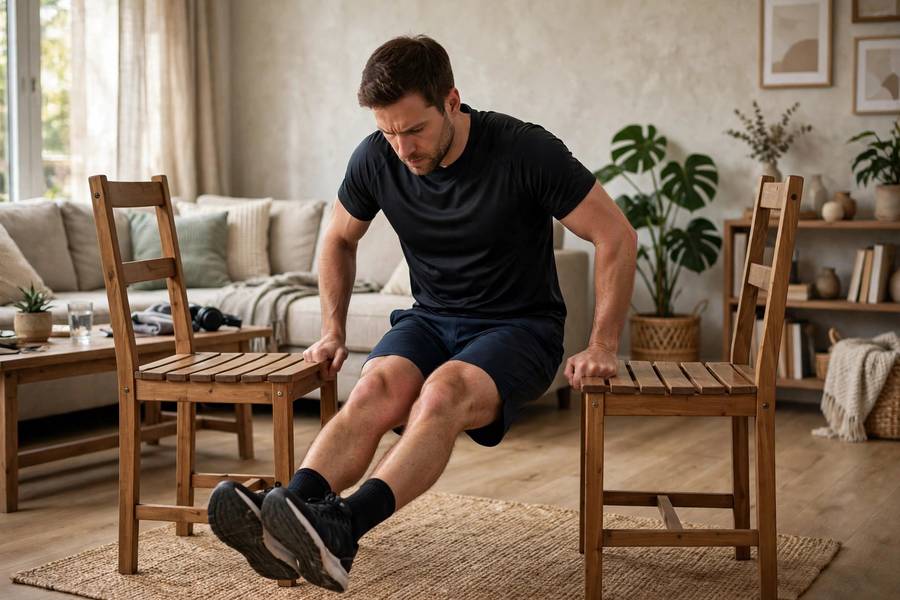
11. Chair dips: 3×12. The best bodyweight tricep builder available at home. Feet elevated when 12 gets easy. 12. Diamond push-ups: 3×10. Hands in a diamond, elbows tucked. Triceps take the majority of the load. 13. Towel curls: 3×15 per arm. Step on a towel and curl against your own leg drive. Adjust resistance by changing your stance. 14. Fingertip planks: 3×30 seconds. Grip and forearm strength that supports every curl and press you do.
The 30-Minute Home Arm Workout
Warm up 3 minutes: arm circles, 10 band pull-aparts, 10 light curls. Then perform as paired supersets, 3 rounds each, 60 seconds rest between pairs: Pair 1: dumbbell curls x12 + band pushdowns x15. Pair 2: hammer curls x10 + chair dips x12. Pair 3: overhead extensions x12 + band curls x15. Finish with fingertip planks 2×30 seconds. Supersets keep the session to 30 minutes and keep the pump high; the bicep-tricep pairing also balances fatigue so neither muscle group waits too long between sets. Twice a week, at least two days apart. On a third day, add best back workouts movements like band rows; back and biceps pair naturally and the pulling balances all the pressing.
The Minimalist Version: 15 Minutes, 3 Moves
For the days when 30 minutes is not happening: dumbbell curls 3×12, chair dips 3×12, band pushdowns 2×15. Fifteen minutes, biceps and triceps both hit, done. This minimalist session done consistently beats the full workout done sporadically; I would rather a client do this three times a week than the full version once. Keep a pair of dumbbells visible, not in a closet; friction kills home workouts more than anything. The best home gym is the one you trip over. On truly chaotic weeks, even one minimalist session maintains most of your progress. Consistency at 70 percent beats perfection at 0 percent, and the minimalist version is how you stay consistent when life gets loud.
Progressing at Home
Home progression is simple if you are systematic. With adjustable dumbbells, increase weight by the smallest plate when you hit the top of the rep range for two sessions running. With bands, step wider, double up bands, or slow the tempo to 3 seconds down. With bodyweight, elevate feet on dips and push-ups, add pauses, or add a fourth set. Track every session; the notebook is your progressive overload. The most common home-training failure is doing the same workout with the same weights for six months and wondering why nothing changes. Change one variable every 2-3 weeks and the arms keep responding. Most home trainees can progress for 12-18 months before needing anything beyond this kit; by then, the habit is the real equipment, and it transfers anywhere.
Troubleshooting Home-Training Stalls
Stall: weights feel the same for a month. You have stopped progressing a variable. Pick one: add a set, slow the tempo, or shorten rest periods by 15 seconds. Stall: no visible change in 8 weeks. Check protein and sleep first, then check honesty: are you actually training twice a week, or averaging once? The log answers this. Stall: elbows ache. Too much volume on extensions, or form breakdown. Cut tricep isolation volume in half for two weeks and check elbow position on every rep. Stall: bored. Rotate 3 movements for novel variations from the lists above; novelty re-engages effort, and effort drives results. Stall: life chaos. Drop to the minimalist version until things settle. A stall you train through lightly beats a stall you quit through entirely. Most home-training stalls are programming or consistency issues, not equipment issues; the kit in this article is enough for years.
A Sample Home Training Week
Monday: the 30-minute arm workout. Tuesday: 20-minute walk or rest. Wednesday: band rows 3×15 and push-ups 3xmax for back and chest balance, 20 minutes. Thursday: rest. Friday: the 30-minute arm workout, swapping two movements for variety. Weekend: one active day, one full rest. Total training time: about 90 minutes for the week. This structure builds arms while keeping the rest of the body in the game; arms-only training works for a while, but the physique looks better and stays healthier with minimal balanced work around it. Adjust the non-arm days to whatever you enjoy; the arm days are the non-negotiable core.
When to Upgrade Your Kit
You will know it is time when the adjustable dumbbells max out on curls and rows while still being right for raises; that split means you have outgrown a single pair. The first upgrade: a second, heavier pair of dumbbells or heavier plates. The second: a doorway pull-up bar, which unlocks chin-ups, the best home bicep builder in existence. The third, much later: a flat bench for better pressing angles. Most people need the first upgrade around month 12-18 and never need the third. Upgrade when the work demands it, not when boredom suggests it; new equipment has never fixed a consistency problem.
Frequently Asked Questions
Yes, for most people. Adjustable dumbbells plus bands provide enough load and variety for years of arm growth. Competitive bodybuilders eventually need more, but anyone training for strong, muscular arms can do it entirely at home with this kit.
They are different, not worse. Bands provide increasing resistance through the rep, which suits curls and pushdowns well. Dumbbells provide constant gravity load, better for presses. Use both; they complement each other, and the combination beats either alone.
About 6×6 feet of clear floor. Arm exercises are compact; even the carries can be done marching in place. A living room corner works fine. The equipment stores in a closet.
Twice a week, full arm session as written above, paired with 2-3 full-body or upper-body days. Alternatively, add 15 minutes of arms to the end of two full-body sessions. Both work; pick the one you will actually do consistently.
No. The floor works for presses, a chair works for dips, and standing works for everything else. A bench is nice but unnecessary; spend the money on better adjustable dumbbells instead.