How Does the NFL Playoff Work? The Complete Fan’s Guide

Every January, football gets electric. The regular season grind is over, the stakes go through the roof, and one loss sends you home. But if you have ever found yourself nodding along while friends debate seeds and byes without fully getting it — this guide is for you. Let us answer how does the NFL playoff work, from the 14-team bracket to the confetti at the Super Bowl.
I live for this stuff. Playoff football is the best reality TV on the planet: single elimination, no second chances, legends made in a single drive. By the end of this guide, you will understand the format cold — and you will enjoy January football about ten times more.
How Does the NFL Playoff Work? The Big Picture
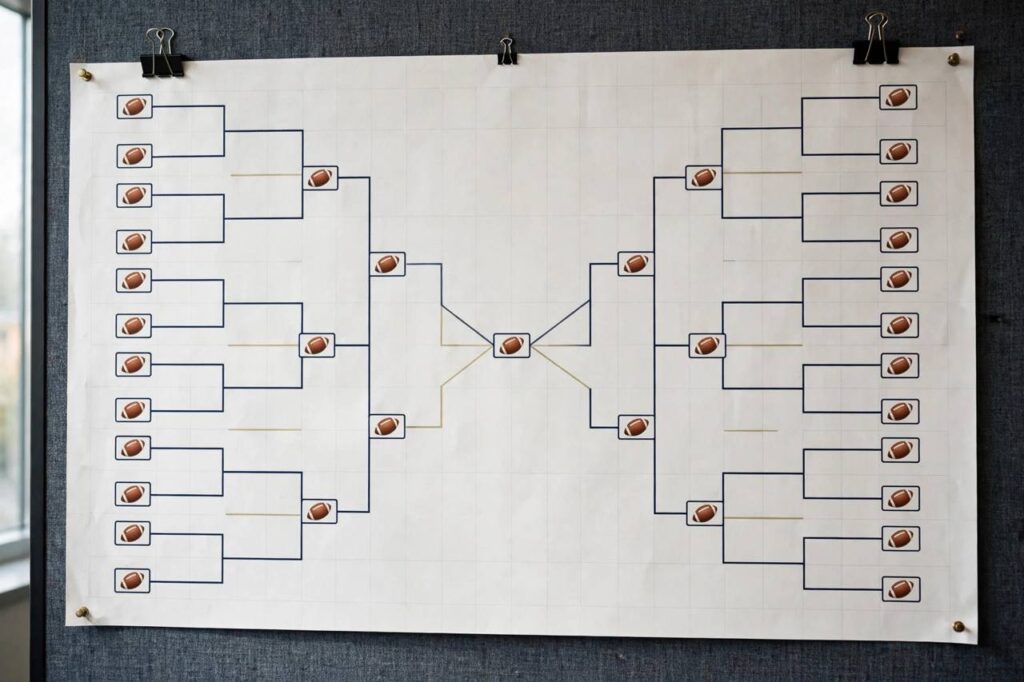
Here is the 30-second version: after the regular season, 14 teams qualify for the playoffs — 7 from the AFC and 7 from the NFC. They play single-elimination games through four rounds, and the last team standing in each conference meets in the Super Bowl. Lose once, and your season is over. That win-or-go-home pressure is what makes playoff football so intense.
How Teams Qualify: Division Winners and Wild Cards
Each conference has 16 teams split into 4 divisions (North, South, East, West) of 4 teams each. Playoff spots go to:
- 4 division winners per conference — the team with the best record in each division. Win your division and you are in, guaranteed.
- 3 wild-card teams per conference — the three non-division-winners with the best overall records.
That is 7 playoff teams per conference, 14 total. Division winners are seeded 1 through 4 based on record; wild-card teams are seeded 5 through 7. A wild-card team with a better record than a division winner still seeds lower — winning the division earns the higher seed and (usually) a home game. Division titles matter.
Seeding and the First-Round Bye
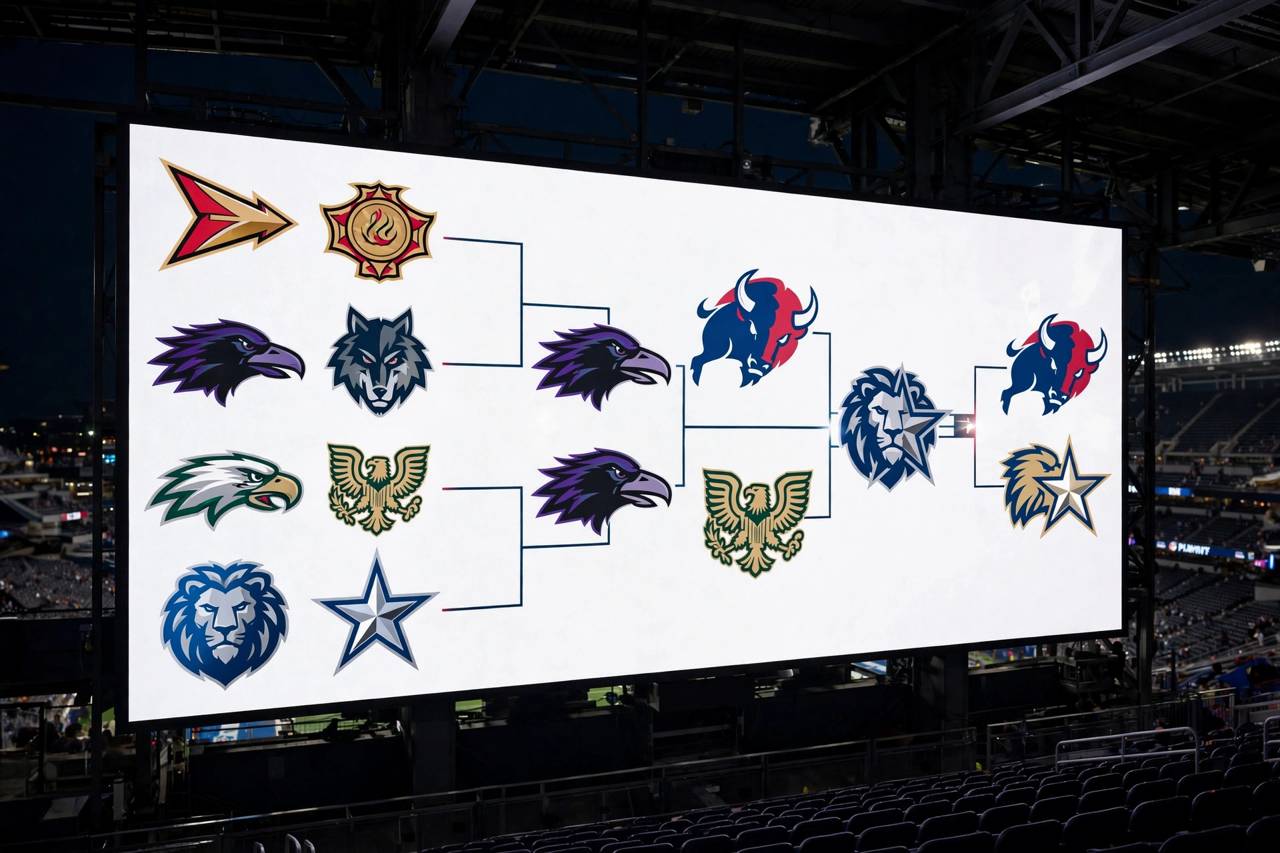
Seeding determines matchups and home-field advantage, and it rewards regular-season excellence:
- The #1 seed in each conference gets a first-round bye — a week off while everyone else plays. This is a massive advantage: rest, extra preparation, and one fewer game to survive.
- Seeds 2 through 7 play in the Wild Card round.
- The higher seed always hosts (except the Super Bowl, which is at a neutral site).
Tiebreakers — for teams with identical records — follow a detailed league procedure starting with head-to-head results, then division and conference records, and so on. Tiebreaker math in Week 18 is its own beautiful chaos.
Round by Round: The Road to the Super Bowl
Wild Card Round (6 games)
The opening weekend: #2 hosts #7, #3 hosts #6, and #4 hosts #5 in each conference. Six games, three per conference, usually spread across Saturday, Sunday, and Monday. Upsets happen here constantly — the #7 seed has nothing to lose, and wild-card weekend has produced some of the most famous games in league history.
Divisional Round (4 games)
The #1 seeds enter the fray. The lowest remaining seed visits the #1 seed; the other two winners face off, with the higher seed hosting. This round historically produces the highest quality football — rested top seeds against battle-tested survivors. Many fans consider divisional weekend the best football weekend of the year.
Conference Championships (2 games)
The AFC Championship and NFC Championship — the final four. Winners take home conference titles and punch their ticket to the Super Bowl. The higher remaining seed hosts. These games are legacy-defining: quarterbacks are remembered as much for conference championship performances as anything else.
The Super Bowl
AFC champion vs. NFC champion at a predetermined neutral site, usually in early February. The biggest single sporting event in America — over 100 million viewers, halftime spectacles, and commercials that cost millions per 30 seconds. Win it and you are immortal; the Lombardi Trophy is the ultimate prize in the sport.
Playoff Overtime Rules
Playoff overtime differs from the regular season, and the rules have evolved. The key points every fan should know:
- Both teams are guaranteed at least one possession in playoff overtime — a change made so that a coin toss cannot decide a season.
- If the score is still tied after both possessions, the game continues under sudden-death rules — the next score wins.
- Overtime periods are 15 minutes in the playoffs (unlike the shorter regular-season format).
- There are no ties in the playoffs — they play until someone wins, however long it takes.
Playoff overtime games are instant classics precisely because every snap could end a season. Some of the most heart-stopping finishes in football history happened in these extra periods.
Home-Field Advantage: Why Seeding Matters So Much
In the playoffs, the higher seed hosts every game through the conference championships. Home-field advantage in January is real: familiar turf, deafening crowd noise disrupting the visiting offense’s communication, no travel fatigue, and often brutal weather that the home team is built for. Statistically, home teams win playoff games at a notably higher rate — which is why teams fight so desperately for seeding in December. Every regular-season game in the final month is essentially a playoff game for positioning.
Fun History: How the Format Evolved
The playoff has grown with the league. For decades, far fewer teams qualified — in the early Super Bowl era, only a handful of teams made the postseason. The field expanded over time: to 10 teams, then 12 in 1990 (a format that lasted 30 years), and finally to the current 14-team format in 2020, which added a third wild-card team per conference and reduced the first-round byes from two per conference to just one.
Each expansion sparked the same debate: does letting more teams in dilute the regular season? And each time, the added wild-card races and extra playoff games won fans over. More meaningful December football, more Cinderella stories — the 14-team era has delivered exactly that.
How to Follow the Playoff Race Like a Pro
Want to sound like the smartest fan in the room down the stretch? Here is what to watch:
- Weeks 15–18: this is when seeding battles and wild-card races crystallize. Scoreboard-watching becomes a sport in itself.
- “Win and in” scenarios: late-season games where the winner clinches a playoff spot and the loser is eliminated — pure drama.
- Strength of victory and tiebreakers: when records are tied, the arcane tiebreaker procedures decide everything. Announcers will walk you through them; now you will understand.
- Rest vs. rust debates: locked-in top seeds often rest starters in Week 18 — endlessly debated, occasionally backfiring.
- The bye-week factor: track how #1 seeds perform coming off the bye; the extra rest is an edge, but some teams come out flat.
Clinching Scenarios: The December Math
Starting around Week 14, you will hear the word “clinch” constantly. A team clinches a playoff berth – or a division title, or the #1 seed – when no remaining combination of results can knock them out of it. Networks display “clinching scenarios” like: “Team X clinches the division with a win OR a Team Y loss.” This is where tiebreakers come alive, and why fans of contending teams become temporary fans of whoever is playing their rivals. Scoreboard watching in December, armed with your new understanding of seeding and wild cards, is one of the great joys of being an NFL fan.
Moments That Made the Format Legendary
The single-elimination format does not just decide champions – it manufactures the most dramatic moments in sports. Wild-card weekend has delivered last-second field goals, fourth-quarter comebacks, and overtime thrillers that fans talk about for decades. Lower seeds playing with nothing to lose have repeatedly toppled giants, which is exactly why the “any given Sunday” cliché exists.
The conference championships have their own mythology: bitter division rivals meeting with a Super Bowl berth on the line, quarterbacks dueling in snowstorms, goal-line stands with seconds remaining. And the Super Bowl itself has produced finishes – last-minute drives, goal-line interceptions, game-winning kicks as time expires – that transcend sports and become cultural touchstones. None of this happens in a forgiving format. The cruelty of one-and-done is precisely what makes the triumphs unforgettable.
After the Confetti: What Happens Next
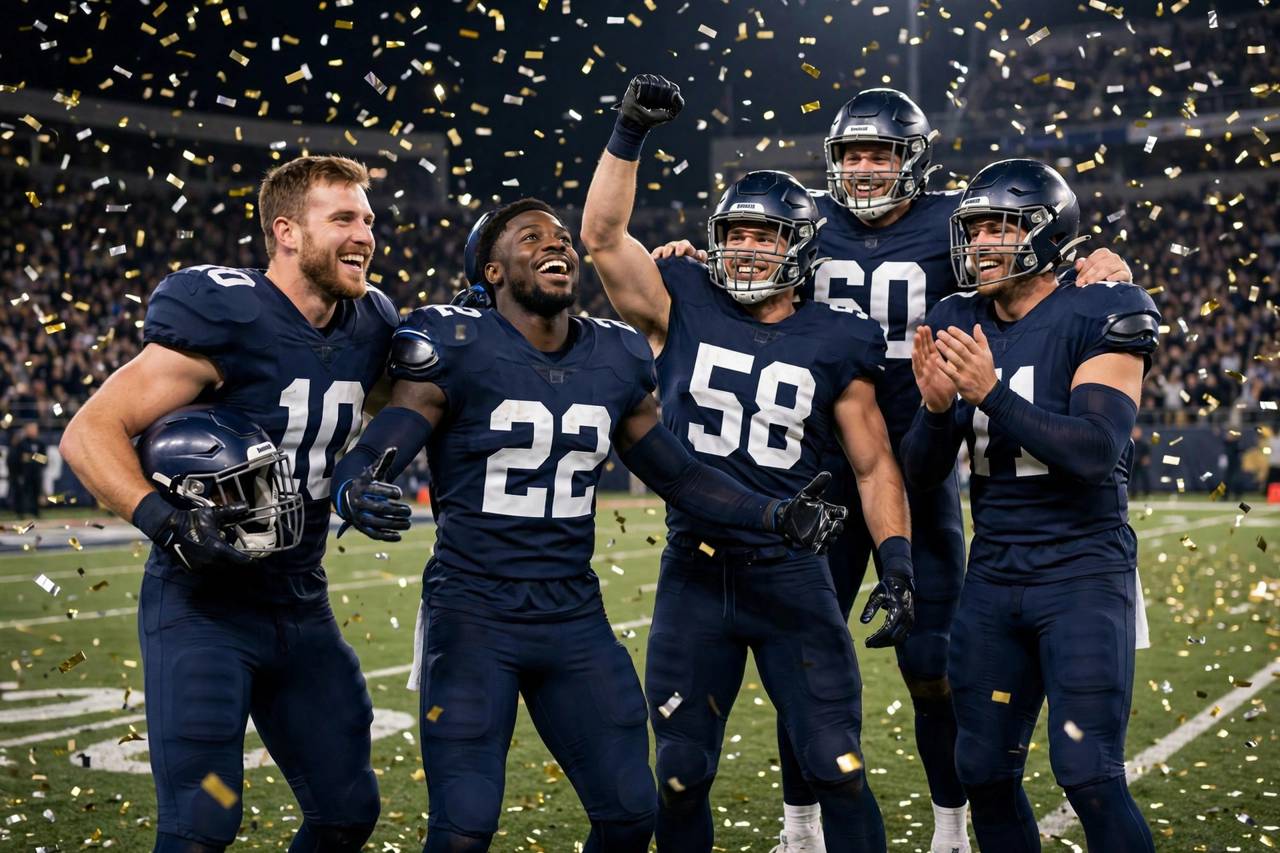
The Super Bowl ends the season, but the league never really sleeps. Here is the offseason rhythm that follows: within weeks, teams begin re-signing their own free agents and the new league year opens free agency – the annual player-movement frenzy. April brings the NFL Draft, where the worst teams pick first (non-playoff teams draft before playoff teams, in order of record), restocking rosters with college talent.
Summer means training camps and preseason games, roster cuts trim teams from 90 players to 53, and by early September, kickoff weekend starts the whole beautiful cycle again. Understanding this calendar makes you a year-round fan, not just a January one – and the draft order logic will make perfect sense now that you know how playoff elimination works.
FAQ
How many teams make the NFL playoffs?
Fourteen teams — 7 from the AFC and 7 from the NFC. Each conference sends its 4 division winners plus 3 wild-card teams (the non-division-winners with the best records). The field expanded to 14 teams in 2020.
What is a bye in the NFL playoffs?
A bye means skipping a playoff round. Only the #1 seed in each conference gets a first-round bye, advancing directly to the Divisional Round while seeds 2–7 play in the Wild Card round. The bye provides rest and an extra week of preparation — a significant advantage.
Do the higher seeds always play at home?
Yes, through the conference championships — the higher-seeded team always hosts. The only neutral-site game is the Super Bowl, which is held at a predetermined stadium regardless of seeding.
Can a wild-card team win the Super Bowl?
Absolutely — it has happened multiple times. Wild-card teams have won the Super Bowl as low as the #6 seed under previous formats. Once the playoffs start, seeding matters less than momentum, health, and quarterback play. Every team in the bracket can win it.
How does playoff overtime work?
Both teams are guaranteed at least one possession in playoff overtime. If still tied after that, sudden death applies — next score wins. Overtime periods are 15 minutes, and there are no ties; they play until someone wins.