Minimalism vs. Simple Living: What’s the Difference?

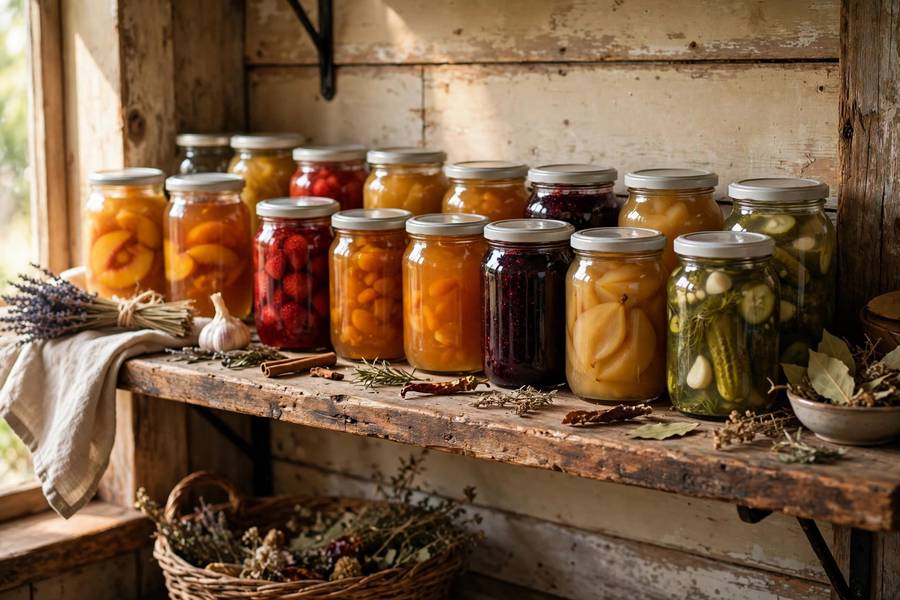
For my first year of decluttering, I called myself a minimalist. Then I visited a friend’s farmhouse — wood stove, garden, chickens, shelves of home-canned tomatoes, a pantry that would make your grandmother weep with joy — and she called herself a simple living advocate. Her home had more stuff than mine in some categories (forty jars of preserves! a root cellar!), yet her life was clearly, deeply intentional. That’s when I realized these two philosophies I’d been treating as synonyms were actually cousins with different personalities.
If you’re drawn to intentional living but unsure which camp fits, this comparison is for you. I’ll break down what each philosophy actually values, where they overlap, where they genuinely differ, and how to borrow the best of both — because most happy intentional livers I know are hybrids.
In this guide:
- The Definitions (Without the Jargon)
- The Core Difference: Less vs. Enough
- How They Compare, Value by Value
- Where They Overlap
- Which One Fits Your Life?
- The Hybrid: Stealing the Best of Both
The Definitions (Without the Jargon)
Minimalism is the intentional reduction of possessions and commitments to focus on what matters (see what minimalism actually means for the full picture). Its central question: “Does this add value to my life?” It’s fundamentally about less — fewer things, fewer obligations, fewer distractions — as the path to more meaning. Born largely as a reaction to consumer culture, it treats excess as the enemy and curation as the method.
Simple living (sometimes called voluntary simplicity) is the intentional design of a life around sufficiency, self-reliance, and connection — often to nature, community, and craft. Its central question: “Is this enough? Is this mine to make?” It’s about enough rather than less: enough food (grown yourself, maybe), enough income (not maximum income), enough speed (slower is often better). Its roots run through Thoreau, the back-to-the-land movement, and various religious traditions of plain living.
The one-sentence distinction: minimalism asks “what can I remove?” while simple living asks “what is sufficient?” Those sound similar, but they lead to very different pantries — the minimalist’s near-empty one versus the simple liver’s forty jars of tomatoes.
The Core Difference: Less vs. Enough
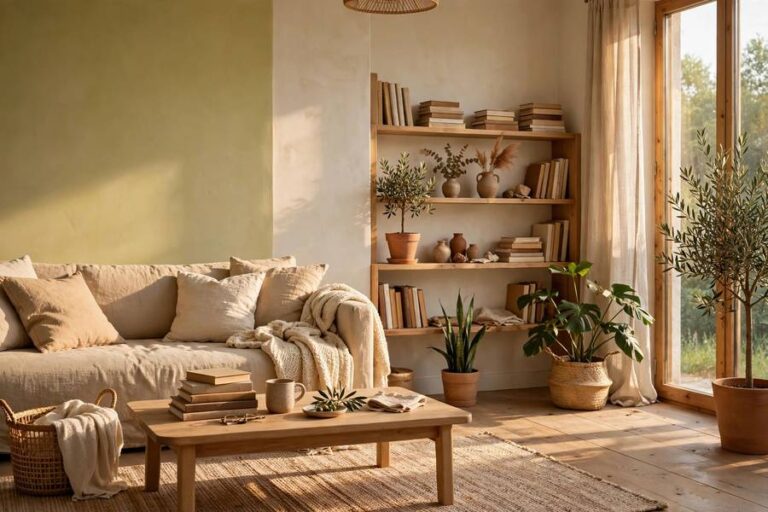
This is the philosophical heart of it. Minimalism’s ideal is reduction — the best version of a category, ideally one, ideally multi-functional. One good knife. One bag. The capsule wardrobe. The logic: fewer things, less management, more freedom. It’s elegant, urban-friendly, and scales beautifully to apartments and mobile lives.
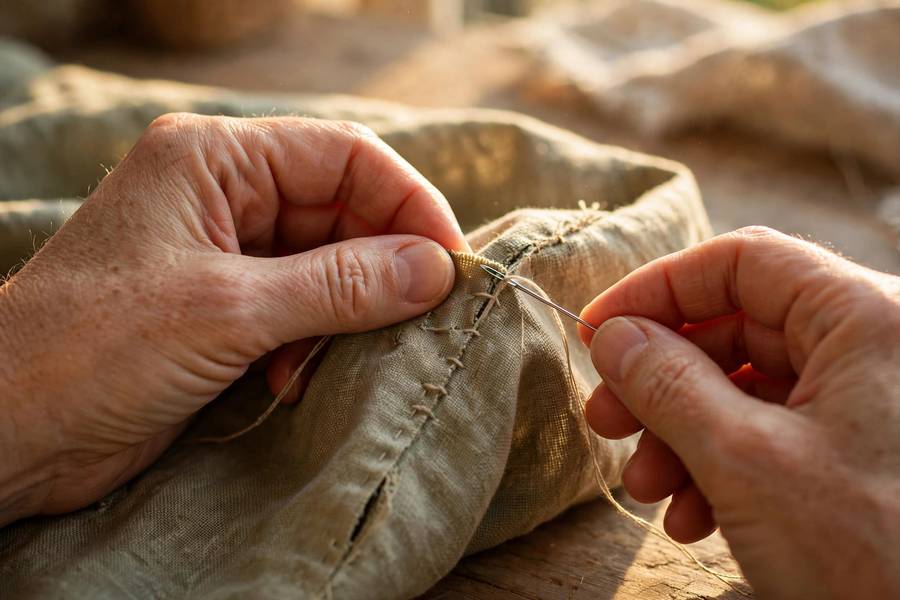
Simple living’s ideal is sufficiency and self-reliance — having what you need to live well, often produced by your own hands. Forty jars of preserves isn’t excess to a simple liver; it’s food security and craft. A workshop full of tools is not clutter; it is the means of making and mending. Gardeners, start with how to start a garden. The logic: dependence on fragile systems (supply chains, consumer credit, constant earning) is the real burden, and the remedy is capability, not emptiness.
Neither is wrong — they’re optimizing for different freedoms. Minimalism optimizes for freedom from: from stuff, from maintenance, from the weight of possessions. Simple living optimizes for freedom to: to feed yourself, to fix things, to live at a human pace regardless of what the economy does. Freedom-from is lighter; freedom-to is more resilient. Most of us want both.
A tale of two kitchens
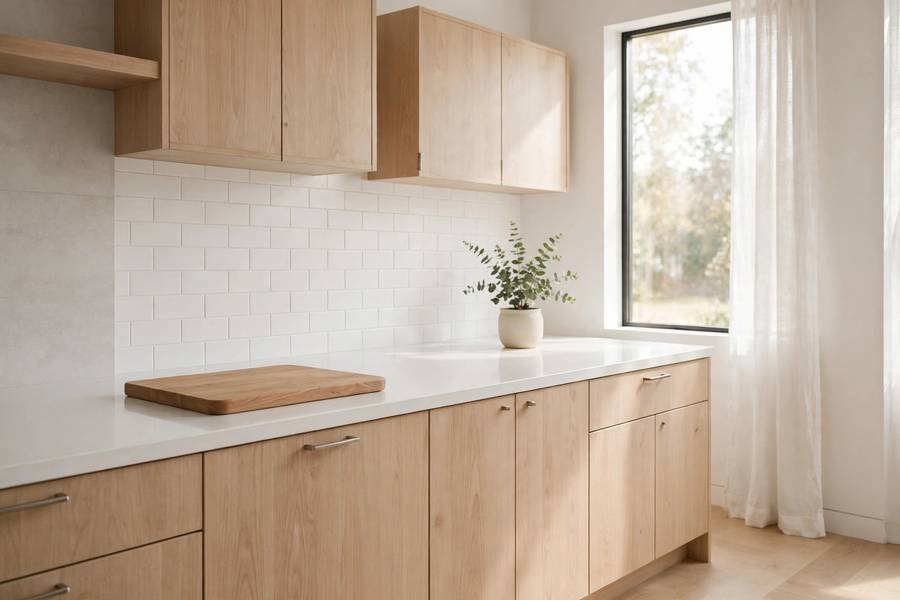
The minimalist kitchen: clear counters, one excellent knife, a single pot that does everything, twelve total items. Beautiful, fast to clean, slightly dependent on stores and takeout. The simple-living kitchen: grain mill, canning equipment, garden produce everywhere, well-stocked pantry. Busier, more work, deeply self-sufficient. Both cooks are intentional. They’re just intentional about different things.
How They Compare, Value by Value
Possessions: Minimalism says fewer, better, curated. Simple living says enough, durable, often handmade or homegrown. A minimalist might own 30 items of clothing; a simple liver might own 50 but made half of them and mends the rest.
Money: Minimalism tends to reduce spending by reducing wants — the money saved is freedom (travel, early retirement, security). Simple living tends to reduce need for money — growing food, making things, living on less income by design. (how to compost at home is the natural next step.) The minimalist might earn a lot and spend little; the simple liver might deliberately earn less and need less.
Time: Both value time highly, but use it differently. Minimalism frees time by eliminating management overhead (less cleaning, shopping, organizing). Simple living invests time in slow production — gardening, cooking from scratch, making, mending. The minimalist’s free Saturday is empty; the simple liver’s is full of bread dough.
Technology: Minimalism is generally tech-positive but curated — the best laptop, the essential apps, digital minimalism for the feed. Simple living is more skeptical — appropriate technology, repairable tools, sometimes deliberate low-tech choices. A minimalist optimizes their phone; a simple liver might keep a flip phone.
Community: Minimalism is often individual (my space, my choices), though it doesn’t have to be. Simple living is historically communal — barn raisings, shared harvests, skill exchanges. The simple living tradition has deeper roots in mutual aid; minimalism has deeper roots in personal optimization.
Environment: Both end up greener than average, by different routes. Minimalism via reduced consumption; simple living via local production, repair culture, and low-impact daily practices. The simple liver’s carbon footprint is usually smaller, but the minimalist’s is far below average too.
Where They Overlap
Despite the differences, the Venn diagram has a fat middle. Both reject mindless consumerism — the reflexive buying, the status objects, the clutter of unexamined accumulation. Both value intentionality over default: choosing your life rather than inheriting it from advertising. Both find that “enough” is a happier target than “more.” The hygge lifestyle and slow living overlaps beautifully with both camps.
Both tend toward quality over quantity, experiences over objects (though simple livers might argue a well-made tool is an experience), and both report the same core benefits: less stress, more time, clearer priorities, lower expenses. The practices overlap heavily too — decluttering, the 30-day purchase pause, questioning defaults, opting out of the upgrade cycle.
Honestly, most practitioners I know couldn’t tell you which camp they’re in without thinking about it. The labels matter less than the direction: toward enough, away from excess, on purpose.
Which One Fits Your Life?
Consider minimalism if: you live in a small urban space, you move frequently, you love efficiency and clean systems, your joy comes from experiences and freedom, or you’re drowning in stuff and need the clarity of reduction. Minimalism is the better starting point for most people because “remove the excess” is a clearer first instruction than “redesign your relationship with production.”
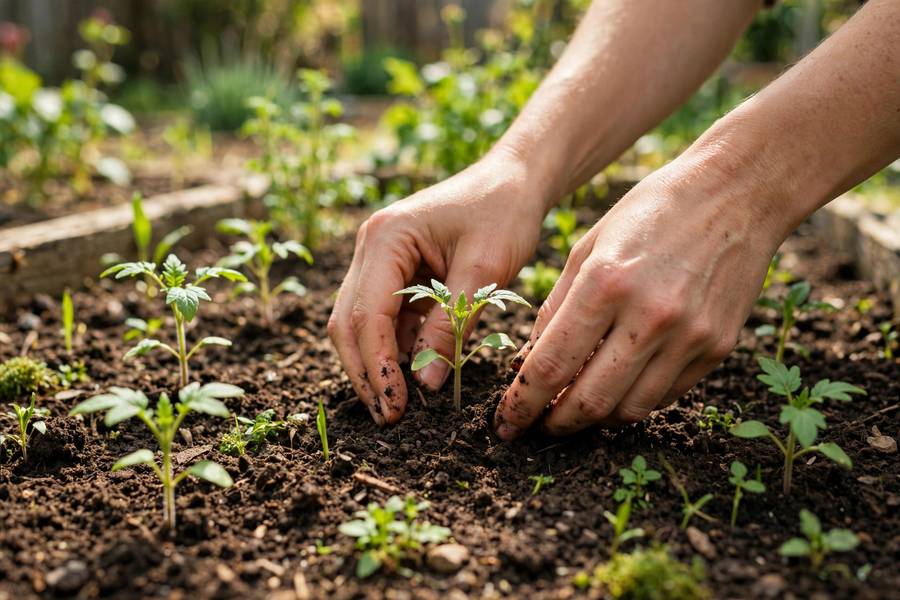
Consider simple living if: you crave self-reliance, you find joy in making things (food, objects, repairs), you want resilience more than mobility, you’re drawn to nature rhythms and slower pace, or the minimalist aesthetic leaves you cold but the intentionality attracts you. Simple living asks more upfront (skills, time, sometimes land) but builds deeper capability.
Consider that it’s not a permanent choice. Many people start with minimalism (clear the decks) and drift toward simple living (build the good life on the cleared land). I did exactly this: two years of reduction, then a growing interest in cooking from scratch, mending, and gardening. The empty space minimalism created got filled — deliberately — with practices, not products.
Questions to ask yourself
Do I want fewer things, or more capability? Do I crave lightness or rootedness? Does an empty counter delight me or does a full pantry? Would I rather travel light or grow tomatoes? There are no wrong answers — but your honest answers point to your camp. And “both, in different areas” is a completely valid answer.
The Hybrid: Stealing the Best of Both
Here’s my actual recommendation: be a minimalist about consumption and a simple liver about production. Ruthlessly minimal about what you buy and accumulate (the inflow discipline, the curation, the “does this serve me?”); generously simple-living about what you make and do (cook real food, learn to mend, grow something, build skills). Minimalist inputs, simple-living outputs.
In practice: a decluttered home (minimalism) with a real kitchen you actually cook in (simple living). A curated wardrobe (minimalism) plus mending skills when things wear (simple living). Digital minimalism for the feeds (minimalism) and a garden, a craft, or a workshop for the hands (simple living). Fewer things coming in; more good things going out — meals, repairs, gifts made, skills shared.
The labels were never the point. The point is a life you chose on purpose — light enough to move, rooted enough to matter, with enough of what counts and none of what doesn’t. Call it whatever you like. Live it however fits. That’s the whole philosophy, in the end: yours, on purpose.
Minimalism focuses on reducing possessions and commitments to what adds value (‘what can I remove?’), while simple living focuses on sufficiency, self-reliance, and slower rhythms (‘what is enough?’). A minimalist might own one excellent knife; a simple liver might can forty jars of tomatoes. Both reject mindless consumerism but optimize for different freedoms.
No, though they overlap heavily. Minimalism is primarily about less — fewer things, fewer obligations. Simple living is primarily about enough — sufficiency, making and growing things, living at a human pace. Many people blend both: minimalist about consumption, simple-living about production.
Neither is objectively better — it depends on your life. Minimalism suits urban, mobile lives and is the clearer starting point for most people. Simple living suits those craving self-reliance, craft, and rootedness. Many practitioners start with minimalism (clear the excess) and evolve toward simple living (build intentional practices).
Absolutely — it’s arguably the ideal combination. Be minimalist about inputs (ruthless curation of what you buy and keep) and simple-living about outputs (cooking, gardening, mending, making). The hybrid gives you lightness without emptiness: fewer things coming in, more good things going out.
Both reject mindless consumerism, value intentionality over default choices, prefer quality over quantity, and report the same core benefits: less stress, more time, clearer priorities, and lower expenses. The practices overlap too — decluttering, pausing before purchases, and opting out of upgrade culture.