Raised Bed Garden for Beginners: Build It Right Once

The raised bed I built my second year is still going strong, and it taught me something important: most raised bed advice skips the decisions that actually matter and obsesses over the ones that do not. The wood species matters less than the depth. The exact dimensions matter less than the sun. And the soil mix matters more than everything else combined. A raised bed garden for beginners is the closest thing to a guaranteed good first season, because you bypass bad native soil entirely and start with perfect growing conditions on day one. In this guide, I will walk you through choosing materials, building a bed that lasts, filling it with the right mix (not overpriced bagged ‘raised bed soil’ alone), and planting it for maximum harvest. Pair it with my guide on how to start a garden for the full seasonal picture.
Why Raised Beds Are the Beginner’s Best Friend
Raised beds solve the three problems that sink most first-year gardens. Bad native soil becomes irrelevant because you fill the bed yourself. Drainage improves instantly, since the bed sits above grade and excess water flows away. And the soil warms up earlier in spring, buying you a week or two of extra growing season on each end. My raised beds are workable a full ten days before my in-ground areas each spring.
There are ergonomic wins too. Working at eight to twelve inches of height saves your back and knees, and the defined edges keep you from ever stepping on the growing area, which means the soil stays fluffy and uncompacted forever. Weeding is easier because the soil is loose and the boundaries are clear. For a beginner, a raised bed removes variables, and fewer variables mean fewer mysterious failures.
Size and Placement: The Decisions That Matter
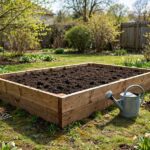
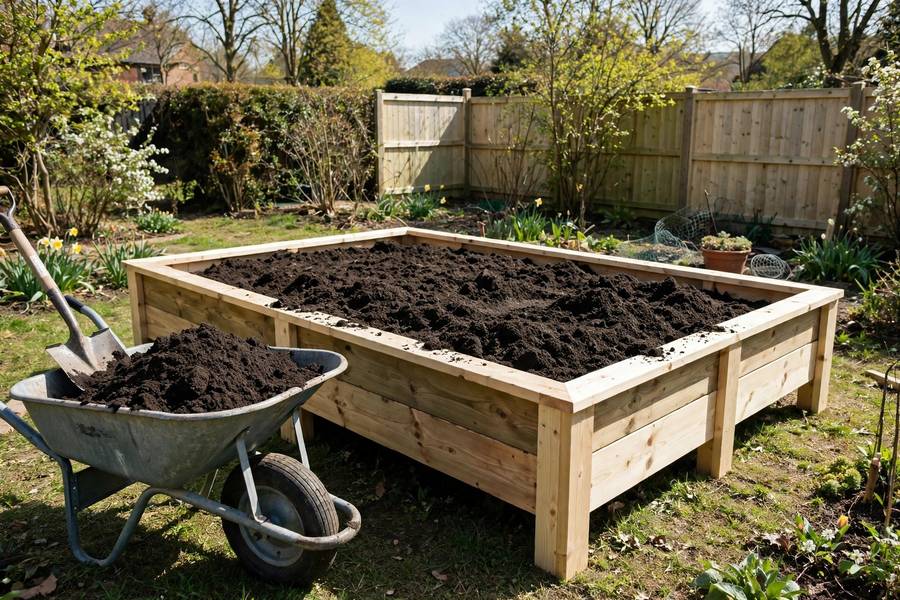
Build four feet wide and eight feet long if you have the space. Four feet is the magic width: you can reach the center from either side without stepping in. Eight feet gives you 32 square feet of growing space, enough for a serious harvest. Height matters more than most guides admit: aim for ten to twelve inches of soil depth minimum. Shallow six-inch beds dry out fast and restrict root growth; I made that mistake once and spent the summer watering twice daily.
Placement follows the same rules as any garden: six to eight hours of direct sun, level ground, near water and your kitchen door. Orient the long axis north to south so tall plants at the north end do not shade the rest. And leave at least two to three feet of path around all sides; you need room for a wheelbarrow, and cramped paths become muddy, trampled messes by midsummer. Measure your paths before you build, not after.
One bed is the right start. It is tempting to build four at once, but one well-tended bed teaches you more and produces more than four neglected ones. Expand next year from success.
Materials: What to Build With (and What to Avoid)
Untreated lumber is the standard choice and mine has lasted years. Cedar and redwood naturally resist rot and can last a decade or more; pine or fir is cheaper but may need replacing in three to five years. Use two-inch-thick boards (nominal 2×10 or 2×12) rather than one-inch; they resist bowing under soil pressure far better. Avoid old railroad ties and pressure-treated lumber from before 2004, which contained arsenic; modern ACQ-treated lumber is considered safe, but I still prefer untreated wood for food beds.
Alternatives work well too. Galvanized steel stock tanks and purpose-built metal beds last decades and look sharp, though they cost more upfront and can heat soil in very hot climates. Stone or concrete block beds are permanent and beautiful but immovable, so be sure of your placement. Whatever you build with, skip the expensive corner bracket kits; basic exterior screws and simple butt joints hold perfectly well. Spend the savings on soil mix, which is where the money actually matters.
Filling the Bed: The Mix That Grows Great Plants
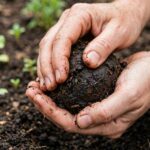
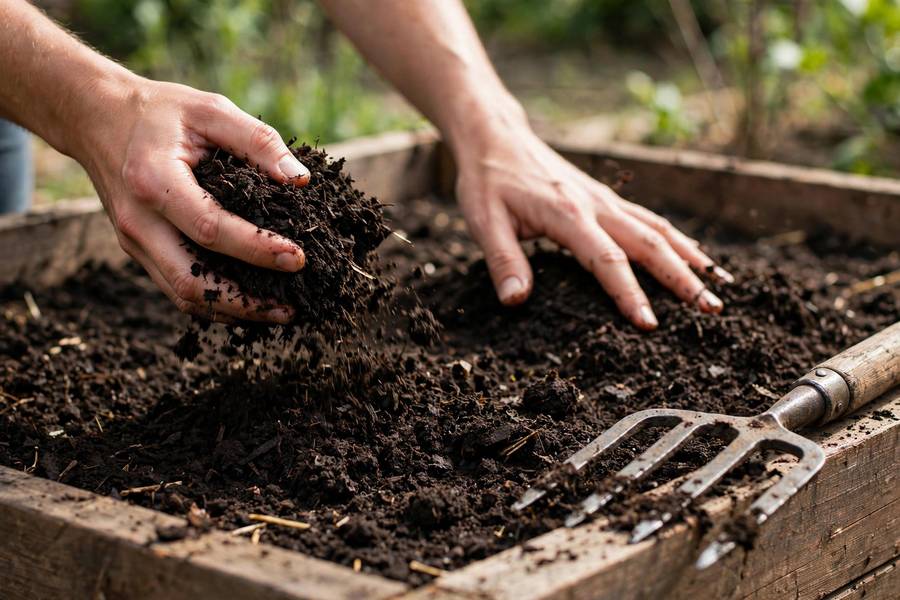
Here is where beginners waste the most money: filling beds entirely with bagged ‘raised bed mix’ at premium prices. For a 4x8x1-foot bed you need about 32 cubic feet of fill, and bagged mix alone gets expensive fast. My proven recipe: roughly 60 percent good-quality bulk topsoil or garden soil, 30 percent compost, and 10 percent aeration material like perlite or coarse vermiculite. If you must buy bagged, mix cheaper topsoil bags with compost rather than buying all premium mix.
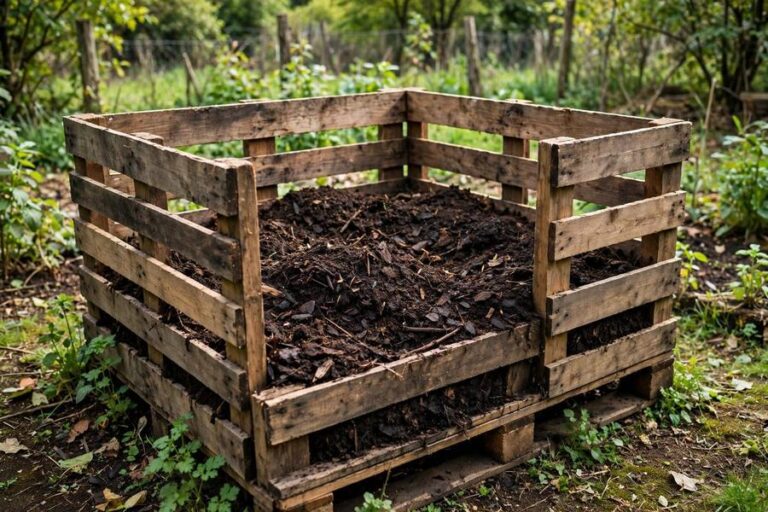
Fill the bed to the top, water thoroughly, and let it settle for a week before planting; fresh fill always sinks a few inches. Then top up with more compost. Every spring after, add an inch or two of compost to replace what broke down. A bed fed with annual compost just gets better with age; mine grow better now than the year I built them. For the compost itself, my guide to composting at home will keep you supplied for free.
Do not fill the bottom with logs, gravel, or filler junk unless your bed is very deep. In a standard 12-inch bed, filler layers just steal root space and create drainage interfaces that cause more problems than they solve. Fill the whole thing with good mix.
Planting Your Raised Bed for Maximum Harvest
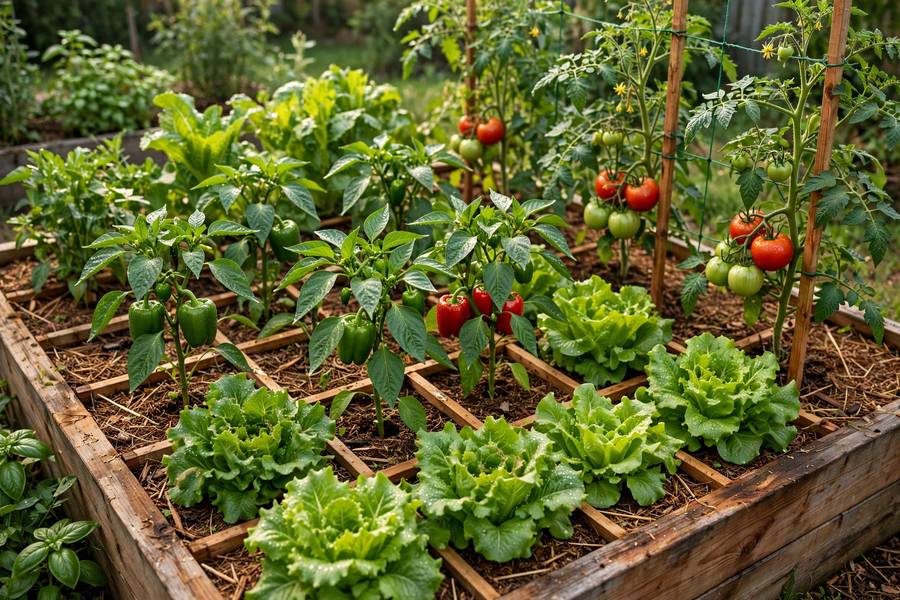
Plant a raised bed in a grid, not rows. The one-foot grid lets you space intensively: one tomato per two square feet, four lettuce per square foot, sixteen carrots per square foot. Put tall crops (tomatoes, trellised cucumbers) on the north side, medium plants (peppers, beans) in the middle, and short fast crops (lettuce, radishes) on the south edge where you harvest most often.
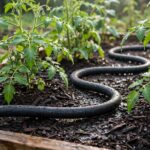
Mulch every inch of bare soil with two to three inches of straw or shredded leaves; in the loose soil of a raised bed, unmulched surfaces crust and dry shockingly fast. Water deeply but less often to encourage deep roots, and remember that raised beds drain well, which in hot weather means checking moisture daily in midsummer. Drip irrigation or a soaker hose under the mulch is the ultimate raised bed upgrade; it waters the roots, not the leaves, and runs while you sleep.
Year-Two Care: Keeping the Bed Productive
A raised bed is not plant-and-forget infrastructure; it needs small annual rituals. Each spring, top up settled soil with fresh compost, check boards for rot or loose screws, and test the soil every couple of years to catch nutrient imbalances. Rotate plant families yearly: do not plant tomatoes where tomatoes grew last year. In a single bed, this just means shifting things around; in multiple beds, rotate crops between beds.
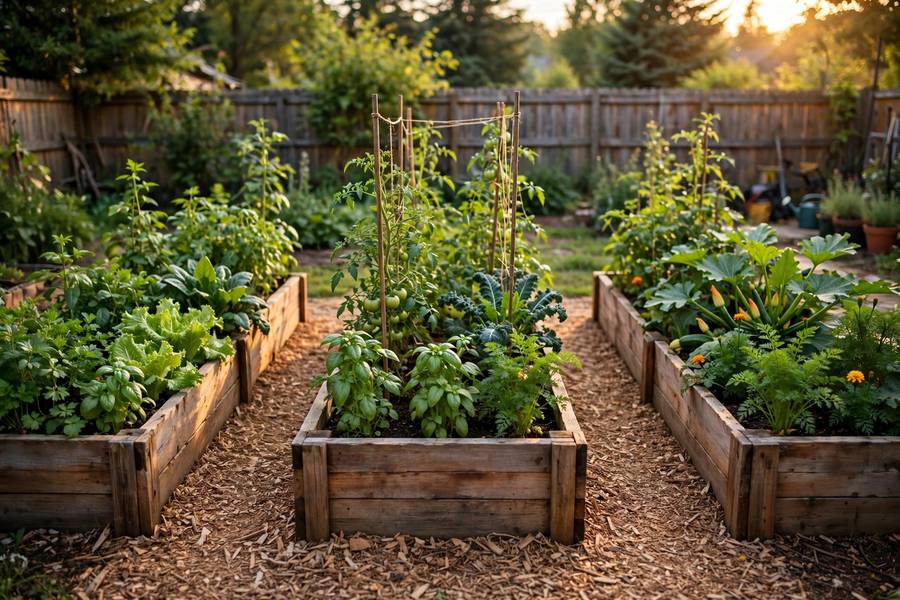
Refresh mulch as it breaks down, watch for soil compaction on the paths (not in the bed, since you never step in it), and every few years, consider a cover crop of clover over winter to feed the soil. These small habits compound. My oldest bed, now in its sixth season, has soil so dark and alive that I barely fertilize at all. Build it right once with the guidance above and my guide on how to start a garden, maintain it lightly, and it will feed you for a decade.
Aim for 10-12 inches of soil depth minimum. Most vegetables root in the top 12 inches. Shallow 6-inch beds dry out quickly and restrict root growth. Deeper beds (18-24 inches) are luxurious but unnecessary for most crops; spend the budget on good soil mix instead.
About 60% good topsoil, 30% compost, and 10% perlite or vermiculite for aeration. Avoid filling entirely with expensive bagged ‘raised bed mix.’ Top up with 1-2 inches of fresh compost each spring as organic matter breaks down and the level settles.
Untreated cedar or redwood lasts longest (up to 10+ years). Untreated pine or fir is cheaper but lasts 3-5 years. Avoid pre-2004 pressure-treated lumber (contained arsenic). Modern ACQ-treated lumber is considered safe, but many gardeners prefer untreated wood for food beds.
No. An open-bottom raised bed sitting on soil drains naturally through the ground below. Only fully enclosed containers need drainage holes. If your native soil drains very poorly, the raised height itself solves most of the problem.
Using intensive grid spacing: 2-4 tomato plants, 6-8 peppers, 16+ lettuce heads in succession, a row of beans, carrots, and herbs. A single 4×8 bed (32 sq ft) can produce a substantial harvest for a small family when planted intensively and succession-planted through the season.