How to Make a Small Apartment Feel Bigger: 12 Designer Tricks

I once lived in a 420-square-foot studio that felt bigger than a friend’s 700-square-foot one-bedroom, and the difference was not square footage. It was a dozen small decisions about light, color, furniture scale, and visual clutter that made my tiny place breathe while hers felt cramped. How to make a small apartment feel bigger is not about knocking down walls; it is about removing the visual cues that tell your brain ‘this space is small’ and adding the ones that say ‘this space flows.’ In this guide, I am sharing the twelve tricks I have used in every small place I have lived, from the five-minute fixes to the weekend projects. For the complete design approach, my small apartment decorating ideas guide covers the full philosophy.
Light It Like You Mean It
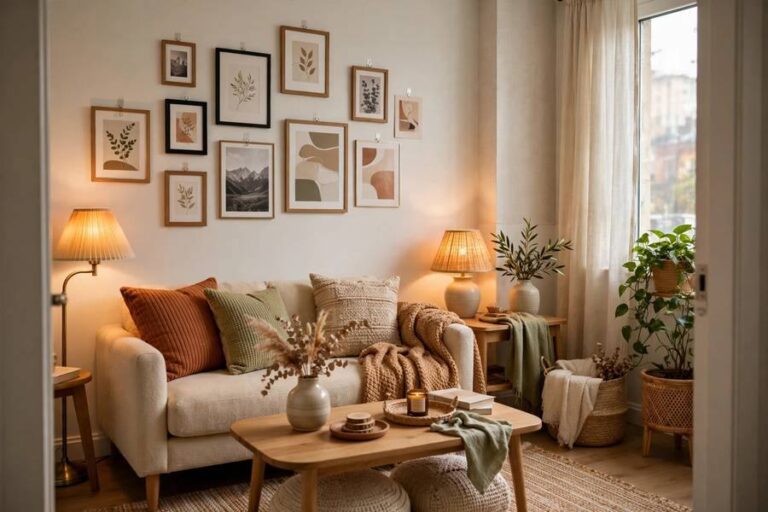
Dark corners shrink rooms; light expands them. The single biggest difference between my cramped-feeling apartments and my airy ones was never the floor plan, it was the lighting plan. Kill the single overhead light habit. Every room needs light at multiple heights: a floor lamp washing a corner, a table lamp creating a pool of warmth, and daylight maximized during the day. Corners that glow feel like they recede; corners in shadow feel like walls closing in.
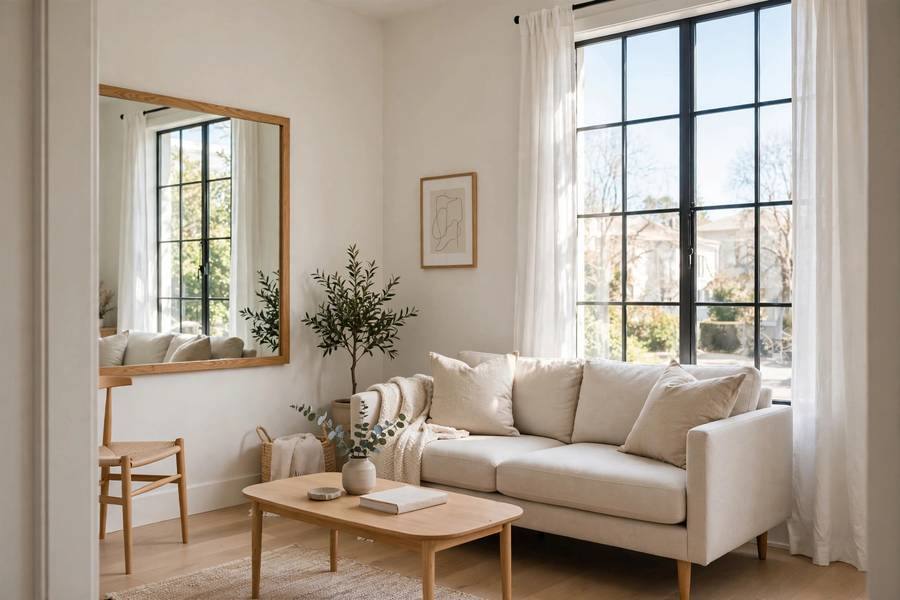
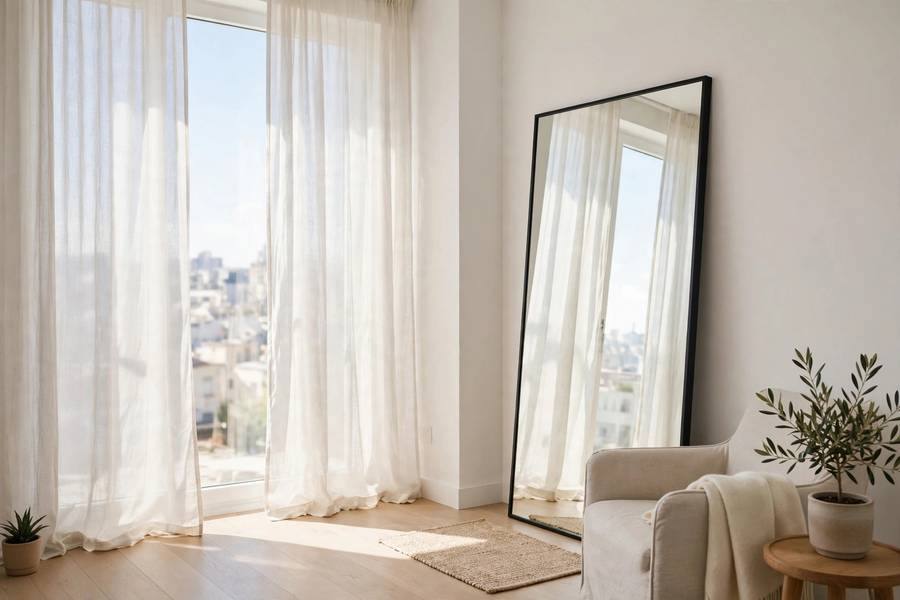
Maximize natural light ruthlessly. Clean your windows (seriously, dirty windows cut light dramatically), keep windowsills clear, choose sheer or light-filtering curtains over heavy drapes, and place a large mirror opposite each window to bounce daylight deep into the room. I gained what felt like fifty square feet in my studio just by replacing heavy curtains with sheers and adding a big mirror. Warm bulbs in the evening, daylight bulbs in work areas; light temperature shapes mood as much as brightness does.
Color & Contrast: The Visual Space Makers
Light colors recede; dark colors advance. This is not a rule that every wall must be white, but it is the physics your eyes follow. In small apartments, I keep the largest surfaces light: walls, sofa, rug, bedding. Then I add depth with darker accents in small doses: throw pillows, art frames, a single dark chair. The result reads as airy but not sterile, which is the balance that makes small spaces feel both bigger and homier.
Low contrast is the subtler trick. When your walls, curtains, and largest furniture are close in tone, the eye glides across the room without stopping, and uninterrupted sightlines read as spaciousness. High contrast chops a room into visual pieces that each feel small. This does not mean boring: texture does the work that contrast usually does. A cream boucle throw on a cream sofa, a jute rug under a light wood table; varied textures in a tight palette feel rich without feeling busy.
One accent wall in a deeper tone can actually add depth if the other walls stay light; it creates a sense of distance. But keep ceilings white or very light always; a dark ceiling presses down on a small room like a lid.
Furniture Scale & Layout: Float, Don’t Push
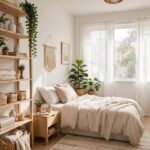
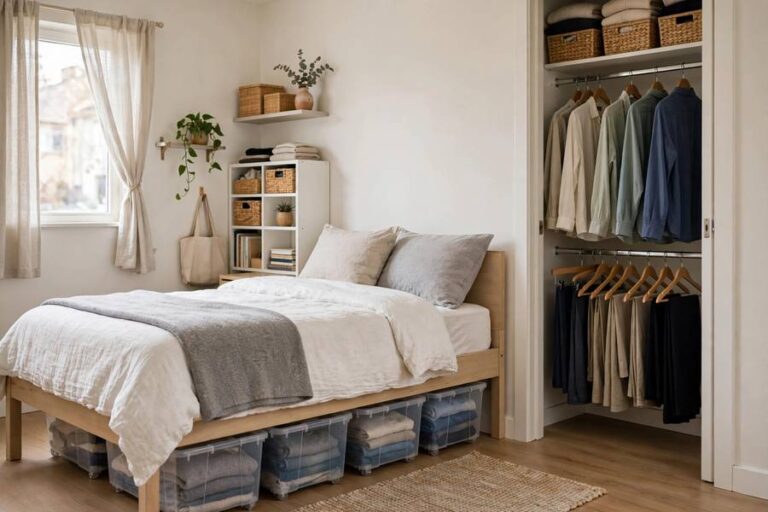
Oversized furniture is the fastest way to shrink a room. In small apartments, choose pieces with visible legs rather than skirted bases; seeing floor underneath furniture extends the visual floor area dramatically. A sofa on legs, a coffee table on legs, a bed frame with clearance underneath: each one borrows visual space from the floor. Glass or acrylic side tables disappear visually while staying functional.
Layout matters as much as scale. Pull furniture even a few inches off the walls; the shadow gap behind a sofa reads as breathing room. Create clear pathways at least two feet wide; squeezing past furniture constantly reminds your body the space is tight. Angle one piece, a chair or a rug, to break the boxy geometry that makes small rooms feel like containers. And edit ruthlessly: every small apartment I have lived in felt bigger the day I removed one piece of furniture. If you have not used it in a month, it is visual weight you are carrying.
Mirrors & Reflective Surfaces: Double Your Space
A large mirror opposite a window is the oldest small-space trick because it works so completely: it doubles the light, doubles the view, and doubles the perceived depth. Go as large as you can; a full-length mirror leaned against the wall has ten times the impact of a small decorative one. Mirrored or glass-front cabinet doors, reflective trays, and metallic accents scatter light in smaller doses throughout the room.
Placement details matter. Hang or lean mirrors where they reflect something beautiful: the window, a plant, art, not the cluttered corner or the TV. A mirror reflecting a window effectively adds a second window to the room. In narrow hallways, a long mirror along one wall transforms a tunnel into a gallery. And keep mirrors clean; a smudged mirror reads as a dirty wall, not as expanded space.
In rentals, lean large mirrors rather than hanging them: no wall damage, easy to move, and the slight tilt actually reflects more of the room.
Declutter Visually: What the Eye Can’t See
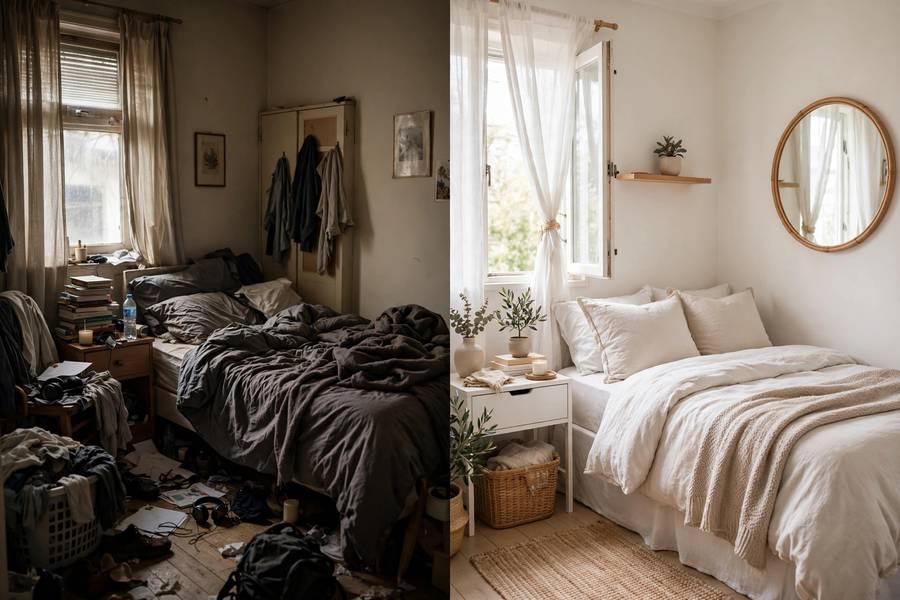
Visual clutter shrinks rooms faster than physical clutter. A counter with fifteen small items reads as chaos; the same items grouped on a tray or behind a cabinet door read as calm. My rule: every surface gets one intentional grouping or nothing. Corral the small stuff: remote controls in a box, toiletries in a basket, desk supplies in a drawer organizer. Closed storage beats open shelving in small spaces, because open shelves demand constant curation to avoid looking cluttered.
Cords are invisible clutter with outsized impact. A tangle of chargers behind the TV or under the desk reads as mess even in an otherwise tidy room. Cord covers, cable boxes, and a single charging station tame them for a few dollars. Go vertical with storage to free floor area: tall narrow bookcases, over-door organizers, wall-mounted desks that fold away. The floor you can see is the space you feel, so every item lifted off the floor makes the room breathe. My systems for this live in my guide to organizing a small apartment.
The 5-Minute Fixes & Weekend Projects
Five-minute fixes, ranked by impact: open all blinds fully and clean the windows; remove one piece of furniture or decor you do not love; corral surface clutter into baskets; turn on every lamp instead of the overhead; pull the sofa six inches off the wall. Do all five on a Saturday morning and your apartment will feel new by lunch.
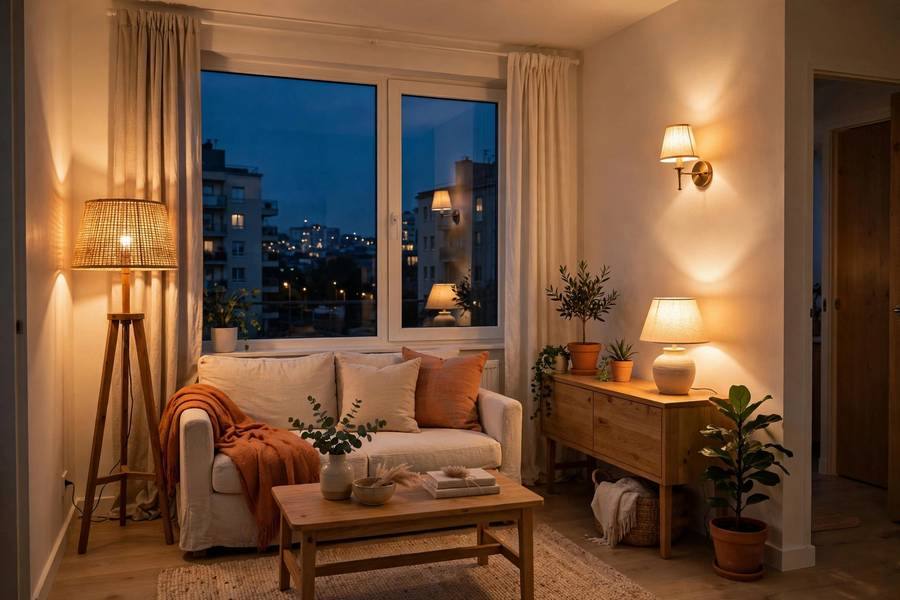
Weekend projects for bigger transformation: hang curtains high, wide, and to the floor to fake taller windows; paint or wallpaper one accent wall in a light-reflective tone; swap heavy drapes for sheers; add a large mirror opposite the main window; replace a bulky coffee table with a glass or nesting alternative. None of these require construction, most are renter-friendly, and together they compound into a space that feels genuinely larger. For the design thinking behind all of it, my small apartment decorating ideas guide is the deeper read; and if the real problem is too much stuff rather than too little space, my guide to minimalism reframes the whole question.
Light, low-contrast colors: whites, creams, soft grays, and pale tones on walls, large furniture, and rugs. Keeping walls, curtains, and big pieces close in tone lets the eye glide across the room, reading as spaciousness. Add depth with darker accents in small doses and keep ceilings white.
Opposite windows, where they double natural light and the view. Go large: a full-length leaning mirror has far more impact than small decorative ones. Also effective: long mirrors in narrow hallways, and mirrored surfaces where they reflect something beautiful, never clutter.
No, counterintuitively. Pulling furniture even a few inches off walls creates shadow gaps that read as breathing room. Choose pieces with visible legs so floor shows underneath, keep pathways 2+ feet wide, and remove any piece you have not used in a month.
Multiple light sources at different heights eliminate dark corners that read as walls closing in. Maximize daylight with clean windows, sheer curtains, and mirrors opposite windows. In the evening, use several warm lamps instead of one harsh overhead; lit corners feel like they recede.
Declutter surfaces (corral small items into baskets/trays), open blinds fully, turn on lamps instead of overheads, pull furniture slightly off walls, and remove one unnecessary piece. These five five-minute fixes together transform how spacious a room feels.