Celebrity Red Carpet Style Guide: How the Looks Happen

Every flawless red carpet look you’ve ever admired is a small miracle of logistics. Behind each thirty-second walk stands an army: the stylist, the glam team, the tailor, the fashion house, the jeweler, the publicist — all working for weeks toward a moment that lasts less than a minute. I’ve spent years watching this machine operate, and the reality is more fascinating than the fantasy. This is how celebrity red carpet styling actually works, from the first fitting to the final flashbulb.
In this article
In this guide:
- The Stylist: The Most Powerful Person You’ve Never Heard Of
- The Loans: How the Clothes Actually Arrive
- The Contracts: Ambassadorships and Exclusives
- The Fittings: Where the Magic Happens
- The Glam Team: Hair, Makeup, and Nails
- The Night Of: The Final Three Hours
- The Unwritten Rules
- The Stylist: The Most Powerful Person You’ve Never Heard Of
- The Loans: How the Clothes Actually Arrive
- The Contracts: Ambassadorships and Exclusives
- The Fittings: Where the Magic Happens
- The Glam Team: Hair, Makeup, and Nails
- The Night Of: The Final Three Hours
- The Unwritten Rules
- Frequently Asked Questions
The Stylist: The Most Powerful Person You’ve Never Heard Of
The celebrity stylist is the architect of the red carpet. Stars like Zendaya, Cate Blanchett, and Timothée Chalamet don’t just “have good taste” — they have Law Roach, Elizabeth Stewart, and their equivalents: professionals who live in showrooms, speak fluent fashion-house, and can get a couture gown pulled, fitted, and altered in days.
A top stylist’s job starts months before an event. They study the calendar (which premieres, which awards, which press tours), research the fashion houses’ upcoming collections, and build a strategy: which designer for which moment, which silhouette tells the right story, how to avoid repeating a competitor’s look. The best stylists think like film directors — every appearance is a scene, and the season is the movie.
The stylist-celebrity relationship is intimate and high-stakes. The stylist knows the client’s insecurities, measurements, and preferences better than anyone. And when it works — Zendaya and Roach, Blake Lively flying solo with a vision — the results redefine what’s possible. When it doesn’t, the internet notices within minutes. There’s no hiding on a red carpet.
The Loans: How the Clothes Actually Arrive
Here’s the industry’s open secret: celebrities almost never buy their red carpet clothes. The gowns are loaned — pulled from fashion houses’ showrooms and archives, often straight off the runway, specifically for the event. Afterward, they go back.
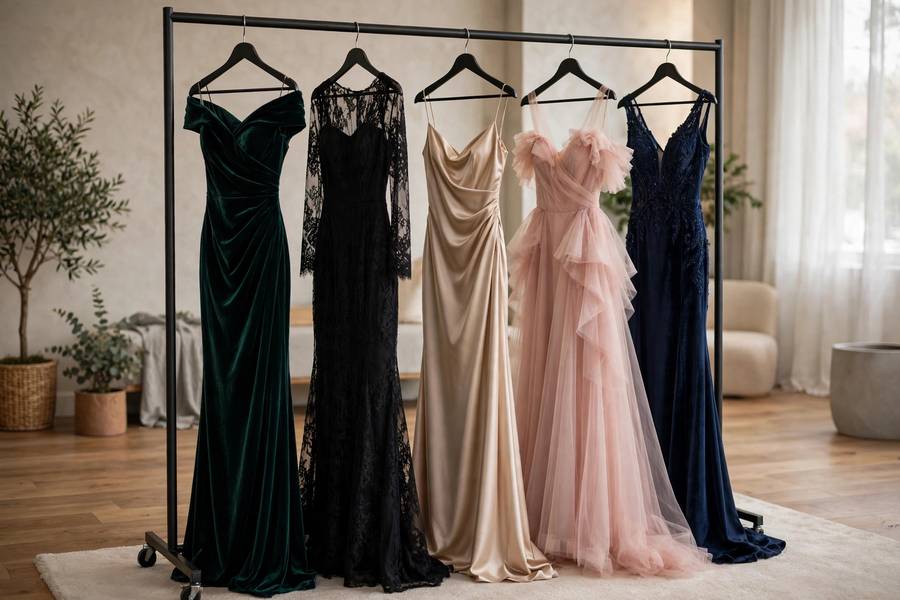
The process works like this: the stylist requests “pulls” from multiple fashion houses — sometimes dozens of options for a single event. The houses send the pieces (this is a privilege reserved for stylists with relationships; a cold call gets nothing). The celebrity tries them on, the team narrows it down, and the chosen look gets fitted and altered. The house gets the publicity of a global red carpet moment; the celebrity gets a couture gown for the night. Everyone wins — except the houses whose pulls get rejected, who pretend not to mind.
For the biggest stars at the biggest events, fashion houses will create custom looks — designed specifically for the celebrity and the occasion. Rihanna’s Guo Pei cape, Blake Lively’s transforming Versace, Beyoncé’s Givenchy — these are couture commissions, months in the making. Custom is the highest tier of the loan economy, reserved for the names that guarantee global coverage.
The Contracts: Ambassadorships and Exclusives
Many A-listers have formal relationships with fashion houses — ambassadorships or “face of” contracts that pay serious money and come with expectations. A Louis Vuitton ambassador wears Louis Vuitton to the major events. A Dior ambassador wears Dior. These deals, worth millions annually, are why you’ll notice certain stars in the same house again and again.
The contracts shape the carpet invisibly. When Emma Stone wears Louis Vuitton to the Oscars, it’s not a spontaneous choice — it’s a partnership, planned months ahead, with the house’s atelier potentially building the look from scratch. The “who are you wearing?” question has a contractual answer more often than you’d think.
Then there are the exclusives: an agreement that a celebrity will wear a particular house for a specific event, sometimes with a custom creation. The Met Gala runs on these — the pairings of star and designer are negotiated like treaties, and the results are the themed spectacles the night is famous for.
The Fittings: Where the Magic Happens
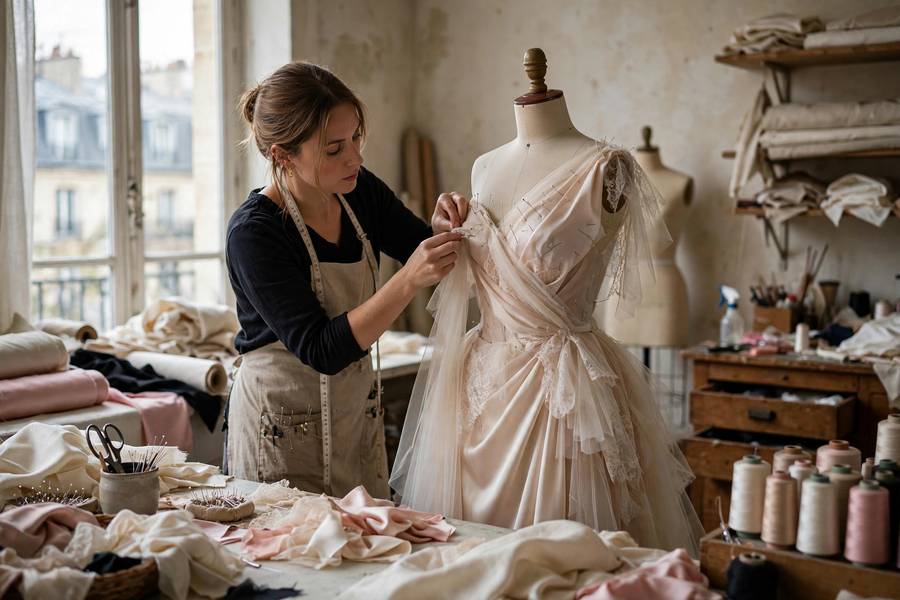
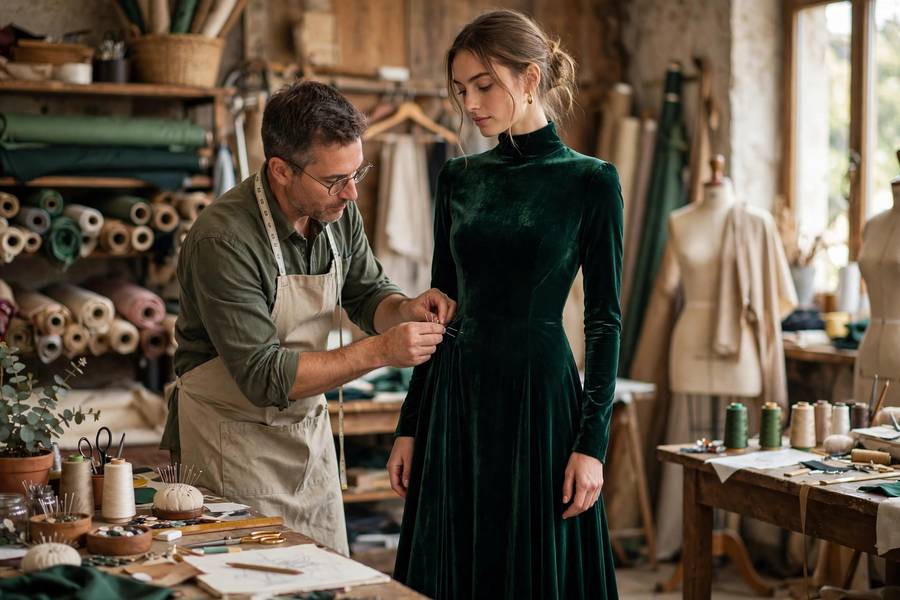
The fitting is where a borrowed gown becomes the look. It happens days before the event (sometimes the day before, for the truly chaotic), and it’s a surgical process: the tailor pins, marks, and alters until the garment sits perfectly. Hem lengths are calibrated for the shoe height. Necklines are secured. Seams are adjusted for the cameras’ unforgiving gaze.
This is also where the look gets finalized in every detail: the jewelry (loaned, insured, often worth more than the gown), the shoes, the bag — or the decision to skip the bag entirely. Every element is considered. The great stylists sweat details the audience will never consciously notice but will absolutely feel: the exact break of a trouser, the precise drape of a train.
Emergency kits are packed: fashion tape, stain remover, a sewing kit, backup shoes, pain relief for the feet. Veterans of the carpet know that something always goes wrong — a zipper, a strap, a heel — and the difference between a disaster and a anecdote is preparation.
The Glam Team: Hair, Makeup, and Nails
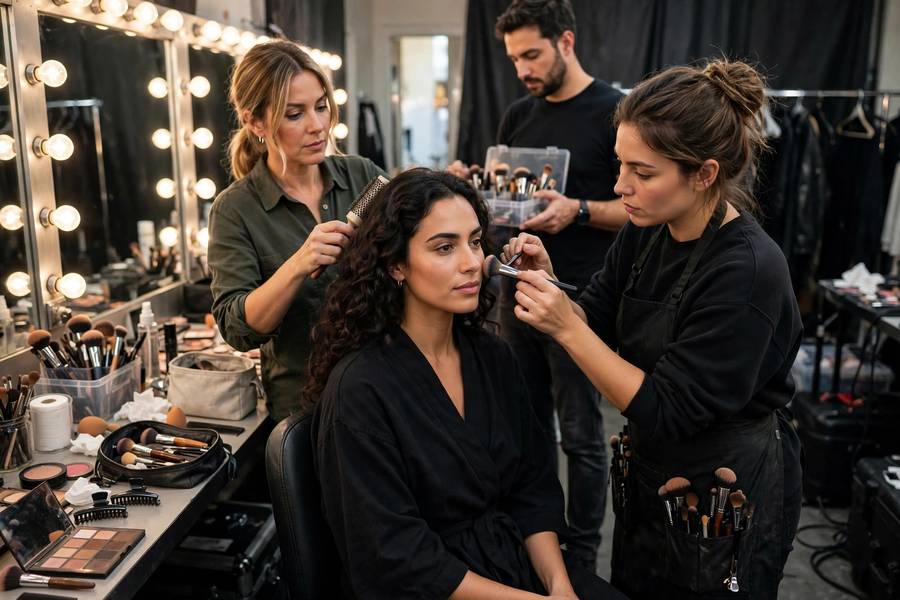
While the stylist handles the clothes, the glam team — hair stylist, makeup artist, sometimes a nail artist — builds the rest of the look. For a major event, glam starts three to four hours before showtime, and it’s as strategic as the styling: the makeup has to photograph under flash, the hair has to survive wind and hours of standing, the nails have to complement the jewelry.
The best glam looks effortless and is anything but. “No-makeup makeup” on a red carpet is typically an hour of work. An “undone” updo is a structural engineering project. And the skincare prep starts weeks out — which is why the celebrities with the best skin are usually the ones with the best facialists, not the best genes. (Genes help. Money helps more.)
The Night Of: The Final Three Hours
Here’s the timeline nobody sees:
T-minus 3 hours: Glam begins. Hair and makeup, simultaneously if the team is large enough. The stylist steams the look one final time.
T-minus 1 hour: The celebrity gets dressed — carefully, with help, often with the tailor on standby for last-minute adjustments. Jewelry goes on last (it’s insured and handled like museum pieces, because it basically is).
T-minus 30 minutes: Final check in full light. Photos for the team. The publicist confirms the arrival time. The car is waiting.
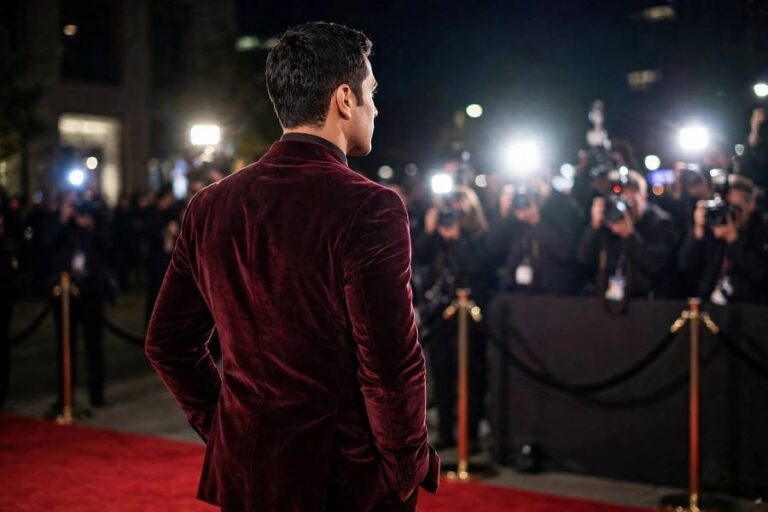
The carpet: Thirty seconds to a few minutes per stop, moving down the line of photographers. Pose, turn, pose. The whole apparatus — weeks of work, dozens of people, hundreds of thousands of dollars — distilled into a walk that takes less time than a coffee order.
After: The after-party look (sometimes a second outfit, sometimes the same), and then the dress goes back to the fashion house. By morning, the internet has rendered its verdict.
The Unwritten Rules
No repeats (for the women, traditionally). Wearing the same gown twice is still a minor scandal for actresses, though the sustainability movement is slowly changing this. Men repeat suits freely — nobody has ever cared.
Don’t upstage the bride — the red carpet version: don’t wear white to someone else’s premiere, don’t out-dress the honoree at their event. The carpet has etiquette, and violations are remembered.
The theme is law (at the Met Gala). Ignore it at your peril. Everywhere else, the only theme is “look expensive and intentional.”
Comfort is a lie everyone agrees to. The shoes hurt. The corsetry constricts. The train is a tripping hazard. Nobody admits it on camera. The pain is part of the performance.
The verdict is instant and permanent. Best-dressed lists publish within hours. Memes within minutes. A look’s legacy is decided before the after-party starts — which is why the preparation is so obsessive. You get one walk. Make it count.
To see the results of all this machinery, the best red carpet looks of all time is the gallery. The press apparatus these looks plug into is explained in what a press tour is. For the interview circuit where the looks get discussed, the best celebrity interviews are essential. And to steal the whole thing for real life, how to dress like a celebrity is your manual.
Frequently Asked Questions
Almost never. Red carpet looks are loaned by fashion houses — pulled from showrooms or created custom for the event — and returned afterward. The house gets global publicity; the celebrity gets couture for the night.
The stylist architects the entire look: requesting loans from fashion houses, planning the season’s fashion narrative, running fittings, coordinating jewelry and accessories, and managing the glam team. Top stylists like Law Roach are among the most powerful figures in fashion.
A custom couture gown can cost tens or hundreds of thousands of dollars to create — but the celebrity doesn’t pay; the fashion house absorbs it as marketing. Add loaned jewelry (often worth millions), glam teams, and tailoring, and a single look represents an enormous investment by everyone except the wearer.
A paid contract between a celebrity and a fashion house (worth millions annually) in which the star wears the house’s designs to major events. It’s why you’ll see certain celebrities in the same designer repeatedly — the “who are you wearing?” answer is often contractual.
Glam (hair and makeup) typically takes 3-4 hours on the day. But the full process — stylist planning, loan requests, fittings, alterations — runs for weeks before a major event, and months for custom couture commissions.