Vegetable Garden Watering Guide: How Much, How Often

Watering looks like the simplest garden task and causes more problems than any other. I have drowned seedlings with kindness, starved tomatoes through a heatwave out of sheer busyness, and given an entire bed of peppers blossom end rot by watering erratically. This vegetable garden watering guide is the routine I wish someone had handed me in year one: how much water vegetables actually need, when to water, how to tell what your soil is doing, and the small habits that prevent the big problems. Water is not just about keeping plants alive; consistent, thoughtful watering is what separates mealy, cracked, bland vegetables from the sweet, crisp ones you brag about. For the complete growing picture, my guide on how to start a garden covers everything around the watering.
How Much Water Do Vegetables Actually Need?
The standard guidance is about one inch of water per week from rain or irrigation, increasing to two inches in hot weather or for heavy feeders. But ‘one inch’ is abstract until you translate it: for a 4×8 bed, one inch of water is roughly 20 gallons. That surprises most beginners, who have been sprinkling a gallon or two and wondering why plants look thirsty. Vegetables need deep, thorough soakings, not daily sprinkles.
A rain gauge is the cheapest watering tool you will ever buy. Place it in an open spot near the garden and check it weekly; you will be surprised how often a ‘good rain’ turns out to be a tenth of an inch that barely wet the mulch. Knowing your actual rainfall turns watering from guesswork into arithmetic.
Different crops have different thirsts. Tomatoes, cucumbers, squash, and peppers are heavy drinkers, especially once fruiting.
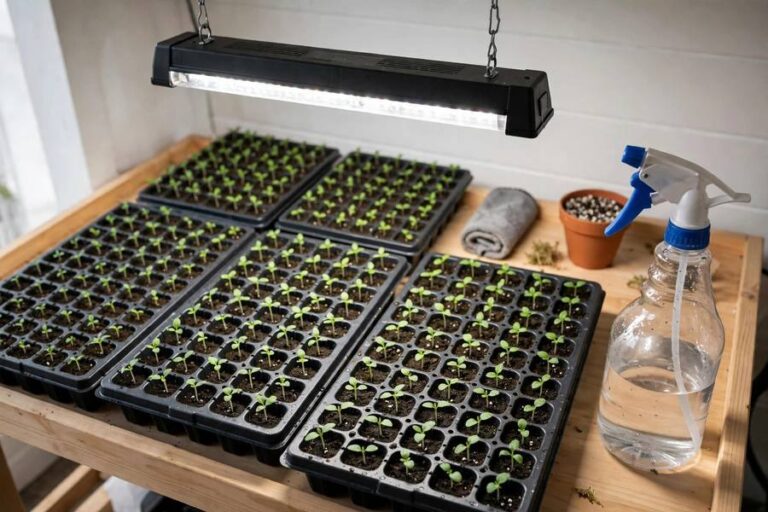
Beans and greens are moderate. Established herbs like rosemary and thyme prefer to dry out between waterings. New transplants and germinating seeds need consistently moist (not soggy) soil until established; this is the one stage where daily attention is truly required. Learn your crops’ needs and you will stop treating the whole garden identically, which is one of the quiet upgrades from beginner to intermediate gardener.When to Water: Morning Wins Every Time
Water in the morning, ideally before 10 a.m. Morning watering gives plants a full tank before the heat of the day, and just as importantly, leaves dry quickly in the rising sun. Wet foliage overnight is an invitation to fungal diseases: the blight that killed my first tomatoes traced directly back to my habit of evening watering. I switched to mornings and my disease problems dropped by more than half.
If mornings are impossible, late afternoon is the second choice, giving leaves time to dry before dark. Avoid watering in the heat of midday; much of it evaporates before reaching roots, and cold water on hot leaves can stress plants. And skip watering when rain is genuinely coming, but verify: a light drizzle that wets the mulch and nothing else does not count as watering. Push past the mulch and check the soil.
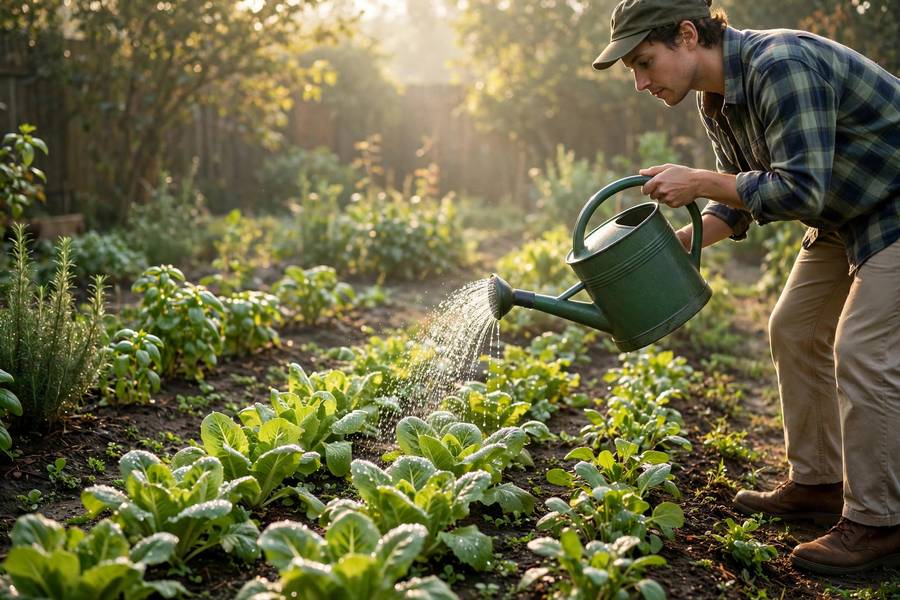
Set a consistent routine rather than watering by memory. I water deeply on the same mornings each week, adjusting for rain and heat. Routine beats inspiration in gardening.
How to Tell What Your Soil Is Doing
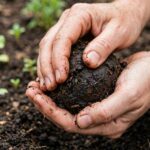
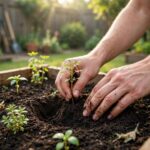
Your finger is the best moisture meter ever made, and it is free. Push it two inches into the soil near (not touching) plant stems. Moist and cool? You are fine. Dry and powdery? Water deeply. Soggy and cold? Back off and let it dry; roots need air as well as water, and waterlogged soil suffocates them. Do this check before every watering decision for a month, and you will develop an instinct that no gadget can replace.
Learn to read your plants too. Wilting in the afternoon heat that recovers by evening is normal heat response, not an emergency; wilting in the cool morning means real water stress. Yellowing lower leaves can mean overwatering just as often as underwatering, which is why the finger test matters more than the plant’s complaint. Mulch changes everything here: two to three inches of straw or shredded leaves keeps soil moisture remarkably even, stretching the time between waterings and buffering against both drought and downpour.
Watering Methods Ranked: From Best to Worst
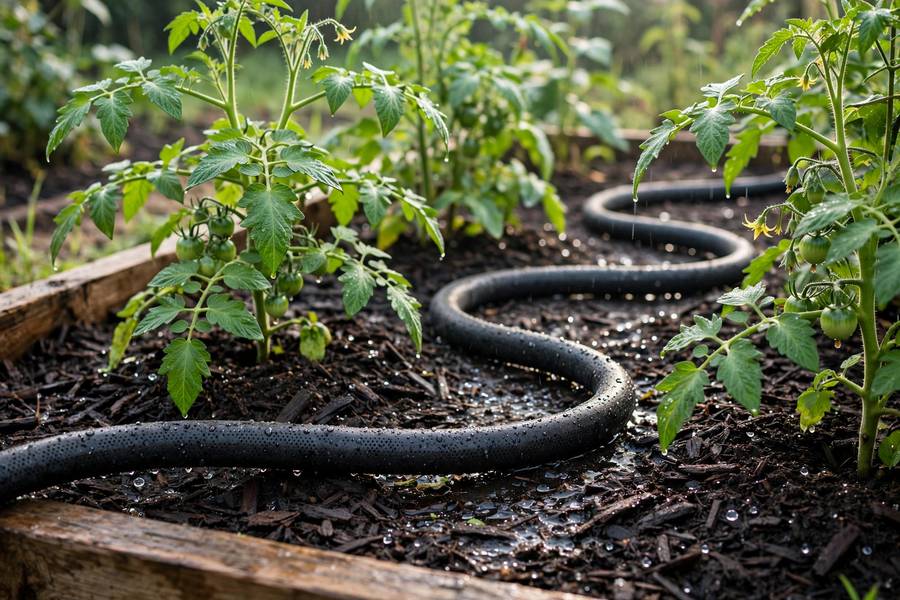
Drip irrigation and soaker hoses are the gold standard. They deliver water slowly to the root zone, keep foliage dry, waste almost nothing to evaporation, and run on a timer while you live your life. A simple soaker hose snaked through a bed under mulch transformed my watering from a daily chore into a twice-weekly check. If you upgrade one thing in your garden, make it this.
A watering can or hose with a gentle nozzle, aimed at the base of plants, is the honest second place and perfectly fine for small gardens. Hand watering keeps you observant; you notice problems while you water. Overhead sprinklers come last for vegetables: they wet the foliage (disease), waste water to evaporation and paths (weeds love sprinkler overspray), and deliver unevenly. If sprinklers are all you have, run them in the early morning and accept the trade-offs.
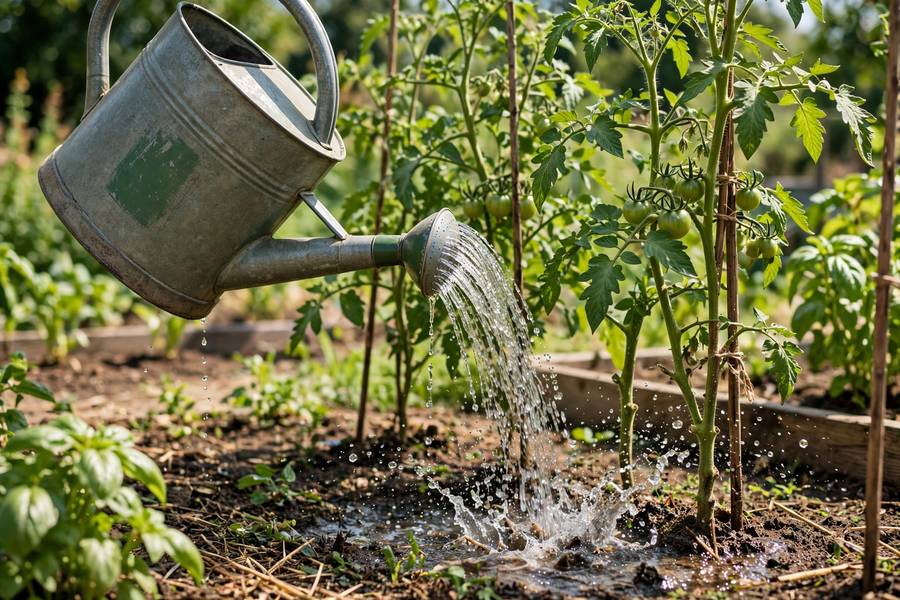
Whatever method you use, water the soil, not the plant. Foliage does not drink; roots do. Every drop that lands on a leaf instead of soil is a drop wasted and a small disease risk taken.
Containers & Raised Beds Need Special Attention
Containers dry out far faster than ground soil. In midsummer, a tomato in a five-gallon pot can need water daily, sometimes twice daily in extreme heat. Check containers every single day in summer with the finger test; they go from fine to crisis in 24 hours. Mulch the pot surface, use the largest pots you can, and consider self-watering planters if you travel. Container growers should read what container gardening is for the full container care picture.
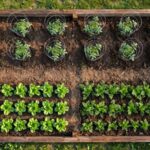
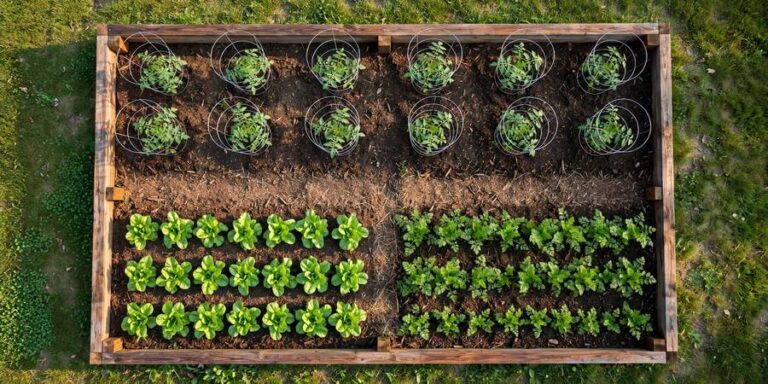
Raised beds sit between containers and ground: they drain better than native soil (good) but dry faster (needs watching). Water raised beds deeply to push moisture down through the full root zone; shallow watering in a raised bed creates shallow roots and thirsty plants. In-ground gardens hold moisture longest but are hardest to fix when overwatered, since excess has nowhere quick to go. Match your method to your setup and check more often than you think necessary in year one.
5 Watering Mistakes That Ruin Harvests
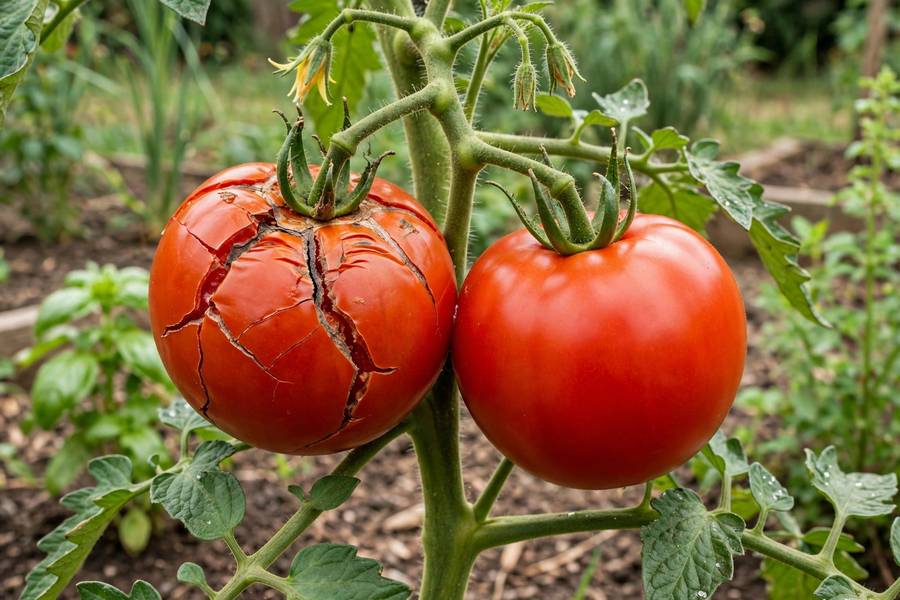
One: daily light sprinkles. This wets the top inch, encourages shallow roots, and wastes water. Water deeply and less often. Two: watering foliage instead of soil, especially in the evening. This is how blight and mildew get started. Three: erratic watering of tomatoes, alternating drought and flood. This causes blossom end rot and cracked fruit; consistency matters more than volume.
Four: ignoring mulch. Bare soil loses moisture fast and crusts over; mulched soil stays evenly moist with half the effort. Five: watering on autopilot without checking soil. Timers and routines are great, but a week of rain means the timer should be off, and a heatwave means it should run longer. Check the soil, then decide. Master these five and your watering will be better than most experienced gardeners’. For the rest of the growing system, my guide on how to start a garden ties it all together.
Deep watering 2-3 times per week suits most in-ground and raised beds, delivering about 1 inch weekly (2 inches in heat). Containers often need daily watering in summer. Always check soil moisture 2 inches down with your finger before watering rather than following a rigid schedule.
Morning is best, ideally before 10 a.m. Plants hydrate before the day’s heat and foliage dries quickly, preventing fungal disease. Evening watering leaves foliage wet overnight, which encourages blight and mildew. Late afternoon is the second choice if mornings are impossible.
Soggy, cold soil, yellowing lower leaves, and wilting despite wet soil all signal overwatering. Push your finger 2 inches into the soil: if it is wet, do not water. Roots need air as well as water, and waterlogged soil suffocates them. Let the top inches dry between deep waterings.
Cracked tomatoes are caused by erratic watering: drought followed by heavy watering makes fruits swell faster than their skins can stretch. Keep soil moisture consistent with deep, regular watering and 2-3 inches of mulch. Water consistently rather than alternating flood and drought.
Yes, significantly more. Containers dry out much faster than ground soil; a tomato in a 5-gallon pot may need daily watering in summer heat, sometimes twice daily. Check containers daily with the finger test, mulch the surface, and use the largest pots practical.