Nobel Prize 2026 Winners List: Navi Pillay, Francis Halzen, Anne Carson and All Six Laureates — and What They Won For


Six prizes, ten laureates, one week in October — from neutrinos caught in Antarctic ice to a jurist who prosecuted war criminals, here is every 2026 Nobel winner and the work that earned it.
The 2026 Nobel Prizes were announced between October 5 and 12: Physics went to Francis Halzen for the IceCube neutrino observatory, Physiology or Medicine went to Karl Deisseroth, Peter Hegemann and Georg Nagel for controlling brain cells with light, Chemistry went to Henri Kagan and Kenso Soai for research on mirror-image molecules, Literature went to Canadian poet Anne Carson, the Peace Prize went to South African jurist Navanethem “Navi” Pillay, and the Economic Sciences prize went to Robert Hall and Michael Woodford. Below is the full list, what each winner actually discovered, and why the committees chose them — based on the official announcement coverage.
| Category | 2026 winner(s) | Announced | Awarded for |
|---|---|---|---|
| Physiology or Medicine | Karl Deisseroth, Peter Hegemann, Georg Nagel | October 5 | Discoveries concerning light-gated ion channels and optogenetics |
| Physics | Francis Halzen | October 6 | Decisive contributions to the IceCube Neutrino Observatory and the discovery of high-energy neutrinos of astrophysical origin |
| Chemistry | Henri B. Kagan, Kenso Soai | October 7 | The discovery of non-linear effects and autocatalysis in asymmetric organic synthesis |
| Literature | Anne Carson | October 8 | A bold and inventive body of work that, in playful dialogue with the classical tradition, has created new forms for contemporary literature |
| Peace | Navanethem “Navi” Pillay | October 9 | Work to ensure that war crimes, crimes against humanity and genocide are prosecuted |
| Economic Sciences | Robert E. Hall, Michael Woodford | October 12 | Microeconomic foundations of macroeconomic stabilisation |
Nobel Prize in Physics 2026: Francis Halzen
The Royal Swedish Academy of Sciences awarded the physics prize to Francis Halzen “for decisive contributions to the IceCube Neutrino Observatory and the discovery of high-energy neutrinos of astrophysical origin.”
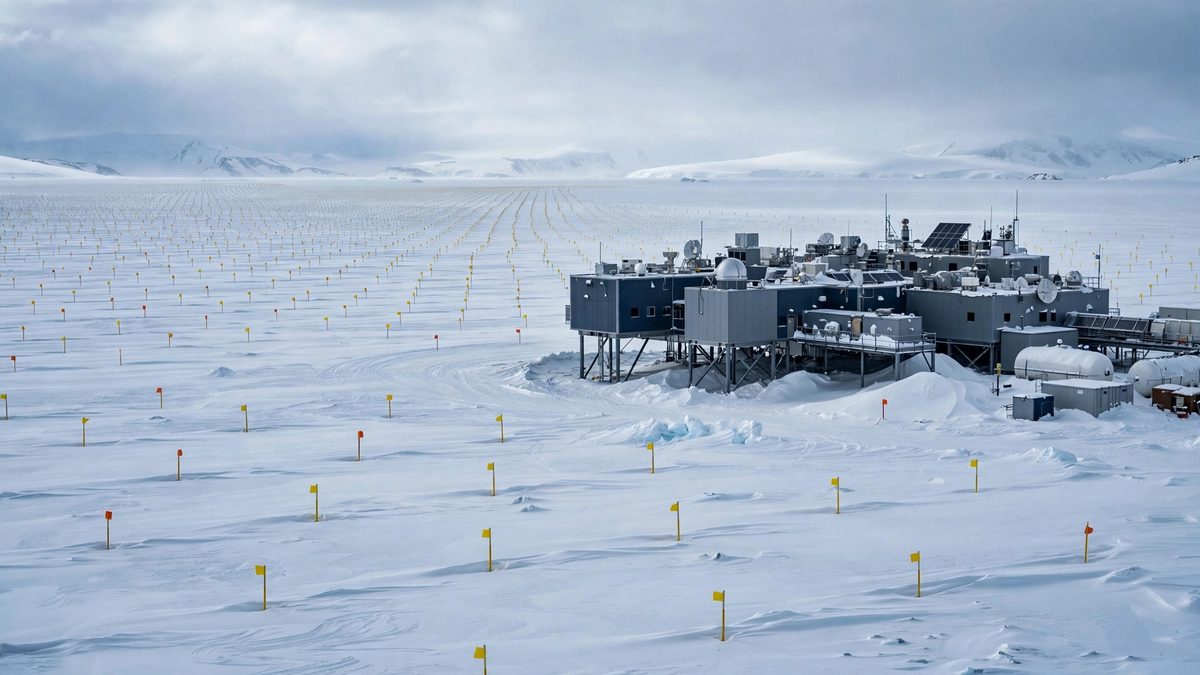
The citation tells the story of one of the most ambitious experiments ever built. IceCube is a particle detector that fills a full cubic kilometre of glacial ice near the South Pole. It is run by more than 450 scientists at 58 institutions in 14 countries.
What are neutrinos? Neutrinos are tiny particles that almost never interact with ordinary matter. They have no electric charge, so they pass through space — and through us — with barely any resistance. The Sun produces them in nuclear reactions, and billions of them stream through your body every second without you ever noticing.
Halzen’s insight, developed in the 1980s, was that these ghost particles could be used to study the most violent objects in the universe. Because neutrinos travel straight from their source without being absorbed or deflected, catching them would be like getting a direct message from black holes and exploding stars.
The problem was scale. Neutrinos interact so rarely that you need an enormous detector to catch even a few. Halzen proposed using a kilometre of Antarctic ice as the detection medium. Construction of IceCube began in 2004 and was completed in 2011. Within two years it had detected 28 high-energy cosmic neutrinos — the first solid proof that these particles reach Earth from beyond our solar system.
Since then the observatory has traced neutrino emission to the galaxies TXS 0506+056 and NGC 1068, and in 2023 it detected neutrinos coming from the Milky Way itself. Neutrinos have now joined visible and invisible light as a working tool for astronomy, and the first data from the IceCube Upgrade is expected this year.
Nobel Prize in Physiology or Medicine 2026: Deisseroth, Hegemann and Nagel
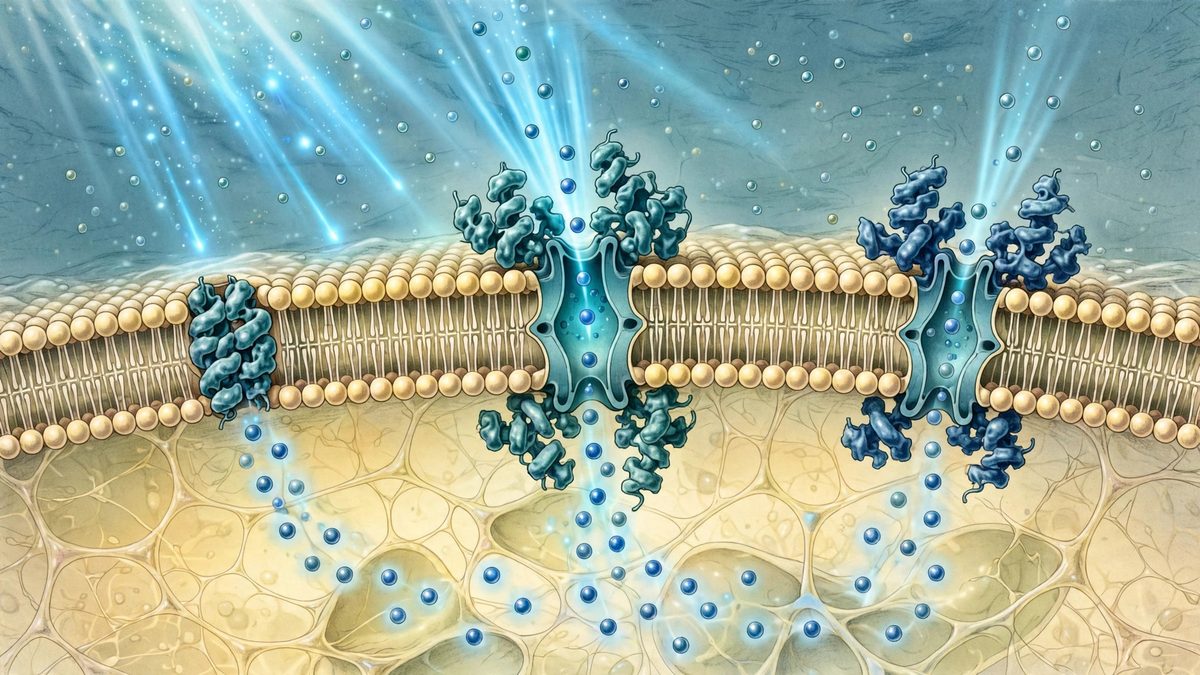
The medicine prize went to Karl Deisseroth, Peter Hegemann and Georg Nagel “for their discoveries concerning light-gated ion channels and optogenetics.”
The research began in the 1990s, when Peter Hegemann was studying a single-celled algae called Chlamydomonas. He noticed that the algae responded to light much faster than the human eye can. He suspected the algae carried a special protein that made this possible. Working with Georg Nagel, he studied two genes that produce light-sensitive proteins.
The researchers then found that these proteins could make other cells respond to light. Karl Deisseroth had the key idea: use one of these proteins in neurons, the cells that carry electrical signals in the brain. When those neurons were exposed to light, they responded and passed signals to nearby cells — proving that scientists could control the activity of brain cells with light.
This technique, optogenetics, is now a standard research tool in neuroscience. Scientists use it to study conditions such as depression, schizophrenia, dementia, anxiety and addiction, and researchers are exploring whether it could help restore vision in people with certain types of blindness.
Nobel Prize in Chemistry 2026: Henri Kagan and Kenso Soai
The chemistry prize went to Henri Kagan of the University of Paris-Saclay and Kenso Soai of the Tokyo University of Science “for the discovery of non-linear effects and autocatalysis in asymmetric organic synthesis” — research on chirality, the property of mirror-image molecules.
What is chirality? Many molecules come in two forms that are mirror images of each other, like a person’s left and right hands. You cannot place one exactly on top of the other. This matters enormously in biology: the amino acids that build proteins are generally left-handed, while the sugars living organisms use are right-handed. Scientists have long wondered how this difference came about.
Kagan made an important discovery in 1986: he showed that chemical reactions could increase the difference between the two forms of a molecule beyond what scientists had expected.
Soai took the research further in a study published in 2003. He showed that even a tiny initial difference between the two forms could grow enormously through repeated chemical reactions. In one example, repeating a reaction three times increased the imbalance between the two forms by 630,000 times.
Nobel Prize in Literature 2026: Anne Carson
The Swedish Academy awarded the literature prize to Canadian poet, essayist and translator Anne Carson “for her bold and inventive oeuvre that, in playful dialogue with the classical tradition, has created new forms for contemporary literature.”
Carson, 76, was born in Toronto and has spent her career moving between ancient Greek and Roman texts and sharply modern forms — translations of Greek poets sit alongside genre-blending works that mix poetry, essay and prose. She is known for drawing on classical themes, modern influences and personal experience in the same book, which is exactly the “playful dialogue” the Academy’s citation describes.
The 2026 Peace Prize, in Brief
The Nobel Peace Prize is awarded in Oslo by the five-member Norwegian Nobel Committee, separately from the science prizes. For 2026, the committee registered 287 candidates — 208 individuals and 79 organisations. The names are kept confidential for 50 years under the Nobel Foundation’s rules.
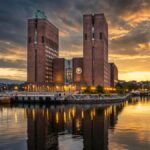
The 2026 Peace Prize went to Navanethem “Navi” Pillay, an 85-year-old South African jurist of Indian Tamil origin — a former UN High Commissioner for Human Rights and a former judge of the International Criminal Court. The committee recognised her role in ensuring that war crimes, crimes against humanity and genocide are prosecuted, the latest chapter in a career that began with defending anti-apartheid activists, including Nelson Mandela. The winner was announced at the Norwegian Nobel Institute in Oslo on October 9, 2026, with the ceremony scheduled for December 10. The prize money for 2026 is 12 million Swedish kronor, raised by 1 million this year as the Nobel Prize marks its 125th anniversary.
The announcement drew unusual global attention when U.S. President Donald Trump publicly expressed his disappointment at not being chosen, saying he deserved the award. Because nominations are sealed for half a century, public claims about who nominated whom cannot be officially verified.
Nobel Prize in Economic Sciences 2026: Robert Hall and Michael Woodford
The final prize of Nobel week went to two American economists: Robert E. Hall of Stanford University and Michael Woodford of Columbia University, “for microeconomic foundations of macroeconomic stabilisation,” according to the Associated Press winners list.
Their work built models of how households and businesses actually make decisions — whether to save or spend, and how expectations about the future shape those choices — giving governments and central banks a firmer theoretical basis for managing downturns, inflation and shocks such as energy crises. The committee noted that the way central banks communicate future policy can itself steer the economy, an idea that sits at the centre of the models central banks now use. The economics prize is the only one not created by Alfred Nobel’s will; it was established by Sweden’s central bank in 1968.
All six sets of laureates receive their medals and diplomas at ceremonies on December 10, the anniversary of Alfred Nobel’s death — in Stockholm for five prizes, and in Oslo for the Peace Prize.
Why These Discoveries Matter
The 2026 science prizes share a theme: they reward tools that let humans perceive what was previously invisible. IceCube gave astronomy a new sense for ghost particles from across the universe. Optogenetics gave neuroscience a switch for the brain’s own circuits. And asymmetric synthesis research gave chemistry a deeper understanding of how molecules — and life itself — get their handedness.
Francis Halzen, principal investigator of the IceCube Neutrino Observatory, “for decisive contributions to the IceCube Neutrino Observatory and the discovery of high-energy neutrinos of astrophysical origin.”
Karl Deisseroth, Peter Hegemann and Georg Nagel, “for their discoveries concerning light-gated ion channels and optogenetics” — the technique of controlling brain cells with light.
Henri Kagan of the University of Paris-Saclay and Kenso Soai of the Tokyo University of Science, “for the discovery of non-linear effects and autocatalysis in asymmetric organic synthesis,” research on mirror-image molecules (chirality).
Navanethem “Navi” Pillay, a South African jurist and former UN human rights chief, recognised for her work to ensure that war crimes, crimes against humanity and genocide are prosecuted.
Anne Carson, a Canadian poet, essayist and translator, “for her bold and inventive oeuvre that, in playful dialogue with the classical tradition, has created new forms for contemporary literature.”
Robert E. Hall of Stanford University and Michael Woodford of Columbia University, “for microeconomic foundations of macroeconomic stabilisation” — models of how households and businesses decide to save, spend and set prices, now used by central banks and governments worldwide.
Optogenetics is a research technique that uses light to control the activity of brain cells. It works by adding light-sensitive proteins (light-gated ion channels) to neurons so they respond to light exposure. Scientists use it to study brain function and conditions such as depression, schizophrenia and addiction.
IceCube is a neutrino observatory built into a cubic kilometre of ice near the South Pole, operated by more than 450 scientists at 58 institutions in 14 countries. It detects neutrinos — nearly massless particles from space — and has traced them to sources including the galaxies TXS 0506+056 and NGC 1068 and the Milky Way itself.