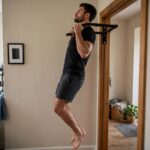
Common Pull-Up Mistakes: 10 Form Errors Killing Your Progress


I’ve watched thousands of pull-up reps — in my gym, in client videos, in competition warm-up areas — and I can diagnose most lifters within three reps. Not because I’m psychic, but because everyone makes the same ten mistakes. The same half reps. The same shrugged shoulders. The same kip that snuck in when the set got hard. These errors are so universal that fixing just two or three of them typically adds 2 to 4 reps to someone’s max within a month, with zero additional strength work.
That’s the part people miss. Your pull-up numbers aren’t just a strength problem — they’re a skill problem. Every wasted rep with bad form is a rep that didn’t train the right muscles in the right positions. Fix the form, and strength you already have suddenly shows up on the bar. Here are the ten mistakes I correct most, in roughly the order I see them.
1. The Half Rep
The most common mistake in the gym, and the most lied-about. The rep starts from a bent-arm hang, the chin sort of approaches the bar, and the counter clicks. I don’t care what your app says — if your chin didn’t clearly clear the bar, it wasn’t a pull-up.
Half reps happen because the top two inches are the hardest part of the movement. Your lats are in a shortened position, your biceps are doing the finishing work, and everything wants to quit. So people unconsciously stop where it’s comfortable. The fix is simple but humbling: lower your rep target and demand chin-over-bar on every single rep. If that drops you from 8 reps to 5, good — those 5 are real, and real reps build real strength. Film yourself from the side once a month; the camera doesn’t accept excuses.
2. Skipping the Dead Hang
At the bottom of every rep, your arms should be straight and your shoulders should be actively pulled down — a dead hang with tension, not a passive dangle. Most people do a weird bent-arm bounce at the bottom, never fully extending, because the dead hang feels like the hardest position. It is. That’s why you need it.
Starting each rep from a full hang does three things: it builds grip endurance, it trains the scapular depression that initiates every good rep, and it stops you from using the stretch reflex to bounce out of the bottom. Yes, your rep count will drop at first. Yes, it’s worth it. If your grip is the thing failing in the hang, that’s diagnostic — it tells you exactly what to train. My pull-up guide breaks down the bottom position in detail if you need a refresher.

3. Shrugging Instead of Depressing
Watch a beginner’s shoulders during a pull-up: they rise toward the ears on every rep. That’s the upper traps taking over for lats that aren’t firing. The correct initiation is the opposite — before your elbows even bend, pull your shoulder blades down and together, like you’re putting them in your back pockets. Your torso should rise an inch or two from the scapular movement alone.
The cue I use with clients: “shoulders away from ears.” If you can’t feel the difference, do scapular pull-ups as a warm-up — hang and practice the depression for 2 sets of 10 before your working sets. Within two weeks the pattern starts carrying over. This single fix resolves more “I can’t feel my lats” complaints than any other cue I know.
4. The Accidental Kip
I’m not anti-kip — it’s a legitimate CrossFit skill. I’m anti the thing most people do, which is a strict pull-up for reps 1 through 3 and then an increasingly desperate full-body spasm for reps 4 through whatever. The legs start swinging, the hips drive, and suddenly it’s not a pull-up anymore, it’s a convulsion with a bar involved.
The accidental kip is your body trying to help weak muscles by recruiting momentum. The honest response is to end the set when your strict form breaks. Do 4 perfect reps instead of 7 ugly ones. If you want to kip, learn it deliberately as its own skill with proper coaching — don’t let it leak into your strict work. Strict strength first, always. For building the raw pulling foundation, my best back workouts will give your lats the direct work they need.
5. Craning the Neck Over the Bar
To get the chin “over” the bar, people throw their head back and crane their neck forward like a tortoise. Congratulations, your chin cleared — and your cervical spine just took a load it was never designed for. The chin-over-bar standard is about torso height, not neck gymnastics.
Fix it by keeping a neutral neck — eyes forward or slightly up, chin tucked just slightly. Think about bringing your upper chest to the bar rather than your chin over it. If you can’t get there without the neck crane, you can’t get there yet, and that’s fine. Eccentrics and holds at the top will build the last two inches honestly. A sore neck after pull-ups is a form problem, not a badge of honor.
6. Wrong Grip Width and Type
Two grip errors I see constantly. First, gripping too wide — hands at the very ends of the bar because someone heard “wide grip builds wide lats.” Excessively wide grips shorten the range of motion and beat up the shoulders; slightly wider than shoulder-width is the sweet spot for most people. Second, the thumbless “suicide grip,” which reduces forearm engagement and, on a sweaty bar, is exactly as sketchy as it sounds. Wrap your thumbs.
Also: if your goal is pull-up numbers and you’re only using a pronated (overhand) grip, add neutral-grip reps. Neutral grip is easier on the elbows and lets most people do 1 to 2 more reps, which means more volume, which means faster progress. Grip variety isn’t cheating — it’s smart programming.

7. Swinging Between Reps
Each rep should start from stillness. But most sets turn into a pendulum — the body swings forward at the bottom, and the lifter times the next pull to the swing’s return, stealing momentum. It usually starts around rep 4 when fatigue sets in.
The fix: pause. A full one-second pause in the dead hang between reps kills the swing and forces every rep to start from zero. Your numbers will drop. Your lats will grow. That’s the trade, and it’s always worth making. If you’re training for a fitness test that counts reps and doesn’t care about swings — that’s a different conversation, and you should train specifically for that test’s standards. But for building strength, stillness between reps is non-negotiable.
8. Dropping Instead of Lowering
The lowering phase — the eccentric — is where a huge amount of strength is built, and most people skip it entirely by dropping from the top like the rep is over. It’s not over. A controlled 2 to 3 second lower on every rep roughly doubles the time under tension of your set, and eccentric strength transfers directly to concentric strength.
I program the lowering as deliberately as the pull: “take three seconds down.” Clients hate it for about a week, then their numbers climb. If you’re doing weighted pull-ups, the controlled eccentric matters even more — dropping 45 extra pounds from the top is how elbows get angry. Own the way down.
9. Holding Your Breath (Wrong)
There’s a right way and a wrong way to hold your breath. The right way: big breath at the bottom, brace hard, pull, exhale as you lower. The wrong way — which I see constantly — is holding the breath through the entire set until the face turns purple and the last reps get dizzy and sloppy. Or the opposite: panting rapidly with zero brace, so the core contributes nothing.
For sets under 5 reps, one breath per rep works: inhale and brace at the hang, pull, exhale on the way down. For higher-rep sets, breathe at the bottom of each rep — quick inhale in the hang, brace, pull. Never sacrifice the brace for the breath. A braced core is what keeps your body rigid; a rigid body is what lets your lats do their job instead of fighting a swinging torso.
10. Training Them Like Cardio
The last mistake isn’t form — it’s programming. Most people train pull-ups in one of two useless ways: maxing out every session (3 sets to failure, 3 times a week, wondering why they stall and their elbows hurt), or doing them as an afterthought at the end of arm day when they’re already fried.
Pull-ups are a heavy compound lift. Train them like one: fresh, early in the session, with planned sets, reps, and rest — 3 to 5 sets of 5 to 8 reps with 2 to 3 minutes rest builds strength. To-failure sets have a place, but not every session. And they need recovery like any heavy lift; hammering them daily is how you get elbow tendinopathy, not more reps. If you’re new to structured strength work, my beginner’s lifting guide covers the programming principles that apply here.

The 4-Week Fix Plan
Don’t try to fix all ten at once. Here’s the order I’d address them:
Week 1: Film your max set from the side. Count only full reps — dead hang to chin over. That’s your honest baseline. Now cut your working sets to 60 percent of that number and do every rep with a 1-second pause at the bottom and a 3-second lower.
Week 2: Add the scapular cue. Two sets of scapular pull-ups before your work sets, and “shoulders away from ears” as your initiation cue on every rep.
Week 3: Fix the top. No neck craning — chest to bar, neutral neck. Add one set of flexed-arm hangs (top position holds) at the end of each session.
Week 4: Retest your max with strict standards. Almost everyone I put through this adds reps — not because they got dramatically stronger in four weeks, but because they stopped leaking strength through bad positions. That’s free progress, and it’s the easiest progress you’ll ever make.
Frequently Asked Questions
The most common causes are shrugging instead of depressing the shoulder blades, gripping too wide, and kipping before you have strict strength. Fix your scapular initiation first — pull the shoulders down before bending the elbows — and narrow your grip to just outside shoulder width. If pain persists beyond form fixes, back off volume and see a professional; don’t train through sharp shoulder pain.
Yes, for strict strength training. A full dead hang with active shoulders at the bottom of each rep builds grip, trains scapular control, and prevents bouncing. It will reduce your rep count at first, but the reps you do will build more strength. The only exception is sport-specific training where the rules reward continuous motion.
Kipping isn’t cheating if it’s a deliberate, trained skill for CrossFit competition — it’s a different movement with different demands. It becomes a problem when it leaks into strict training unintentionally, because then you’re neither building strict strength nor practicing the kip well. Build a strict foundation first, then learn the kip separately if your sport requires it.
Almost always because the arms and upper traps are doing the work the lats should do. Fix the initiation: depress your shoulder blades before bending your elbows, and think about driving your elbows down to your ribs rather than pulling your chin up. Scapular pull-ups as a warm-up and a slightly narrower grip usually solve this within two weeks.
Pause for a full second in the dead hang between every rep — stillness kills momentum. Also brace your core hard and squeeze your glutes; a rigid body doesn’t swing. If the swing starts mid-set, that’s fatigue telling you the set is over. End it there rather than collecting sloppy reps.
Film yourself, pick the two mistakes that match what you see, and fix those first. Strength you already have is hiding behind bad positions — go collect it.