How to Do Your First Pull-Up: A 6-Week Beginner Plan

Your first pull-up is the hardest single rep in all of strength training. I don’t say that for drama — I say it because the gap between zero and one is bigger than the gap between one and ten. It requires a base of grip strength, scapular control, and pulling power that most untrained people simply don’t have, and there’s no shortcut around building it. But here’s the good news: the path from zero to one is completely mapped. I’ve walked dozens of people down it. Follow the plan below for six weeks and you’ll have a real shot — most of my clients get there in 6 to 10.
This isn’t motivation. It’s a program: exact exercises, sets, reps, and benchmarks, in the order that works. Do the work, hit the benchmarks, and the bar will come to you.
The Honest Reality Check
Let’s set expectations. If you’re starting from zero — can’t hang for 20 seconds, never done a row — six weeks is ambitious but doable if you train three times a week and your bodyweight is reasonable. If you’re carrying significant extra weight, add a few weeks; every pound matters in a bodyweight movement, and that’s physics, not judgment. If you can already do 8 to 10 inverted rows and hang for 30 seconds, you might get there in three to four weeks.
What won’t work: trying a max pull-up attempt every day hoping today is the day. That’s not training, it’s lottery tickets. What will work: systematically building each component — grip, scapular initiation, pulling strength, and the top position — until the full movement assembles itself. Think of it like building a bridge from both sides. When the two sides meet, you have a pull-up.
Commit to three 30-minute sessions per week for six weeks. That’s nine hours total. I’ve never had a client follow this plan honestly and not get their rep.
Prerequisites: What Your Body Needs First
Before week one, test yourself on three benchmarks. These tell us your starting point:
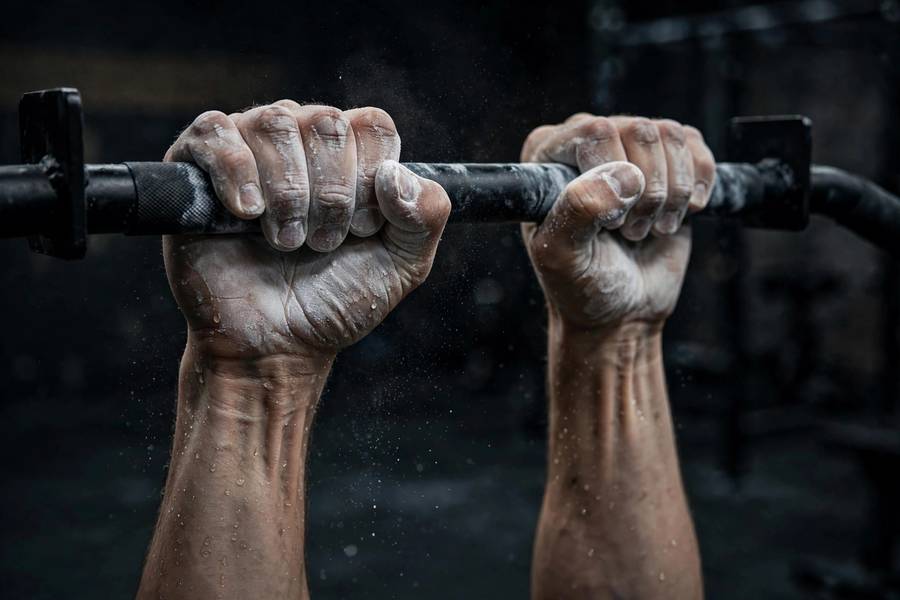
Dead hang: Hang from the bar with straight arms. Can you hold 20 seconds? If not, grip is your first project — and it’s the most common bottleneck I see. Everything else waits until you can hang.
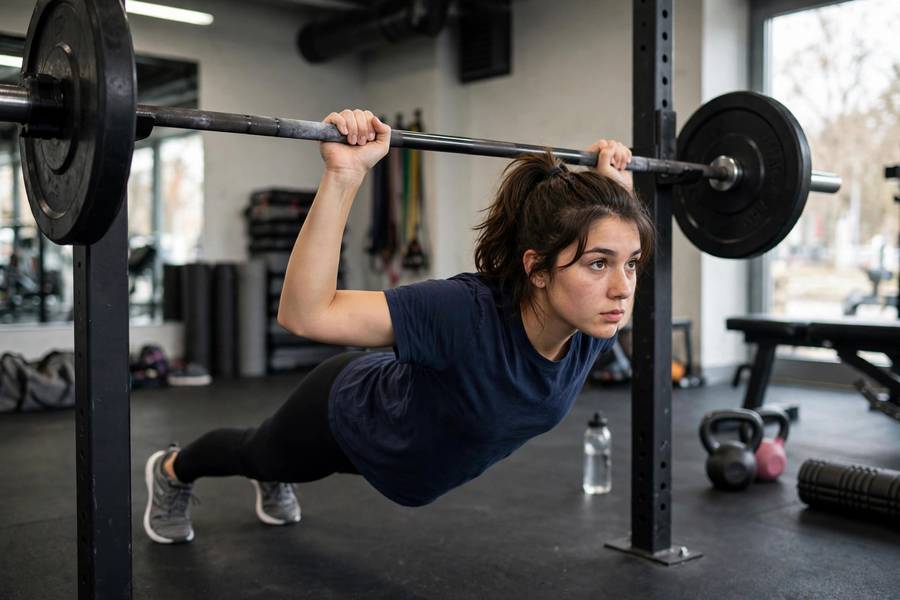
Inverted row: Under a low bar or sturdy table, body straight, pull your chest to the bar. Can you do 5 with good form? This tells me whether your pulling muscles have a base to build on.
Bodyweight reality: Step on a scale. I’m not going to give you a target weight — but understand the math: at 250 pounds you need roughly 50 percent more pulling strength than at 170. If fat loss is part of your bigger picture, it directly shortens this timeline.
Whatever your starting point, the plan adapts. But be honest about it — programming for where you wish you were is how people waste months. If you’re brand new to structured training altogether, my beginner workout routines guide will get your general base sorted alongside this plan.
Phase 1 (Weeks 1–2): Grip and Hanging
Goal: own the bar. Every session starts with hanging work, because if you can’t hold the bar, nothing else matters.
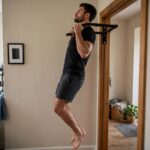
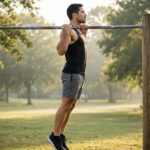
Dead hangs: 4 sets of max hold, resting 90 seconds between. When you can hold 30 seconds on your first set, you’re ready for phase 2’s hanging work. Hang with shoulders actively pulled down — not a passive shoulder-shrug dangle. This active hang is already teaching the bottom of your pull-up.
Scapular pull-ups: 3 sets of 8. Hang and pull your shoulder blades down and together without bending your elbows, lifting your body two inches. This is the initiation of your future pull-up. Most people have never felt their lower traps work — you will now.
Inverted rows: 4 sets of 8 to 12. Set the bar at a height where the last two reps are challenging. Body rigid as a plank — hips sagging means the set is over. These build the lat and upper-back strength that will eventually move your bodyweight.
Farmer’s carries (optional but excellent): Grab the heaviest dumbbells you can hold and walk for 40 seconds. Two to three sets. Grip strength transfers directly to hang time, and carries build it fast.
End of week 2 benchmark: 30-second dead hang, 10 clean inverted rows, 10 crisp scapular pulls. Hit all three and you move on. Miss one and you repeat the week — there’s no penalty for building a deeper foundation.
Phase 2 (Weeks 3–4): Building the Pull
Goal: develop the actual pulling strength through the full range. We keep the hangs and add the two most effective first-pull-up builders I know.
Eccentric pull-ups (negatives): 5 sets of 3. Jump or step up so your chin is over the bar, then lower yourself over a full 5 seconds. This is the money exercise — you’re stronger lowering than lifting, so negatives let you train the full movement with supramaximal control. When the lowering gets faster than 3 seconds, the set is done. Rest 2 minutes between sets; these are neurologically demanding.
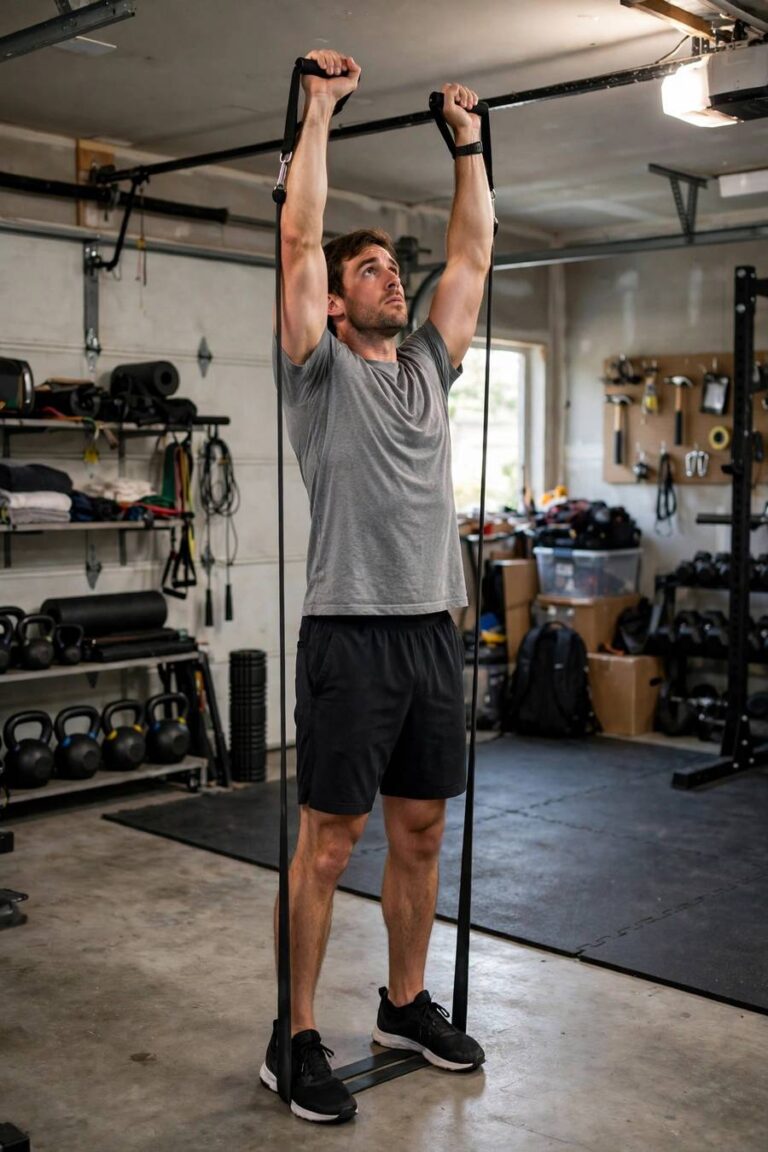
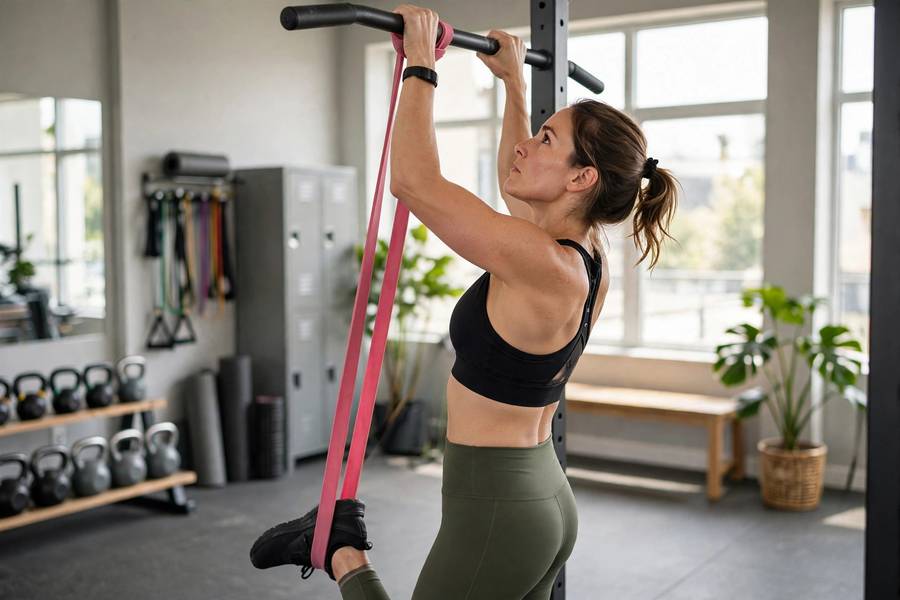
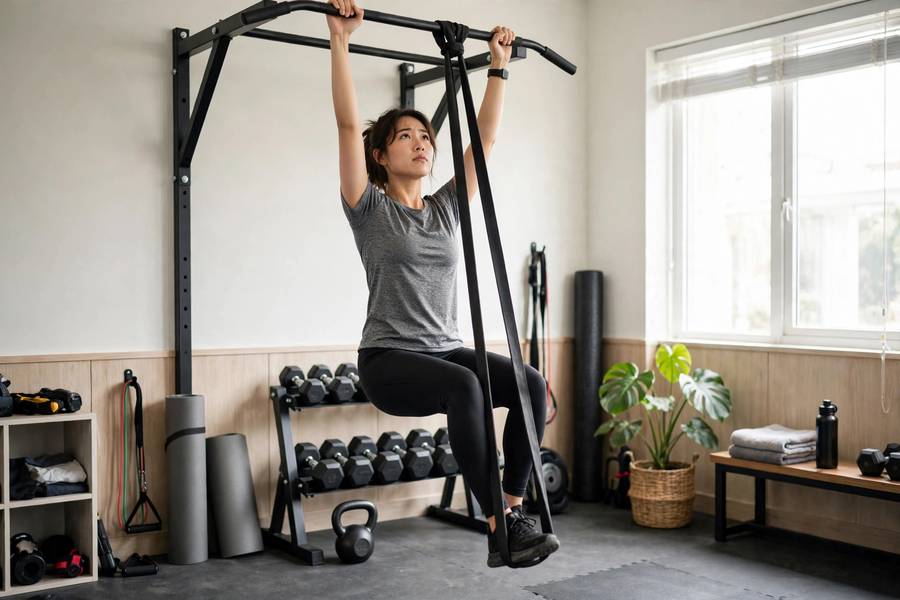
Band-assisted pull-ups: 4 sets of 5 to 6 with the thinnest band that makes it possible. One knee in the band, full dead hang at the bottom of every rep, chin over at the top. The band is teaching your nervous system the complete movement pattern under reduced load. Every week, try the next thinner band for at least one set.
Inverted rows (harder): 3 sets of 10 to 12 with your body more horizontal — feet elevated on a bench if you can. We’re chasing strength now, not just pattern.
Dead hangs: Keep them — 3 sets of max hold at the end. Grip keeps improving in the background.
End of week 4 benchmark: 5-second controlled negative, 5 band-assisted reps with a light band, 45-second hang. The pull-up is getting close now. You can probably feel it — the top position is familiar, the bottom is strong, and the middle is the only stranger left.
Phase 3 (Weeks 5–6): Bridging the Gap
Goal: convert assisted strength into one unassisted rep. This is where the programming gets specific.
Top-half pull-ups: Start from a dead hang, but place a box or bench under the bar so you start with elbows already bent at 90 degrees — the top half of the movement. Pull from there to chin-over-bar: 5 sets of 3. This trains the finishing strength where most first attempts die.
Heavy negatives: 4 sets of 2 with an 8-second lowering. Yes, 8 seconds. These should feel brutally hard — that’s the point. You’re overloading the exact muscles beyond what your concentric strength can handle, which drags your concentric strength upward.
Band-assisted, minimal band: 3 sets of 3 with the thinnest band you own. If you can do these easily, try one set with no band at the start of the session when you’re freshest.
Flexed-arm hangs: 3 sets of max hold at the top position. This builds comfort and strength in the exact position where your chin needs to be. When you can hold 20 seconds here, your first rep is very close.
During these two weeks, attempt one real pull-up at the start of each session — just one, when you’re fresh. Don’t grind out five failed attempts; one honest try, then move on to the programmed work. The day it happens, it’ll surprise you. It always does.
Test Day: Getting the Rep
End of week 6 (or whenever you feel ready): warm up thoroughly — hangs, scapular pulls, a few easy band-assisted reps — then rest 5 minutes. Chalk your hands if you have it. Grip the bar slightly wider than shoulders, take a big breath, pull your shoulders down, and pull like you mean it. Drive your elbows to your ribs. Don’t think about the chin — think about getting your chest to the bar, and the chin follows.
If you get it: celebrate, rest 5 minutes, and try one more to confirm it wasn’t a fluke. Then stop — don’t turn test day into a max-out session. If you don’t get it: you’re probably within 2 to 3 weeks. Repeat phase 3, keep the faith, and retest. The most common reason for a near-miss is the last two inches — add an extra set of top-half pull-ups and flexed-arm hangs, and it’ll come.
For the complete technical reference on what a perfect rep looks like, keep my pull-up form guide bookmarked — now that you can do the movement, refining it is the next project.
After Your First: What Next
One rep is a milestone, not a program. Here’s what the next 8 weeks look like:
Weeks 1–2 after: Do singles. One perfect rep, rest 3 minutes, repeat 5 times, three days a week. You’re grooving the pattern, not building fatigue.
Weeks 3–4: Start pairing: 2 reps, rest, repeat. When doubles feel solid, you’re building real capacity.
Weeks 5–8: Follow a simple linear plan — 5 sets of 50 to 60 percent of your max reps, three days a week, adding one rep per week. This is where 1 becomes 5, and 5 is where pull-ups start feeling like a real exercise instead of a party trick.
Resist the urge to test your max weekly. Test every 6 weeks. And start thinking about the supporting work — push-ups for balanced upper-body development, band work for assistance and warm-ups. A pull-up is the entry ticket; balanced strength is the destination.
Frequently Asked Questions
Most beginners get their first strict pull-up in 6 to 12 weeks training 3 days per week. Your starting point matters most — if you can already hang for 30 seconds and do 10 inverted rows, expect 4 to 6 weeks. If you’re starting from zero grip strength or carrying significant extra weight, plan for 10 to 16 weeks. Consistency beats intensity here.
Yes, but be realistic about the timeline — every extra pound is a pound you must lift, so it takes longer. The program still works: build grip, rows, and eccentrics while working on body composition in parallel. Many of my heavier clients get their first rep during a fat-loss phase, when strength is maintained and bodyweight drops. Both sides of the equation help.
Yes — chin-ups (underhand grip) recruit the biceps more, so most people can do a chin-up before a pull-up. There’s no shame in getting your first chin-up first; the strength transfers heavily. But if your goal is specifically a pull-up, train the pull-up pattern — the overhand grip and wider hand position change the mechanics enough that you should practice what you’re testing.
The program is the same — hangs, rows, eccentrics, band-assisted work. The timeline is often longer because women typically start with less upper-body muscle mass relative to bodyweight, so expect 10 to 16 weeks rather than 6 to 10. The process works identically; patience with the timeline is the only adjustment needed.
You need a bar and something low to row under — that’s it. A doorway pull-up bar plus a sturdy table for inverted rows covers the entire program. Bands help but aren’t mandatory. The whole six-week plan can be done at home with under $50 of equipment.
Three sessions a week, six weeks, honest benchmarks. The bar is waiting — go earn that first rep.