Single-Leg Exercises for Runners: Balance, Power, Injury-Proofing

Running is a single-leg sport. Every stride is a tiny single-leg squat, repeated thousands of times. Yet most runners train both legs together in the gym and wonder why imbalances persist. I test every runner I coach for left-right strength differences, and almost everyone has one. The fix is single-leg training.
Here are my eight essential single-leg exercises, why unilateral work transfers to running better than bilateral lifts, and how to find and fix your own imbalances. This is a core pillar of our strength training for runners approach.
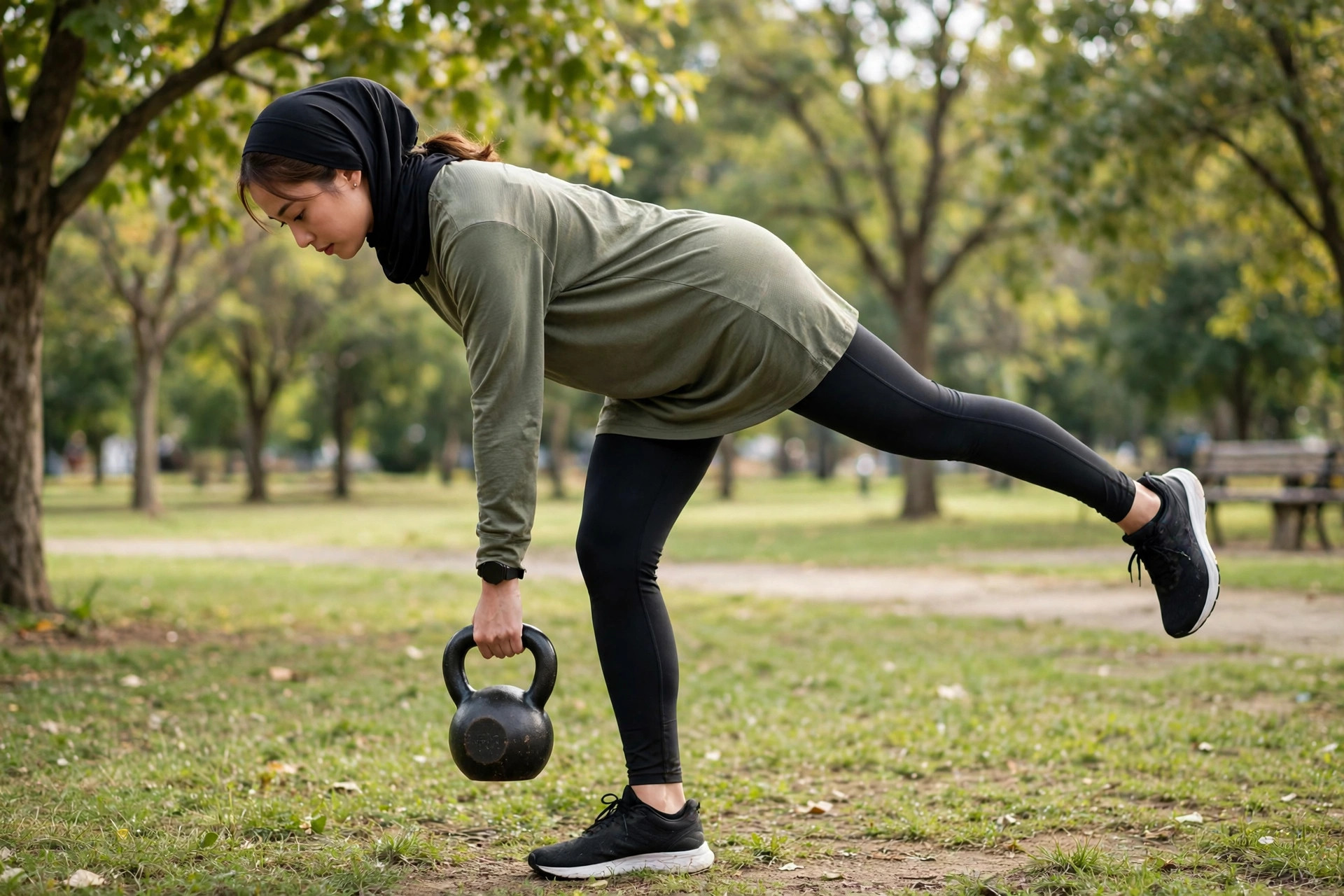
Why Single-Leg Training Beats Bilateral for Runners
When you squat with both legs, your stronger leg quietly does more work. The imbalance hides. Single-leg exercises expose it instantly: if your left Bulgarian split squat is dramatically weaker than your right, you have found the reason behind that recurring left knee ache.
Beyond exposing imbalances, unilateral training matches running mechanics. You never push with two legs when you run, so training one leg at a time builds strength in the exact pattern you use. It also trains balance and pelvic stability simultaneously, which bilateral lifts barely touch. For runners, single-leg work is not an accessory; it is the main event.
How to Find Your Imbalances
Test yourself with three exercises: Bulgarian split squat, single-leg calf raise, and single-leg glute bridge. Do as many clean reps as possible per leg and compare. A difference of more than 10 to 15 percent is significant and worth addressing.
I also film runners doing single-leg squats from the front. If the knee collapses inward or the hips drop on one side, that is a stability imbalance, not just a strength one. Test quarterly. The numbers tell you exactly where to focus, which beats guessing every time.
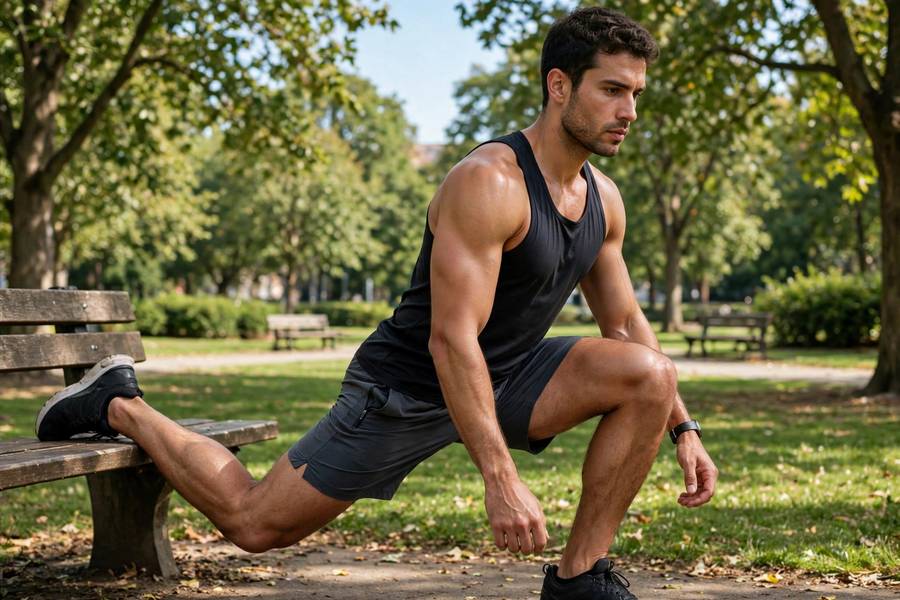
1. Bulgarian Split Squat
The king of single-leg exercises. Rear foot elevated on a bench or chair, lower the front thigh to parallel, drive up through the heel. Three sets of 8 to 10 per leg, starting bodyweight and adding dumbbells.
The coaching points I repeat endlessly: torso tall, front knee tracking over the toes, and the rep starts from the glute, not the quad. Always start with your weaker leg and match reps on the stronger side. This one exercise fixes more runner problems than any other in my program.
2. Single-Leg Romanian Deadlift
Stand on one leg, hinge at the hips with a dumbbell in the opposite hand, lower until you feel the hamstring stretch, drive back up. Three sets of 8 per leg. This trains hamstring strength, ankle stability, and balance in one movement.
The wobble is the point. Your foot and ankle stabilizers work overtime, which is exactly what they do during every stride. Touch a wall lightly for balance at first, then wean off it. I consider the day a runner can do these cleanly with 16 kilos the day their hamstring injury risk drops meaningfully.

3. Step-Up
Drive up onto a knee-high box with one leg, stand tall, lower with control. Three sets of 10 per leg. The step-up is the most running-specific power exercise: it mimics the knee drive and single-leg push-off of the stride.
Do not push off the trailing foot; that is cheating and everyone does it at first. Drive through the heel of the working leg and control the descent for two seconds. Add dumbbells when bodyweight gets easy. Hill runners swear by these, and they are right.
4. Single-Leg Calf Raise
Off a step, one leg, full range: stretch deep at the bottom, rise high at the top, two-second pause. Three sets of 12 to 15 per leg. Then repeat with a bent knee to hit the soleus: 3 sets of 15 per leg.
Calves are the most undertrained muscle in running, which is absurd given the load they carry. Single-leg calf work also reveals Achilles vulnerabilities early. If one side fatigues dramatically faster, you have found tomorrow’s injury today. Fix it now with patient, progressive loading.
5. Pistol Squat Progression
The pistol squat, a full single-leg squat to the floor, is the advanced standard. Almost no runner can do one at first, and that is fine. Progress through assisted versions: holding a doorframe, sitting to a low box, then full range over months.
I program 3 sets of 5 per leg once runners have the mobility. The pistol demands ankle mobility, quad strength, and balance simultaneously, which makes it a brilliant diagnostic tool. Where you fail tells you what to fix: falling backward means ankle mobility, collapsing knee means glute medius weakness.
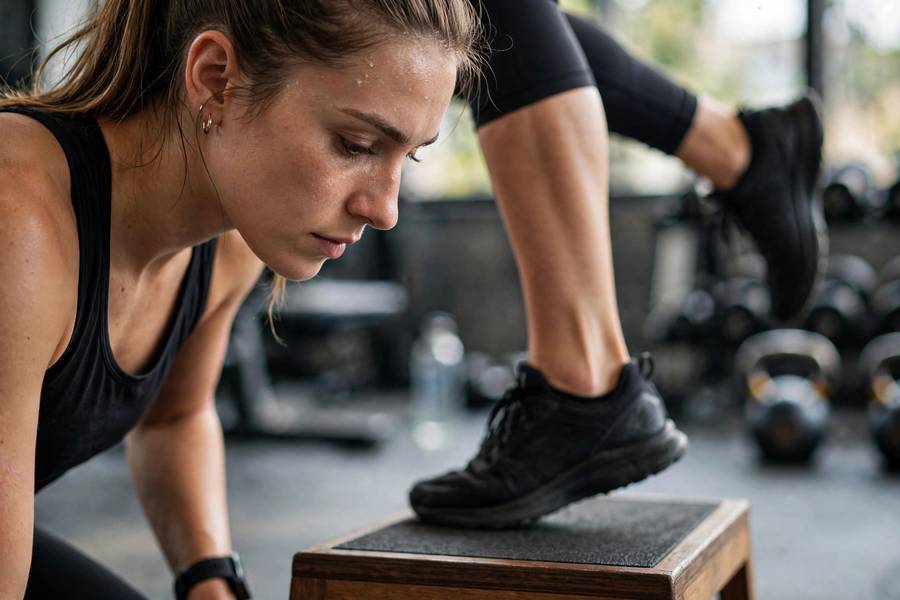
6-8. Lateral Step-Up, Curtsy Lunge, Single-Leg Glute Bridge
The lateral step-up trains side-to-side stability runners never develop: step sideways onto a box, 3 sets of 10 per leg. The curtsy lunge loads the glute medius in a diagonal pattern: 3 sets of 10 per leg, keeping the front knee stable.
The single-leg glute bridge is pure activation: 3 sets of 12 per leg, squeezing hard at the top. I use these three as the accessory circuit after the big movements. They target the stabilizers that keep knees tracking straight and pelvises level, and they take ten minutes.
Programming Single-Leg Work Into Your Week
Dedicate one of your two weekly sessions to single-leg emphasis: Bulgarian split squats, single-leg deadlifts, step-ups, and calf raises. The other session can include bilateral work like hip thrusts plus upper body. Always train the weaker leg first and never do more reps on the strong side.
Expect the balance challenge to limit you before strength does at first. That is normal and desirable: the stabilizers adapt quickly, usually within three to four weeks. Pair this with the core stability routine for runners, because single-leg strength without trunk stability is only half the fix. The complete integration is mapped in our runner strength training guide.
Single-Leg Plyometrics for Advanced Runners
Once your single-leg strength base is solid, plyometrics add the elastic power that makes fast running feel springy. Start with single-leg hops in place: 3 sets of 10 per leg, landing soft and quiet. Progress to forward hops, then lateral hops, then box jumps landing on one leg.
The rules are strict: only on fresh legs, never after hard runs, and stop if landings get sloppy. Plyometrics on fatigued stabilizers is how ankles get hurt. I program them once weekly in base phase for advanced runners, 10 minutes max. The return is real: improved running economy and a more powerful push-off.
Not everyone needs them. If you are injury-prone, new to strength work, or in peak race season, skip plyometrics entirely. They are the cherry on top, not the cake. Build the strength base first with the exercises in this guide; add bounce only when the foundation is unshakeable.
Fixing Imbalances: The 6-Week Correction Plan
Found a meaningful left-right difference? Here is the fix. For six weeks, start every unilateral exercise with the weaker leg and do one extra set on that side. If the weak leg manages 8 reps, the strong leg does 8 too, never more. You are bringing the weak side up, not pushing the strong side further.
Add one dedicated weak-side session per week: 15 minutes of single-leg work for the lagging side only. It feels strange and it works fast. Most imbalances I assess correct substantially within six weeks because the weak side is usually just undertrained, not damaged.
Retest at week six with the same assessments. If the gap closed below 10 percent, return to balanced programming. If it persists, look deeper: old injuries, mobility restrictions, or movement patterns may need attention. But for most runners, six weeks of biased training evens things out, and the recurring one-sided niggles fade with the imbalance.
Running is a single-leg activity, so unilateral training matches the sport’s mechanics, exposes left-right imbalances that bilateral lifts hide, and builds balance and pelvic stability simultaneously.
The Bulgarian split squat: it builds quad and glute strength in a running-specific stance and immediately reveals strength imbalances between legs.
Test single-leg exercises per side: if one leg manages 10-15% fewer clean reps in Bulgarian split squats, calf raises, or glute bridges, you have a meaningful imbalance to address.
Include them in both weekly strength sessions, with one session emphasizing unilateral work. Always start with the weaker leg and match volume on the stronger side.
For most runners, yes. Single-leg work transfers better to running mechanics and carries lower spinal loading. Bilateral lifts are optional, not essential, for runners.