Buttercream vs Fondant in Hot Weather: What Holds Up?

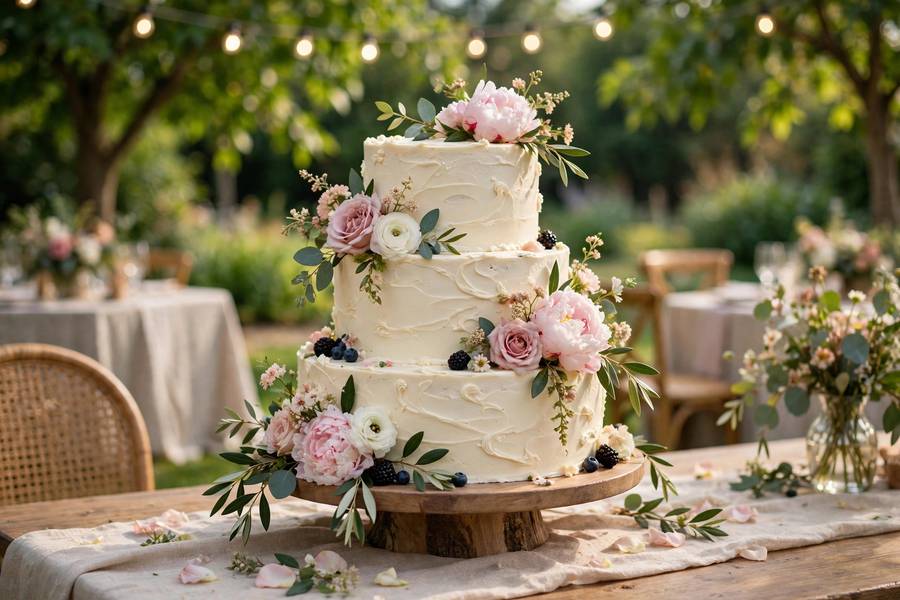
Summer wedding + wedding cake = a structural engineering problem. Heat melts frosting, humidity warps decorations, and a cake that looked perfect at noon can look tragic by 4pm. If you’re marrying in hot weather, your frosting choice isn’t about taste or looks — it’s about survival. Here’s the complete guide.
The Heat Problem
Wedding cakes face three heat enemies: temperature (direct sun, hot rooms), humidity (moisture softens everything), and time (cakes often sit displayed for 4–6 hours). A frosting that survives 2 hours in air conditioning might not survive 4 hours on a sunny terrace.
The danger zone: above 75°F (24°C), buttercream starts softening. Above 85°F (29°C), it’s in real trouble. Fondant tolerates heat better but has its own humidity issues. Understanding the specifics helps you (and your baker) plan.
Buttercream in Heat: The Risks
American buttercream (butter + powdered sugar): softens around 75°F, melts around 85–90°F. It’s the most heat-vulnerable. Swiss/Italian meringue buttercream (more stable): holds to about 80–85°F thanks to the cooked meringue base. Cream cheese frosting: the worst in heat — softens fast and has food safety concerns above 70°F for extended periods.
What failure looks like: bulging sides, sliding tiers, melting decorations, shiny/oily surface, and in worst cases, structural collapse. It’s not just ugly — it’s a food safety issue if dairy-based frostings sit too long in heat.
Fondant in Heat: The Advantages
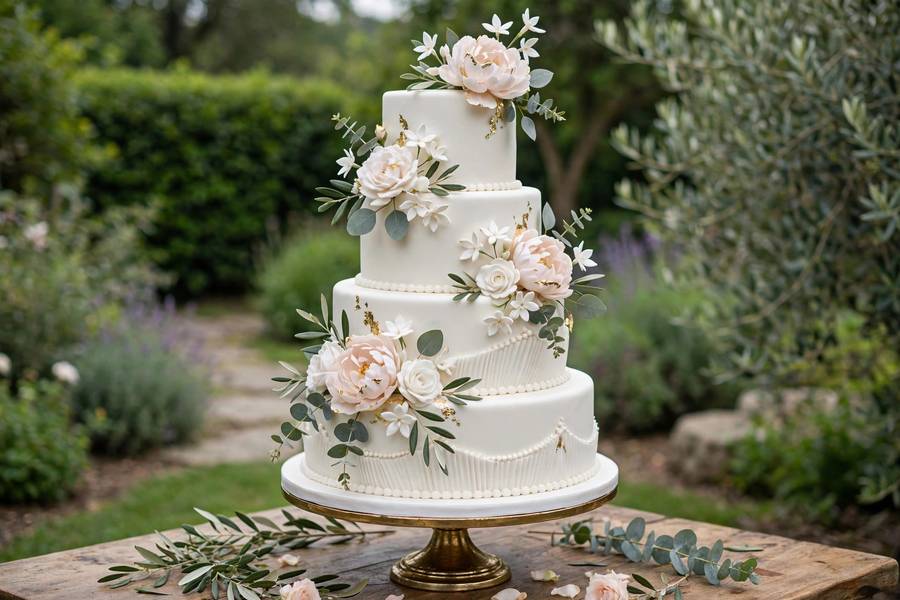
Fondant is essentially sugar dough — no butter to melt. It holds its shape in heat that destroys buttercream, which is why it’s the traditional choice for hot climates and outdoor weddings. A fondant-covered cake can sit at 85°F looking perfect while a buttercream cake beside it weeps.
But fondant has a weakness: humidity. High humidity makes fondant sticky, spotty, and prone to “elephant skin” (wrinkling). In humid heat (Florida, Gulf Coast, tropical destinations), fondant needs climate control too — just for a different reason. Dry heat? Fondant wins easily. Humid heat? It’s complicated.
Melting Points Compared
Rough stability ranking (highest to lowest heat tolerance): 1. Fondant (dry heat) — excellent to 90°F+. 2. Ganache (dark chocolate) — surprisingly heat-stable, holds to ~85°F. 3. Swiss/Italian meringue buttercream — good to ~80–85°F. 4. Fondant (humid heat) — sticky above 75% humidity. 5. American buttercream — struggles above 75°F. 6. Whipped cream / cream cheese — dangerous above 70°F for extended time.
The surprise winner: dark chocolate ganache. It’s delicious, looks sleek and modern, and handles heat better than any buttercream. If you’re having a summer wedding and love chocolate, ganache is the smart choice nobody talks about enough.
Baker Strategies for Summer
Professional bakers have hot-weather playbooks: sturdier recipes (higher sugar ratio in buttercream for stability), chilled delivery (refrigerated transport, last-minute setup), strategic timing (cake displayed 1 hour before cutting, not 6), dowel and board structure (proper internal support prevents heat-related collapse), shade planning (never in direct sun — coordinate with your venue).
Ask your baker: “What’s your hot-weather protocol?” Experienced summer-wedding bakers will have immediate, specific answers. Vague answers (“oh, it’ll be fine”) are a red flag — find a baker who’s battled August before.
Outdoor vs Indoor
Fully outdoor (ceremony + reception outside): choose fondant or ganache. Period. Display the cake in shade, as late as possible, for the shortest time possible. Indoor with AC: either frosting works — the venue’s climate control solves the problem. Outdoor ceremony, indoor reception: keep the cake inside until the reception; display it when guests move indoors.
The tent trap: tents feel like shelter but trap heat — a tented reception in August can be HOTTER than open air. If you’re tenting, the cake needs the same precautions as fully outdoor. Discuss with your baker AND tent company about airflow and shade.
The Hybrid Solution
Best of both worlds for hot weather: fondant exterior + buttercream filling. The cake looks flawless (fondant shell), tastes delicious (buttercream layers inside, protected from heat), and survives the display. Most guests peel fondant anyway — they’ll get to the good stuff.
Or: a small fondant showpiece for display/photos + buttercream sheet cakes kept refrigerated until serving. Guests get the better-tasting, perfectly-preserved cake; you get the photos. This is what smart summer couples do.
For the full frosting comparison, see buttercream vs fondant. For budget cake strategies, affordable wedding ideas has tips.
Emergency Plans
Day-of heat emergency kit: confirm your baker’s delivery time (later is better), designate a shaded display spot (scout it in advance), have the venue hold the cake in refrigeration until 1 hour before cutting, and assign someone to monitor (seriously — a melting cake needs a human to notice).
If disaster strikes: cut the cake early (don’t wait for the “right” moment — a slightly early cake cutting beats a collapsed cake), move it indoors immediately, and remember: guests care about CAKE, not perfection. A slightly soft cake that tastes amazing beats a perfect-looking cake nobody eats. Keep perspective — and keep it cool.
For full wedding planning, our wedding planning checklist covers every seasonal consideration.
Real Summer Wedding Cake Stories
Lessons from hot-weather weddings:
The beach wedding: buttercream cake displayed at 2pm in direct sun (against the baker’s advice). By 4pm, the tiers were sliding. The couple cut the cake early — laughing about it — and guests ate it off a slightly lopsided but delicious cake. Lesson: listen to your baker about shade and timing.
The vineyard wedding: fondant cake, 88°F, displayed in a shaded barrel room. Perfect at 8pm. The couple chose fondant specifically for the heat, and it paid off — the cake looked flawless in every photo. Lesson: the right frosting for the conditions works.
The backyard wedding: ganache cake, 85°F, kept refrigerated until 30 minutes before cutting. Guests raved about the taste (ganache is a crowd-pleaser). The baker’s plan — late display, minimal time out — worked perfectly. Lesson: timing matters as much as frosting type.
The universal lesson: every successful summer cake had three things: the right frosting for the conditions, a baker with hot-weather experience, and a plan for shade and timing. Every failed one was missing at least one. It’s not luck — it’s planning.
Cake Stands and Display for Summer
How you display the cake affects how it survives:
Location: indoors, air-conditioned, away from windows (direct sun through glass is an oven). If it must be outdoors: full shade, under a tent with airflow, never in direct sun. Timing: display 1–2 hours before cutting (not 6). The less time in heat, the better. Coordinate with your baker — they’ll advise based on the frosting and conditions.
The stand: sturdy, level, and heat-appropriate. Marble stays cool (good for summer). Avoid: stands that wobble (heat softens frosting — wobbling + soft = disaster). Surroundings: flowers and greenery are fine, but keep them from touching the cake (moisture transfers). Candles nearby are fine (they don’t generate enough heat to matter at distance).
The backup plan: have the venue hold the cake in refrigeration until display time. Assign someone to monitor (a melting cake needs a human to notice and act). And know when to cut early — a slightly early cake cutting beats a collapsed cake. Photography: take cake photos EARLY (when it’s pristine), not right before cutting (when heat may have taken a toll). The detail shots matter — get them while the cake is perfect.
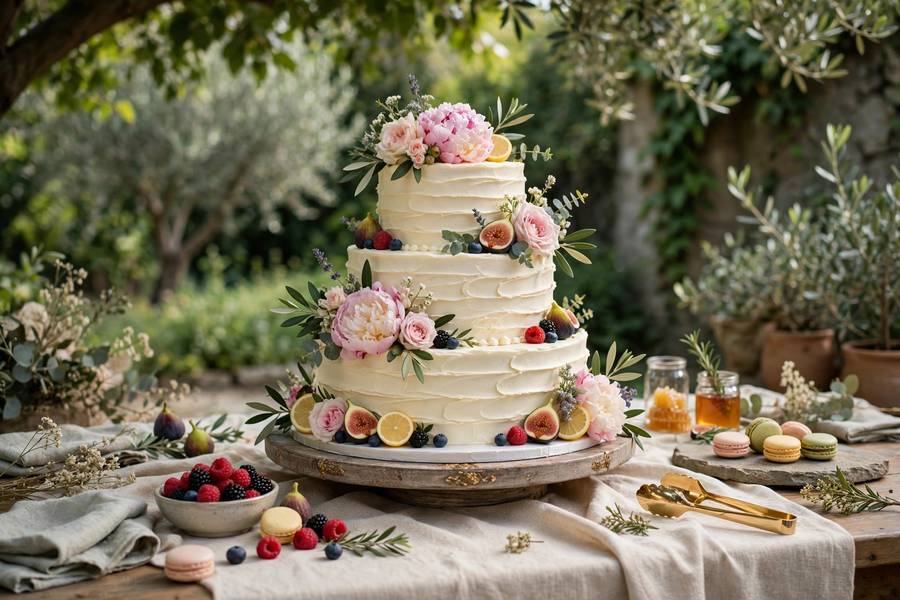
Fondant wins in dry heat — no butter to melt, holds shape to 90°F+. Buttercream (especially American) softens above 75°F. In humid heat, fondant gets sticky — consider dark chocolate ganache as the all-around summer winner (delicious and stable to ~85°F).
American buttercream softens around 75°F and melts around 85–90°F. Swiss/Italian meringue (more stable) holds to about 80–85°F. Cream cheese frosting is the most vulnerable — avoid it for outdoor summer weddings.
Risky but possible: use Swiss/Italian meringue buttercream, keep the cake refrigerated until 1 hour before cutting, display in full shade (never direct sun), and hire a baker with hot-weather experience. Or use the hybrid: fondant shell outside, buttercream layers inside.
Dark chocolate ganache — delicious, modern-looking, and stable to ~85°F. Fondant is the most structurally stable in dry heat. Both beat any buttercream in hot conditions.
In air conditioning: 4–6 hours safely. In 80°F+ heat: minimize to 1–2 hours maximum. Above 85°F with dairy-based frosting: food safety becomes a concern after 2 hours. When in doubt, refrigerate longer and display shorter.
Avoid it if possible. Keep the cake refrigerated or in shade until 1 hour before cutting. Never in direct sun — even fondant suffers eventually. Coordinate the display timing with your baker and venue.