What NOT to Pack for a Cruise: 18 Things to Leave Home

Cruise cabins are 150–200 square feet, the closets are dollhouse-sized, and every overpacked item becomes a daily obstacle. I’ve done 12 cruises, and my packing list has shrunk every time — not because I need less, but because I learned what the ship already provides and what’s dead weight. The ‘what not to pack’ list is more valuable than the ‘what to pack’ list.
These are the 18 things first-time cruisers always bring and experienced cruisers never do — with what to bring instead (or why you don’t need it at all). For the positive list, see our what to pack for a cruise and the Alaska cruise edition.
Banned and Confiscated: Don’t Even Try
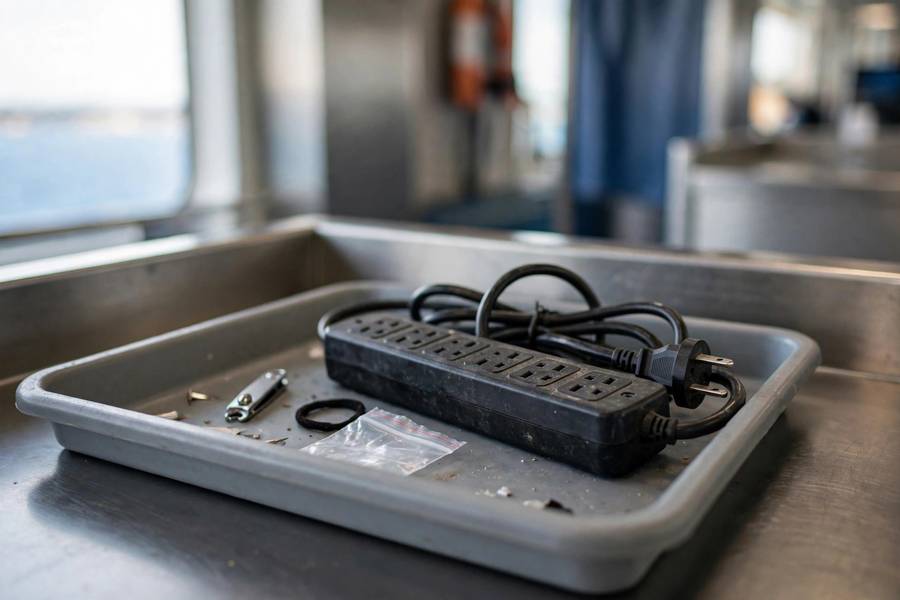
Power strips and extension cords: banned on virtually all cruise lines (fire hazard — the #1 confiscated item). They’ll be taken at embarkation and returned at disembarkation. Bring instead: a USB multi-charger hub (allowed — no cord, just the block) or a cruise-approved power strip (no surge protector, short cord — Royal Caribbean’s list is the reference). The cabin has 2–3 outlets; the USB hub multiplies them legally.
Irons and steamers: banned fleet-wide (fire hazard). The solution: wrinkle-release spray ($5 — works surprisingly well), the shower-steam trick (hang the garment in the bathroom during a hot shower), or the ship’s laundry pressing service ($3–5/item — worth it for formal night). Candles, incense, and heating pads: banned (open flame/heat). The LED tea lights ($8/set — flameless, allowed) give the ambiance without the confiscation.
Alcohol (mostly): the lines allow 1–2 bottles of wine at embarkation (policies vary — Carnival: 1 bottle, Royal: 2, Norwegian: none but corkage). Liquor and beer are confiscated. The workaround isn’t smuggling (they X-ray everything — the ‘rum runner’ flasks get caught); it’s the drink package math (do the honest calculation — 5+ drinks/day to break even) or the allowed wine + the bar.
The Ship Provides: Leave These Home
Beach and pool towels: the ship provides them — at the pool, on excursions, in the cabin. They’re large, they’re free, and the towel station tracks them (the $25 lost-towel fee is the incentive to return them). Your microfiber travel towel is redundant weight. (Exception: the Alaska hot springs excursion or the private beach day — even then, the ship usually provides.)
Toiletries (the basics): shampoo, conditioner, body wash, and often lotion are in the cabin (the quality varies — the suites get the good stuff, but even standard cabins have the basics). Bring: your specific skincare, prescription items, and the sunscreen (the ship’s shop charges 3× — the $25 sunscreen is the most overpriced item on board). Decant the rest.
Hair dryers: every cabin has one (in the desk drawer — the wall-mounted or handheld, always present). They’re weak by salon standards but functional. The diffuser attachment (if you need one — bring just the attachment, not the dryer). Coats hangers: the cabin has them (a few — bring 5–6 extra, the packable kind — layers need hanging, and the closet is small).
The Overpacking Traps: Clothes You’ll Never Wear
Too many ‘nice’ outfits: most cruises now are smart-casual throughout (the formal nights are 1–2, and ‘formal’ means a blazer, not a tux). One nice outfit + the versatile pieces (the dress that dresses up with jewelry, the blazer that elevates everything) covers it. The three gowns and two suits are the #1 space waste — I know, I brought them on cruise #2.
Excessive shoes: the rule is 3 pairs (worn: comfortable walkers; packed: dressy pair + sandals/flip-flops). The ‘options’ (the second dressy pair, the ‘maybe’ heels) never leave the closet — and heels on a moving ship are a special kind of regret. The excursions need the walkers; the dinners need one dressy pair; that’s the inventory.
‘Just in case’ clothes: the heavy sweater (the Caribbean in February doesn’t need it — the ship is climate-controlled), the rain gear overkill (one packable rain shell, not the full hiking kit), the workout wardrobe (one set — the gym exists, but the vacation reality is 2 visits max). Every ‘just in case’ is a packing cube of regret.
The Redundant Gear: The Ship Has It
Books (the paper kind): the ship’s library (yes, really — most ships have one, the larger ones have proper collections) plus your e-reader (the Kindle holds the library). The 3 paperbacks are weight and space for nostalgia. (The exception: the specific guidebook for the ports — but the phone/PDF version works.)
Snorkel gear: the excursion operators provide it (and the good ones sanitize it properly). Your own mask (if you’re particular — the fit matters, $30) is the reasonable bring; the full set (fins, snorkel, vest) is the overpack. The ship’s shore excursions include the gear in the price — check before packing. carry-on vs checked baggage
Binoculars (the big ones): for Alaska, yes (the compact 8×42 — see the Alaska guide); for the Caribbean, the balcony views don’t need them. The full-size birding binoculars are the Alaska-specific item — everywhere else, they’re weight.
The ‘Clever’ Ideas That Backfire
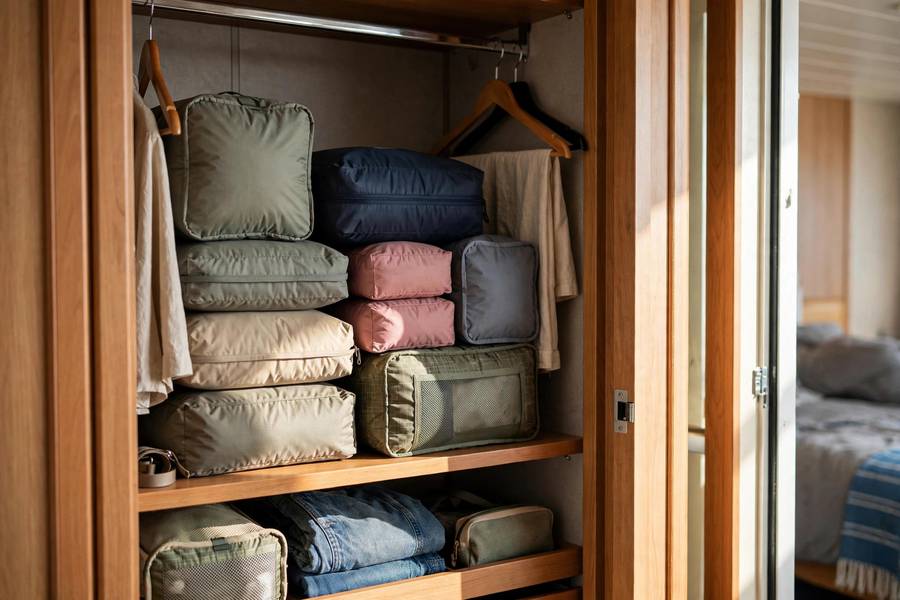
The over-the-door shoe organizer: the cruise-forum favorite — and it works, but it’s unnecessary weight and setup for a 7-day trip. The cabin’s shelves + the packing cubes (unpacked into the shelves — the cubes become drawers) organize better with less. (For 14+ day cruises, the organizer earns its place — the threshold is the trip length.)
The full first-aid pharmacy: the ship’s medical center handles the real issues (and the infirmary visit is the travel-insurance claim), and the ports have pharmacies. Bring: prescriptions (extra, in original bottles), seasickness remedy (the Bonine — the ship charges $15 for what costs $5), and the basics (bandages, painkillers). The suture kit and the IV bags are the overpack.
Too much cash: the ship is cashless (everything goes on the Sail & Sign/SeaPass card). Bring: small bills for port tips and the taxis ($100–200 in mixed bills), and the credit card (no foreign fees — the onboard charges are in USD, the ports aren’t). The money belt full of traveler’s checks is 2005.

What to Bring Instead: The Short List
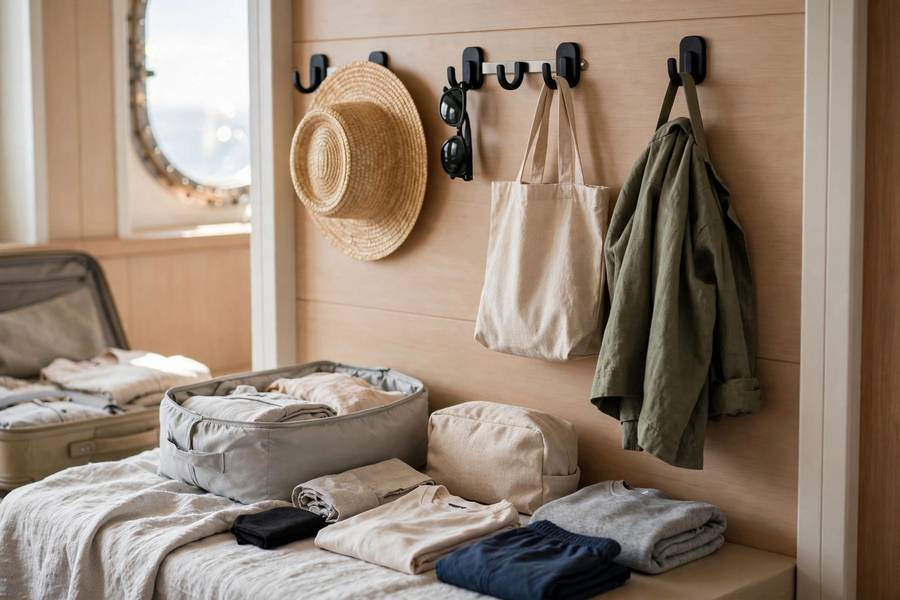
The actual essentials (the experienced cruiser’s kit): the USB charging hub (the legal power multiplier), the magnetic hooks ($10 — the cabin walls are metal, the hooks create hanging space from nothing — the #1 cruise hack), the wrinkle-release spray, the seasickness remedy, the sunscreen (2 bottles — the ship’s price is triple), and the daypack (the excursion bag).
The documents: passport (the photo page + a photocopy — some ports require the original, the ship holds it sometimes — know your line’s policy), the cruise documents (printed — the embarkation goes faster), travel insurance (the medical evacuation coverage — the ship’s medical center is excellent and expensive), and the credit card (the onboard account’s backbone).
The mindset: the cruise is the most supplied form of travel — the ship is a floating resort that anticipates needs. Pack for the person, not the contingency. The less you bring, the more the cabin feels like a cabin instead of a storage unit — and the vacation starts at embarkation, not after you’ve organized the overpacking. how to pack light
Cruise Lines’ Specific Rules (2026)
Royal Caribbean: 2 wine bottles per cabin, no liquor; power strips without surge protection allowed (the famous exception — check the current list, it changes); irons banned. Carnival: 1 wine bottle per adult, no liquor; no power strips at all (strictest). Norwegian: no alcohol at embarkation (corkage $15/bottle if you bring wine to dinner); no power strips.
Princess, Holland America, Celebrity: similar — 1–2 wine bottles, no power strips (Celebrity allows the USB hub), irons banned. Disney: the most family-detailed (the fish extender gift culture — the door decorations, the allowed magnets). The rule: check YOUR line’s prohibited list before packing — they’re all published, they all differ slightly, and the embarkation X-ray enforces them.
The confiscation process: items are held until disembarkation (tagged, stored, returned on the last morning — the ‘naughty room’ pickup). It’s not a fine, it’s a hold — but the power strip you needed all week sat in a warehouse. Pack right the first time.
Power strips (banned/confiscated — bring a USB hub instead), irons/steamers (banned — use wrinkle spray), beach towels (provided), hair dryers (in cabin), excessive formal wear (1–2 nice outfits max), and too many shoes (3 pairs). Check your line’s prohibited list — they differ.
Usually no — most lines ban them (fire hazard) and confiscate at embarkation. Royal Caribbean allows non-surge-protected strips (check the current list). The universal solution: a USB multi-charger hub (no cord, just the block) — allowed everywhere, multiplies the cabin’s 2–3 outlets.
1–2 bottles of wine at embarkation (varies by line — Carnival: 1, Royal: 2, Norwegian: none). Liquor and beer are confiscated. Corkage fees ($15–25) apply if you drink your wine in the dining room. They X-ray everything — smuggling attempts get caught.
5–7 daytime outfits (mix and match), 1–2 nice evening outfits, 2 swimsuits, 3 pairs of shoes max. Most cruises are smart-casual throughout now — the formal-night overpacking (gowns, tuxes) is the #1 space waste for first-timers.
The closets are small but the packing cubes-as-drawers method (cubes unpacked into shelves) plus magnetic hooks (cabin walls are metal — $10, the #1 cruise hack) create ample space. The overpacking is the problem, not the cabin.