Thailand Packing List for 2 Weeks: What to Bring (and What to Buy There)

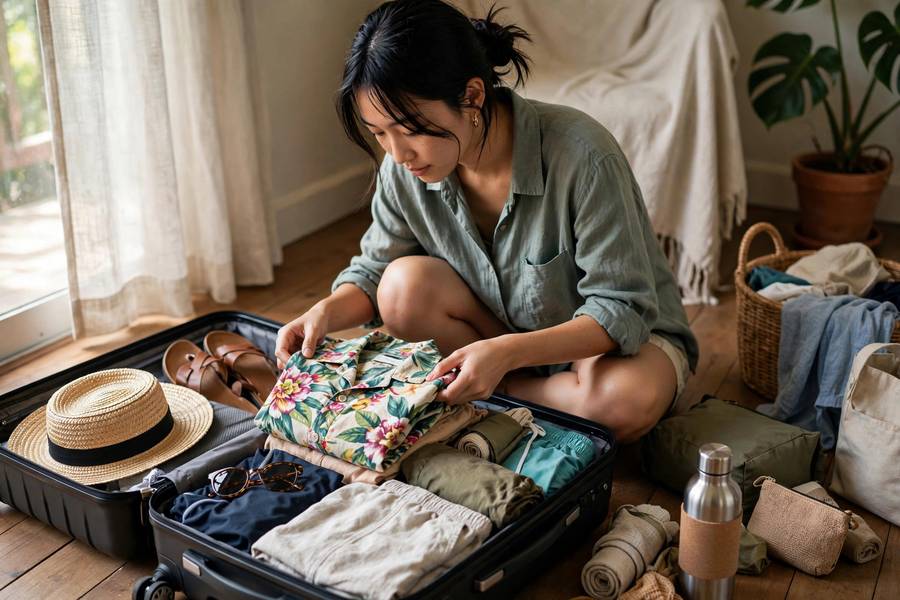
I’ve done two weeks in Thailand four times, and my packing has gone from ‘entire closet’ to ‘one carry-on’ — because Thailand is the easiest country in the world to pack for. It’s hot, it’s casual, laundry is $1–2 everywhere, and anything you forget costs almost nothing to replace. The biggest packing mistake in Thailand isn’t forgetting something. It’s bringing too much.
This list is built for the classic two-week route: Bangkok → north (Chiang Mai/Chiang Rai) → islands (south). It covers temples, cities, beaches, and the odd nice dinner — in a single carry-on, with room for everything you’ll buy.
For the country overview, see our Thailand packing list hub. This is the two-week tactical version.
The Thailand Packing Philosophy
Three facts shape everything: (1) It’s hot and humid everywhere, always — 30–35°C with humidity that makes air feel solid. (2) Laundry is available on every street for $1–3 per kilo, returned same-day. (3) Thailand’s markets sell everything cheaply — a beach cover-up is $5, sunscreen is the only thing that’s expensive.
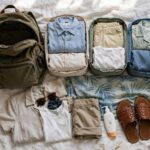
The implication: pack for 5–6 days, not 14. Do laundry twice. Bring half the clothes and twice the money you think — you’ll spend the savings on $3 massages and $1 pad thai. Every experienced Thailand traveler arrives overpacked and leaves wondering why they brought so much. how to pack light
The non-negotiable principle: if it’s available in Thailand for under $10, don’t pack it — buy it there. This covers: beach towels, sarongs, flip-flops, umbrellas, basic toiletries, hats, and most ‘just in case’ items. Your bag should contain only what Thailand doesn’t sell cheaply: your specific medications, good walking sandals, and your tech.
Clothing: Less Than You Think
Tops (5–6): lightweight, breathable, quick-dry. Linen or moisture-wicking synthetics — cotton stays damp in Thai humidity and you’ll be uncomfortable by noon. One ‘nice’ top for rooftop bars or nicer restaurants (Bangkok has a dress code scene). Everything in light colors — dark clothes show sweat, and you’ll sweat.
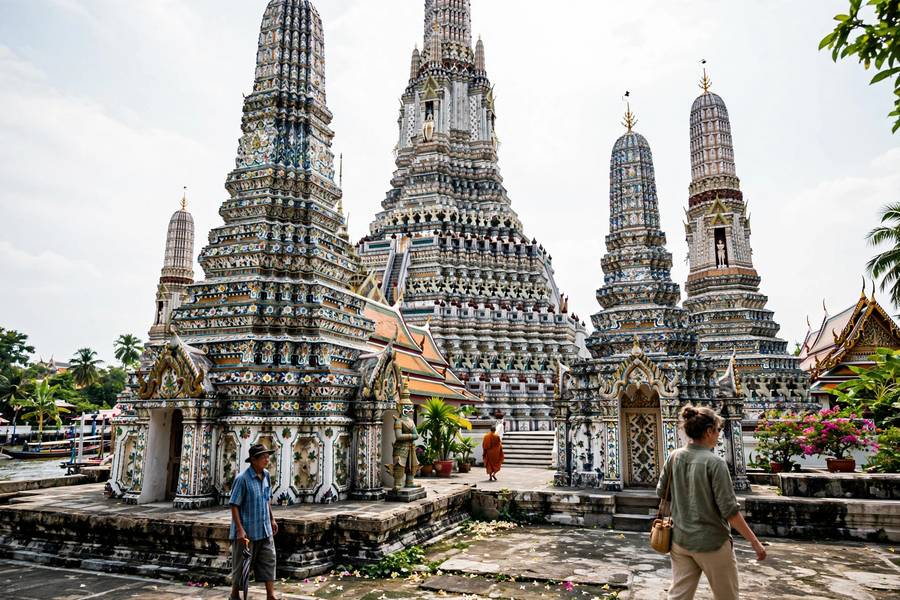
Bottoms (3–4): 2 pairs of shorts, 1 lightweight long pants (temples require covered knees — and they’re also useful for mosquito-heavy evenings), 1 skirt or nicer option. The temple rule is real and enforced: shoulders and knees covered at major temples (Grand Palace, Wat Pho, Wat Arun). A sarong in your daypack solves this anywhere — it doubles as a temple cover-up, beach wrap, and blanket.
Swimwear (2): you’ll swim daily on the islands. Two suits means one dries while you wear the other. Rash guard for snorkeling days — the Thai sun is brutal on the water and reapplying sunscreen every 40 minutes gets old.
Underwear/socks (5–6): quick-dry underwear is worth it in this climate. Socks barely matter — you’ll live in sandals. One pair of socks for the flight and temple visits (some temples require bare feet but socks for the approach).
Dress code reality check: Thailand is casual to a degree that surprises first-timers. Shorts and tank tops are fine everywhere except temples, nice restaurants, and rooftop bars. The ‘dress up’ ceiling is low — a sundress or collared shirt covers 99% of situations.
Shoes: The Two-Pair Rule
Pair 1 (on your feet): good walking sandals — Teva-style sport sandals or quality flip-flops with arch support. You’ll walk 15,000+ steps daily in Bangkok, much of it on uneven streets. Your feet will thank you. Break them in before the trip.
Pair 2 (packed): lightweight sneakers or closed shoes for hiking (Chiang Mai’s trails, Khao Sok), temple days (easier than sandals for the on-off), and the flight. That’s it. Two pairs total.
The temple shoe dance: you’ll remove shoes constantly — at temples, some shops, all massage places. Slip-on/off footwear isn’t just convenient, it’s culturally expected. Lace-up boots in Thailand are a rookie error you’ll regret by day two.
Skip: heels (cobblestones and temple steps), white shoes (red dust in the north, street grime in Bangkok), and ‘nice’ shoes that can’t handle rain. Bangkok floods — streets become rivers in rainy season, and your shoes will get wet. things to do in Bali
Temple Kit and Cultural Essentials
The temple bag (keep in your daypack always): a sarong or large scarf (covers shoulders/knees instantly), slip-on shoes, and small bills for donations. Major temples have rental cover-ups, but they’re shared, sweaty, and unflattering — your own sarong is better in every way.
Behavior basics that matter: remove shoes before entering temple buildings (look for the shoe pile — that’s your cue), never point your feet at Buddha images (sit cross-legged or kneel), don’t touch monks (especially women — no contact at all), and keep your voice down. These aren’t suggestions; they’re deeply held norms.
The Grand Palace dress code is the strictest in Thailand — no sleeveless, no shorts, no ripped clothing, and they mean it. If you’re unsure, overdress slightly. A collared shirt and long pants/sarong gets you into every temple in the country.
Health, Toiletries, and the Pharmacy
Sunscreen: bring from home — it’s 2–3x the price in Thailand and often contains whitening agents you don’t want. SPF 50, reef-safe for island days. You’ll use more than you expect; the equatorial sun doesn’t mess around.
Mosquito defense: dengue exists in Thailand. Bring DEET-based repellent (30–50%) — the local stuff works too and is cheap, but have some on arrival. Long sleeves/pants for evenings in the north. Most mid-range hotels have nets or sealed windows; budget guesthouses may not — a travel net ($15) is cheap insurance.
Stomach kit: imodium, rehydration salts, and hand sanitizer. Thai street food is generally safe and delicious — eat where it’s busy and cooked fresh — but 2 weeks is long enough that something will get you. The rehydration salts are the item you’ll be most grateful for.
Toiletries: bring your specific skincare/meds; buy everything else there. Thai 7-Elevens (they’re everywhere, and excellent) sell quality toiletries at local prices. Toothpaste, shampoo, razors — all cheaper and perfectly good. Contact solution: bring enough — it’s harder to find.
Tech, Money, and Documents
Tech: phone, universal adapter (Thailand uses A/B/C plugs — mostly A and C), power bank, and a dry bag for island days (a $10 roll-top bag protects your phone on every boat trip). Earbuds for the overnight train/bus. That’s the kit — Thailand’s infrastructure (wifi, charging) is excellent.
Money: cash is king outside malls and hotels. ATMs charge a 220-baht (~$6) fee per withdrawal — withdraw large amounts infrequently. Bring a no-foreign-fee debit card and a backup. Notify your bank. Many places take cards now, but street food, markets, tuk-tuks, and small islands are cash-only.
Documents: passport (6+ months validity), travel insurance (non-negotiable — scooter accidents are the #1 tourist injury), and digital copies of everything in cloud storage. Visa: most nationalities get 30 days visa-free (check current rules — they change). If staying the full 2 weeks, you’re fine.
What to Buy in Thailand (Save Room)
Leave 25% of your bag empty. You will shop — everyone does. What’s worth it: Thai silk scarves ($10–20, beautiful), handmade soaps and spa products ($2–5), tailored clothes in Bangkok (a custom shirt for $25, suits from $100 — the famous tailors are real), and muay thai shorts ($10, the perfect souvenir).
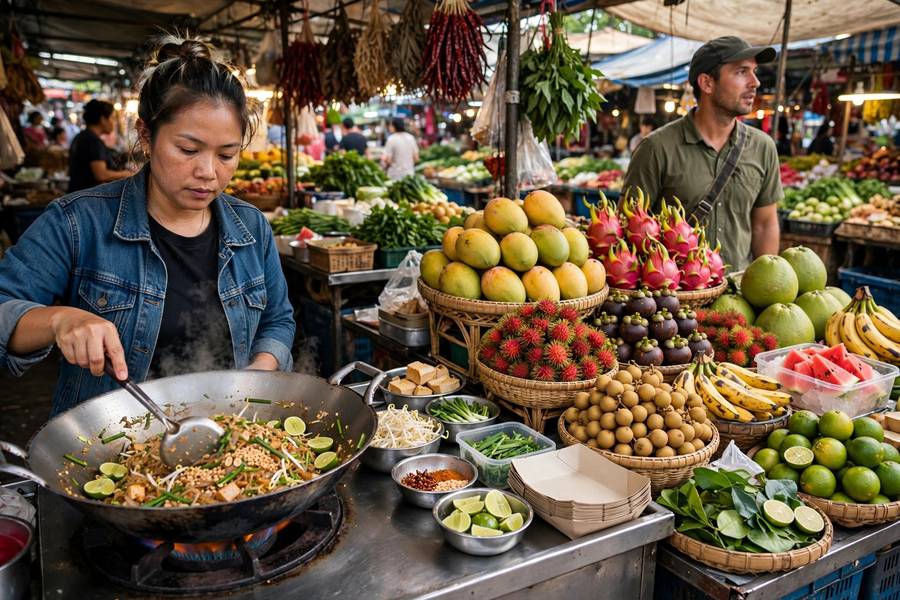
Markets: Chatuchak Weekend Market (Bangkok — 15,000 stalls, go early Saturday), Chiang Mai’s Sunday Walking Street (the best night market in Thailand), and any local morning market (for the experience more than shopping). Bargaining is expected at markets (start at 50–60% of asking, meet in the middle); not in malls or fixed-price shops.
Shipping: for big purchases (furniture, art), shipping services are reliable and cheap. For everything else, it fits in the bag — which is why you left room. The carry-on strategy plus a foldable duffel for purchases is the veteran Thailand move.
Pack for 5–6 days, not 14: lightweight quick-dry clothes, 2 pairs of shoes (walking sandals + sneakers), swimwear, a sarong (temple cover-up), sunscreen from home, and basic meds. Laundry is $1–3 everywhere. Leave 25% bag space for shopping.
Shoulders and knees covered, shoes removed before entering buildings. A sarong in your daypack solves this anywhere. The Grand Palace is strictest — no sleeveless, shorts, or ripped clothing. Never point feet at Buddha images; women should not touch monks.
Most nationalities get 30 days visa-free — plenty for 2 weeks. Your passport needs 6+ months validity. Rules change periodically, so verify current requirements before booking. Travel insurance is strongly recommended (scooter accidents are common).
Toiletries are cheap and good (7-Eleven everywhere). Sunscreen is the exception — 2–3x home prices and often with whitening agents. Bring reef-safe SPF 50 from home; buy everything else there.
Two pairs: walking sandals (Teva-style, broken in) for daily use, and lightweight sneakers for hiking and temples. Everything is slip-on/off — you’ll remove shoes constantly. Skip heels, white shoes, and anything that can’t handle sudden downpours.