20 Best Places to Travel in the World on a Budget (2026 Guide)


People assume I spend a fortune on travel. The truth: my average trip costs less per day than my life at home. Last year I spent 11 days in Vietnam for $680 all-in, and a week in Portugal for $940. The world is full of places where $40–60 a day buys you great food, a comfortable bed, and experiences you’d pay triple for elsewhere — you just have to know where to look.
This isn’t a list of ‘cheap’ places. It’s a list of high-value places — destinations where the experience-per-dollar ratio is off the charts. I’ve been to every country on this list (most of them twice), and the daily costs below are real numbers from my trips, not tourism-board fantasy.
For the splurge version, see our best places to travel in the world — but if you want maximum trip per dollar, this is your list.
Table of Contents
- Southeast Asia: The Budget Travel Capital
- Latin America: Close, Cheap, Spectacular
- Eastern Europe: Europe at Half Price
- Africa and the Middle East: Worth Every Penny
- How to Actually Travel for $50 a Day
- Central Asia and the Caucasus: The Final Frontier of Value
- The Budget Traveler’s Toolkit: Apps and Habits
Southeast Asia: The Budget Travel Capital
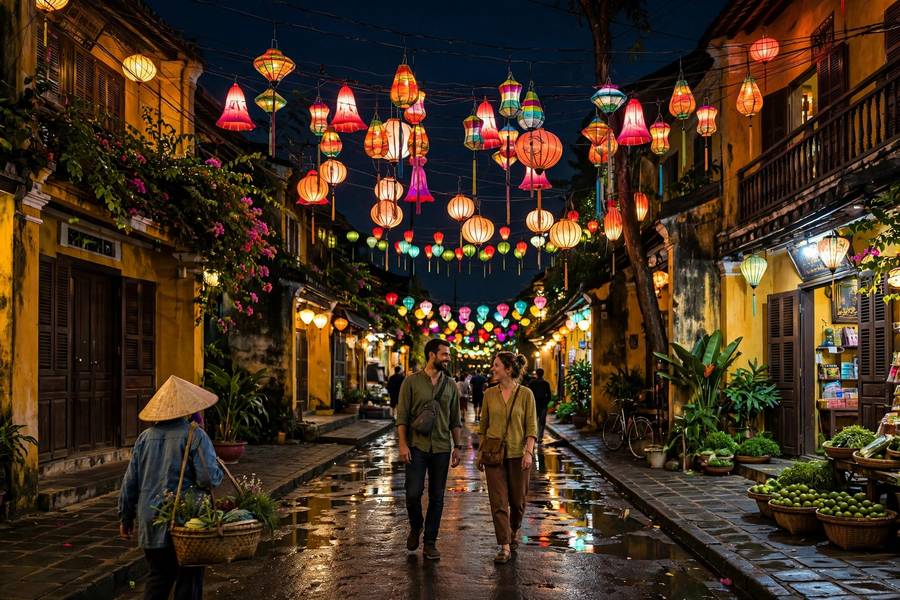
Vietnam ($35–50/day): the best value in Asia, full stop. A bowl of phở costs $1.50, a beachfront hotel room $25, and a tailored suit in Hoi An $80. The country runs the full spectrum — Ha Long Bay’s karsts, Hoi An’s lanterns, the Mekong Delta — and the food alone justifies the flight. The $700–900 flight is the investment; everything after is pocket change.
Thailand ($40–60/day): the classic for a reason. Bangkok’s street food, Chiang Mai’s temples, the southern islands’ beaches — the infrastructure is the best in the region for budget travelers. Go beyond Phuket to Koh Lanta or Khao Sok for lower prices and fewer crowds. The one splurge worth it: a $30 Thai massage, daily.
Indonesia — beyond Bali ($35–55/day): Bali gets the fame, but Java’s temples (Borobudur at sunrise is life-changing), Lombok’s beaches, and Yogyakarta’s culture deliver more for less. Domestic flights are $30–50. The whole archipelago is a budget traveler’s playground. things to do in Bali
Cambodia ($30–45/day): Angkor Wat is the greatest temple complex on earth, and Siem Reap is one of the cheapest pleasant cities in Asia. A three-day temple pass is $62; a tuk-tuk driver for the day is $15–20. Stay an extra day for the floating villages and the circus (Phare — genuinely world-class).
Latin America: Close, Cheap, Spectacular
Mexico — beyond the resorts ($45–65/day): Mexico City is one of the world’s great food cities (a taco al pastor costs $0.50), Oaxaca has the culture, and the Yucatán has cenotes and ruins. The peso’s weakness against the dollar makes everything a deal. Internal flights are cheap; buses are excellent and even cheaper.
Colombia ($40–60/day): the comeback story of South American travel. Cartagena’s walled old town, Medellín’s eternal spring, the coffee region’s haciendas, Tayrona’s jungle beaches. It’s safe, stunning, and priced like Southeast Asia. The flight from the US East Coast is 3–4 hours — shorter than to California.
Peru ($45–65/day): Machu Picchu is the headline, but the Sacred Valley, Arequipa’s white-stone center, and Lima’s food scene (one of the world’s best) fill two weeks easily. The 4-day Inca Trail books out months ahead; the Salkantay trek is cheaper, harder, and arguably more beautiful. Set your flight alerts early — Lima fares drop regularly.
Eastern Europe: Europe at Half Price
Portugal ($70–95/day): the cheapest country in Western Europe, and my personal favorite. Lisbon, Porto, the Algarve, the Douro Valley — it’s all here, at prices 40% below Spain or Italy. A great dinner with wine: €25. A boutique hotel: $80–110. And the light — the light in Lisbon alone is worth the trip. how to plan a Europe trip
Romania ($50–70/day): Transylvania’s castles, medieval towns (Brașov, Sibiu, Sighișoara), the Carpathian mountains, and some of Europe’s best-preserved old towns. It’s the Europe of 30 years ago — authentic, uncrowded, absurdly affordable. The Transfăgărășan road is one of the world’s great drives.
Albania ($40–60/day): the Albanian Riviera has the same Ionian water as Corfu at a third of the Greek prices. Berat and Gjirokastër are UNESCO Ottoman-era towns that feel undiscovered. It’s the last genuinely cheap beach destination in Europe — go before everyone else figures it out.
Poland: Kraków + Gdańsk ($55–75/day): Kraków’s old town survived WWII intact and it’s breathtaking — the main square, Wawel Castle, Kazimierz. Gdańsk’s Hanseatic waterfront is a hidden gem. Hearty food, great beer ($2–3), and history at every corner.

Africa and the Middle East: Worth Every Penny
Morocco ($50–70/day): Marrakech’s medina, the Atlas Mountains, the Sahara’s dunes, Chefchaouen’s blue streets — Morocco packs a lifetime of experiences into one affordable country. Riads (traditional guesthouses) with rooftop terraces run $40–70/night. The overnight desert camp under Saharan stars is a top-ten life experience.
Egypt ($45–65/day): the pyramids, Luxor’s temples, a Nile cruise, the Red Sea’s diving — and it’s never been cheaper for dollar-holders. A private guide for the day costs $30–40. The Grand Egyptian Museum (opened 2024) is now the world’s greatest archaeological museum. Go before the crowds fully return.
How to Actually Travel for $50 a Day
The destination is half the equation; the method is the other half. The $50/day formula: stay in guesthouses and mid-range hotels ($20–35/night in these regions — clean, central, often with breakfast), eat where locals eat (street food and markets, one restaurant meal a day), use local transport (buses and trains, not taxis), and pick free activities (hiking, beaches, old towns, markets) with one paid splurge every few days.
The flight is the fixed cost that breaks the math on short trips — which is why budget destinations reward longer stays. A $800 flight amortized over 7 days is $114/day; over 21 days it’s $38/day. If you can only take a week, stay closer to home (Mexico, Central America from the US). If you can take three weeks, Southeast Asia’s daily costs will more than offset the flight.
Travel in shoulder season, get a no-foreign-fee credit card, and learn the local price of things on day one (ask your guesthouse host). The travelers who overpay are the ones who don’t know what things should cost. Ten minutes of research saves hundreds.

Central Asia and the Caucasus: The Final Frontier of Value
Georgia ($40–60/day): the country, not the state — and it’s extraordinary. Tbilisi’s old town, the wine region of Kakheti (Georgia invented winemaking 8,000 years ago), the Caucasus mountains at Kazbegi, and food that will ruin all other dumplings for you (khinkali). It’s safe, stunning, and almost absurdly cheap. The $60/day here buys what $150 buys in Italy.
Uzbekistan ($35–55/day): Samarkand, Bukhara, Khiva — Silk Road cities with turquoise-tiled madrasas that rival anything in the Middle East. The high-speed train connects them for a few dollars. Tourism is growing but still thin; you’ll have Registan Square nearly to yourself at dawn. Visas have been simplified for most nationalities.
Kyrgyzstan ($30–45/day): for the adventurous — alpine lakes (Issyk-Kul, Song-Kul), yurt stays with nomadic families ($20/night including meals), and some of the world’s best trekking. It’s the cheapest mountain adventure on earth. The infrastructure is basic; the experience is not.
The Budget Traveler’s Toolkit: Apps and Habits
The apps that save real money: a fare aggregator with price alerts (set them and forget them), an offline maps app (download regions before you go — roaming charges are a budget killer), a currency converter with offline mode, and a translation app with camera mode (menus become readable). Total cost: zero. Total savings: hundreds.
The habits that matter more than apps: eat breakfast where you sleep (often included — never skip it), walk the first day in every new city (orientation + free sightseeing), ask locals not guidebooks (your guesthouse host knows the $3 lunch spot), and keep a daily spend log for the first three days (awareness alone cuts spending 15–20%).
The mindset: budget travel isn’t about deprivation — it’s about allocation. Skip the $15 tourist-trap lunch and you fund the $30 cooking class. Take the bus instead of the taxi and the sunset boat trip is free. Every dollar you don’t waste on the forgettable stuff is a dollar for the unforgettable stuff. That’s the whole game.
For overall value: Vietnam, Cambodia, and Bolivia — $30–50/day for a comfortable trip. For beach: Thailand’s lesser-known islands or Albania. For culture: Romania and Morocco. The cheapest flight-accessible option from the US is usually Mexico or Colombia.
$1,000–1,500 per person for Southeast Asia or Latin America (excluding the flight), $1,500–2,000 for Eastern Europe or Morocco. Add $600–1,000 for the flight depending on origin. Two weeks in Vietnam: ~$2,000 all-in from the US is realistic.
More than enough in most of the world. $100/day is luxury-backpacker territory in Southeast Asia and Latin America (nice hotels, great restaurants daily). In Western Europe or Japan, $100/day means hostels and self-catering — doable but tight.
Portugal — it’s safe, English-friendly, uses the euro, has great infrastructure, and costs 40% less than neighboring Spain. Thailand is the equivalent for Asia: tourist-friendly, affordable, and hard to get wrong.
Be flexible on dates (midweek, shoulder season), set fare alerts 3–4 months out, check nearby airports, and consider budget airlines for regional hops. The flight is often 30–40% of a budget trip’s cost, so saving $200 there matters more than any hotel hack.