3 Days in Paris Itinerary for First-Timers: The Perfect Introduction

I’ll never forget my first three days in Paris. I landed at Charles de Gaulle with a list of 47 things I wanted to see, a paper map, and the kind of jet-lagged optimism that makes you think you can do the Louvre and Versailles in one afternoon. By day two, my feet were staging a revolt and I’d learned the most important Paris lesson: this city rewards slowing down, not speeding up.
That trip taught me how to do Paris right in 72 hours. I’ve been back eleven times since, and this is the itinerary I give every friend who asks — the one that hits the icons without turning your vacation into a forced march. It balances the must-sees with breathing room, because the best Paris moments happen between the landmarks: the café where you linger too long, the side street you wander down for no reason. how to plan a Europe trip
If this is your first visit, bookmark our complete 3 days in Paris itinerary hub as well — this guide is the first-timer’s cut, with extra hand-holding on logistics, timing, and the rookie mistakes to skip.
Table of Contents
- Day 1: The Icons — Eiffel Tower, Seine, and the 7th Arrondissement
- Day 2: Montmartre, Sacré-Cœur, and Old Paris
- Day 3: Museums, Markets, and Your Paris
- Where to Stay: The Best Areas for First-Timers
- Getting Around: Metro, Walking, and the Rookie Mistakes
- What It Costs: A Realistic 3-Day Paris Budget
Day 1: The Icons — Eiffel Tower, Seine, and the 7th Arrondissement
Start where every first-timer should: the Eiffel Tower. But here’s what the guidebooks bury — book the summit for 9:00 or 9:30 a.m., the first slots of the day. I arrived at 8:45 on my second trip and walked straight onto the elevator. By 11, the line snaked halfway across the Champ de Mars. The summit at opening time, with the city still shaking off the morning haze, is one of the great travel experiences. Budget two hours. best time to book flights
From the tower, walk east along the Seine toward the Pont de l’Alma — it’s a flat, gorgeous 20-minute stroll, and you’ll pass the river boats gearing up for the day. Cross to the Right Bank and you’re in the golden triangle of the 8th arrondissement. Grab lunch at a boulangerie (a jambon-beurre baguette sandwich costs about €5 and beats most restaurant lunches) and eat it in the Tuileries Garden.
Spend your afternoon at the Louvre, but with a strategy. The museum is enormous — 35,000 works — and trying to ‘see it all’ is how people end up crying in the Denon wing. Buy your timed-entry ticket for 2 p.m., enter through the Carrousel du Louvre shopping mall entrance (almost no line compared to the pyramid), and give yourself three focused hours: the Mona Lisa and Winged Victory (get them done early in your visit), then the apartments of Napoleon III and whatever wing matches your interests. Leave by 5:30 before museum fatigue sets in.
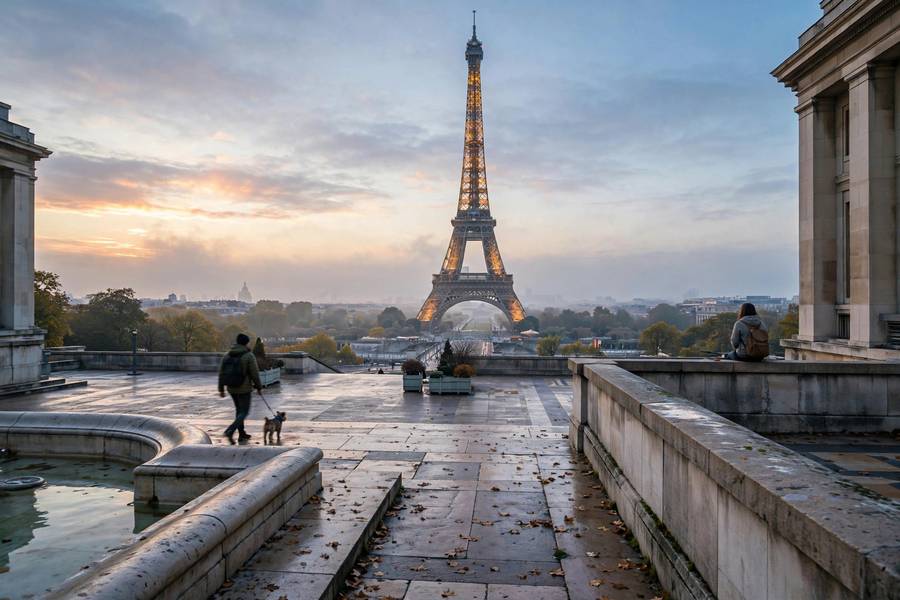
Evening: walk from the Louvre across the Pont des Arts to the Left Bank as the light goes golden. Dinner in Saint-Germain-des-Prés — the 6th arrondissement is made for first nights in Paris. Then, if your legs allow it, take the metro back to the Trocadéro for the Eiffel Tower sparkling on the hour. It sparkles for five minutes every hour after dark, and yes, it’s worth staying up for.
Day 2: Montmartre, Sacré-Cœur, and Old Paris
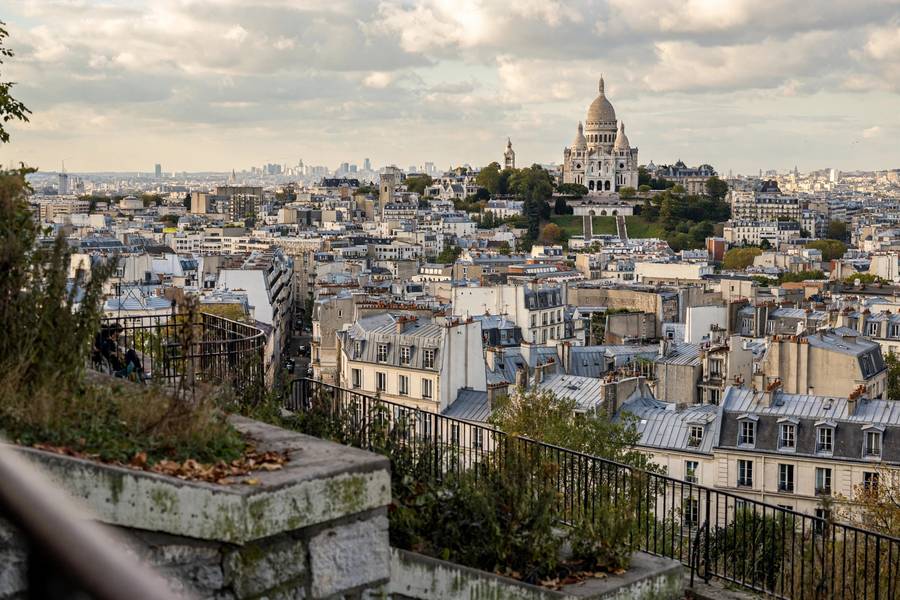
Day two is for the Paris of the movies — and it actually exists, in Montmartre. Take the metro to Anvers and walk up through the neighborhood (skip the funicular; the climb through the streets is half the charm). Arrive at Sacré-Cœur by 9:30 a.m., before the crowds and the street vendors fully mobilize. The basilica is free, the dome climb (€7) gives you the best panoramic view in Paris, and the square behind the church — Place du Tertre — is where the portrait artists set up.
Here’s my Montmartre secret: most visitors see the basilica and leave. Don’t. Walk downhill through the vineyard of Montmartre (yes, there’s a working vineyard in Paris), past the Lapin Agile cabaret, to the Musée de Montmartre. Renoir painted in this house. The garden out back is one of the quietest spots in the city. Have lunch at a crêperie on Rue des Abbesses — a galette complète and a bowl of cider is the definitive Montmartre lunch.
Afternoon: descend into the Paris of the Middle Ages on the Île de la Cité. Notre-Dame is still under restoration after the 2019 fire, but the exterior and the square are moving to see, and the Sainte-Chapelle — a five-minute walk away — is the most underrated church in Paris. Its 15-meter stained glass windows, when the sun hits them, are the single most beautiful interior I’ve seen in Europe. Go on a sunny afternoon; it’s transformative.
Evening: the Marais. This is the neighborhood I always end up in — medieval streets, falafel on Rue des Rosiers (L’As du Fallafel, accept no substitutes), the Place des Vosges for a sunset sit-down. It’s the best area in Paris for aimless evening wandering, which after two full days is exactly what you’ll want.
Day 3: Museums, Markets, and Your Paris
Day three is yours to customize, but here’s my recommended framework: one museum in the morning, one neighborhood in the afternoon, and a proper farewell dinner. For the museum, pick your fighter. Art lovers: the Musée d’Orsay, housed in a Beaux-Arts railway station, with the world’s greatest Impressionist collection — Monet, Van Gogh, Degas — in a building that’s half the attraction. History buffs: the Musée de l’Armée at Les Invalides, or the haunting Mémorial de la Shoah in the Marais. Romantics: the Musée Rodin, where The Thinker sits in a rose garden.
If you’d rather skip museums entirely on day three, take a morning food tour of the Bastille market (Marché d’Aligre, Tuesday–Sunday mornings) or the covered Marché des Enfants Rouges. Tasting your way through a Paris market — oysters, cheese, roast chicken — is as cultural as any museum, and you’ll eat better.
Afternoon: choose the neighborhood you haven’t seen. The Latin Quarter for bookshops (Shakespeare and Company) and the Panthéon. Canal Saint-Martin for the local-Paris vibe — young Parisians picnicking along the water with supermarket wine. Or the covered passages (Galerie Vivienne, Passage des Panoramas) for 19th-century shopping arcades that feel like time travel.
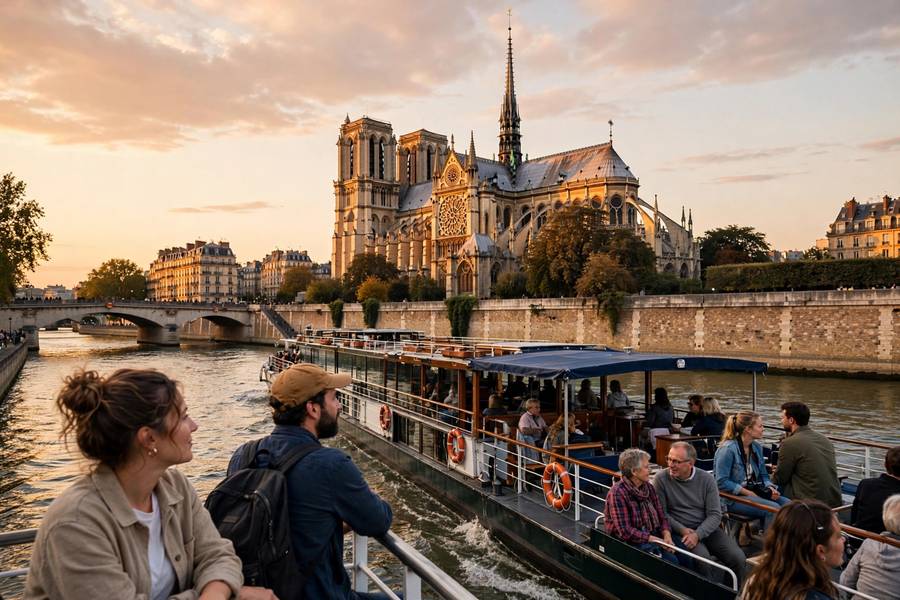
Final evening: do the Seine cruise. I know, I know — tourist trap. But the one-hour Bateaux-Mouches cruise at sunset, gliding past Notre-Dame and the Louvre as the city lights up, is genuinely magical, and it’s the perfect bookend to three days. Book the 8 p.m. departure in summer. Then dinner somewhere with a view of the tower — and start planning your return trip, because three days in Paris is really just an introduction.
Where to Stay: The Best Areas for First-Timers
Where you sleep in Paris matters more than in most cities, because you’ll be out walking 8+ hours a day and the metro — while excellent — still eats time. For first-timers, I recommend three arrondissements above all others. carry-on vs checked baggage
The Marais (3rd/4th): my top pick. Central to everything, gorgeous medieval streets, the best falafel and the best evening wandering. It’s the most expensive of the three but worth it. You’ll walk to Notre-Dame, the Louvre is 20 minutes on foot, and the metro connections are superb.
Saint-Germain-des-Prés (6th): the classic Left Bank. Café de Flore, bookshops, art galleries, and that intellectual Paris atmosphere. Slightly quieter at night than the Marais, which some people prefer. Great for couples.
Montmartre (18th): the budget pick with the most character. Hotels around Abbesses are 30–40% cheaper than the Marais, the village vibe is real, and the views are unmatched. The trade-off: it’s hilly and a bit farther from the day-one sights — but the metro gets you anywhere in 20 minutes.
Whatever you choose, book a hotel within a 5-minute walk of a metro station. Paris has 308 stations; there’s no excuse for a bad location. And avoid anything right next to a major train station (Gare du Nord area) — it’s convenient but sketchy at night.
Getting Around: Metro, Walking, and the Rookie Mistakes
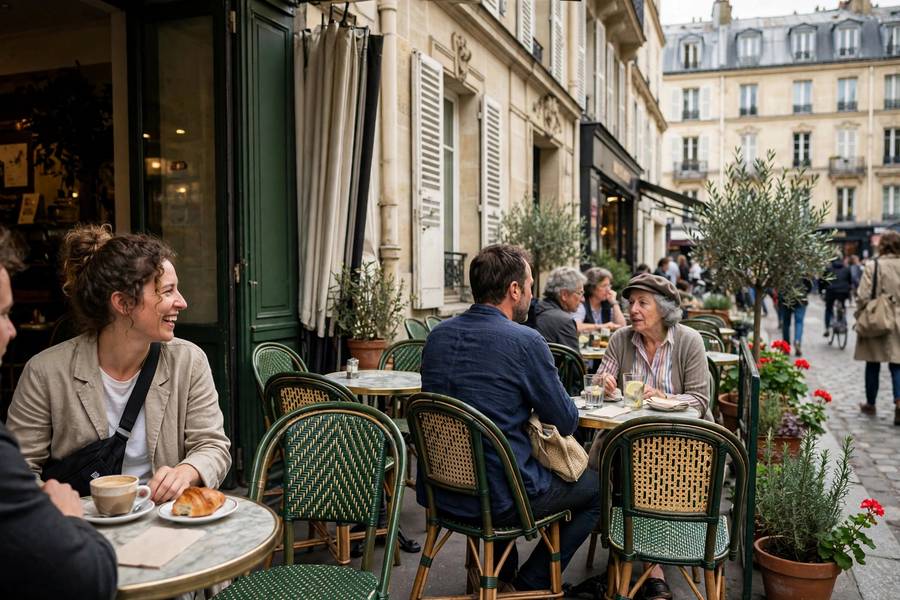
Paris has the best metro system for tourists in Europe — 16 lines, a station every 500 meters in the center, and a single ticket (€2.15) that gets you anywhere. Buy a carnet of 10 on your phone via the RATP app, or get the Navigo Easy card at any station. The metro runs 5:30 a.m. to ~1:15 a.m. (2:15 on weekends). After that, it’s night buses or taxis.
But here’s the truth: you’ll walk more than you metro. Paris is a walking city — the center from the Eiffel Tower to the Bastille is about 5 km, entirely flat along the river. I average 20,000 steps a day in Paris and consider the metro a tool for crossing the city, not exploring it. Wear your most broken-in shoes. This is not the trip for new boots.
Rookie mistakes to avoid: (1) Taking a taxi from CDG — the RER B train is €11.80 and often faster. (2) Eating within sight of a major monument — walk two blocks in any direction and prices drop 40%. (3) Trying to do Versailles as a half-day — it’s a full day or skip it; with only three days, skip it. (4) Not making restaurant reservations — even casual bistros fill up; book lunch spots the morning of, dinner the day before. (5) The ‘gold ring’ scam and petition clipboard scams — a firm ‘non’ and keep walking.
What It Costs: A Realistic 3-Day Paris Budget
Let’s talk money honestly, because Paris has a reputation that scares people off unnecessarily. A comfortable — not luxury, not hostel — three days in Paris costs roughly €150–220 per day per person, and here’s the breakdown from my last trip.
Hotel: €120–180/night for a solid 3-star in the Marais or Saint-Germain. Breakfast is often included; if not, a café breakfast (coffee + croissant) is €5 standing at the bar, €9 seated. Lunch: €12–18 (boulangerie sandwich or plat du jour at a bistro). Dinner: €30–50 with a glass of wine at a proper bistro. Attractions: Eiffel Tower summit €29.40, Louvre €22, Sainte-Chapelle €13, dome of Sacré-Cœur €7 — budget €70–80 total for the big three days. Metro: ~€25 for three days of carnets.
The free stuff is the secret weapon: the Sacré-Cœur basilica, the Tuileries and Luxembourg gardens, the exterior of Notre-Dame, window-shopping the covered passages, the Champ de Mars at sunset, Père Lachaise cemetery (Jim Morrison, Oscar Wilde, Édith Piaf), and every church you wander into. Some of my best Paris hours cost nothing.
Money-saving moves that don’t feel cheap: the museum pass only pays off if you’re doing 4+ museums — with this itinerary, buy individual tickets. Picnic dinners from a fromagerie beat mediocre restaurant meals. And the single best free upgrade in Paris: walk everywhere along the Seine at golden hour.
Three days is enough for the essential Paris — the Eiffel Tower, Louvre, Montmartre, Notre-Dame area, and a couple of neighborhoods — if you plan well and don’t try to add Versailles or day trips. You’ll leave with a real feel for the city and a list of reasons to return. It’s an introduction, not the whole story, and that’s fine.
May, June, and September are the sweet spots: long days, mild weather, and manageable crowds. July and August bring heat and closures (many locals leave). December is magical for Christmas markets but cold and dark by 5 p.m. Avoid Easter week if you hate crowds.
Probably not. The 2-day pass (€62) only pays off with 4+ paid museums, and this itinerary has 2–3. Buy individual timed tickets for the Eiffel Tower and Louvre instead — you’ll save money and skip the pass-holder lines, which can be just as long.
Yes — Paris is very safe for tourists by global standards. The real risks are petty: pickpockets on the metro (lines 1 and 4 especially) and around major sights, and the classic scams (gold ring, petition, string bracelet). Keep your phone zipped away, use a crossbody bag, and you’ll be fine.
No, but ten words of French transform how you’re treated. Learn bonjour, merci, s’il vous plaît, l’addition s’il vous plaît (the check please), and parlez-vous anglais? Always greet shopkeepers with ‘bonjour’ on entering — skipping it is the fastest way to get frosty service.