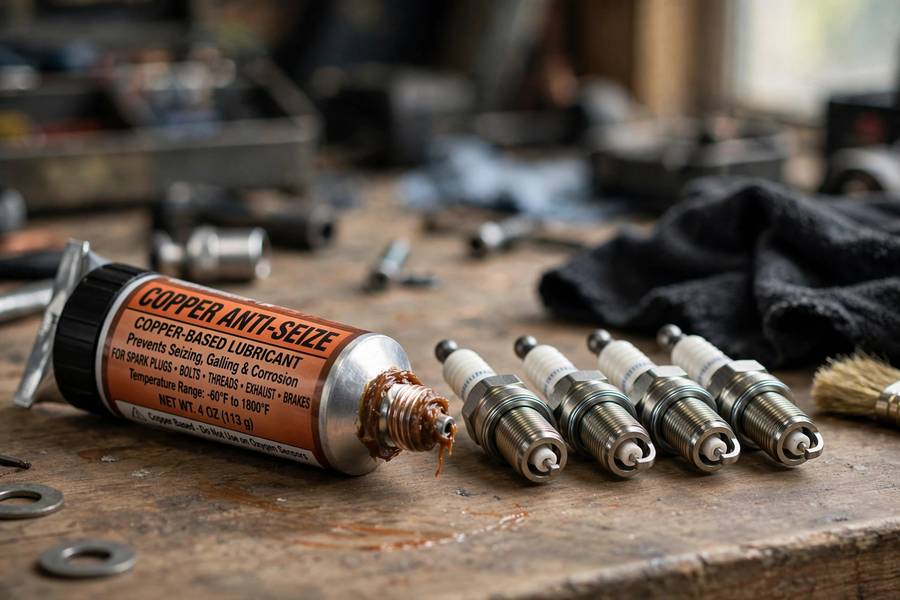
Bring up anti-seize on spark plugs in a room full of mechanics and you’ll get a bar fight. The old guard swears by it — “I’ve used it for thirty years, never seized a plug.” The manufacturer crowd says stop — “you’re over-torquing every plug you touch.” Forums have thousand-post threads. Everybody’s certain.
I’ve been on both sides of this one. I started as a true believer, coating every plug like I was frosting a cake. Then I stripped a plug hole on an aluminum head — torqued to spec, or so I thought — and learned the lesson that changed my practice permanently. Here’s the full picture: what the manufacturers actually say, the physics of why it matters, when I still reach for the tube, and how to do it right if you do.
Contents
- Why This Debate Exists
- What the Manufacturers Actually Say
- The Torque Problem: Lubricated Threads Lie
- When I Still Use It
- How to Apply It Right (If You Use It)
- My Final Call
Why This Debate Exists
The debate exists because both sides are remembering something real.
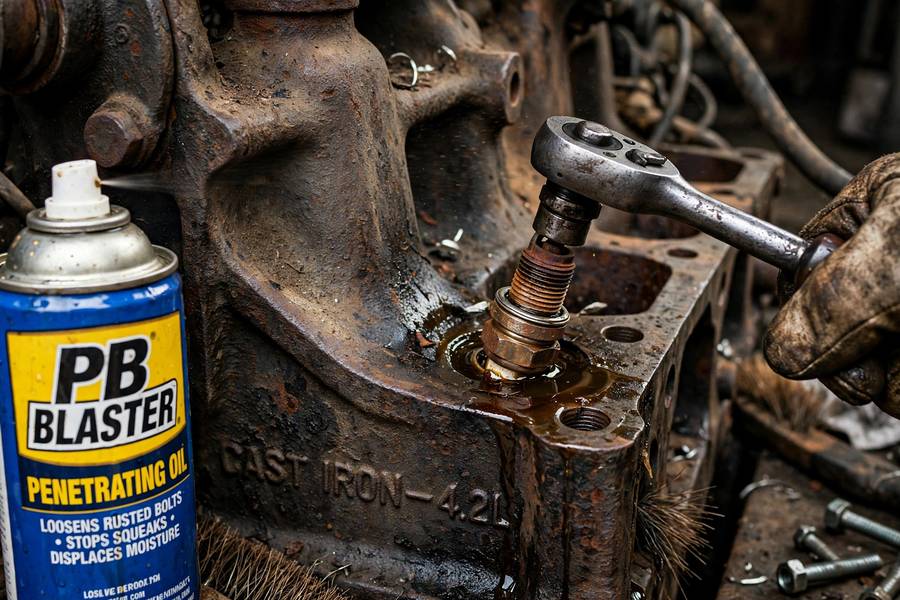
The pro-anti-seize camp remembers the bad old days: steel plugs in cast iron heads, dissimilar metals, heat cycles, and moisture welding threads together over 30,000 miles. Removing a seized plug could snap it off flush in the head — a nightmare that anti-seize genuinely prevented. Anyone who fought those battles has a permanent emotional attachment to the little silver tube. I get it. I fought some of those battles too.
The anti camp remembers the modern reality: today’s plugs mostly come with factory anti-seize plating on the threads, aluminum heads are far easier to strip than iron ones, and lubricated threads plus full torque specs equal over-tightened plugs. Their evidence is stripped threads and cracked insulators, and it’s real too.
Both memories are accurate. They’re just from different eras of engine design. The question isn’t who’s right in principle — it’s what’s right for the plug in your hand, today.
What the Manufacturers Actually Say
This is the part that settles it for most people, so let me be precise.
NGK — the biggest plug maker in the world — states clearly that their plugs should be installed dry, without anti-seize. Their plugs use a special trivalent plating on the threads that acts as both corrosion protection and a release agent. Adding anti-seize on top of that plating changes the friction characteristics the torque specs were calibrated for. NGK’s technical bulletins are unambiguous: the plating IS the anti-seize.
Denso takes the same position for their plated plugs: install dry, torque to spec.
Champion and Autolite have historically been more permissive, with some documentation suggesting anti-seize is acceptable on uncoated plugs — but even they emphasize torque reduction when it’s used.
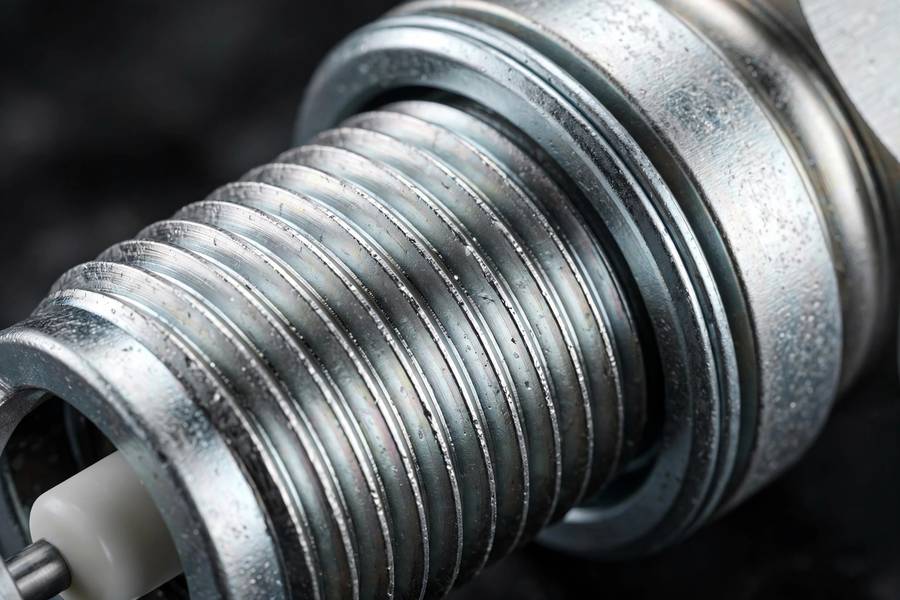
Here’s the key detail most people miss: look at your plugs. Modern plugs from the major brands have a distinctive silvery, slightly iridescent finish on the threads — that’s the trivalent or zinc plating. If your plugs have it, the manufacturer has already answered the question for you: install dry. The debate is over for that plug.
The only plugs where the question is still live are uncoated plugs — plain steel threads with no plating, mostly on older applications or some aftermarket brands. For those, anti-seize remains a legitimate consideration.
The Torque Problem: Lubricated Threads Lie
This is the physics that converted me, so let me make it visceral.
A torque wrench doesn’t measure clamping force — it measures rotational resistance. Most of that resistance is thread friction, not the actual stretching of the fastener. When you lubricate threads with anti-seize, friction drops dramatically, so the same torque wrench reading produces significantly more clamping force. The general engineering rule: lubricated threads need 20–30% less torque for the same clamping force.
Run the numbers on a typical plug: 20 ft-lbs dry spec, minus 25% for lubrication, gives you 15 ft-lbs. If you apply anti-seize and torque to the full 20, you’ve effectively applied the equivalent of 25–27 ft-lbs dry. On an aluminum head with a 14mm tapered-seat plug spec’d at 7–15 ft-lbs, that overshoot can strip threads outright.
This is exactly what happened to me. Anti-seize on the threads, torque wrench set to the book spec, clean click — and the threads pulled on the last plug. I torqued it “correctly” and still over-tightened it, because the spec assumed dry threads and mine weren’t dry. The repair took an afternoon and a thread insert kit, and my pride took longer to recover.
The takeaway isn’t “anti-seize is evil” — it’s that torque specs and thread condition are a package deal. Dry spec + dry threads, or reduced spec + lubricated threads. Mixing them is where the damage happens. If you want the full treatment of why these numbers are what they are, a proper spark plug torque spec chart covers every thread-size and seat-type combination — and the general principle behind all of it is what torque means in cars.
There’s a second, subtler issue: anti-seize is electrically conductive (the copper and nickel varieties especially). If it migrates onto the insulator nose or between the electrodes, it can create a conductive path that bleeds off spark voltage — effectively fouling the plug with your own “protective” coating. This is why application technique matters so much.
When I Still Use It
After all that, here’s where I still reach for the tube — because “usually no” isn’t “never”:
Uncoated plugs in cast iron heads. Old-school combination, old-school solution. If the plug threads are bare steel and the head is iron, a light application is cheap insurance against seizure. Reduce torque 20–30%.
Dissimilar metals with long intervals. Steel plugs in aluminum heads with 100,000-mile change intervals make me nervous on high-mileage engines that have never had the plugs out. If the plugs have clearly been in there since the factory and the engine has 150,000 miles, the next person to remove them will thank you for the anti-seize. (That next person might be you.)
Marine and high-corrosion environments. Boats, coastal cars, anything that lives in salt air. Corrosion seizes threads faster than anything, and anti-seize earns its keep here.
When the plug manufacturer says to. Some specific applications still call for it. The manufacturer’s instruction for your exact plug beats any general rule, including mine.
What I never do anymore: anti-seize on plated plugs in aluminum heads at full dry torque. That’s the combination that stripped my threads, and it’s the most common setup on the road today. If the plug is plated, it goes in dry.
How to Apply It Right (If You Use It)
If you’ve decided your situation calls for anti-seize, technique is everything. Most of the anti-seize problems I see aren’t from using it — they’re from using it like caulk.
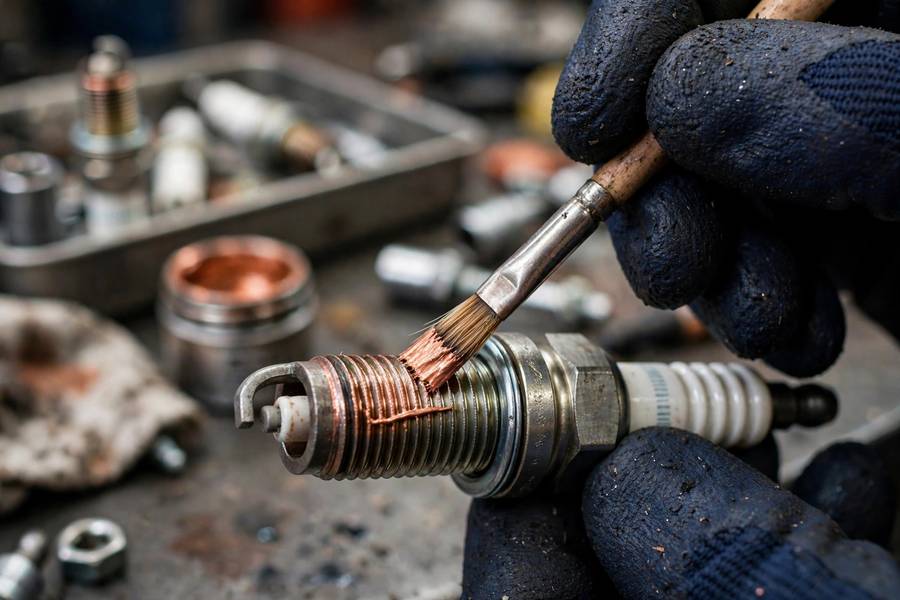
- Less is more. You want a thin, almost translucent smear — not a glob. If you can see clumps, you’ve used ten times too much. I put a dab on a clean fingertip or a small brush and wipe most of it off before it ever touches the plug.
- Threads only, middle of the threaded section. Keep it off the first two threads (nearest the electrode) and off the electrode end entirely. Anti-seize near the firing tip risks contaminating the insulator nose.
- Never on the electrodes or insulator. Conductive compound on the firing end is a misfire waiting to happen. If you get any on the ceramic, clean it off with brake cleaner before installation.
- Keep it off the gasket/washer seat. The crush washer needs clean metal-to-metal contact to seal. Anti-seize on the seat can compromise the seal.
- Reduce your torque 20–30%. Non-negotiable. Set the wrench lower, or use the angle method with reduced rotation. Write it down if you need to — “anti-seize = less torque” on a piece of tape on the wrench handle.
- One plug at a time. Don’t pre-coat all eight plugs and let them sit collecting dust. Coat, install, torque, move on.
And a shop-hygiene note: that tube gets everywhere. Cap it immediately, wipe your hands before touching the plug’s ceramic, and keep it away from the electrodes like it’s radioactive. Because for your spark quality, it kind of is.
My Final Call
Here’s my practice, refined over ten years and one stripped thread hole:
- Plated plug (silvery threads) + aluminum head: dry, torque to spec. This is most modern cars. The plating is the anti-seize.
- Uncoated plug or iron head or marine/salt environment: thin smear, torque reduced 20–30%.
- Manufacturer says otherwise for your specific plug: follow the manufacturer. Always.
The old guard wasn’t wrong — they were solving a real problem with the tools and plugs of their era. The manufacturers aren’t wrong either — plating technology solved that problem at the factory. The mechanics still fighting about it are mostly arguing across a generational divide, each certain the other’s experience doesn’t apply.
Your job is simpler: look at the plug in your hand. Silvery plated threads? Install it dry and torque it right. Bare steel threads going into an old iron head? A whisper of anti-seize and a reduced torque setting. Either way, the procedure around it — cold engine, hand-thread first, gap check — is what really determines whether the job goes well. That’s all in my guide to how to change spark plugs, which is where this whole debate actually lives: not in the tube, but in the technique.
Frequently Asked Questions
Usually no — most modern plugs come with factory anti-seize plating (trivalent coating) on the threads, and manufacturers like NGK and Denso specify installing them dry. Anti-seize is still reasonable for uncoated plugs, cast iron heads, or high-corrosion environments, with torque reduced 20–30%.
Anti-seize lubricates the threads, so the same torque wrench reading produces 20–30% more clamping force. Torquing to the full dry spec with anti-seize applied effectively over-tightens the plug, which can strip aluminum head threads. It can also foul the plug if it contaminates the electrodes.
No. NGK states their spark plugs should be installed dry without anti-seize, because their trivalent thread plating already provides corrosion protection and acts as a release agent. Adding anti-seize alters the friction the torque specs were calibrated for.
Reduce torque by 20–30% from the dry specification when anti-seize is applied. For example, a 20 ft-lb dry spec becomes roughly 14–16 ft-lbs with lubricated threads. This accounts for the reduced thread friction producing more clamping force per unit of torque.
A thin smear on the middle of the threaded section only — keep it off the first two threads, the electrodes, the insulator nose, and the gasket seat. Excess or misplaced anti-seize can compromise the seal or create conductive paths that cause misfires.